Differentiating shapes Geometry Worksheets for Ages 3-5
3 filtered results
-
From - To
Our Differentiating Shapes Geometry Worksheets are perfect for young learners aged 3-5. These engaging and interactive worksheets help children identify and differentiate between various shapes, fostering early geometry skills. Designed by education experts, the colorful activities keep kids motivated as they trace, match, and count shapes. Ideal for both classroom and home use, these worksheets support cognitive and fine motor development while providing fundamental mathematical foundations. Start your child's learning journey with our comprehensive and fun shape-based exercises, ensuring they develop crucial skills in an enjoyable and effective way. Discover the joy of learning with our trusted resources today!
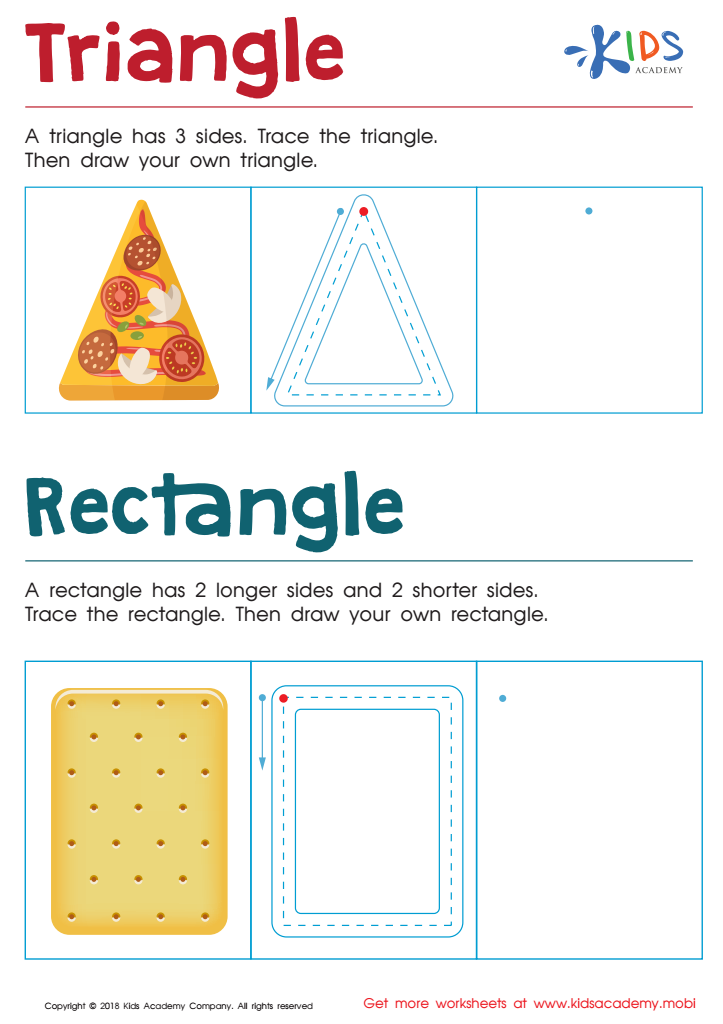
Triangle Rectangle Worksheet
 Assign to My Students











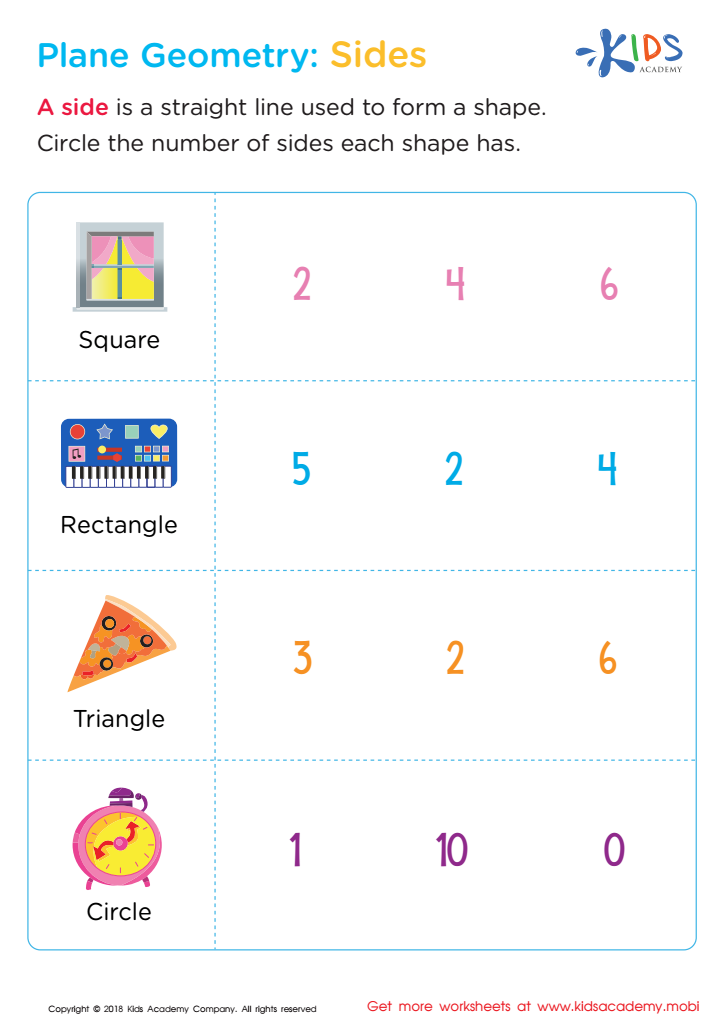
Plane Geometry: Sides Worksheet
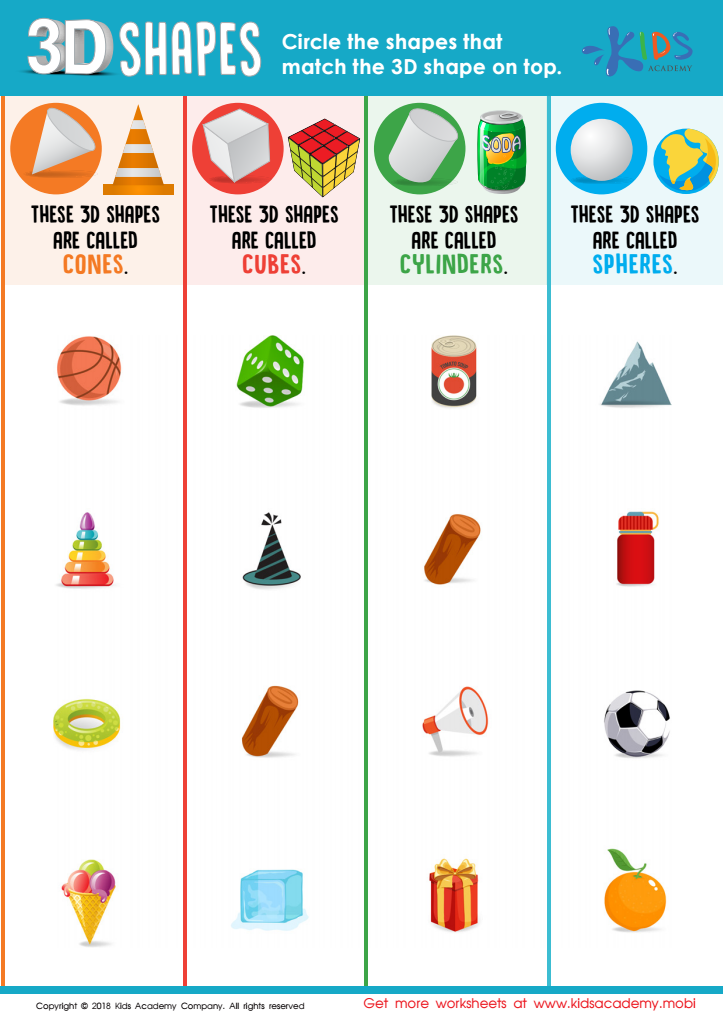
3D Shapes Worksheet








Differentiating shapes geometry for ages 3-5 is critical because it lays the foundational skills necessary for cognitive and spatial development, which influence later success in math and other subjects. At this age, children are in a sensitive period for learning basic geometric concepts as their brains rapidly develop. By identifying, sorting, and manipulating shapes, they sharpen their visual perception, reasoning, and problem-solving abilities. These activities reinforce fine motor skills as well, through the physical action of tracing or building shapes.
Understanding shapes helps children navigate the world around them and applies to real-life situations like identifying road signs or distinguishing objects. It nurtures critical thinking and categorization skills. When parents and teachers emphasize geometry, children grasp the concepts of similarity, difference, and symmetry, which are essential pre-mathematical skills linked to algebra and geometry in higher education levels.
Incorporating geometric education can be interactive and fun, making learning more engaging. Using shape-based games, puzzles, and creative art projects not only stimulates curiosity but also promotes a lifelong love for learning. Providing these early experiences gives children the confidence and ability to tackle more advanced academic challenges in the future, making it essential for parents and teachers to prioritize differentiating shapes geometry for young learners.








