Spatial reasoning Geometry Worksheets for Ages 3-5
4 filtered results
-
From - To
Nurture young minds with our "Spatial Reasoning Geometry Worksheets for Ages 3-5." Specially designed to cultivate early foundational skills, these engaging worksheets introduce preschoolers to the world of geometry through fun and interactive activities. They focus on essential spatial reasoning skills like shape recognition, pattern identification, and the concept of space, helping kids understand how objects relate to each other in their environment. Perfect for early learners, these worksheets build critical thinking and problem-solving abilities in a playful, educational way. Give your child a head start in mathematics and inspire a love for learning with our carefully crafted resources.
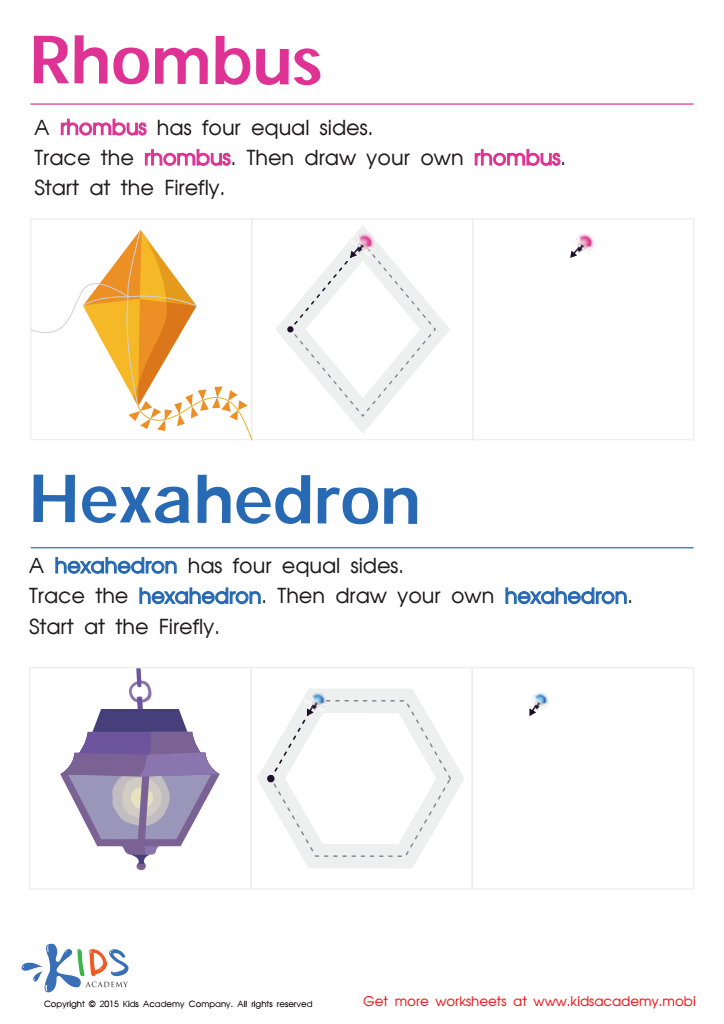
Draw a Rhombus And a Hexahedron Printable
 Assign to My Students











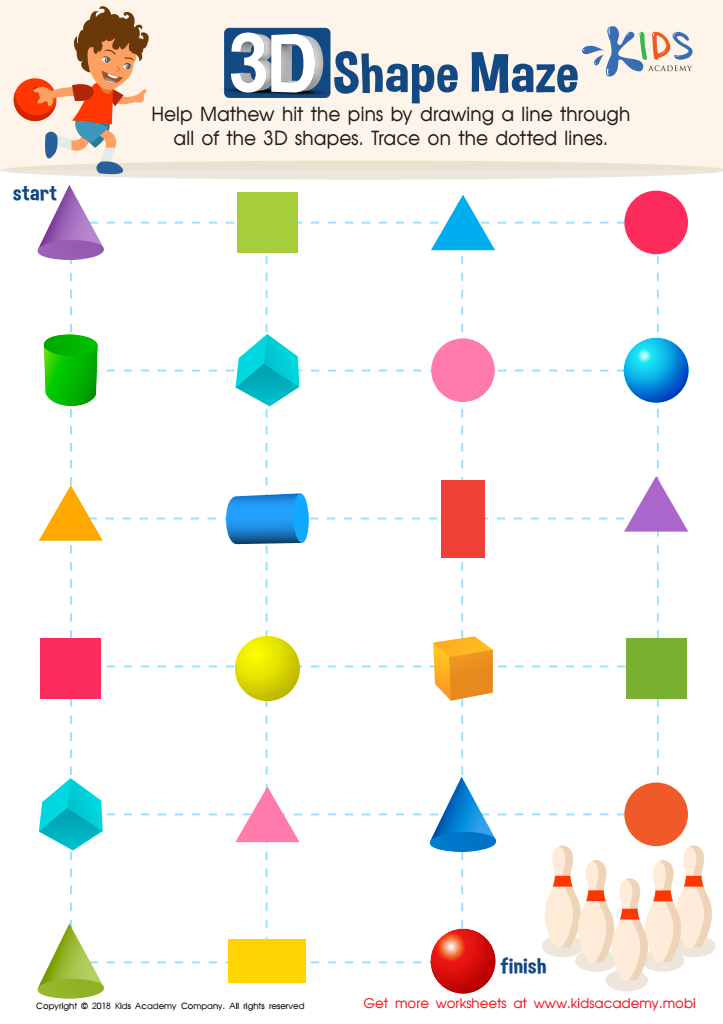
Shapes Maze Geometry Worksheet
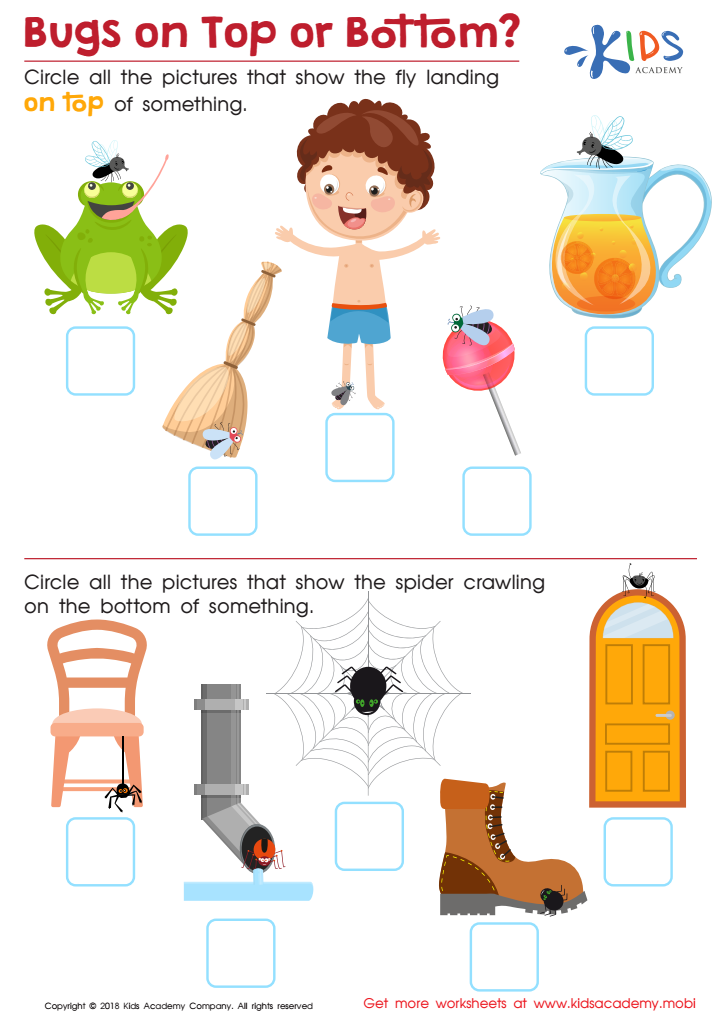
Bugs on Top or Bottom? Worksheet
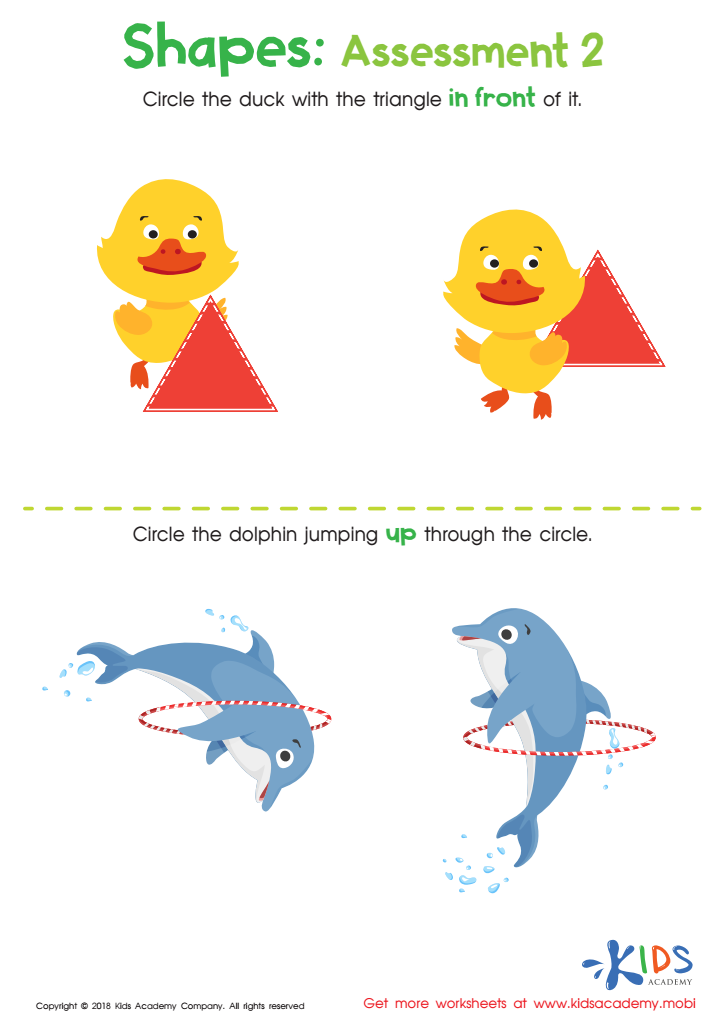
Geometry – Assessment 2 Worksheet








Spatial reasoning and geometry are foundational skills for young children and deserve the attention of both parents and teachers. When children ages 3-5 explore spatial relationships and shapes, they develop critical cognitive and problem-solving abilities. Understanding spatial concepts helps children make sense of the world around them, leading to better navigation of their environment and enhanced awareness of how objects interact in space.
Engaging with geometry at this early age fosters creativity and helps children recognize patterns, symmetry, and measurement. This comprehension is a fundamental building block for later success in subjects like mathematics, science, technology, engineering, and even art. Through playful interactions with blocks, puzzles, and simple organizational tasks, children practice visualizing and manipulating shapes and spatial relationships in their minds.
Moreover, developing strong spatial skills correlates with improved mathematical reasoning. This early exposure sets the stage for numeric and algebraic thinking later in their school years. Encouraging spatial reasoning also supports linguistic skills, as children learn to describe locations, shapes, and transformations.
By fostering an understanding of spatial relationships and geometry between ages 3-5, parents and teachers are investing in the children's long-term academic growth and problem-solving capabilities, nurturing well-rounded individuals equipped for future educational challenges.








