Number comparison Numbers Worksheets for Ages 3-5
5 filtered results
-
From - To
Explore our engaging Number Comparison Worksheets designed for children ages 3-5! These interactive activities help young learners develop essential math skills by comparing numbers in a fun and educational way. Through colorful visuals and simple exercises, kids will learn to identify larger and smaller numbers, enhancing their understanding of quantity and value. Our worksheets are tailored to meet early childhood education standards, making them perfect for at-home learning or classroom use. Encourage your child’s mathematical curiosity and build a strong foundation for future math success with our thoughtfully crafted resources. Start your child’s journey to number confidence today!
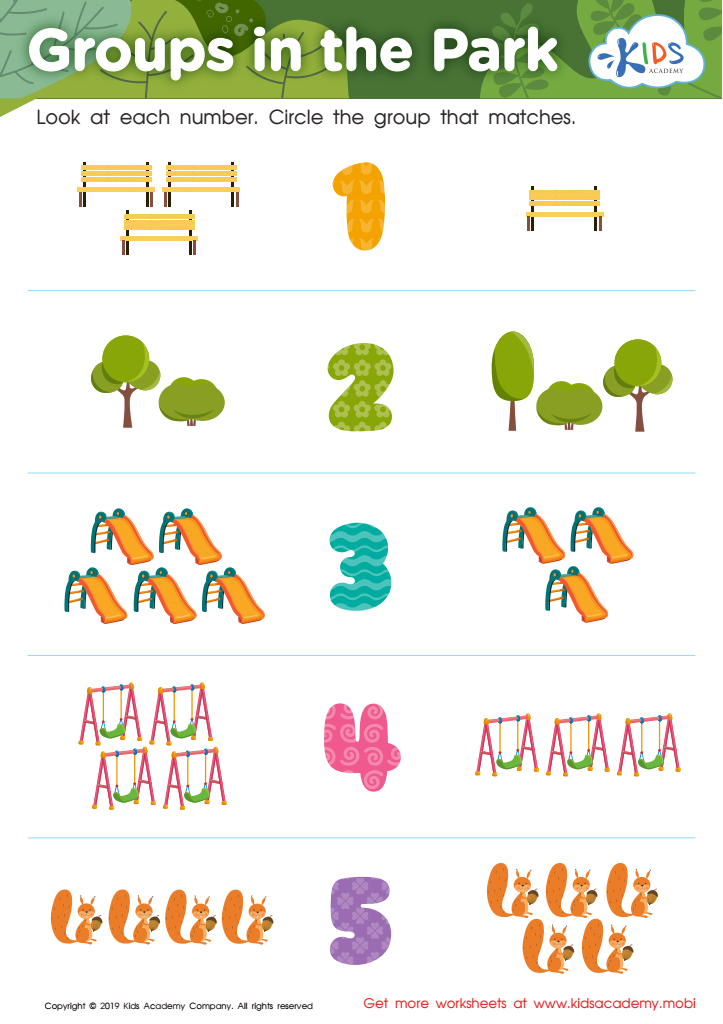
Groups in the Park Worksheet
 Assign to My Students
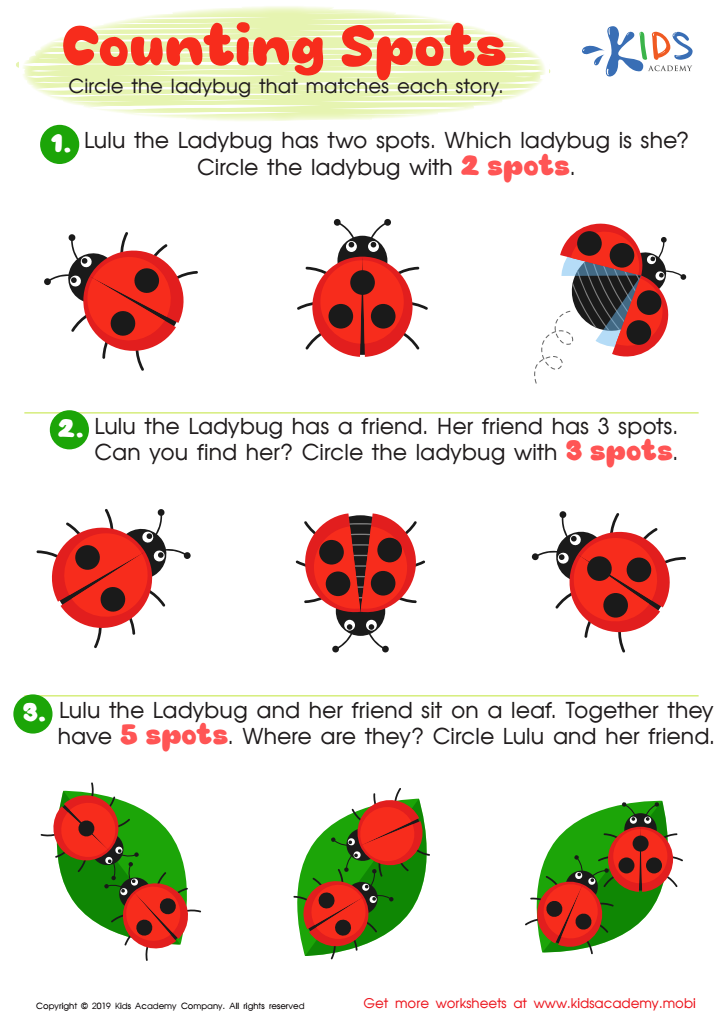
Counting Spots Worksheet
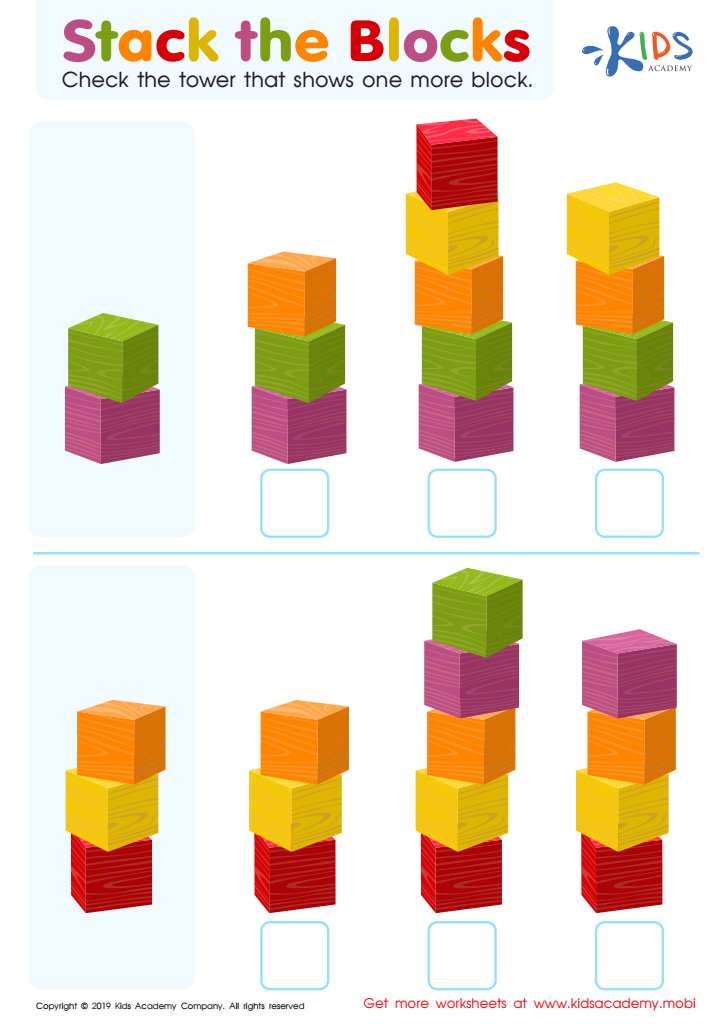
Stack the Blocks Worksheet
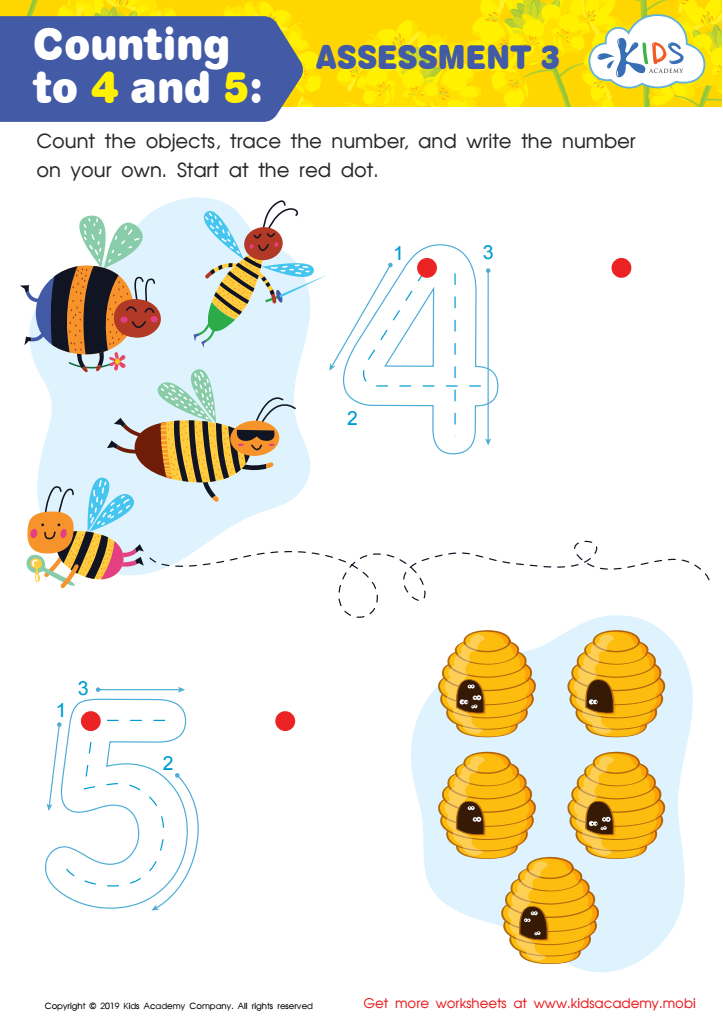
Counting to 4 and 5: Assessment 3 Worksheet
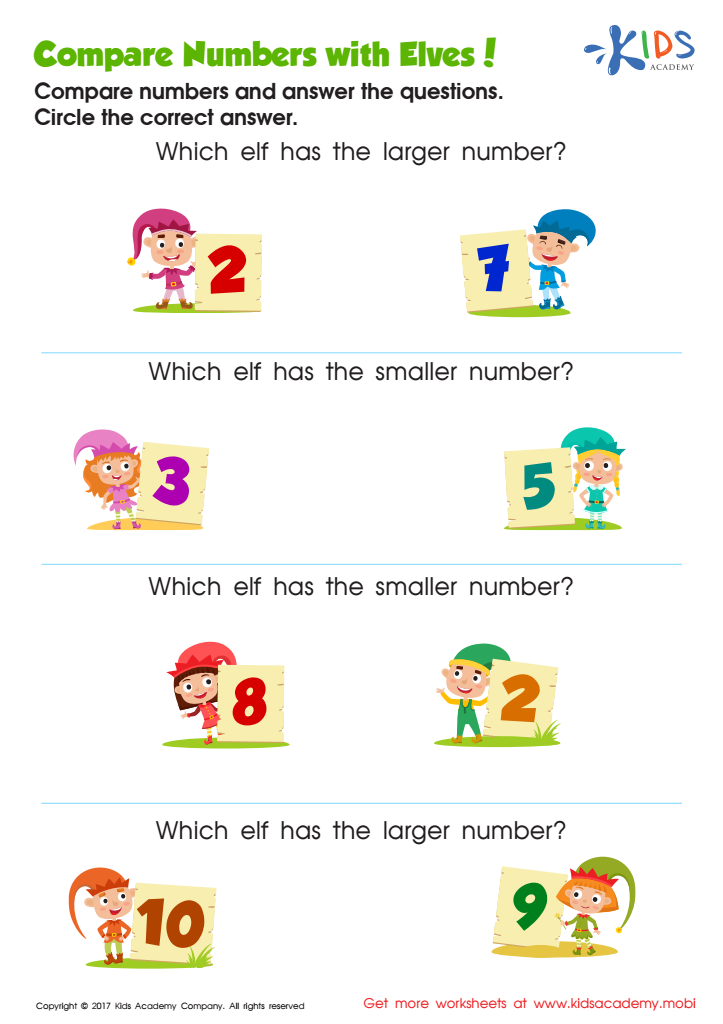
Comparing Numbers Worksheet for Kindergarten








Number comparison is an essential skill for children ages 3-5 as it lays the foundation for mathematical understanding. During these early years, children begin to develop crucial cognitive and problem-solving skills, and understanding how to compare quantities fosters these abilities.
By focusing on number comparison, parents and teachers can facilitate the development of critical thinking. Children learn to recognize and differentiate between larger and smaller quantities, which helps them to organize their understanding of numbers and build a sense of number sense. This skill is pivotal not only for reviewing basic math concepts but also for later subjects like addition, subtraction, and ultimately more complex mathematical operations.
Moreover, engaging in activities that encourage number comparison can promote language development. As children discuss their observations, they learn new vocabulary related to numbers and quantities. This fosters both verbal skills and enthusiasm for learning.
Furthermore, integrating number comparison into playful, everyday situations enhances engagement and motivation. Whether counting apples, comparing toys, or sorting colors, these activities make math relatable and fun.
In summary, number comparison is vital in early education and helps equip children with the necessary skills for future academic success while fostering curiosity and interaction in the learning process.








