Animal recognition Math Worksheets for Ages 3-5 - Page 5
108 filtered results
-
From - To
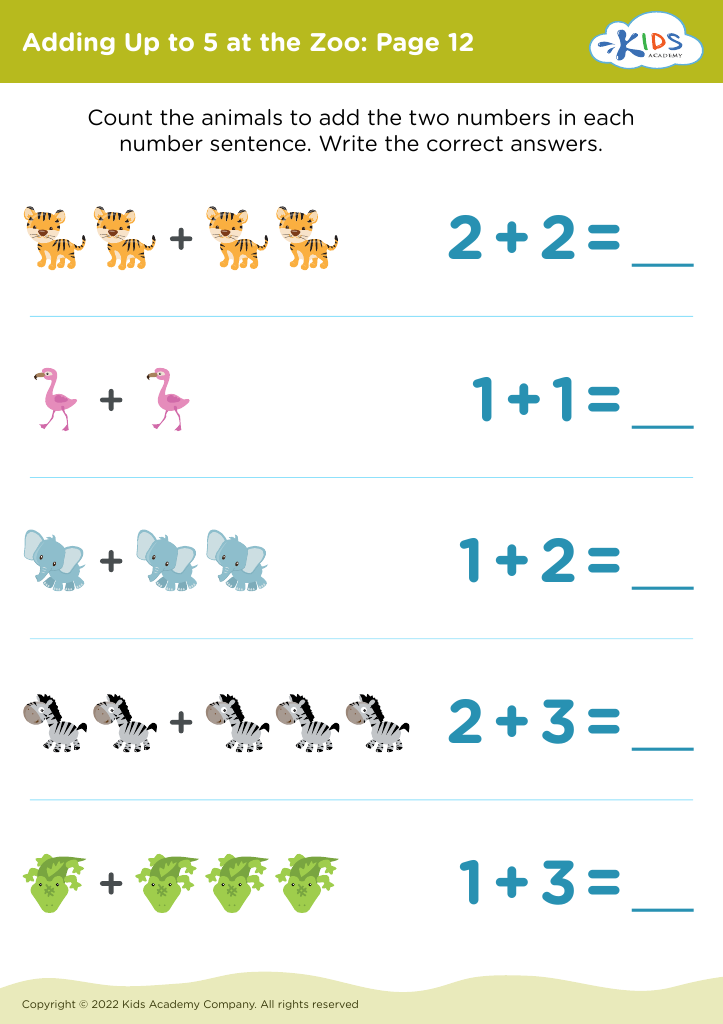
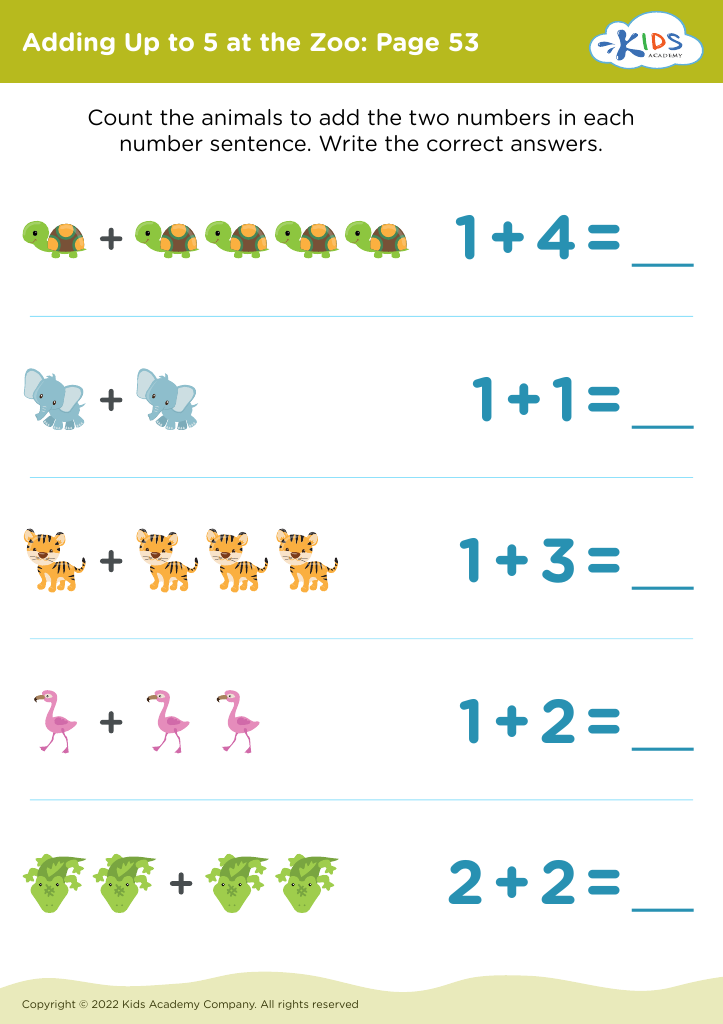
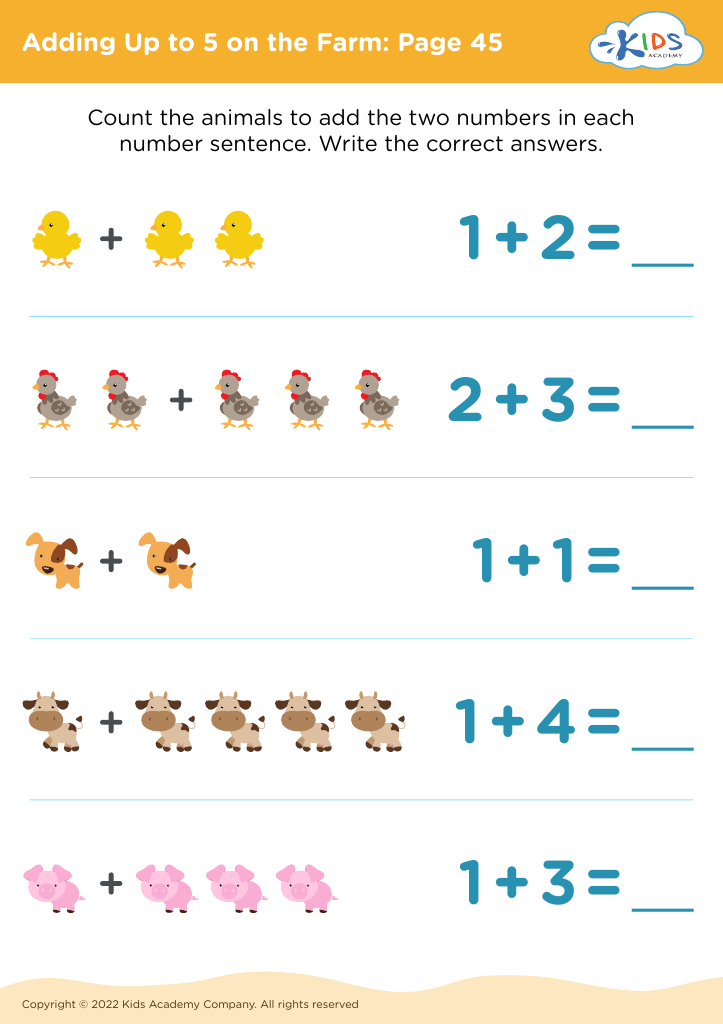
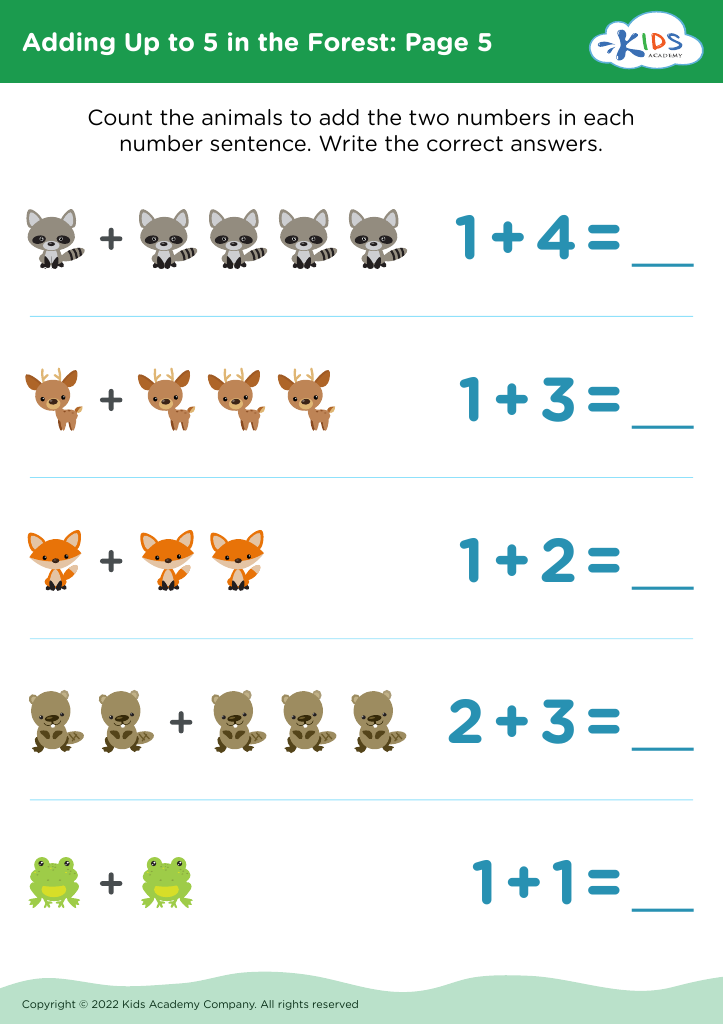
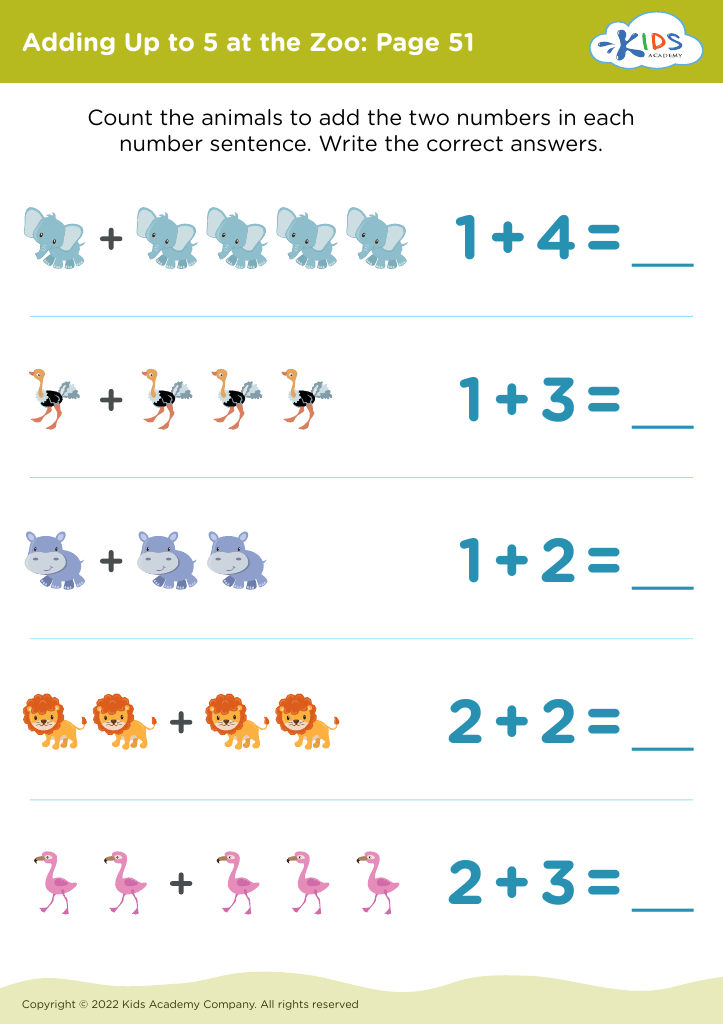
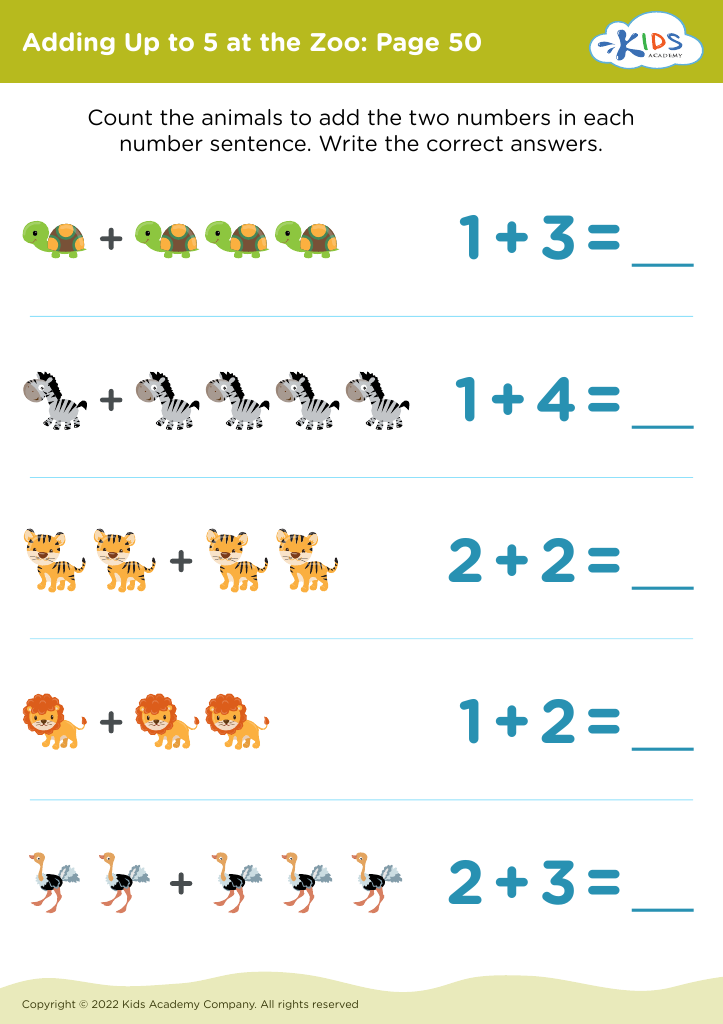
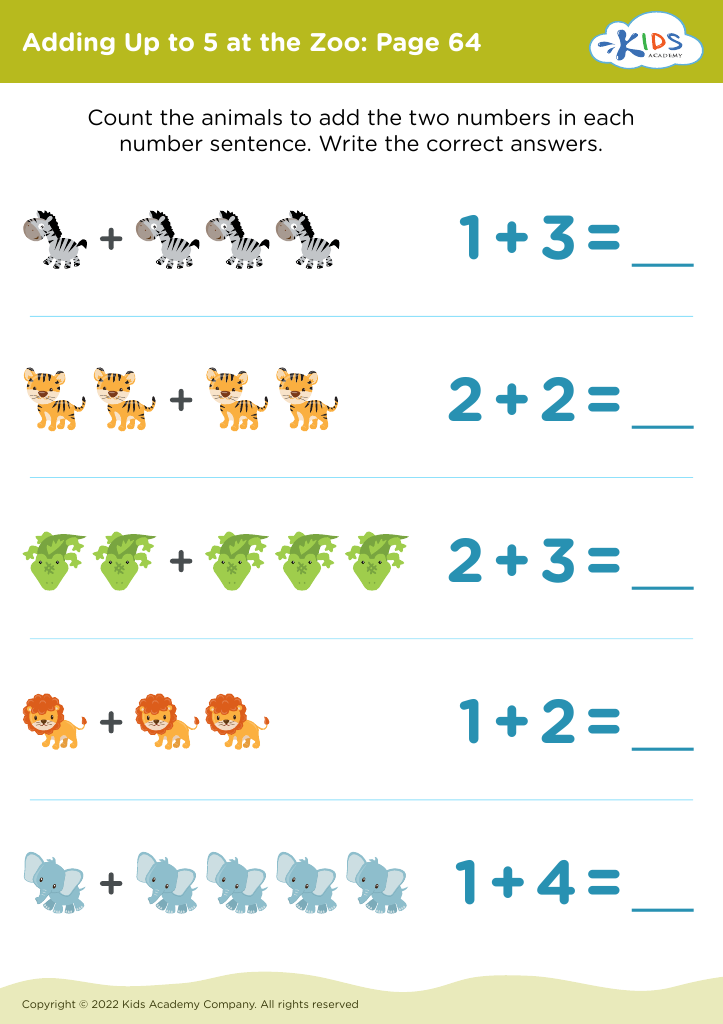
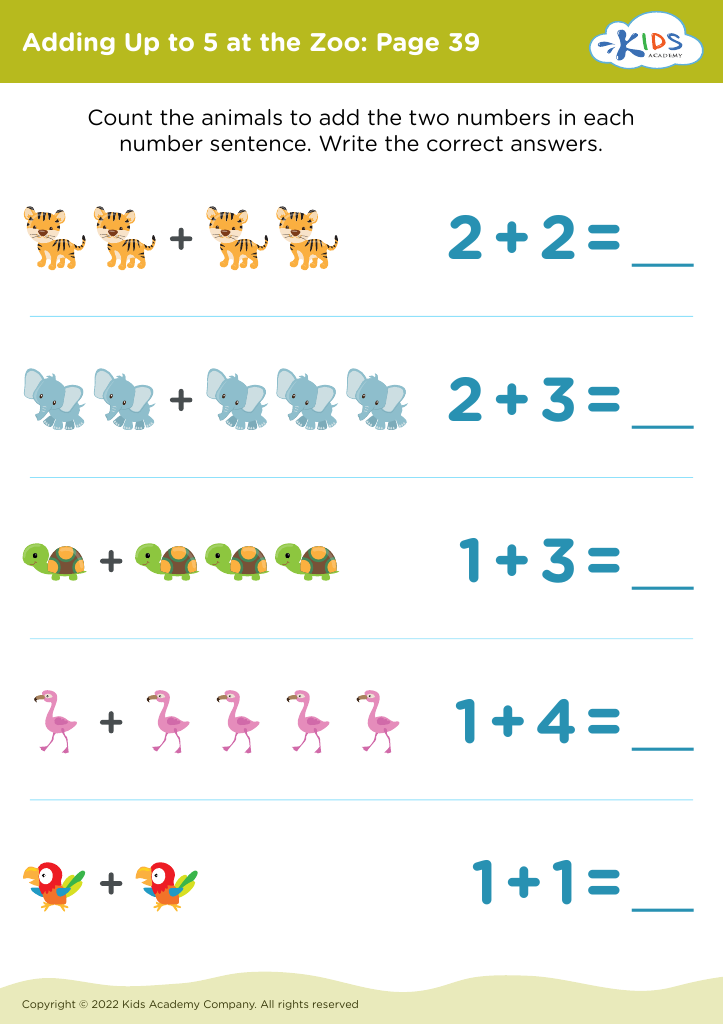
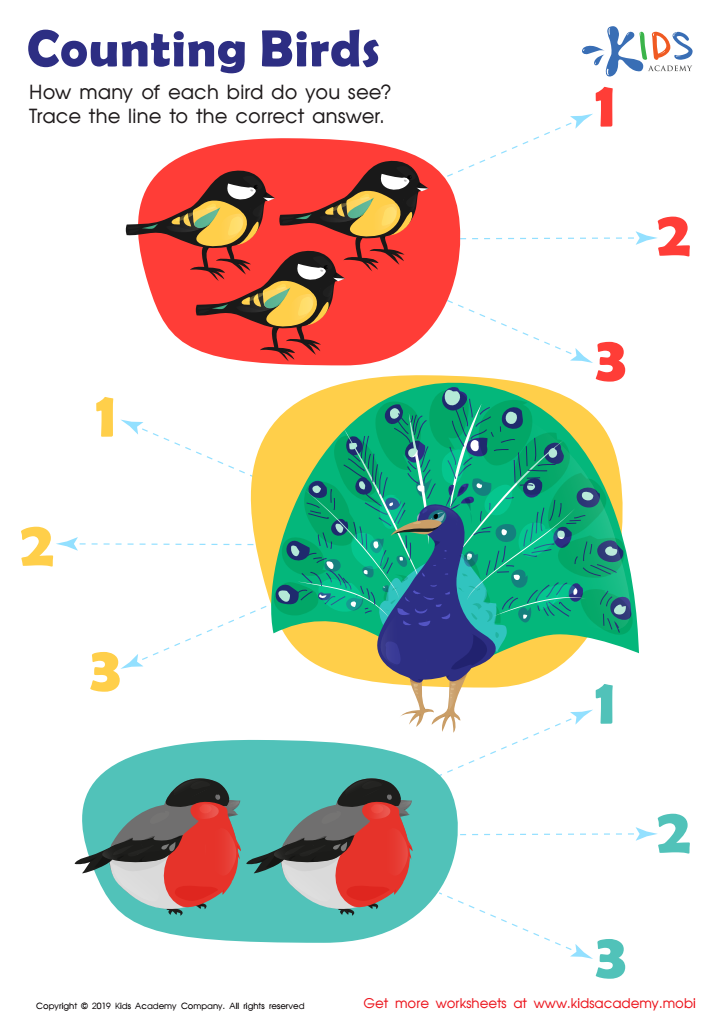
Counting Birds Worksheet
 Assign to My Students
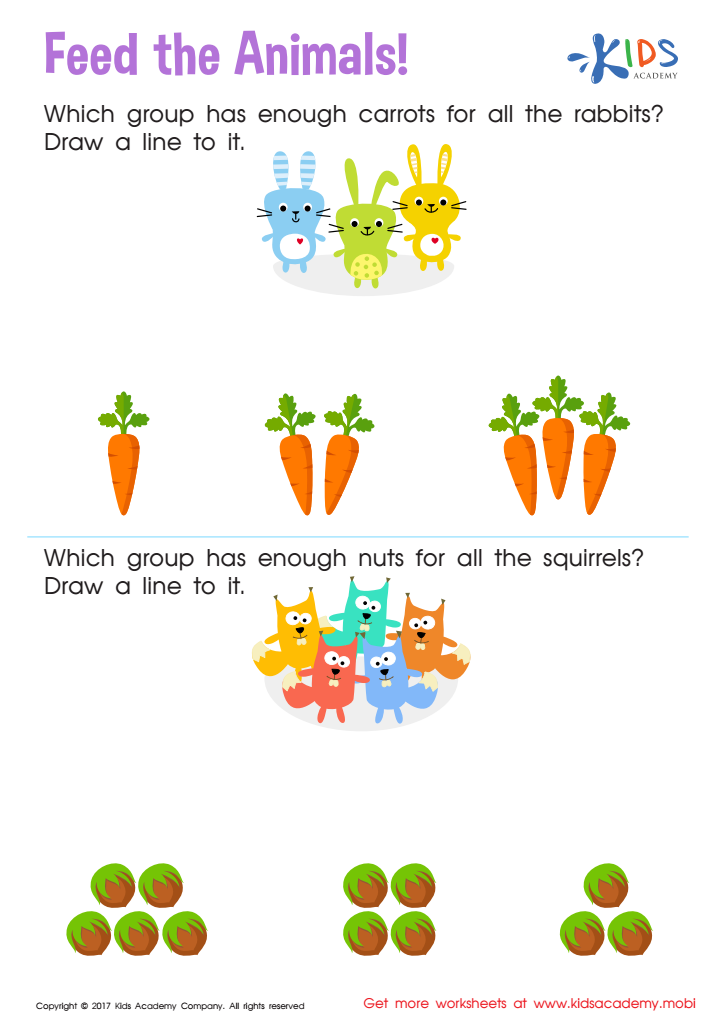
Count and Match: Feed the Animals Worksheet
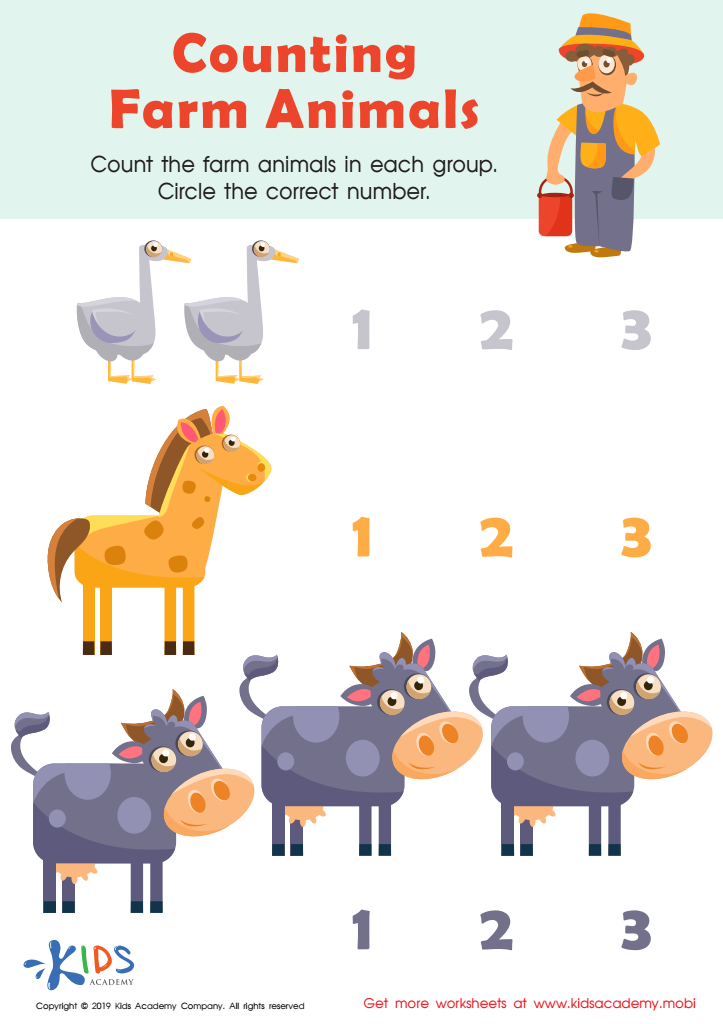
Counting Farm Animals Worksheet
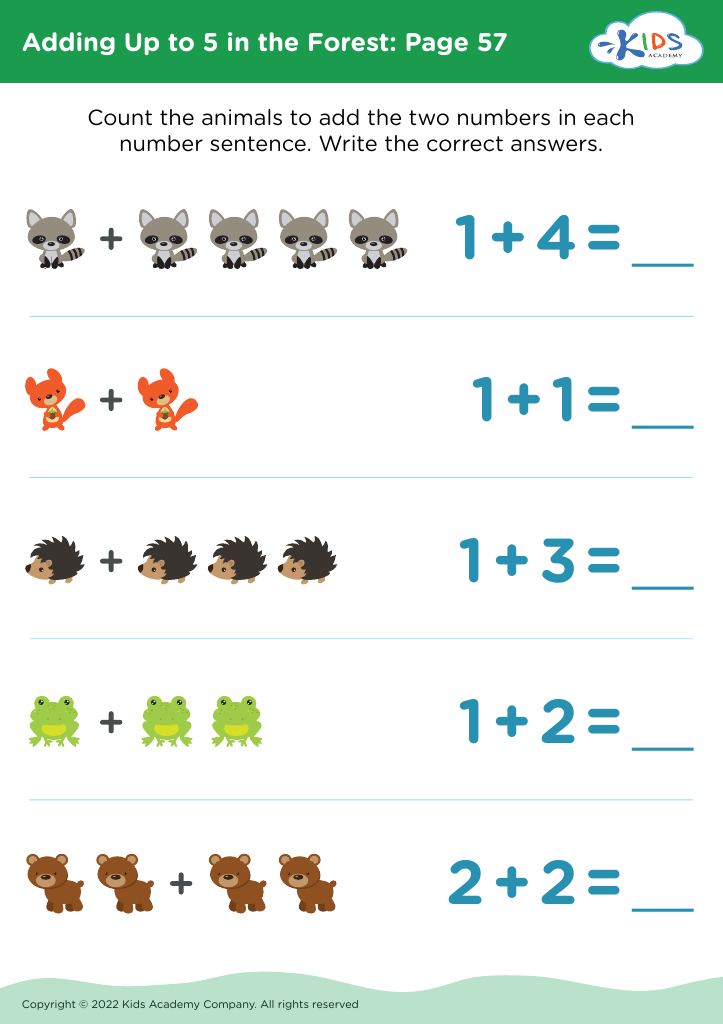








Animal recognition math for ages 3-5 is essential for several reasons. Firstly, it merges foundational math skills with engaging content, making learning both fun and effective. At this age, children are highly curious about animals, allowing educators and parents to leverage this natural interest to introduce math concepts such as counting, sorting, and spatial awareness.
Secondly, recognizing animals provides real-world connections, which help young learners understand and apply mathematical concepts in a meaningful way. For example, children can count the number of legs different animals have, compare sizes, or categorize them by color and habitat, deepening their comprehension of both math and ecological studies.
Also, incorporating animal recognition into early math learning fosters critical thinking and problem-solving skills. As children classify, compare, and analyze different animals, they develop cognitive capabilities that are crucial for lifelong learning.
Moreover, collaborative activities involving animal recognition can enhance social skills as children work together to solve challenges, share thoughts, and explore concepts. Overall, introducing animal recognition in mathematics promotes not only essential academic skills but also nurtures a sense of curiosity, compassion for living beings, and a strong foundation for holistic, integrated learning.








