Check out this FREE Trial Lesson on Math for age 3-5!

L

Favorites
With answer key
Interactive
  • 3-5
  • Basic Addition Skills
  • Math
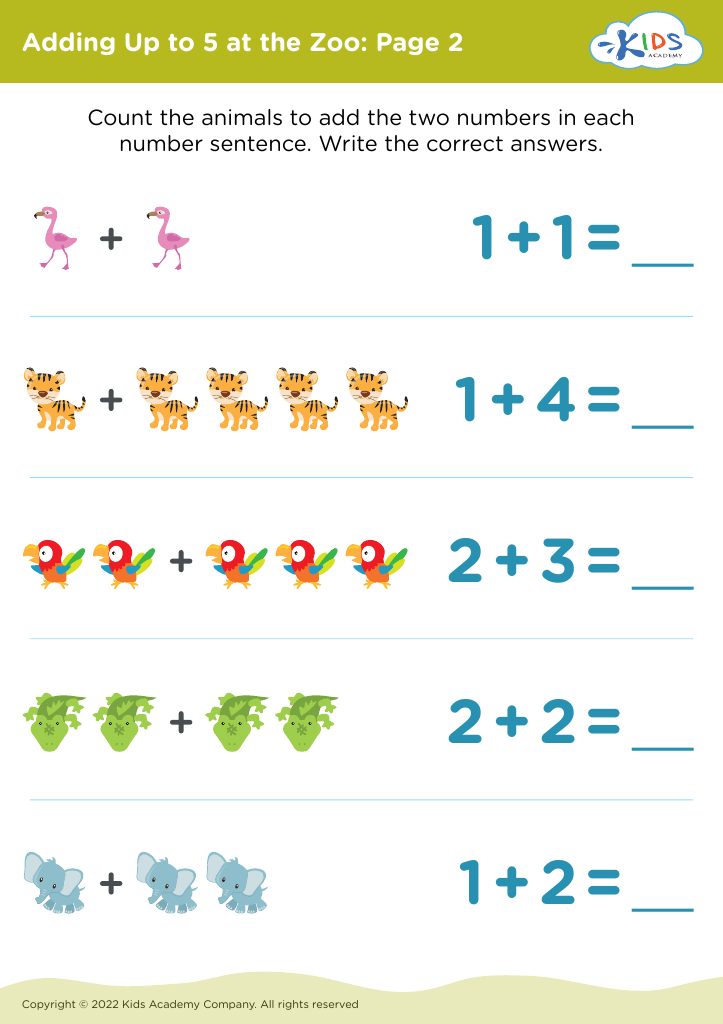
Adding Up to 5 at the Zoo: Page 2

Adding Up to 5 at the Zoo: Page 2

Adding Up to 5 at the Zoo: Page 2
Worksheet
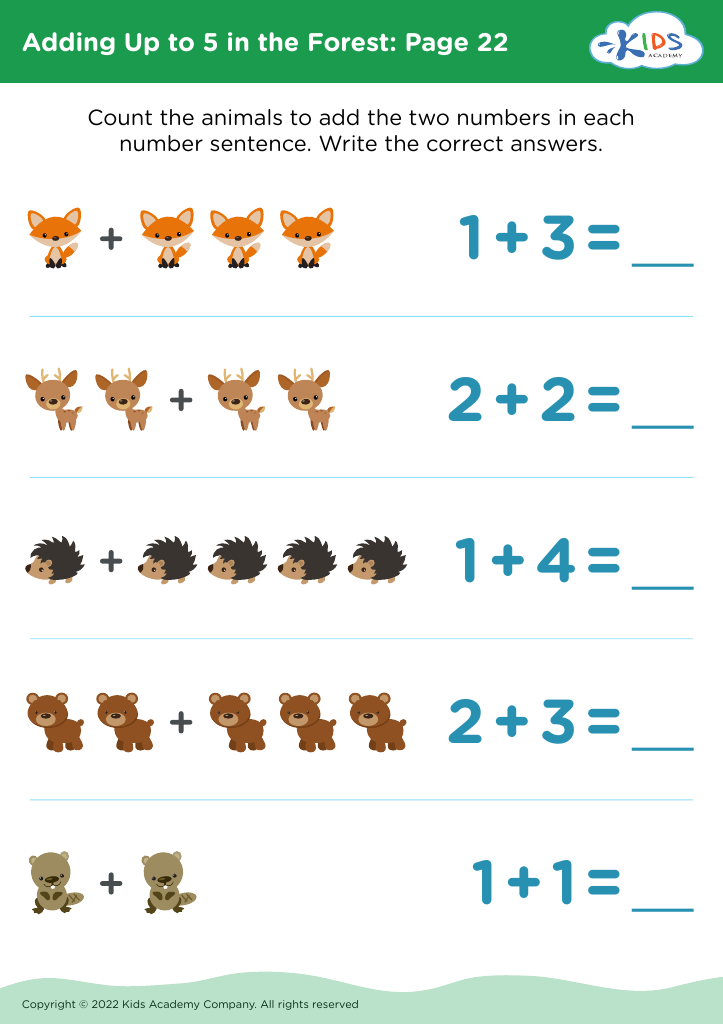
Adding Up to 5 in the Forest: Page 22
Worksheet
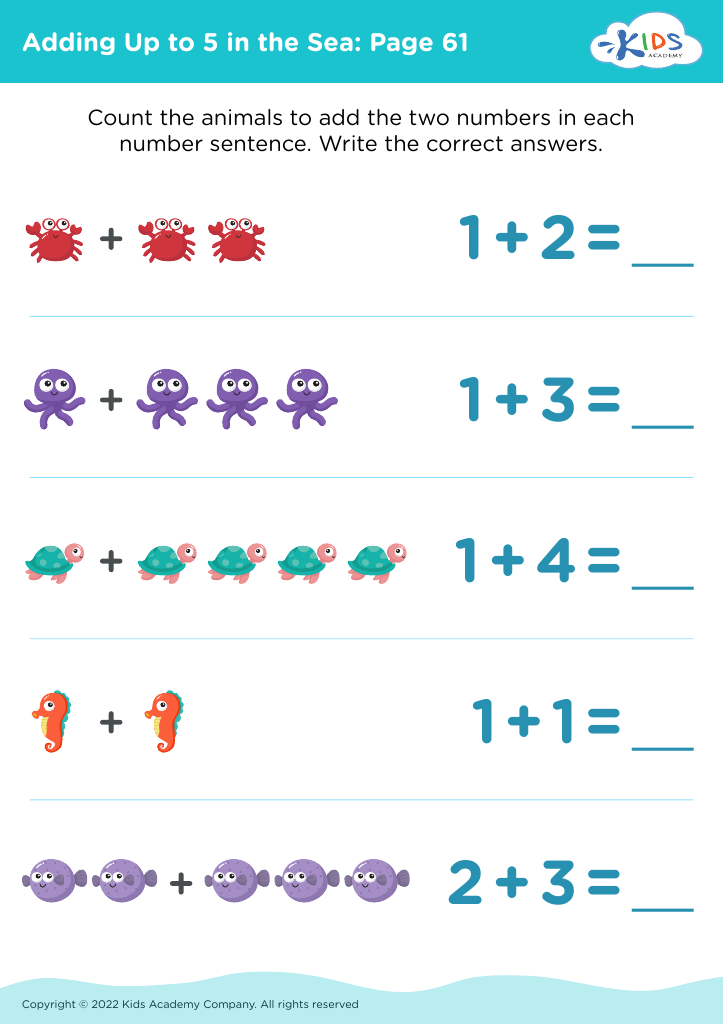
Adding Up to 5 in the Sea: Page 61
Worksheet
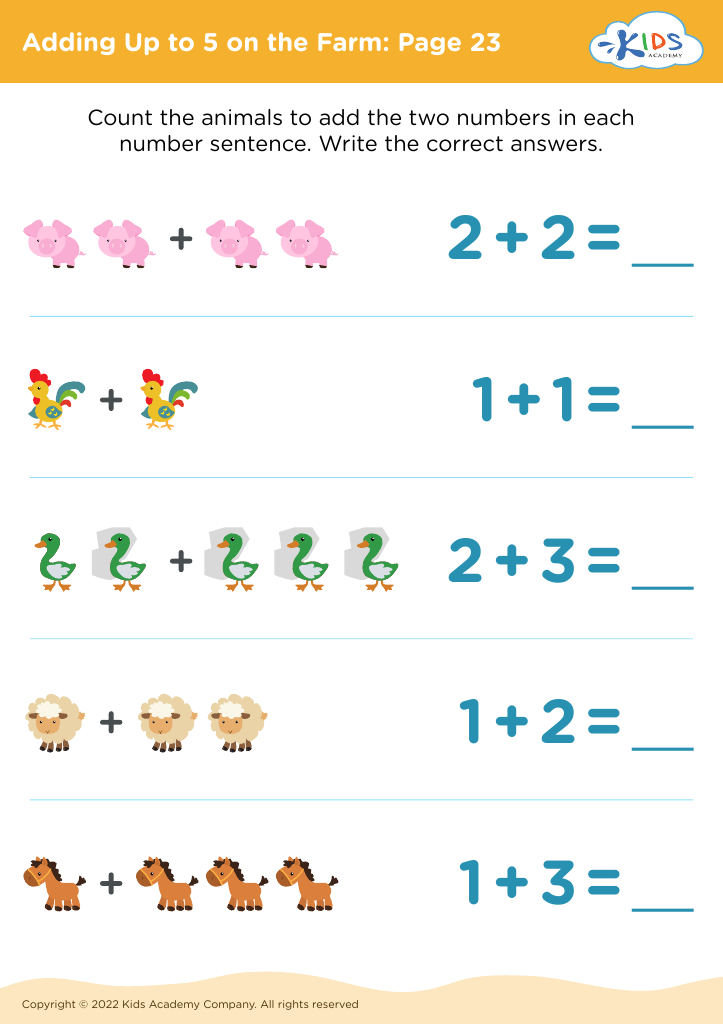
Adding Up to 5 on the Farm: Page 23
Worksheet
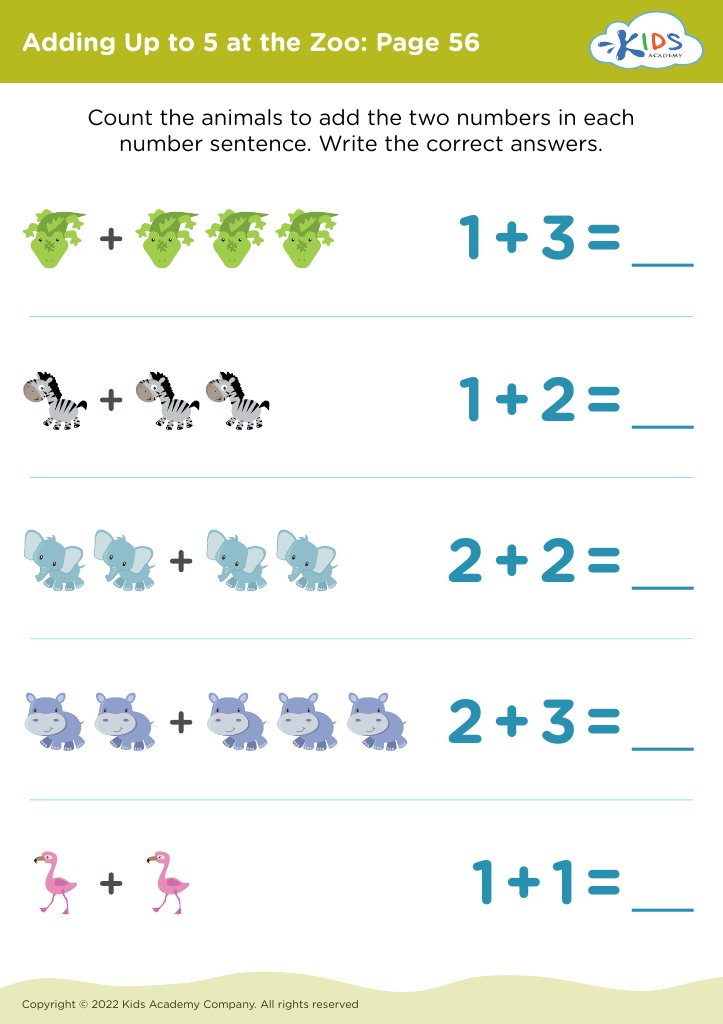
Adding Up to 5 at the Zoo: Page 56
Worksheet
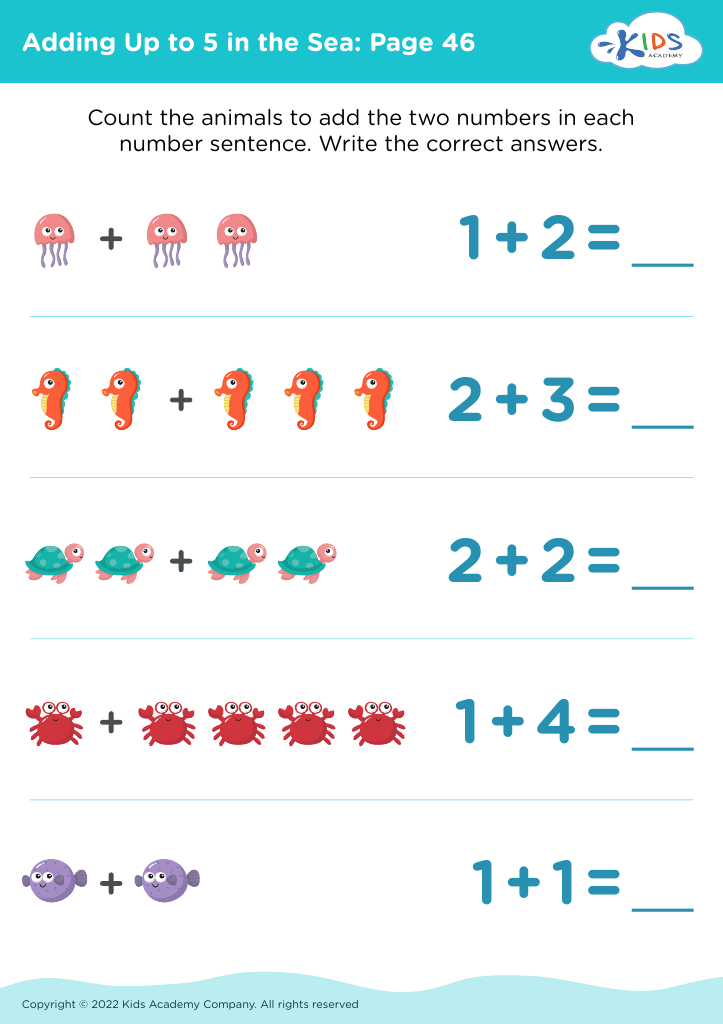
Adding Up to 5 in the Sea: Page 46
Worksheet
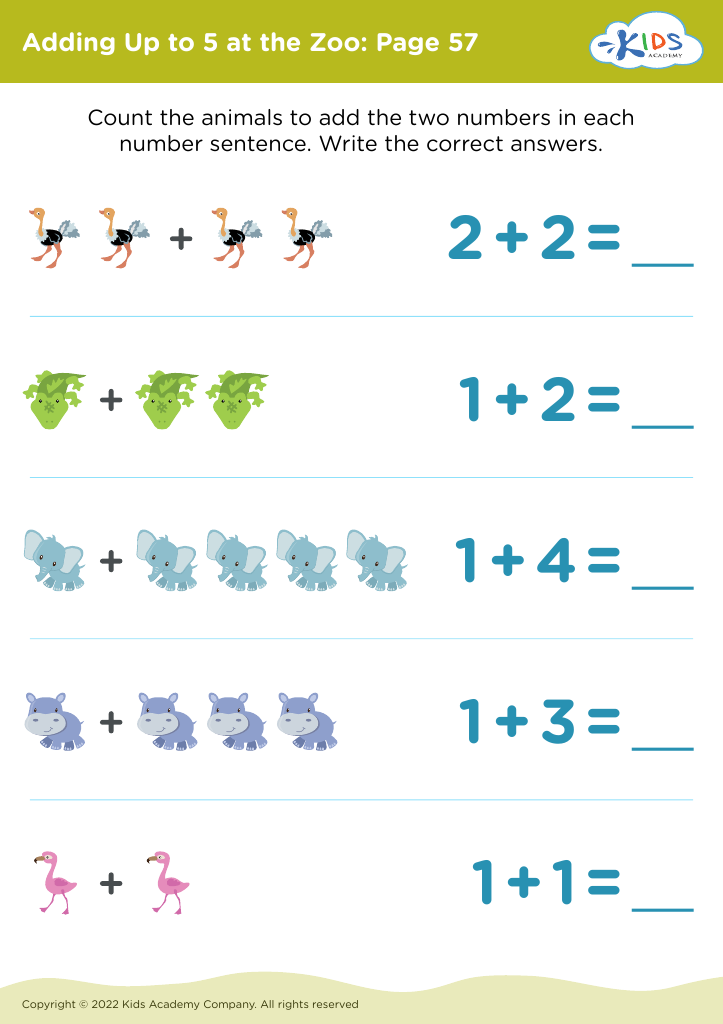
Adding Up to 5 at the Zoo: Page 57
Worksheet
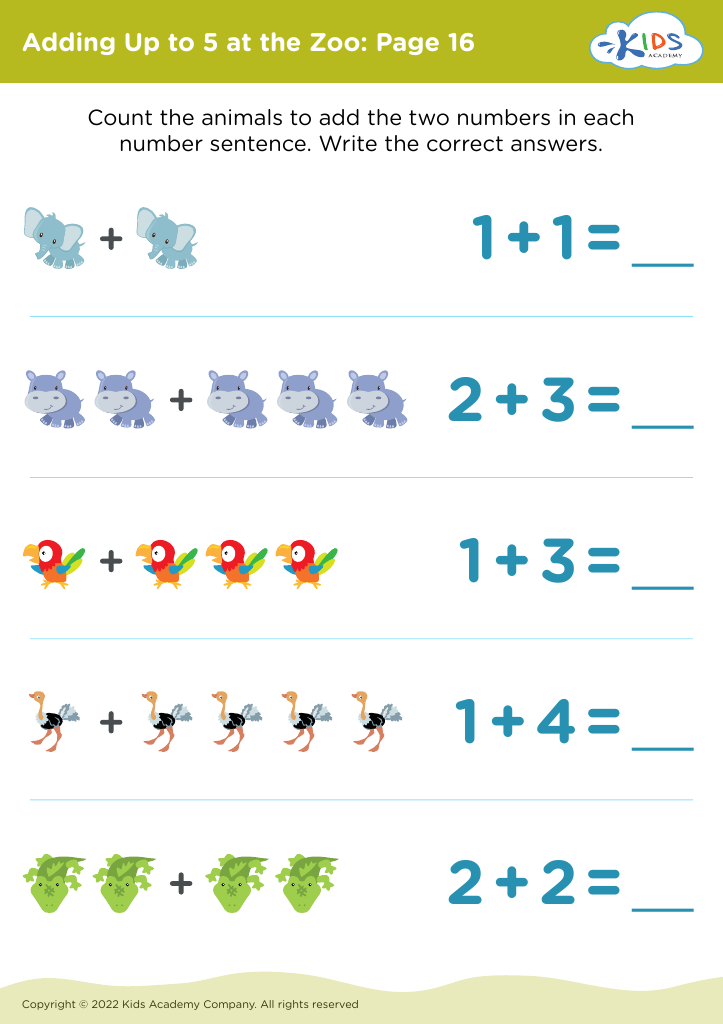
Adding Up to 5 at the Zoo: Page 16
Worksheet
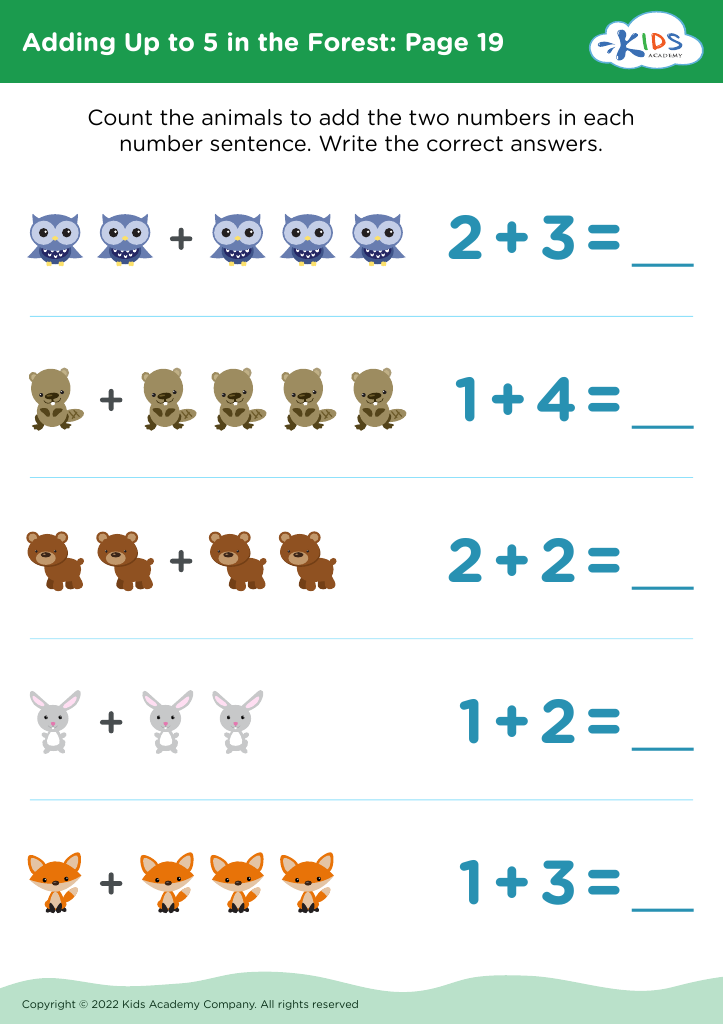
Adding Up to 5 in the Forest: Page 19
Worksheet
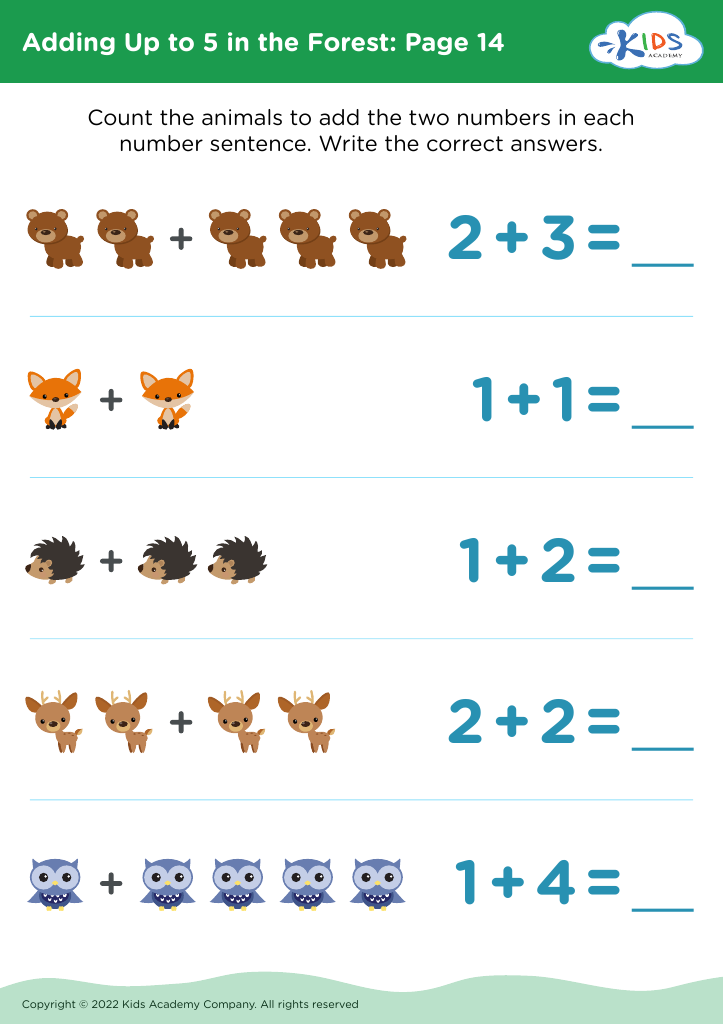
Adding Up to 5 in the Forest: Page 14
Worksheet
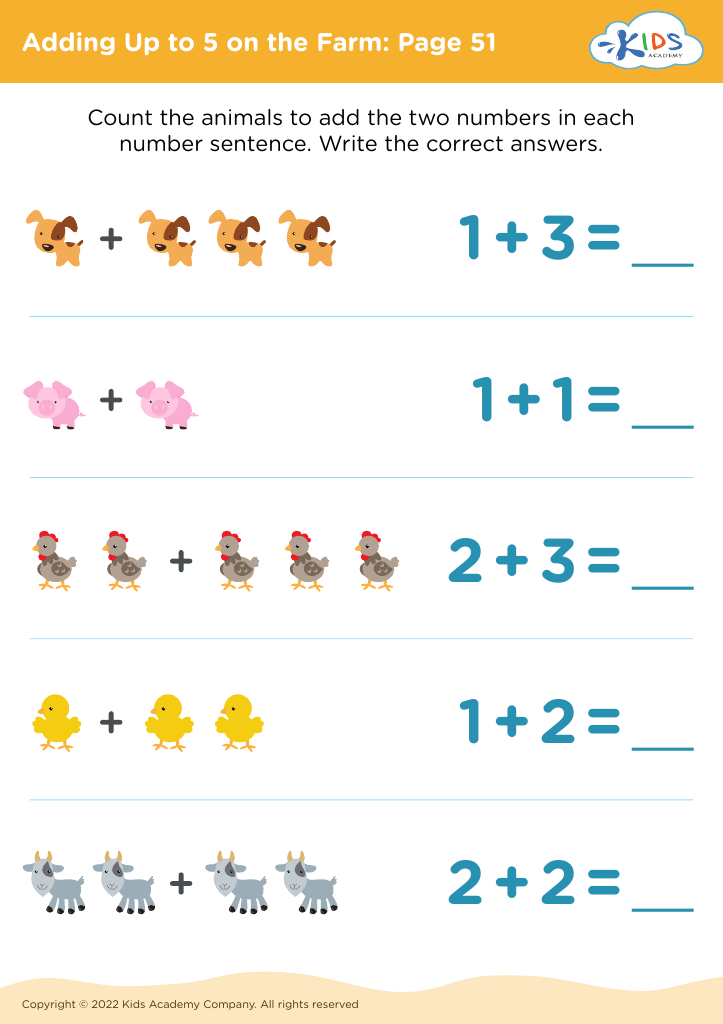
Adding Up to 5 on the Farm: Page 51
Worksheet
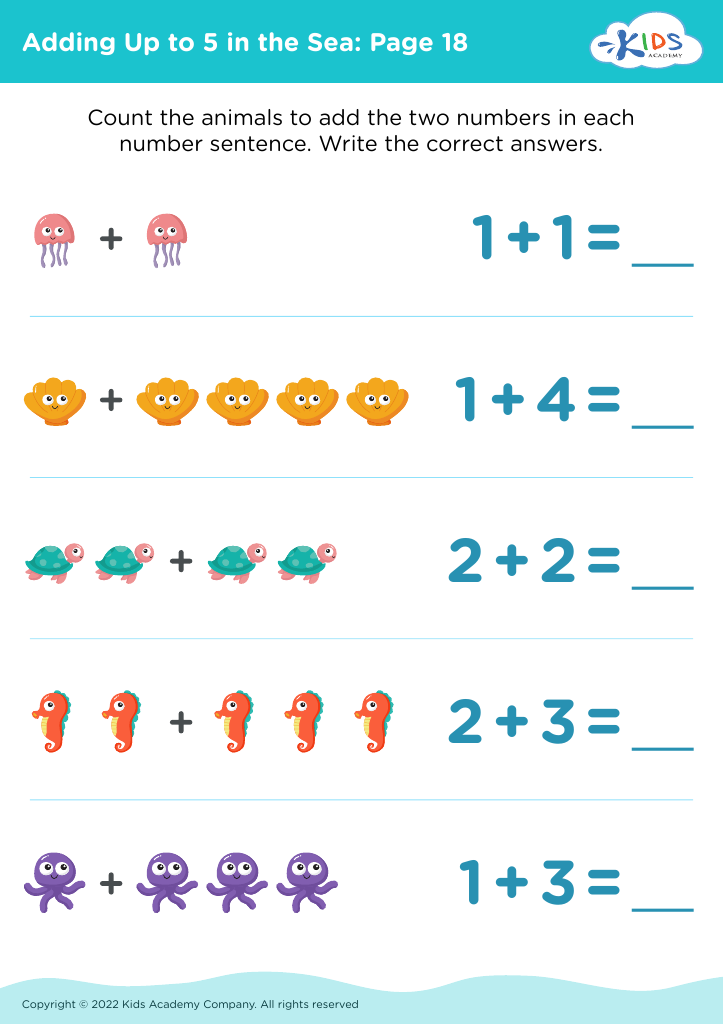
Adding Up to 5 in the Sea: Page 18
Worksheet
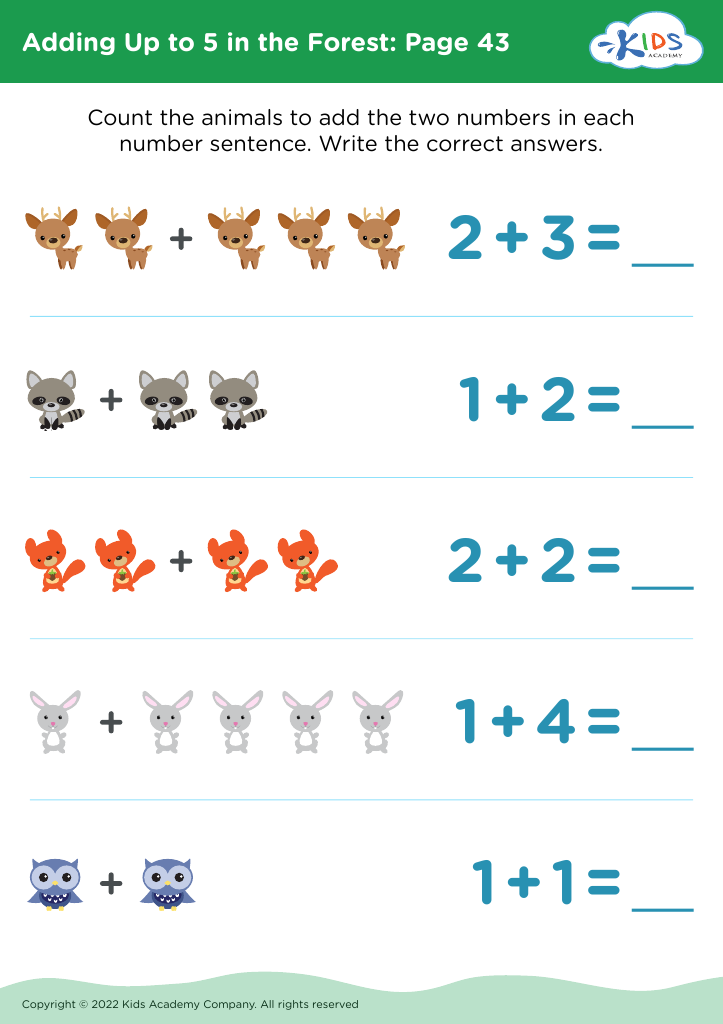
Adding Up to 5 in the Forest: Page 43
Worksheet
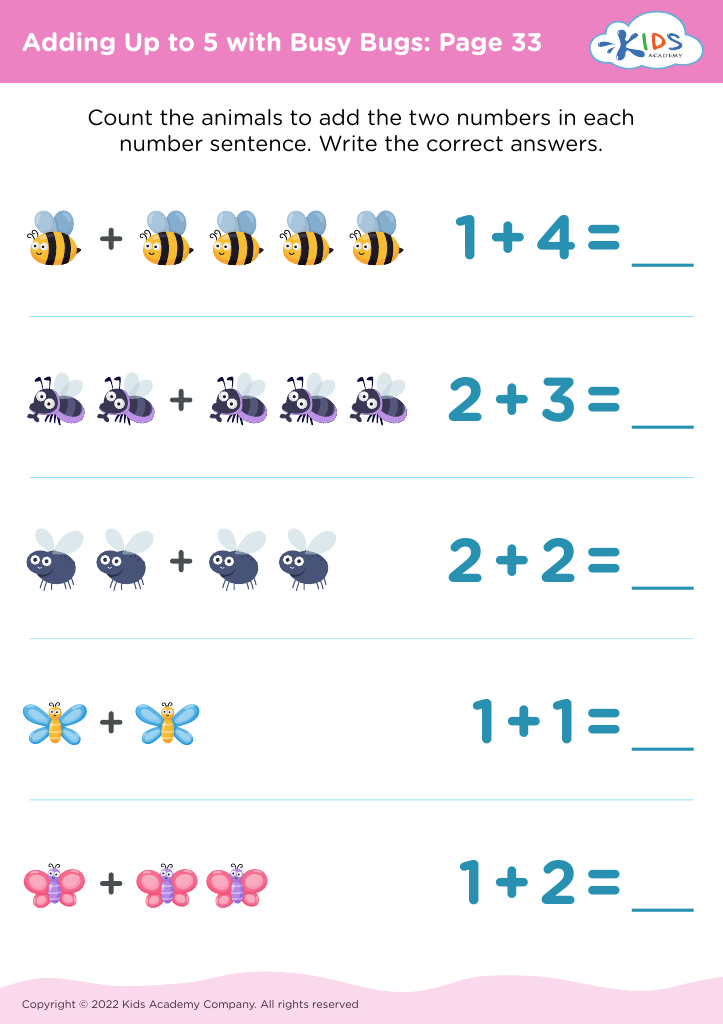
Adding Up to 5 with Busy Bugs: Page 33
Worksheet
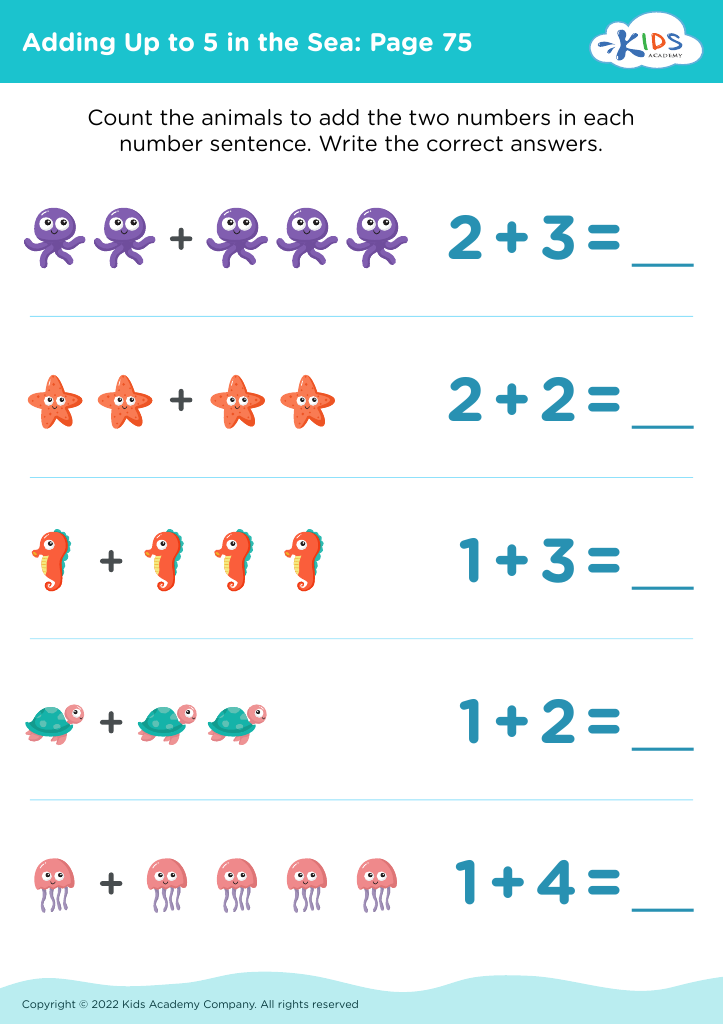
Adding Up to 5 in the Sea: Page 75
Worksheet
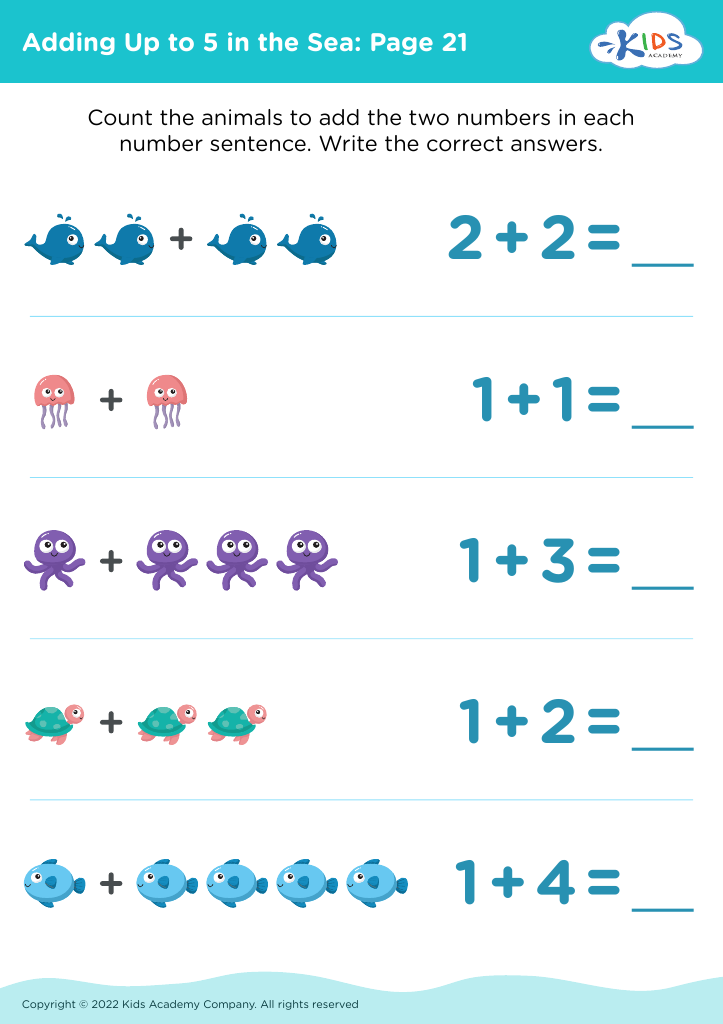
Adding Up to 5 in the Sea: Page 21
Worksheet
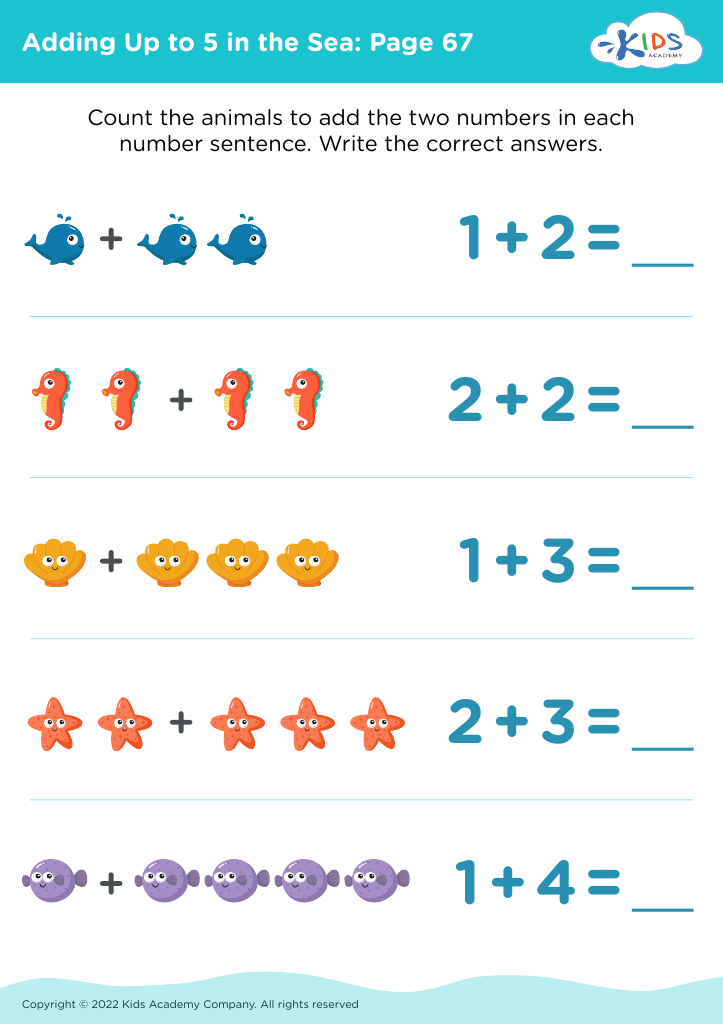
Adding Up to 5 in the Sea: Page 67
Worksheet
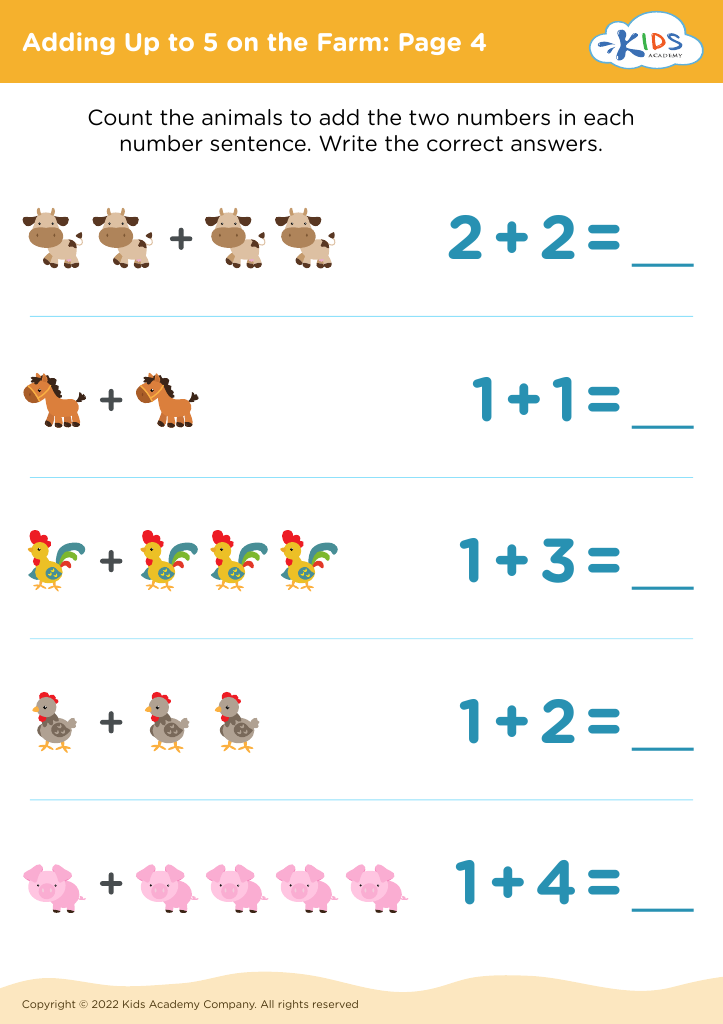
Adding Up to 5 on the Farm: Page 4
Worksheet
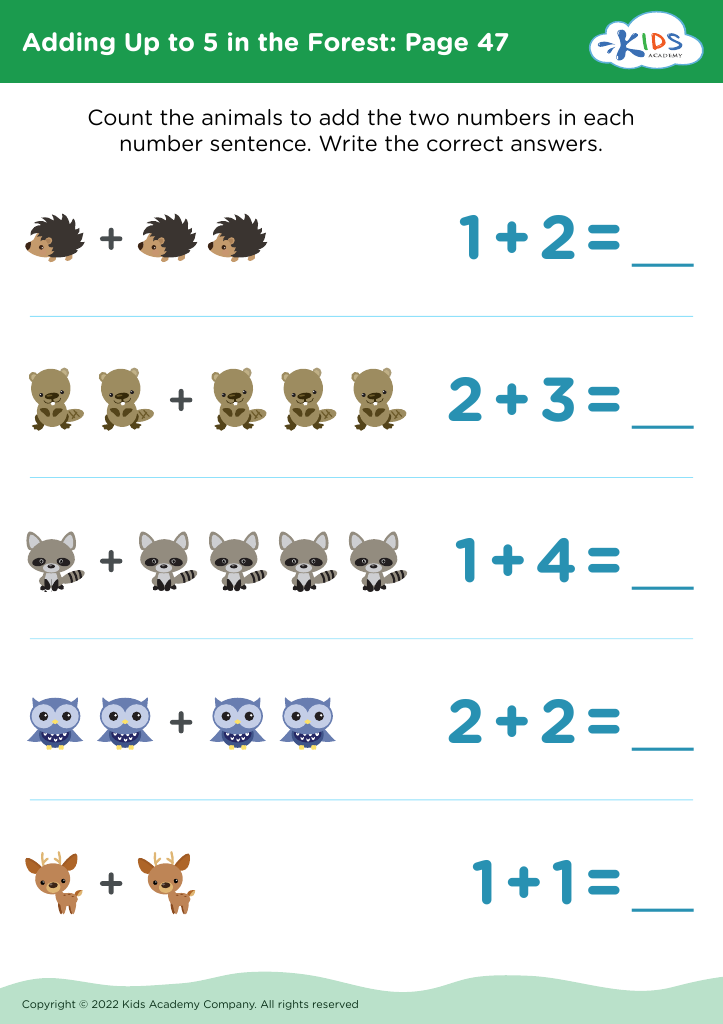
Adding Up to 5 in the Forest: Page 47
Worksheet
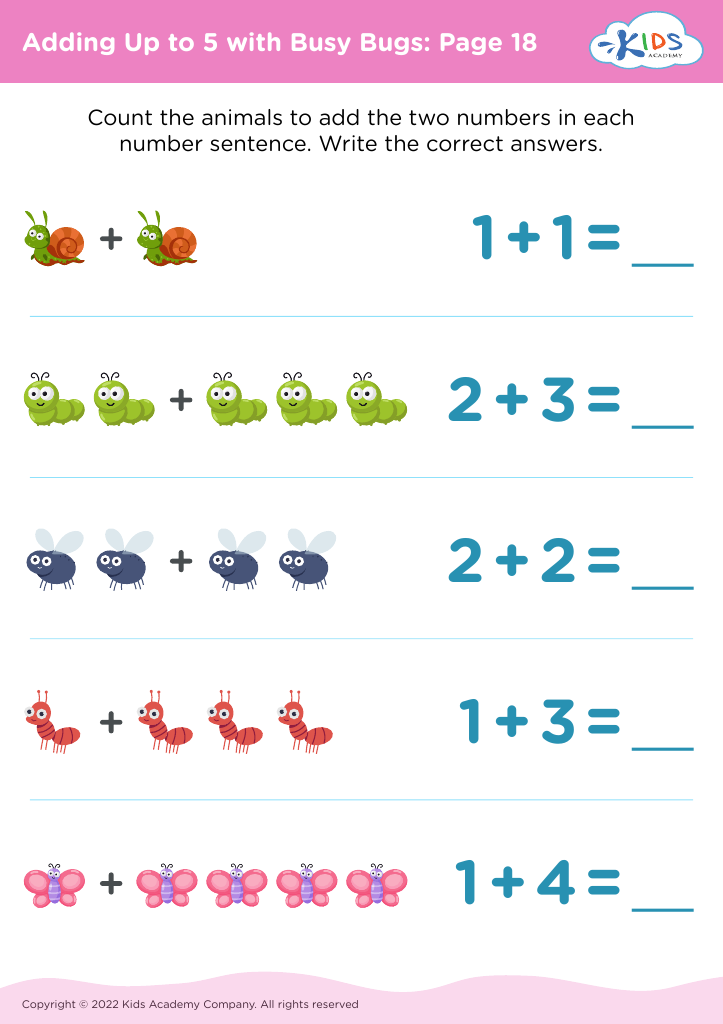
Adding Up to 5 with Busy Bugs: Page 18
Worksheet
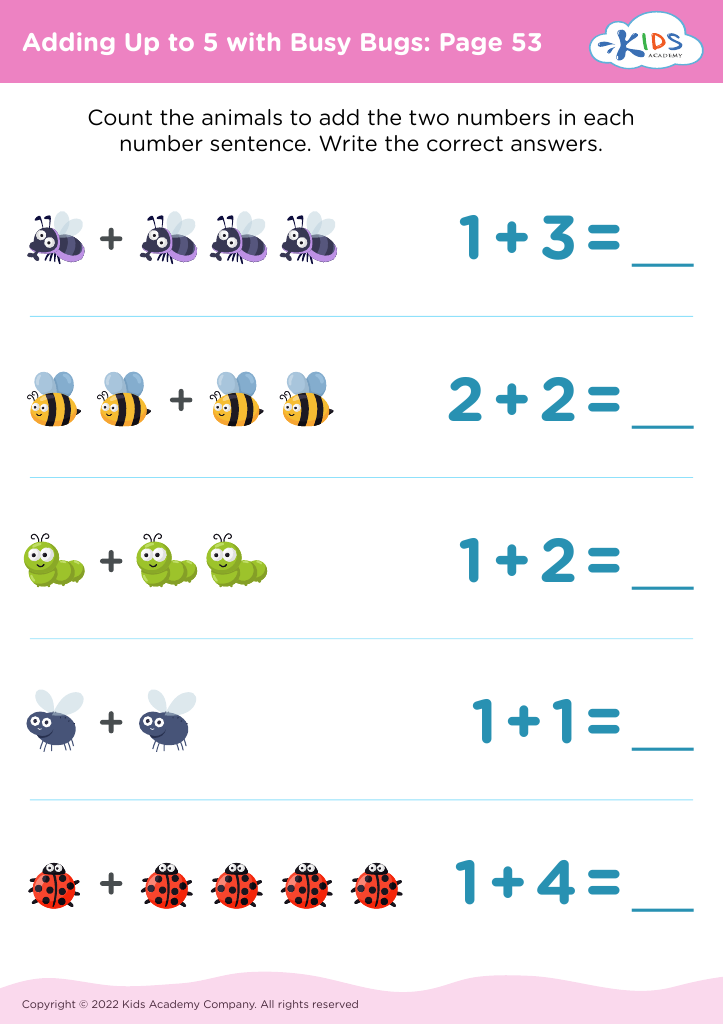
Adding Up to 5 with Busy Bugs: Page 53
Worksheet
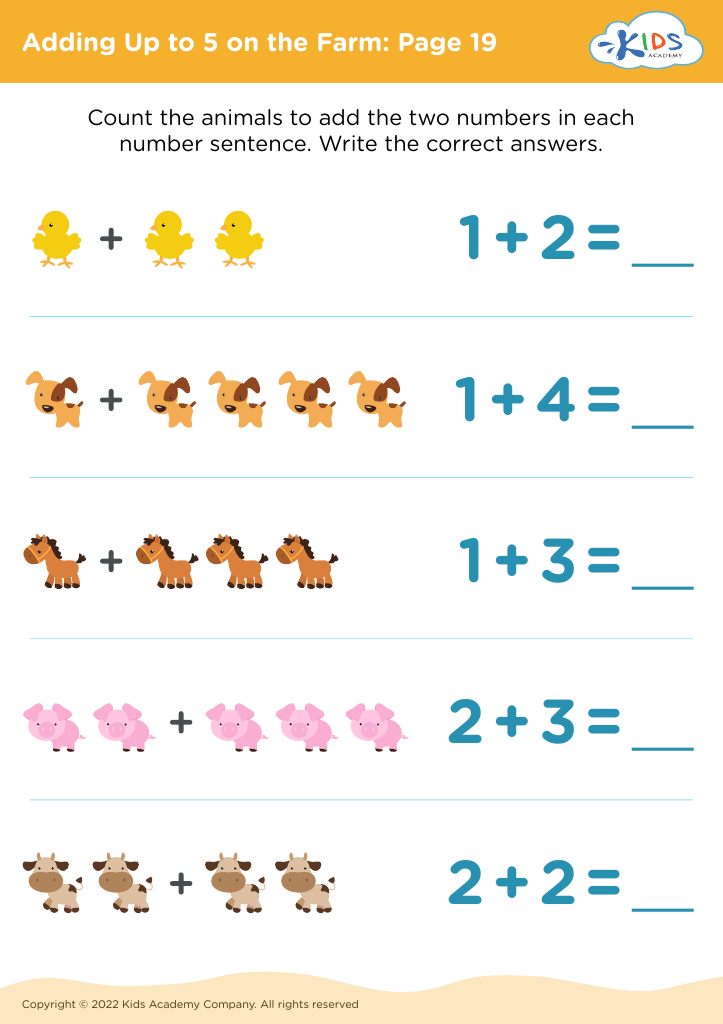
Adding Up to 5 on the Farm: Page 19
Worksheet
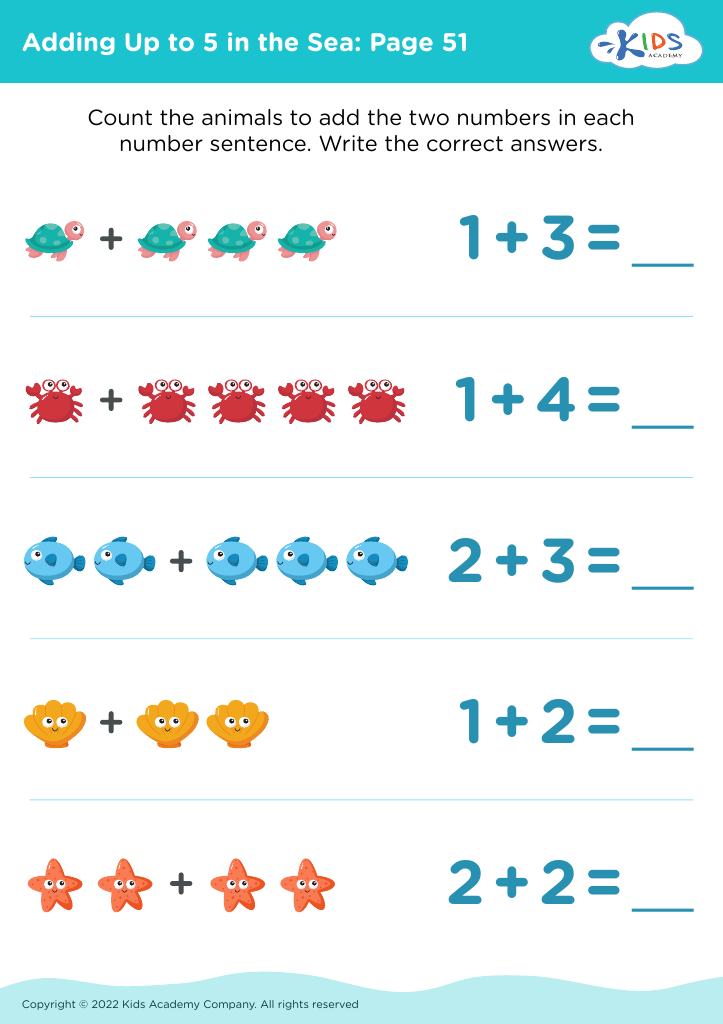
Adding Up to 5 in the Sea: Page 51
Worksheet
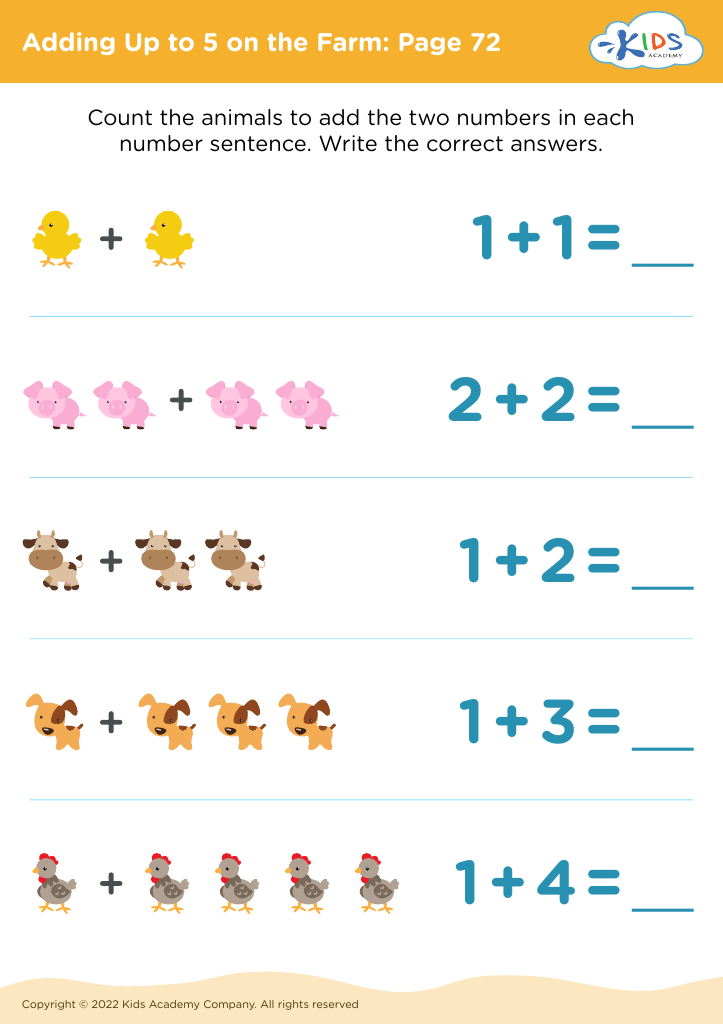
Adding Up to 5 on the Farm: Page 72
Worksheet


Basic addition skills are essential during the formative years of ages 3-5, as they lay the foundation for a child's mathematical understanding and overall cognitive development. At this young age, children are naturally curious and eager to learn, making it the perfect time to introduce concepts such as counting, number recognition, and simple addition.

Engaging children in basic addition using everyday objects, colorful visuals, or interactive games makes the learning experience enjoyable and memorable. These experiences enhance a child's critical thinking and problem-solving skills, enabling them to make real-world connections with math. Furthermore, developing these skills promotes early numeracy, which is crucial for academic success in later years.

Moreover, proficiency in addition boosts a child's confidence and fosters a positive attitude towards learning, reducing anxiety about math as they progress through school. For parents and teachers, investing time in cultivating basic addition skills supports not only individual children's growth but also contributes to a strong foundation for group learning dynamics in classrooms. Ultimately, nurturing math skills at an early age ensures children are better equipped for future educational challenges and empowers them to think more independently and analytically.