
Comparing Fractions Math Worksheets for Ages 3-5
5 filtered results
Difficulty Level
Grade
Age
-
From - To
Subject
Activity
Standards
Discover engaging Comparing Fractions Math Worksheets designed for children ages 3-5 at Kids Academy! Our expertly crafted worksheets help young learners understand fundamental fraction concepts through fun and interactive activities. Structuring lessons with visual aids, simple problems, and colorful graphics supports early development in comparing and contrasting fractions. Give your child a head start in math with our easy-to-follow printables that make learning enjoyable and effective. Visit Kids Academy now to download these fantastic resources that foster a strong mathematical foundation and inspire a love for learning early on!
Favorites
With answer key
Interactive
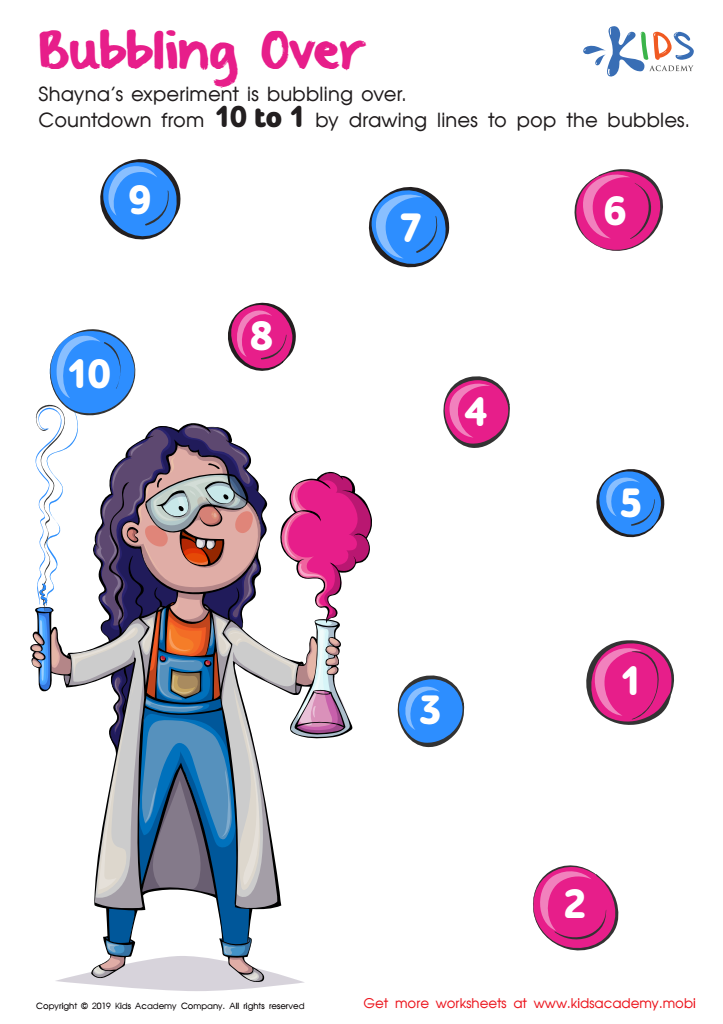
Bubbling Over Worksheet
Students love science experiments at the lab! They get to practice their counting skills while creating a masterpiece or an unexpected catastrophe! Ask them to count down from 10 to 1 by drawing lines to 'pop' the bubbles coming out of Shayna's experiment in the worksheet.
 Assign to My Students
Bubbling Over Worksheet
Worksheet
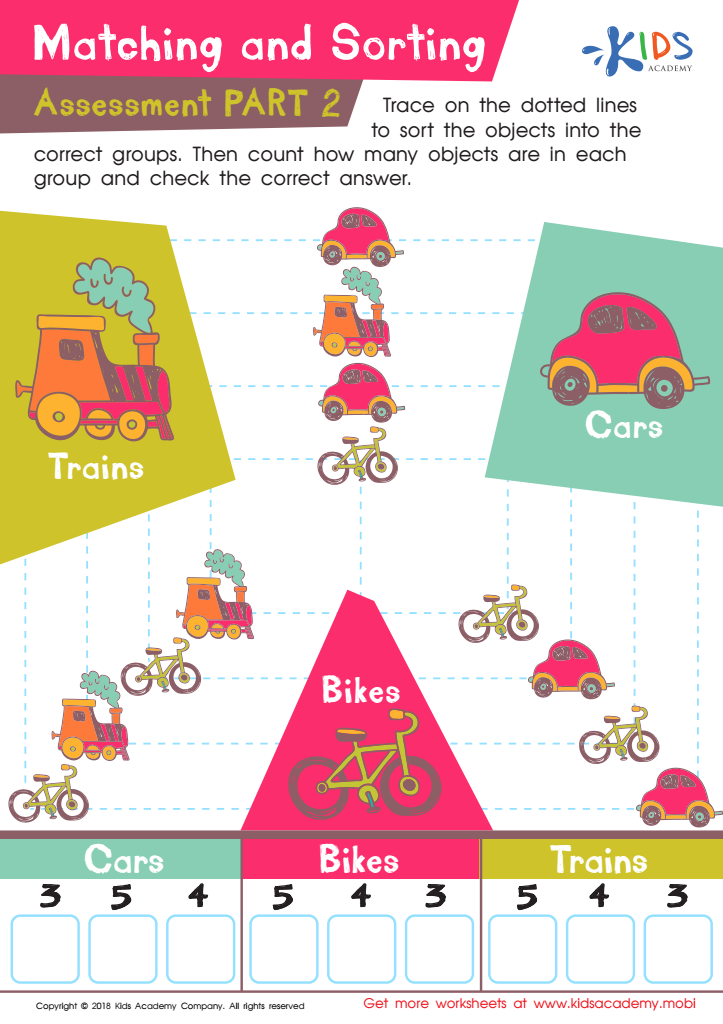
Matching and Sorting for Kindergarten: Assessment 2 Worksheet
This assessment tests matching, sorting and fine motor skills. It challenges kids to identify properties and attributes of pictures, trace guidelines and count the types of vehicles. It's a great way to practice basic number sense and hone in on important foundational skills.
Matching and Sorting for Kindergarten: Assessment 2 Worksheet
Worksheet
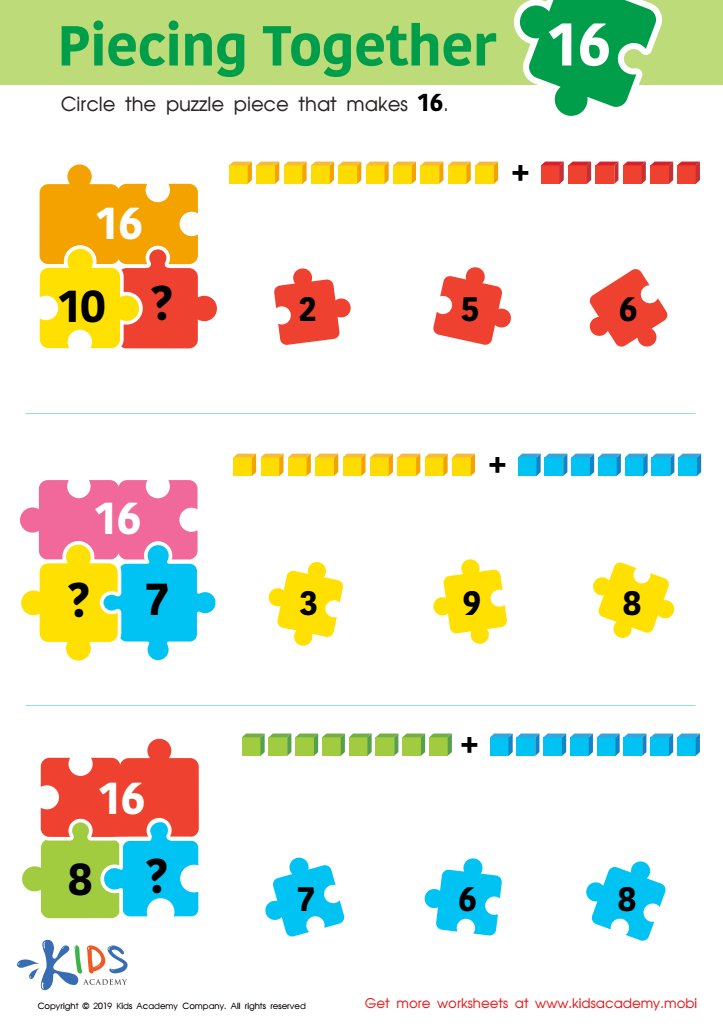
Piecing Together 16 Worksheet
Combine learning with fun using this colorful worksheet! Ask your preschoolers what they see in the picture, then help them solve the mathematical equations on the puzzle pieces. One equation is missing on each; have them circle the piece that will make the bottom puzzle piece numbers equal 16. Use puzzles and bright colors to teach - it's one of the best ways your kids can learn!
Piecing Together 16 Worksheet
Worksheet
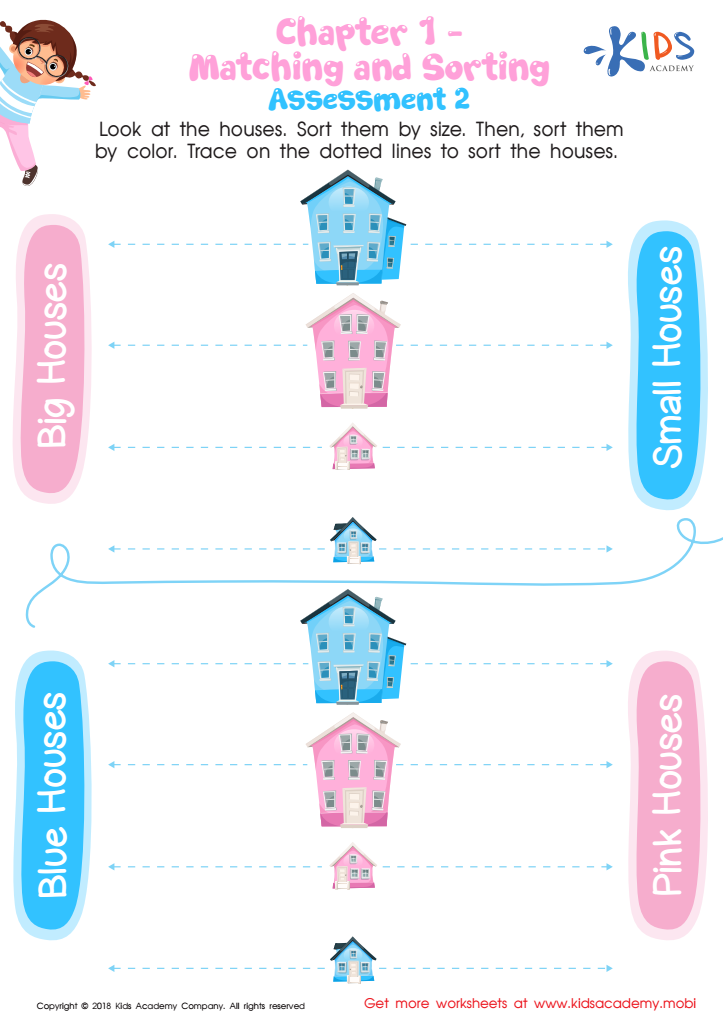
Matching and Sorting for Preschool: Assessment 2 Worksheet
Encourage your kids to take a look at the colorful pictures. Ask them to name the objects. Next, point out any differences between the houses and let them sort them according to color and size. Finally, help them trace the houses on the dotted lines.
Matching and Sorting for Preschool: Assessment 2 Worksheet
Worksheet
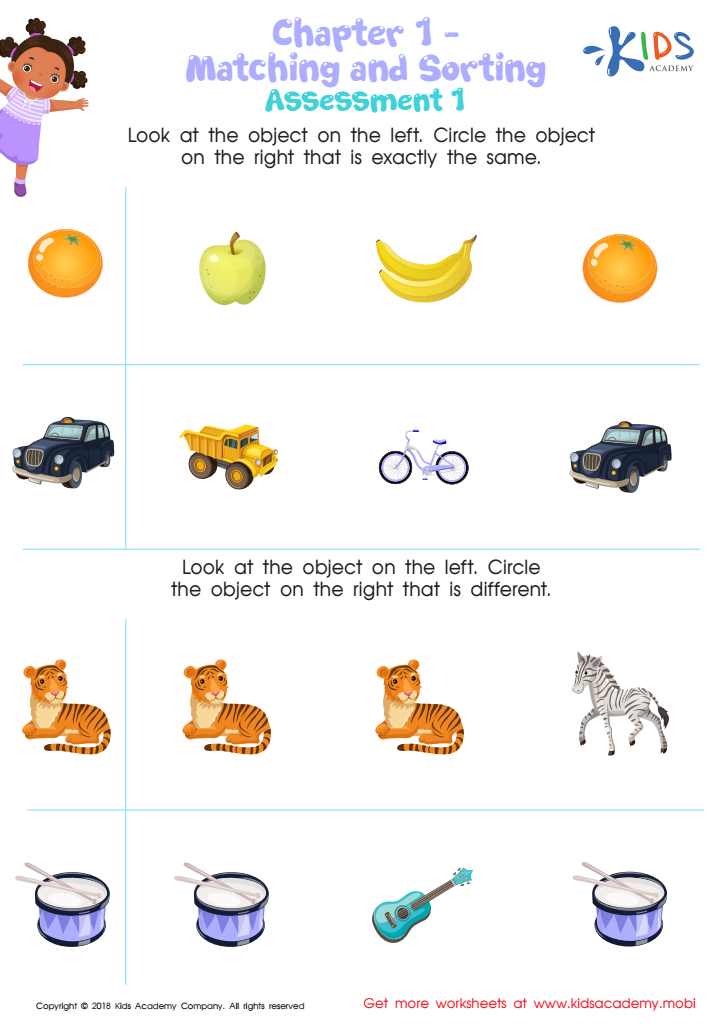
Matching and Sorting for Preschool: Assessment 1 Worksheet
Test your child's matching skills with this worksheet! Ask them to name each of the objects pictured, then circle the ones that are the same. Repeat for the second task. It's a great way to assess their skills and have fun at the same time!
Matching and Sorting for Preschool: Assessment 1 Worksheet
Worksheet
Join Kids Academy for Free
Who is primarily going to use this learning content?


.jpg)

Introducing young children, ages 3-5, to the concept of comparing fractions may seem advanced, but understanding basic mathematical principles early on has profound benefits. Establishing a strong math foundation at an early age encourages critical thinking, problem-solving, and logical reasoning skills. Although typical kindergarten standards focus on whole numbers and basic arithmetic, early exposure to fractions primes young minds for more advanced concepts later on.
At this age, tangible and visual experiences are integral to learning. Children can compare simple fractions through activities like sharing snacks or toys, which helps them grasp the idea of parts of a whole. Recognizing that two halves make a whole or understanding thirds through playful, everyday situations embeds these concepts in their minds naturally and enjoyably.
Moreover, developing an appreciation and interest for math early reduces anxiety and builds confidence as children face increasingly complex mathematical challenges in later grades. Parents and teachers who invest the time to introduce and discuss basic fractions offer their children a head start that will serve their academic journey well. Creating an enriching environment where numbers are fun and relevant fosters a positive attitude toward math, laying the groundwork for advanced problem-solving skills essential for future success.








