Differentiating shapes Math Worksheets for Ages 3-5
3 filtered results
-
From - To
Introduce your little ones to the exciting world of shapes with our "Differentiating Shapes Math Worksheets for Ages 3-5" from Kids Academy! Specially designed to engage and educate, these fun and interactive worksheets help preschoolers and kindergarteners identify and differentiate between various shapes, fostering critical thinking and early math skills. Perfect for home or classroom use, these activities blend playful exercises with essential learning objectives, ensuring young learners develop a solid foundation in geometry. Nurture your child's curiosity and love for learning with these delightful, age-appropriate resources, and watch them master shapes effortlessly!
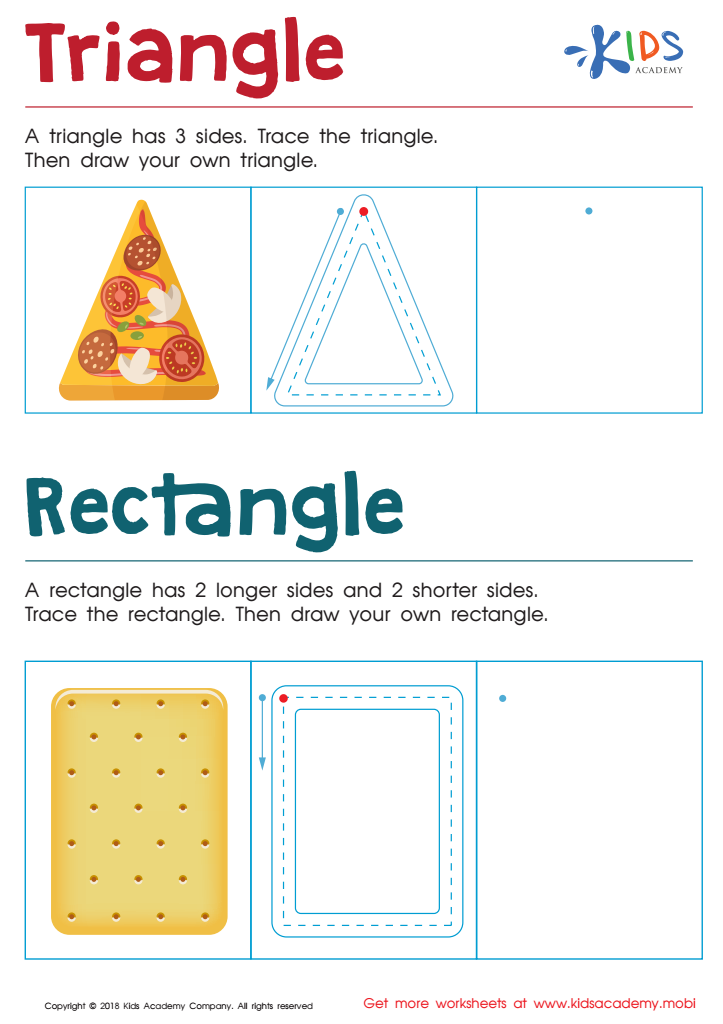
Triangle Rectangle Worksheet
 Assign to My Students
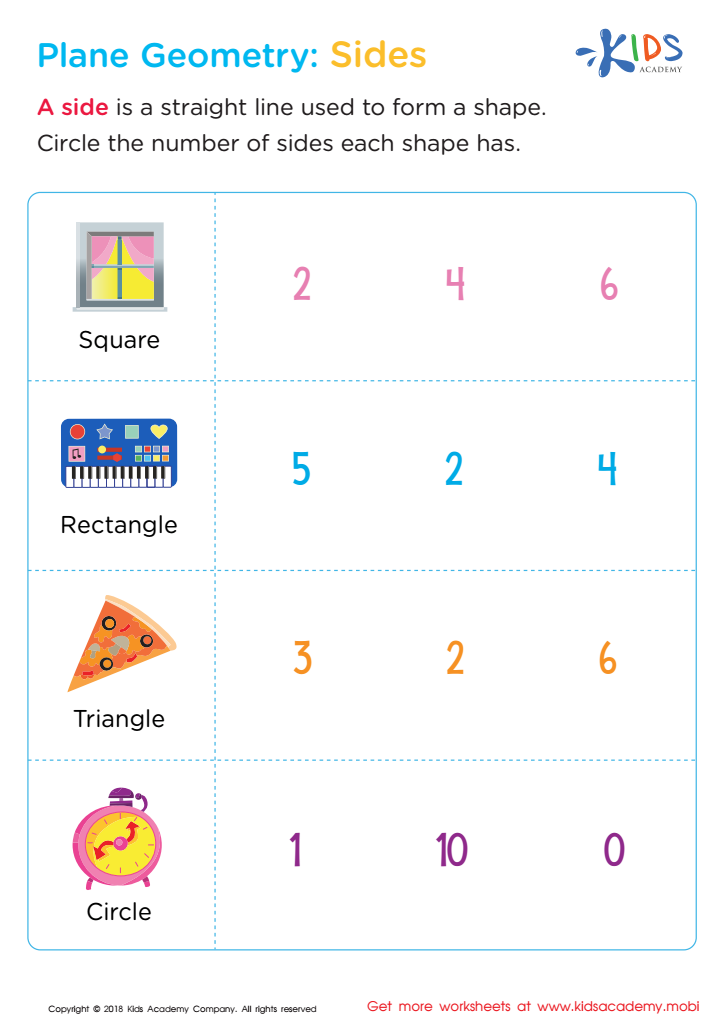
Plane Geometry: Sides Worksheet
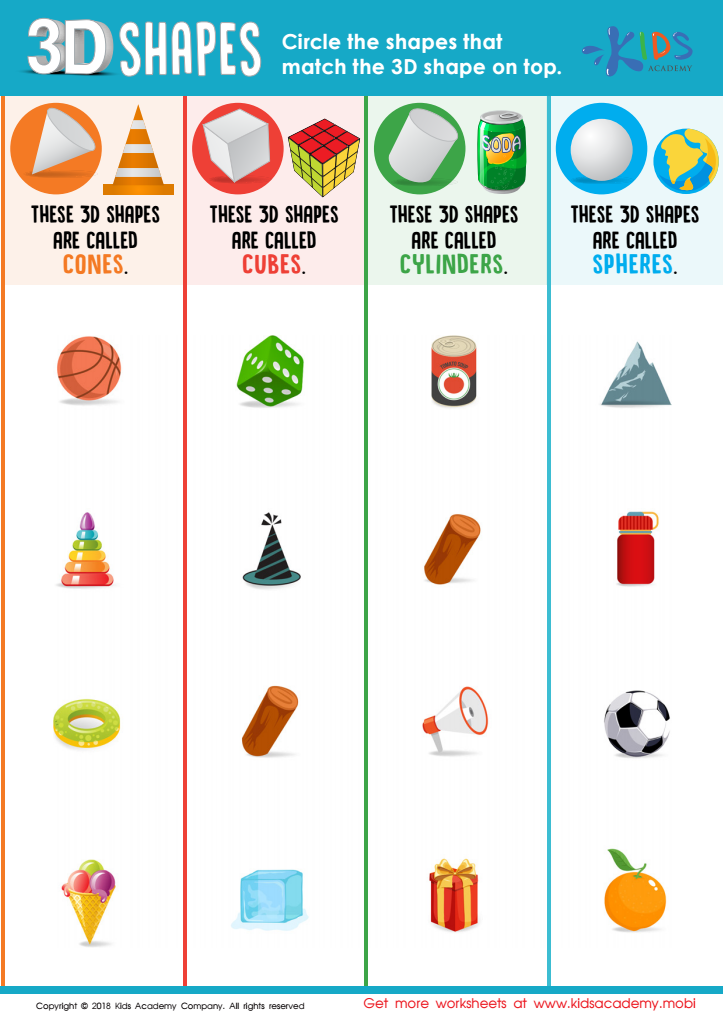
3D Shapes Worksheet








Differentiating shapes for children aged 3-5 is crucial for several reasons, important both for parents and teachers. At this early stage, young minds are highly absorbent and capable of grasping fundamental concepts that form the building blocks of further learning.
Firstly, shape differentiation fosters early math skills. Recognizing and naming shapes like circles, squares, and triangles enhances spatial awareness and problem-solving abilities. These skills are foundational for more complex mathematical concepts like geometry, symmetry, and patterns, creating a smoother transition into formal schooling.
Secondly, learning shapes develops cognitive abilities. As children identify shapes and sizes, they engage in classification and comparison, which sharpens critical thinking and reasoning. This enhances their overall cognitive development, which is vital for future academic success and everyday tasks.
Furthermore, shape recognition aids language development. When children learn shape names, they expand their vocabulary and understanding of descriptive language, enhancing both verbal and written communication skills.
Social-emotional skills are another benefit. By working with peers in shape-related activities, children develop teamwork, patience, and sharing, which are valuable social skills. This is essential for building positive relationships and a cooperative spirit.
In summary, focusing on differentiating shapes equips young children with essential skills—math, cognitive abilities, language, and social-emotional development—that provide a robust foundation for their future learning journey.








