Logical thinking development Math Worksheets for Ages 3-5
5 filtered results
-
From - To
Ignite your child's logical thinking skills with our engaging Math Worksheets designed specifically for ages 3-5! These printable worksheets provide a playful approach to introduce foundational math concepts through fun activities like sorting, pattern recognition, and problem-solving exercises. Each worksheet is crafted to stimulate young minds, enhance critical thinking, and prepare children for future math challenges. Ideal for both home and classroom use, our resources foster curiosity and enhance cognitive skills while aligning with early learning standards. Download our Logical Thinking Development Math Worksheets today and watch your child's confidence and understanding of mathematics grow! Perfect for nurturing young mathematicians!
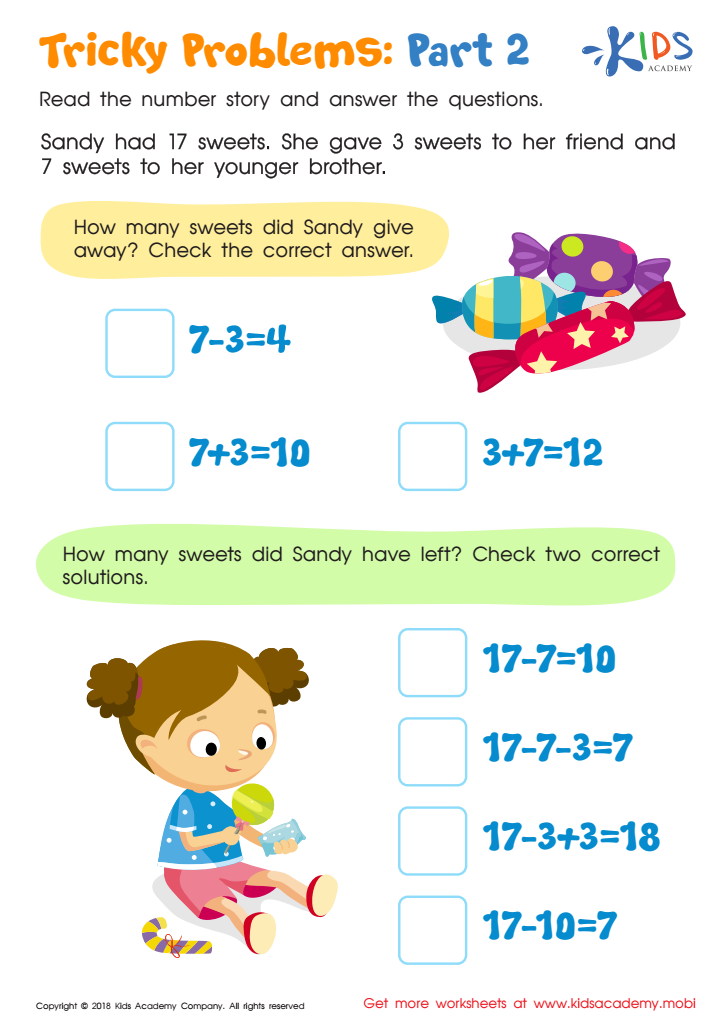
Tricky Problems Worksheet: Part 2
 Assign to My Students
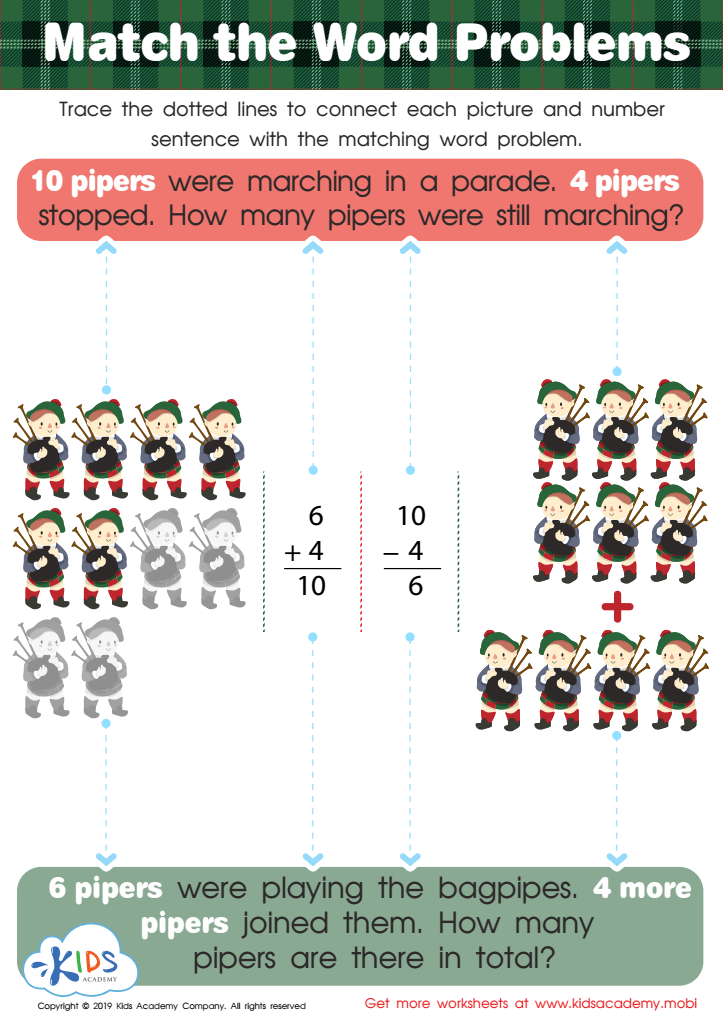
Match the Word Problems Worksheet
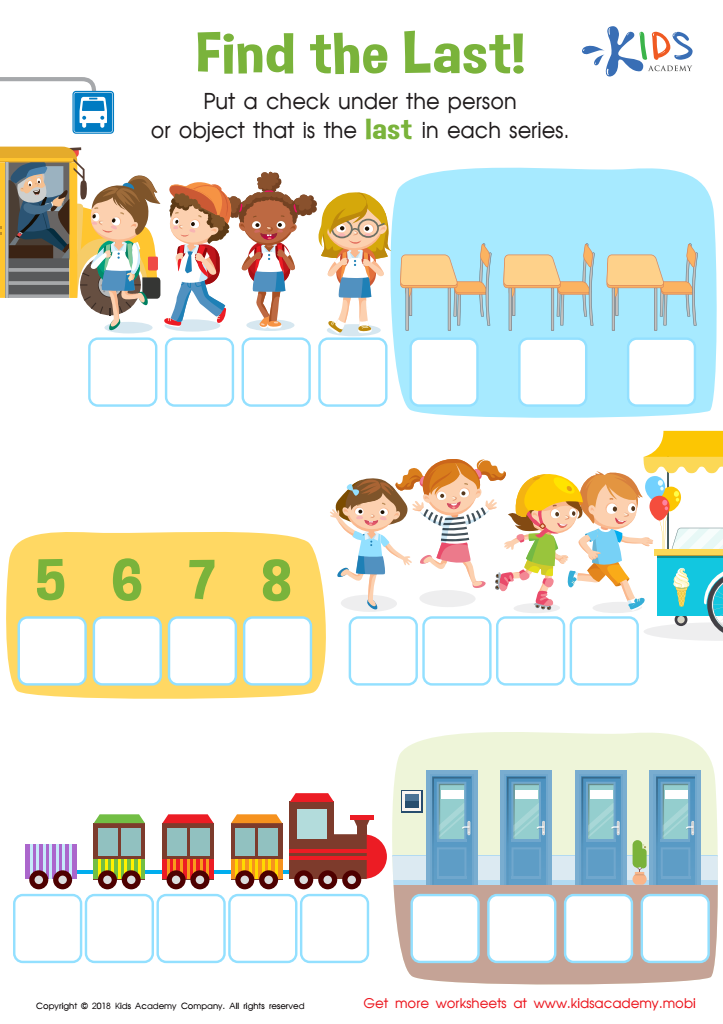
Find the Last! Worksheet
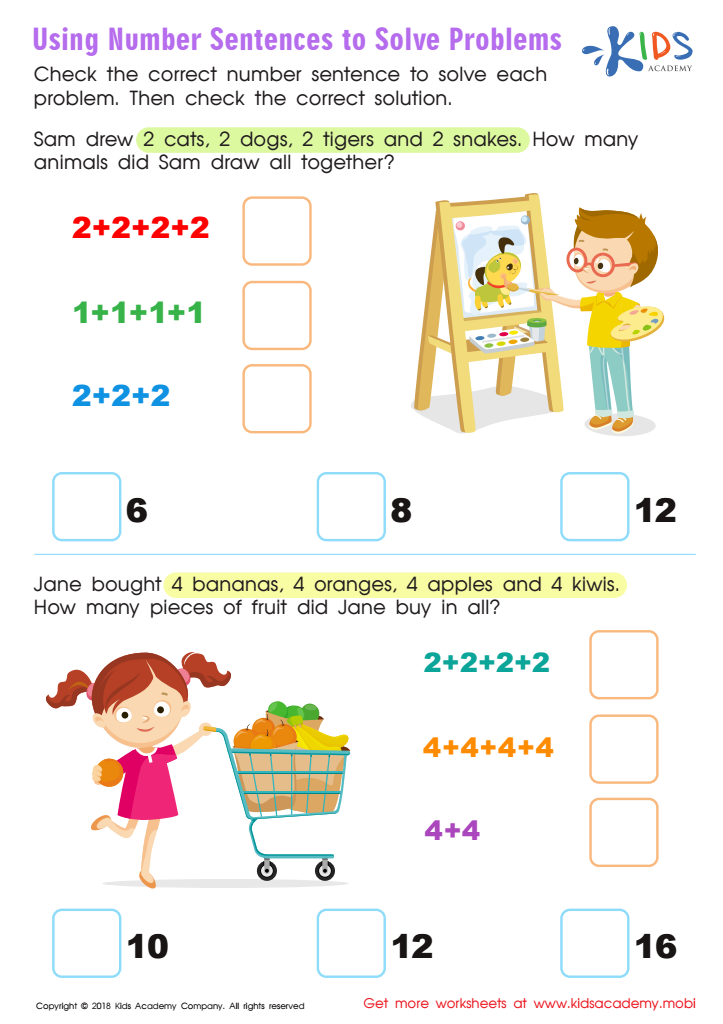
Using Number Sentences to Solve Problems Worksheet
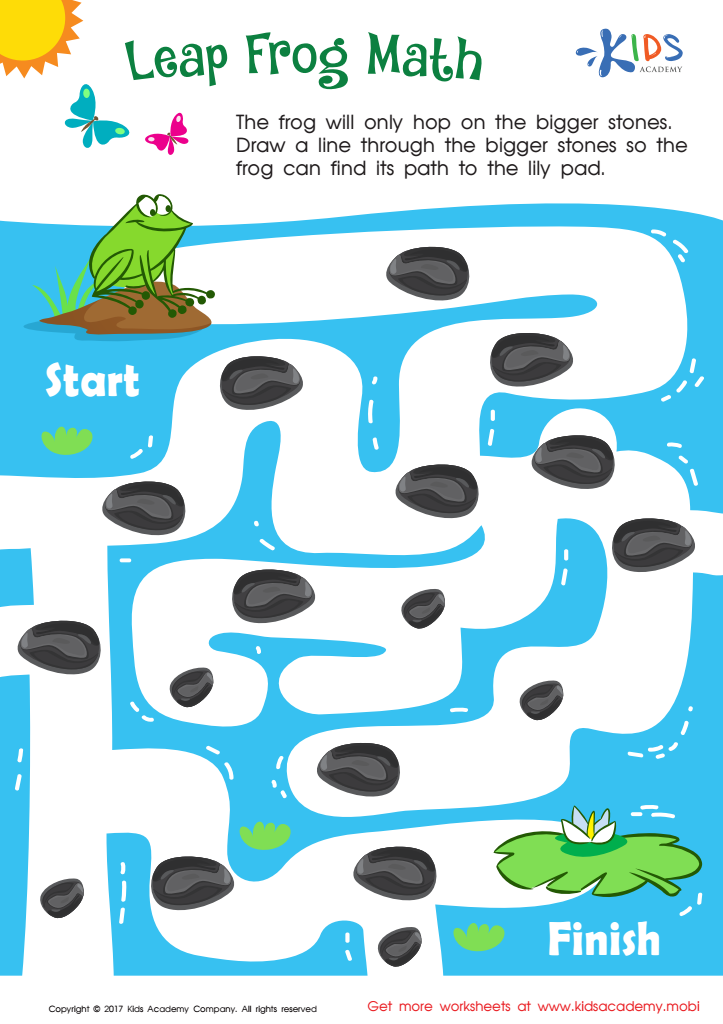
Math Puzzle Worksheet



.jpg)



Logical thinking development in mathematics for children ages 3-5 is crucial as it lays the foundation for critical cognitive skills that extend beyond math. During these formative years, children start to make connections, recognize patterns, and solve problems, all of which are pivotal not only in mathematics but across various disciplines and everyday situations.
Fostering logical thinking helps children learn to analyze situations, make decisions, and sequence steps effectively. For instance, when children sort objects or count, they enhance their understanding of relationships, organization, and syntax—essential skills for reading and even later in complex subjects like science. Engaging in mathematical activities encourages collaboration, communication, and resilience in problem-solving, all vital life skills.
Moreover, when parents and teachers emphasize math-based logical thinking playfully, it makes learning engaging and helps combat math anxiety later on. By making connections between math concepts and real-life situations, adults can significantly boost a child's enthusiasm and confidence in learning.
Ultimately, supporting logical thinking development in early childhood equips children with a powerful toolkit they will carry throughout their academic life and into adulthood, fostering not just competent mathematicians but well-rounded, critical thinkers.








