Mathematical thinking Math Worksheets for Ages 3-5
4 filtered results
-
From - To
Introduce young learners to the basics of math with our "Mathematical Thinking Math Worksheets for Ages 3-5". Designed to foster a love for numbers and problem-solving, these engaging printables cover essential skills like counting, sorting, patterning, and comparing. Each worksheet combines fun activities with foundational concepts, helping little minds build confidence and curiosity in math. Whether it's matching shapes or completing picture patterns, our worksheets offer a delightful and educational experience tailored to preschoolers and kindergarteners. Enhance your child's early math journey and watch them discover the wonders of mathematical thinking. Download now to kickstart their learning adventure!
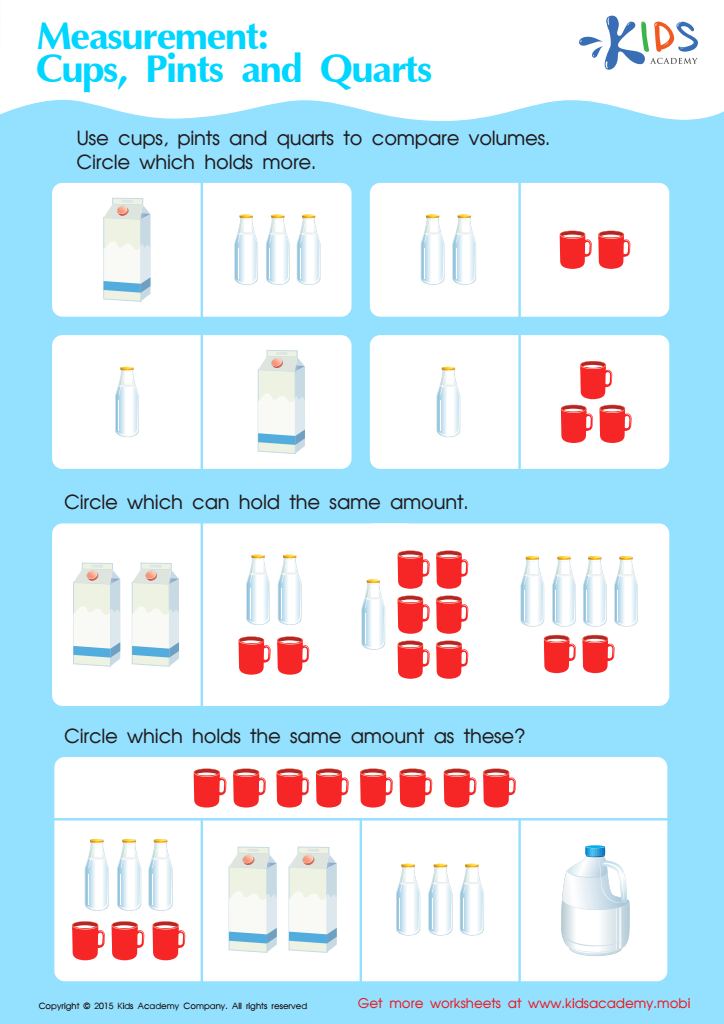
Measurement: Compare Volumes Worksheet
 Assign to My Students
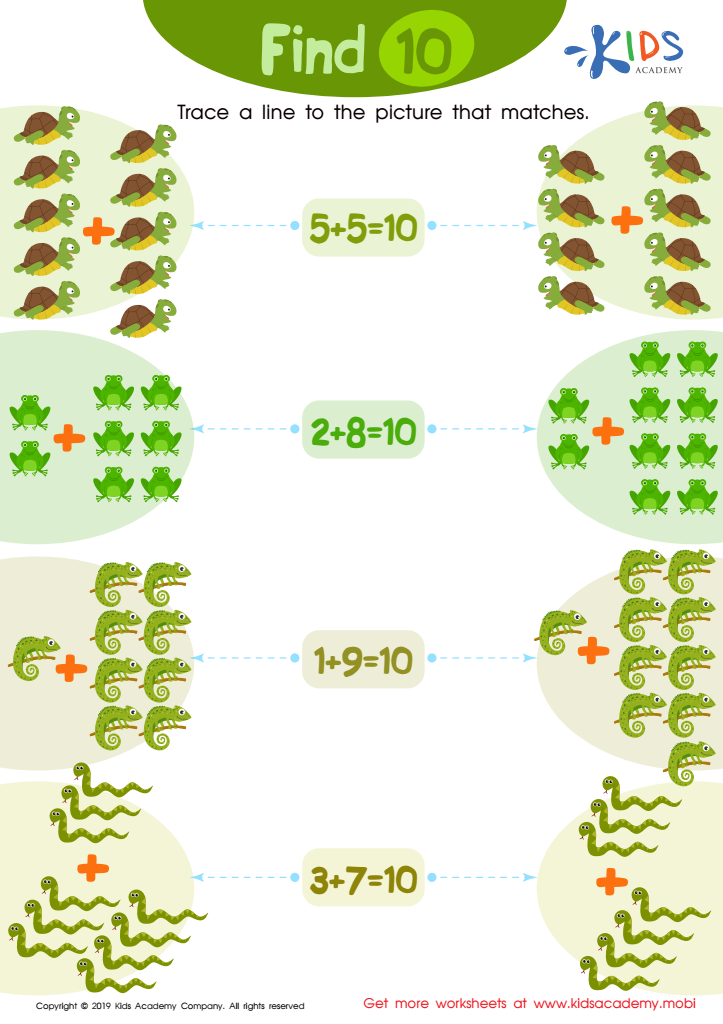
Find 10 Worksheet
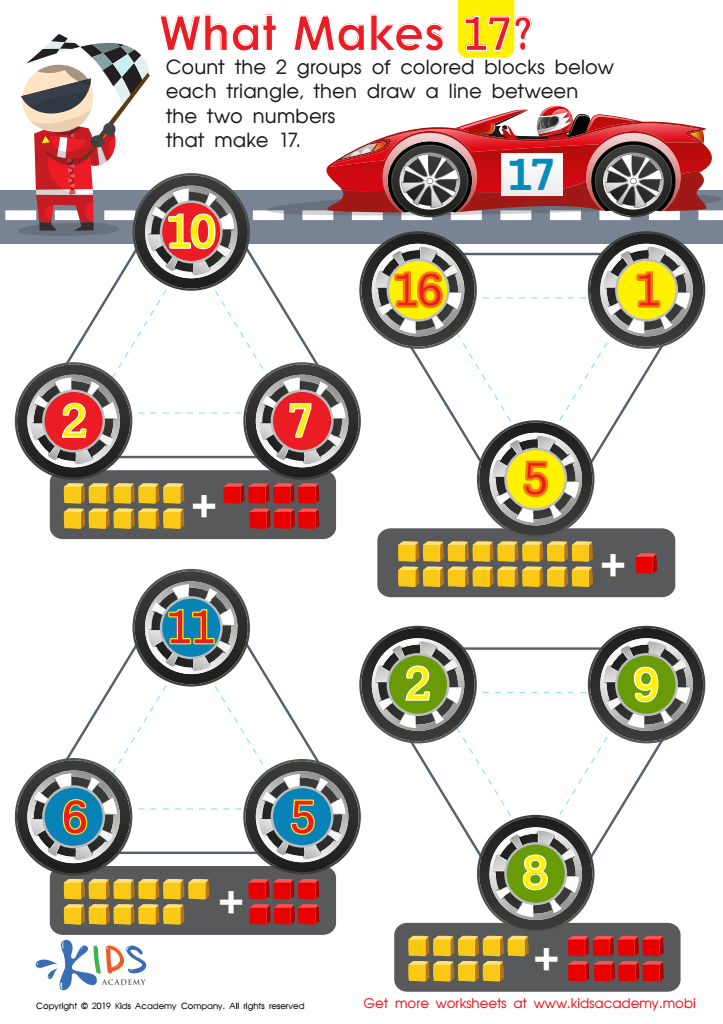
What Makes 17 Worksheet
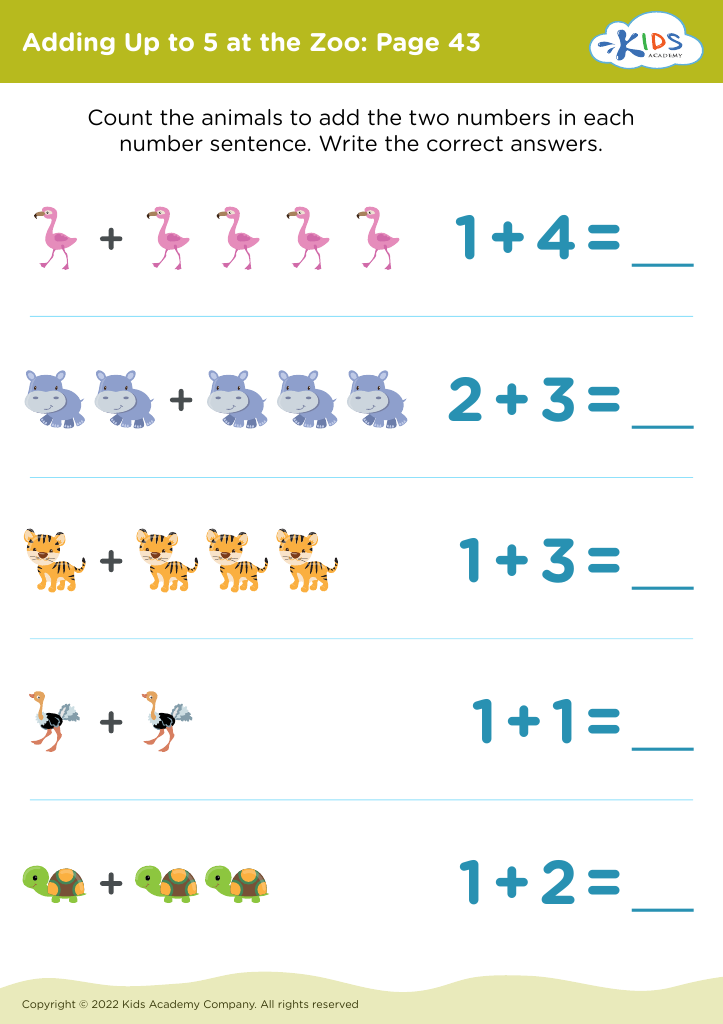






Encouraging mathematical thinking in children aged 3-5 is crucial for several reasons. First and foremost, early exposure to math concepts fosters a positive attitude towards the subject, building confidence and reducing anxiety as they grow older. At this formative stage, children are naturally curious and highly receptive to learning, making it an ideal time to introduce fundamental concepts such as counting, patterns, shapes, and measurements.
Developing mathematical thinking boosts cognitive skills, promoting logical reasoning, problem-solving abilities, and critical thinking. These skills are not only foundational for advanced mathematics but are essential for everyday decision-making and academic success across other subjects. Activities like counting objects, recognizing shapes, and understanding patterns develop a child’s ability to think abstractly and understand the world around them.
Moreover, introducing math through playful and engaging activities helps children link mathematics to real life, making the learning process enjoyable and purposeful. Games, stories, and hands-on activities can make abstract concepts tangible, ensuring that young learners are more likely to retain and understand them.
Supporting mathematical thinking from an early age lays a solid foundation for future learning, ensures a smoother transition into more complex concepts, and cultivates lifelong skills of logical reasoning and problem-solving critical in and out of the classroom.








