Sequencing Skills Math Worksheets for Ages 3-5
7 filtered results
-
From - To
Enhance your child's cognitive development with our Sequencing Skills Math Worksheets designed specifically for ages 3-5. These engaging worksheets promote vital sequencing skills through fun and interactive activities, helping young learners understand order and patterns. By completing tasks such as arranging numbers, sorting objects, and following simple sequences, children will build a strong foundation in early math concepts. Our resources are crafted to encourage critical thinking and problem-solving in a playful manner, making learning enjoyable. Visit our collection today to access printable worksheets that make mastering sequencing skills both effective and fun for your little ones!
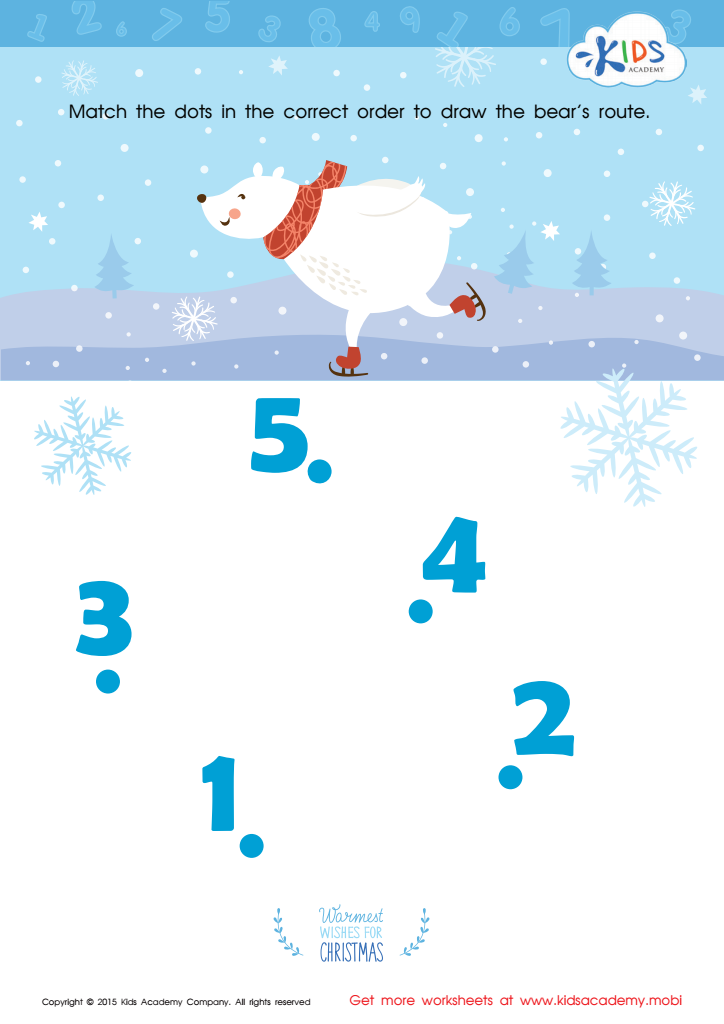
Drawing the Bear's Route by Number Worksheet
 Assign to My Students
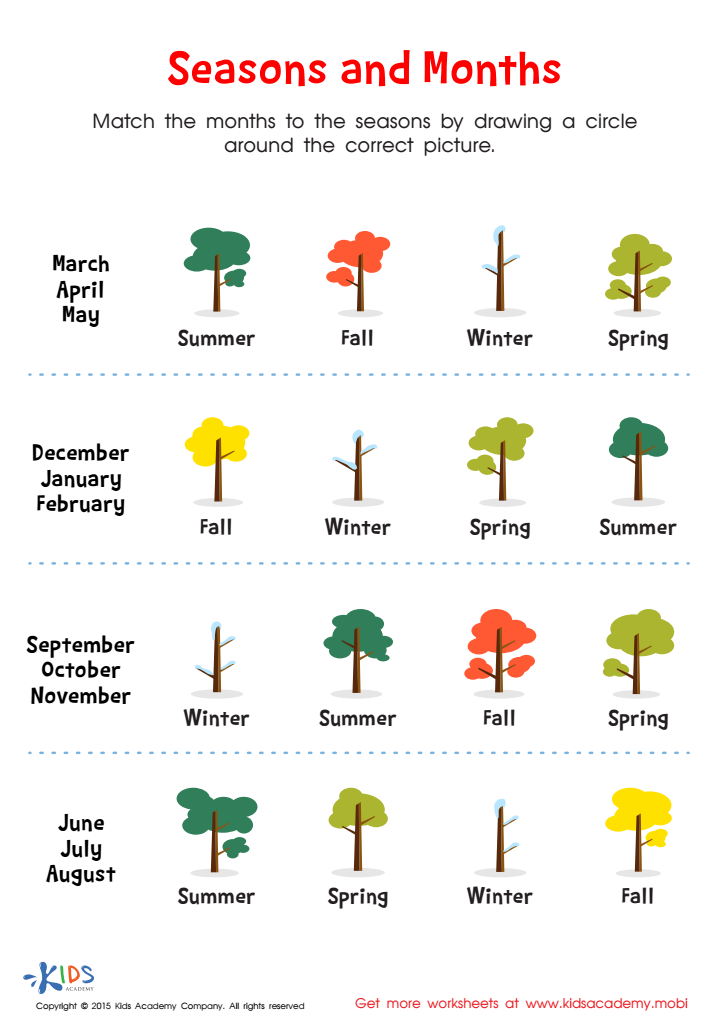
Seasons and Months Worksheet
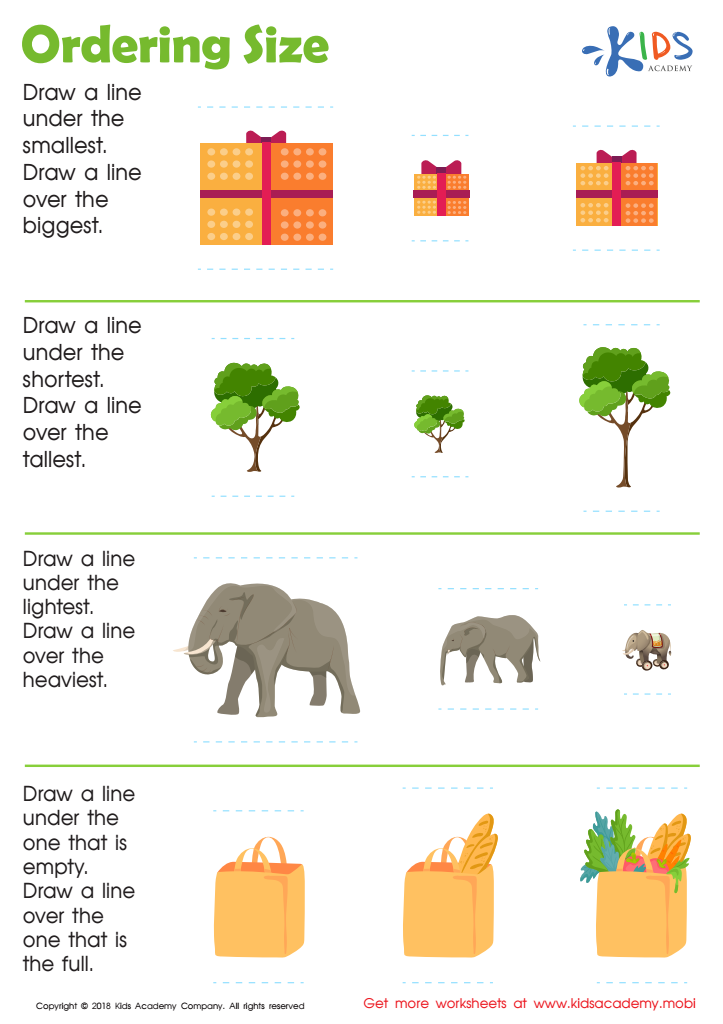
Ordering Size Worksheet
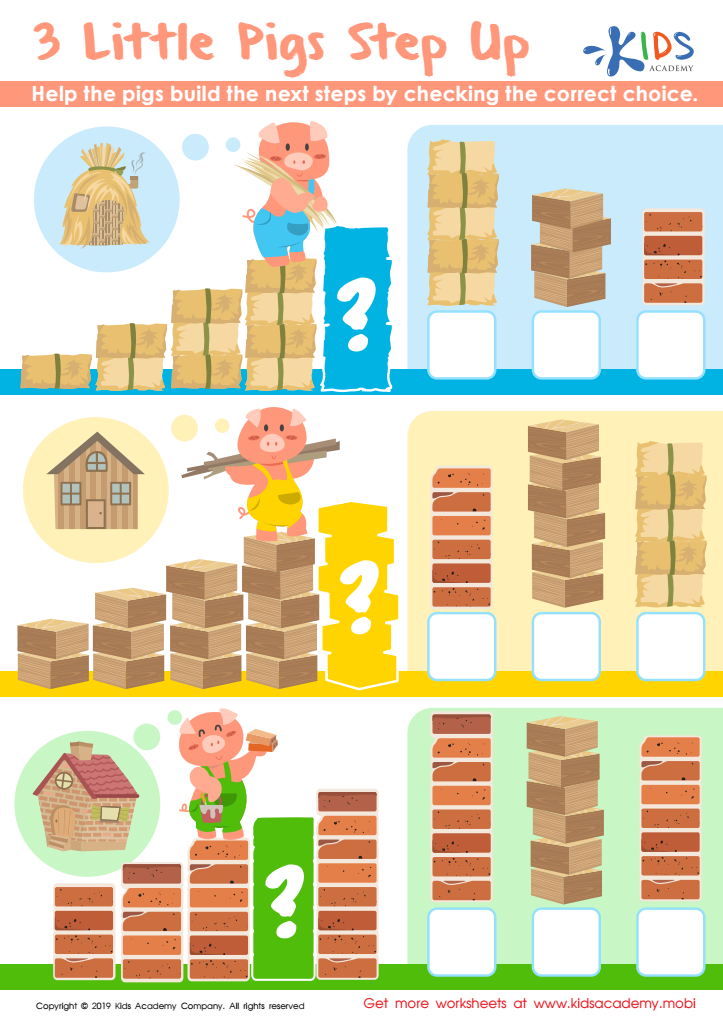
3 Little Pigs Step Up Worksheet
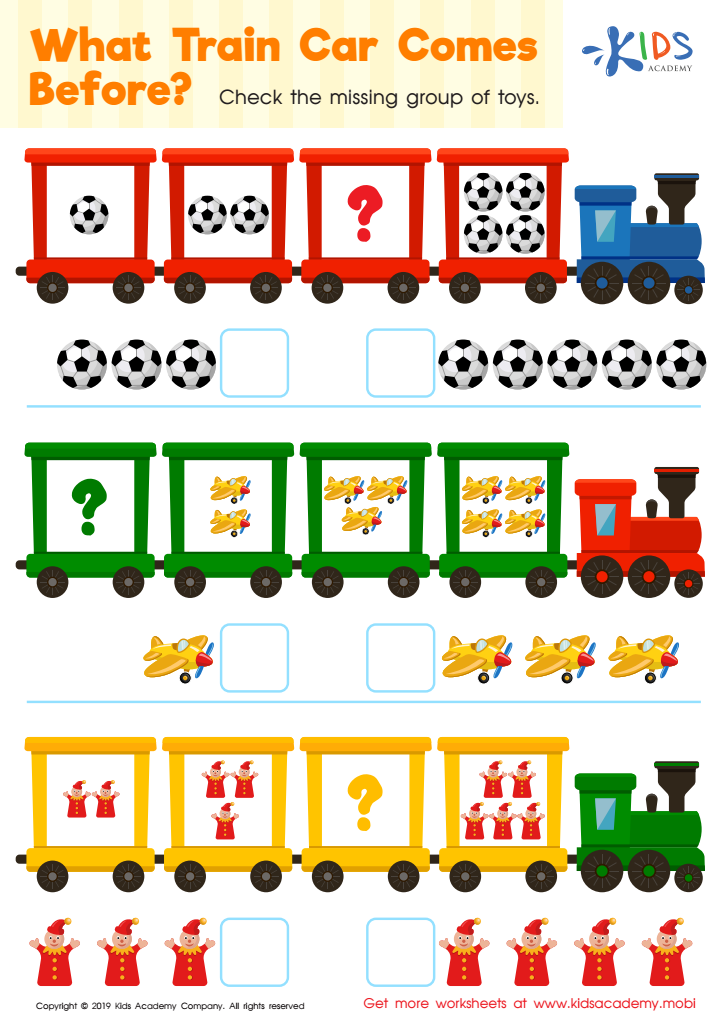
What Train Car Comes Before? Worksheet

Transportation: Steps Worksheet
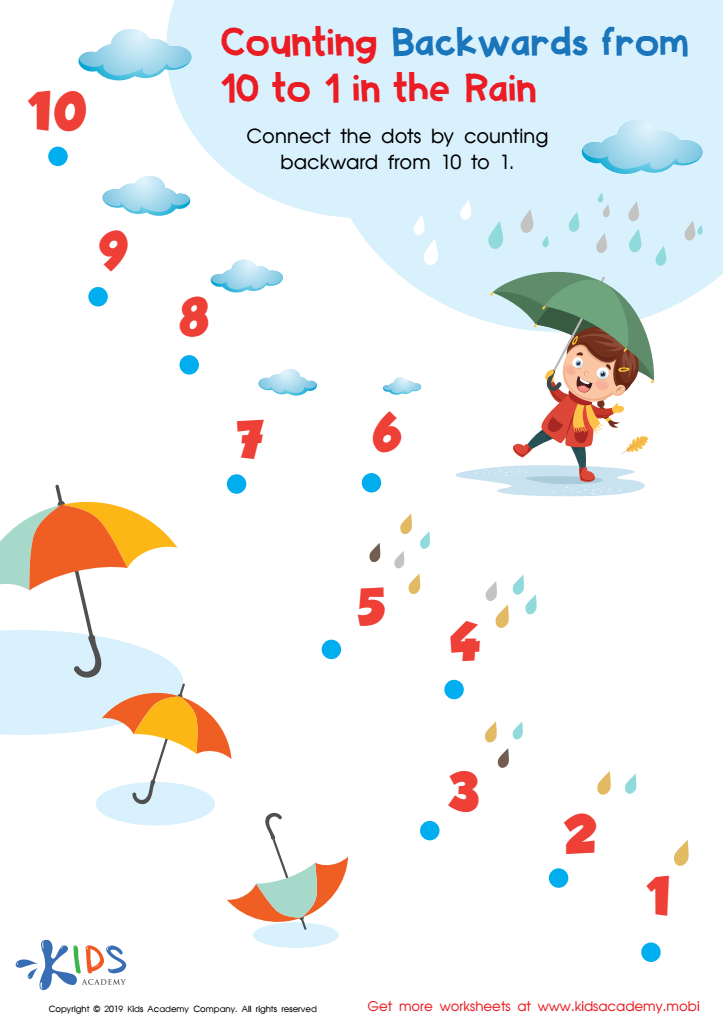
Counting Backwards from 10 to 1 in the Rain Worksheet








Sequencing skills are vital for early math development in children ages 3-5. These skills, which involve understanding the order of events and the relationships between them, lay the foundation for more complex mathematical concepts. Parents and teachers should care about fostering these skills because they enhance critical thinking and problem-solving abilities, which are essential for all areas of learning.
By mastering sequencing, children develop the ability to organize their thoughts, which helps them in tasks such as counting, recognizing patterns, and performing basic operations. For example, during activities like storytelling or following a recipe, kids learn to identify sequences, which unexpectedly hones their analytical skills.
Moreover, engaging in sequencing activities promotes cognitive development by improving memory and attention spans. Activities like arranging blocks by size, sorting objects, or following sequences in songs and rhymes deepen their mathematical understanding while keeping learning fun and interactive.
Additionally, strong sequencing skills contribute to better reading and writing abilities, as they help children understand narrative structures and chronological order. Therefore, investing time in developing sequencing skills not only enriches young children's mathematical competencies but also supports their overall cognitive and academic growth. This holistic approach creates a well-rounded learning experience.








