Understanding comparisons Math Worksheets for Ages 3-5
3 filtered results
-
From - To
Help your little learners grasp important mathematical concepts with our “Understanding Comparisons” math worksheets designed specifically for ages 3-5. These engaging worksheets introduce children to key comparison skills such as bigger, smaller, more, and less through fun and interactive activities. Perfect for early childhood education, each worksheet encourages visual recognition and critical thinking as kids work to compare different objects. Through practical exercises, children develop foundational math skills while enjoying a colorful and playful learning environment. Discover how exciting learning can be with our carefully crafted worksheets, and watch your child thrive in their understanding of comparisons in math!
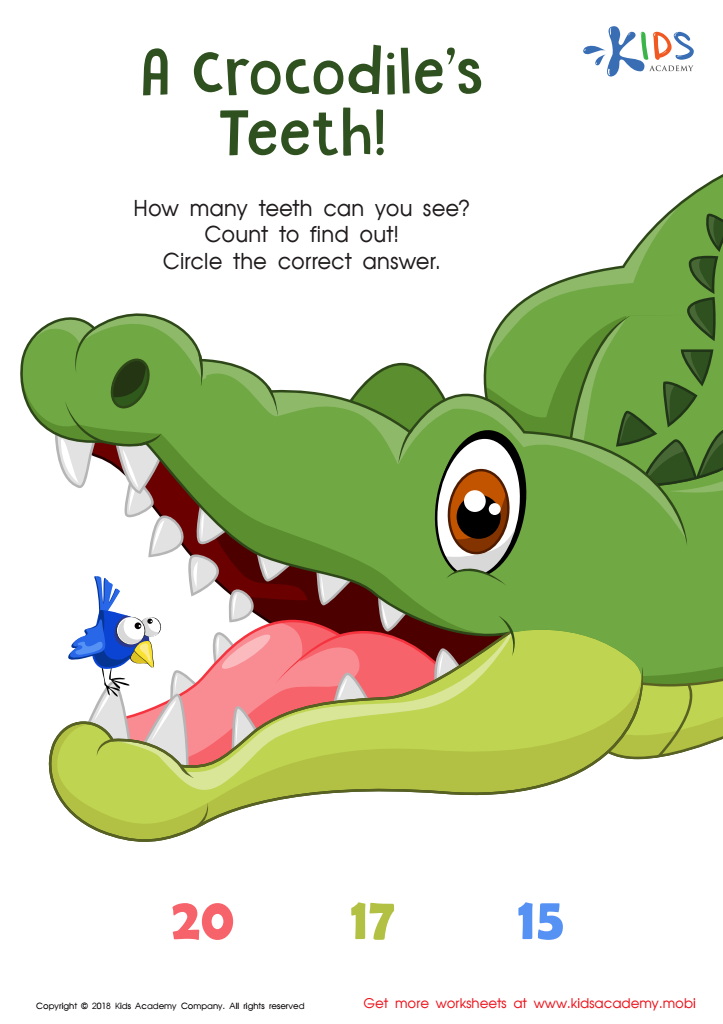
A Crocodile's Teeth Worksheet
 Assign to My Students
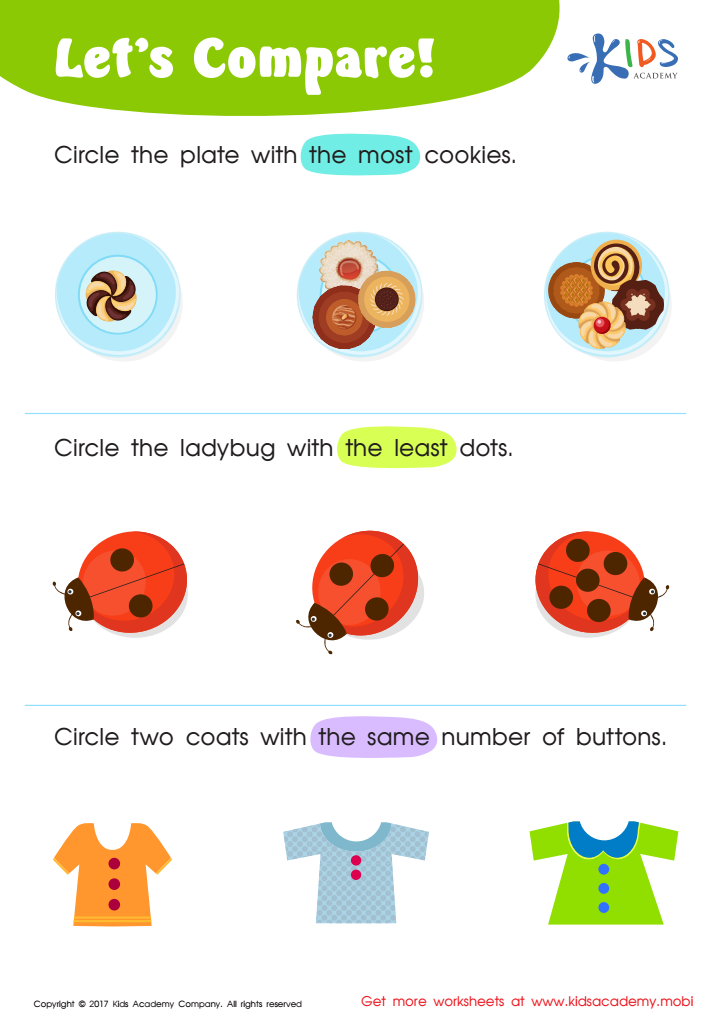
Matching: Classifying Toys by Size Worksheet
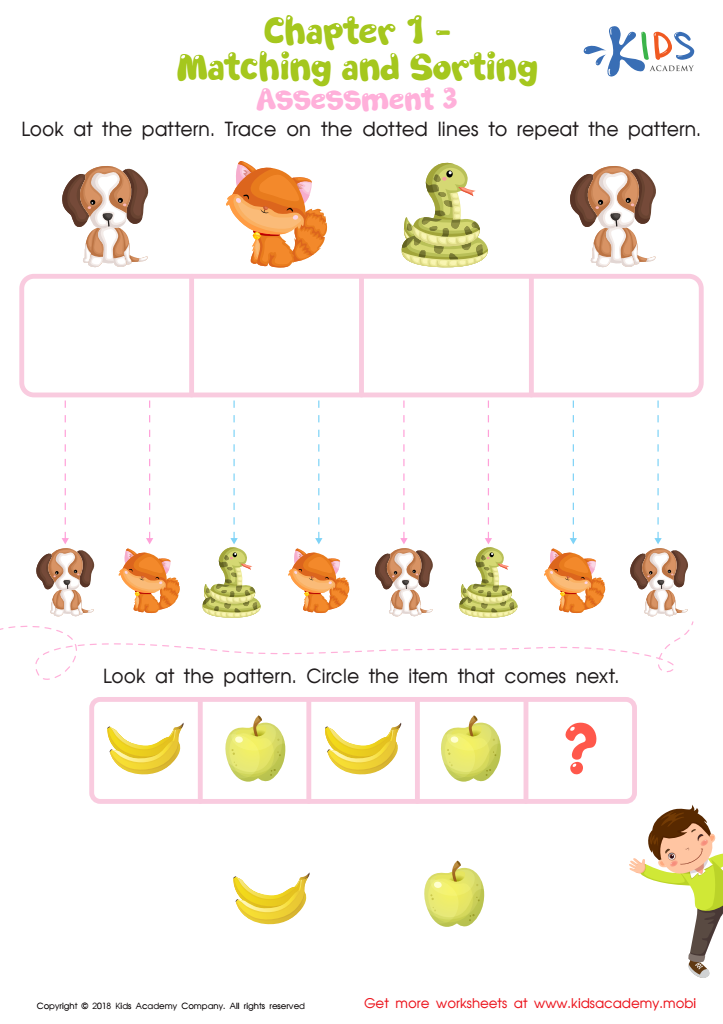
Matching and Sorting for Preschool: Assessment 3 Worksheet







Understanding comparisons is vital for children aged 3-5 as it lays the foundation for their mathematical understanding and cognitive development. During this crucial developmental stage, children begin to explore concepts such as "more," "less," "bigger," and "smaller." By introducing comparisons, parents and teachers promote critical thinking skills essential for problem-solving in everyday life.
When children learn to compare quantities, sizes, and attributes, they enhance their ability to categorize and make sense of the world around them. This foundational skill helps them develop essential numeracy skills that will benefit their future learning in mathematics.
Moreover, engaging in comparison activities encourages language development; as children express their observations, they improve their vocabulary and communication skills. Simple games and activities that involve comparing objects, such as sorting items by size or counting blocks, can make learning interactive and enjoyable. Through these experiences, children also gain confidence in their abilities, fostering a positive attitude towards math.
In essence, understanding comparisons in early childhood not only aids in mathematical readiness but also supports cognitive, linguistic, and social-emotional growth, making it a pivotal area for parents and educators to focus on during these formative years.








