Understanding directions Math Worksheets for Ages 3-5
4 filtered results
-
From - To
"Understanding Directions Math Worksheets for Ages 3-5" are specially designed to enhance kids’ spatial awareness and early math skills by teaching them to follow and comprehend directions. Through engaging activities and playful exercises, young learners are guided to recognize positions, navigate mazes, and identify patterns. These worksheets, available on Kids Academy, incorporate interactive tasks that make learning fun and effective. They help build a strong foundation for future mathematical concepts by developing critical thinking and problem-solving skills. Ideal for preschool and kindergarten children, these printable resources ensure your child enjoys learning math confidently and enthusiastically.
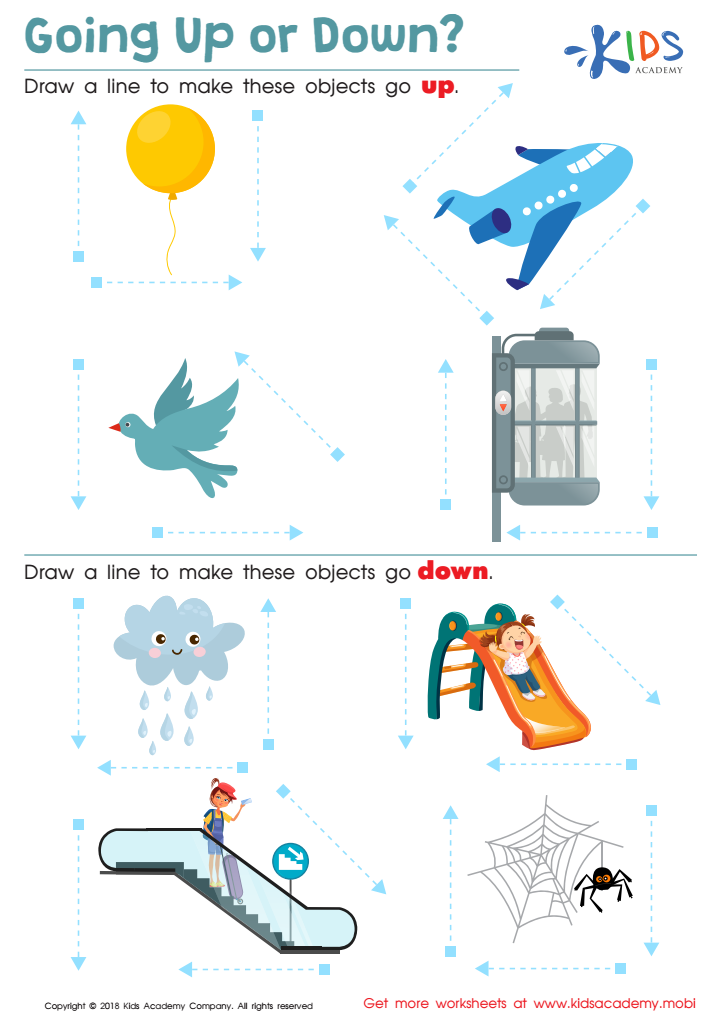
Going up or Down? Worksheet
 Assign to My Students
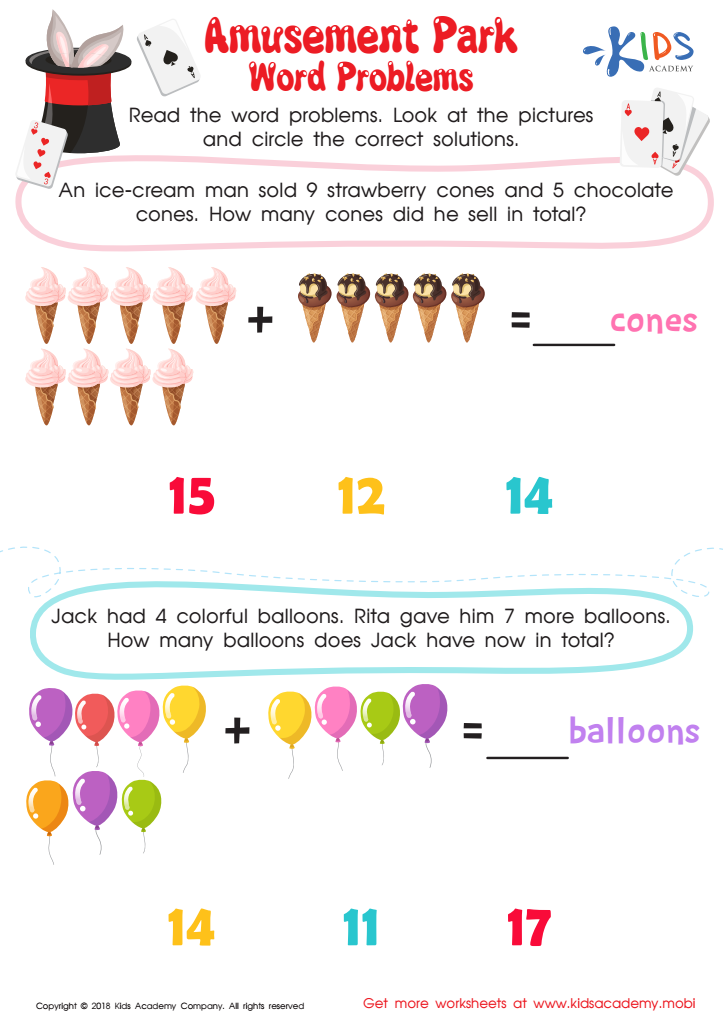
Amusement Park Word Problems Worksheet
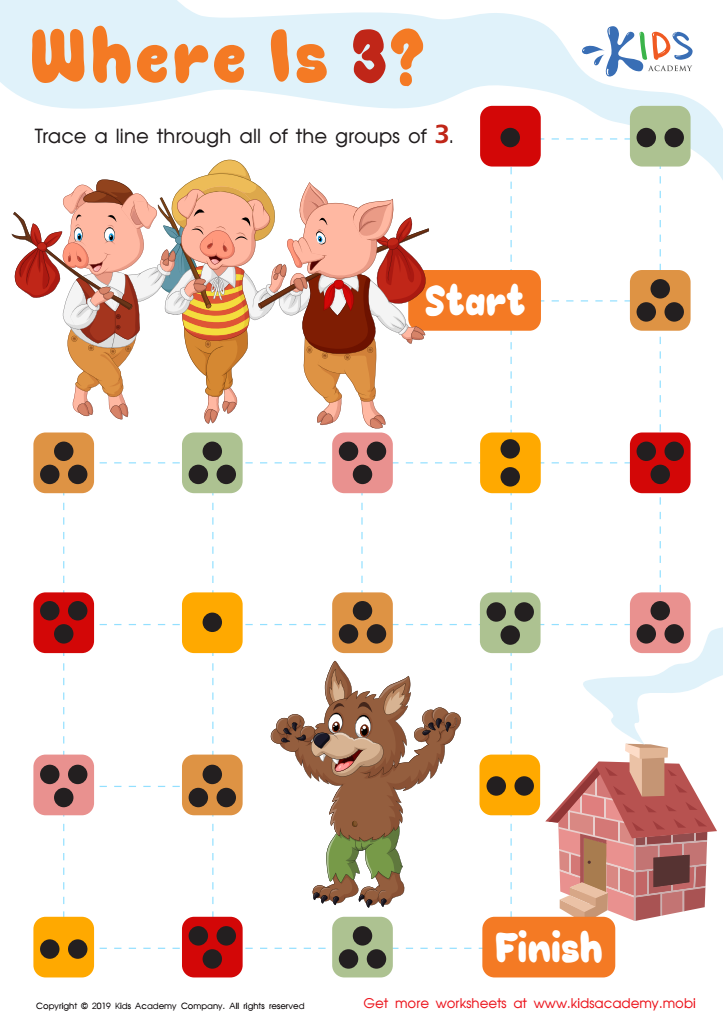
Where Is 3? Worksheet
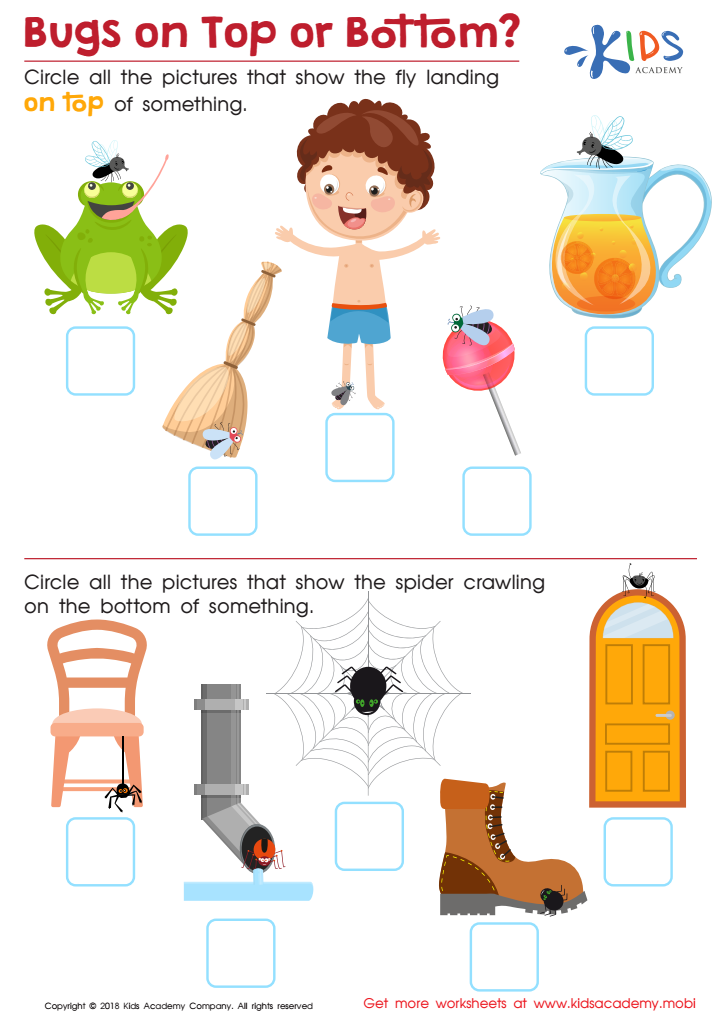
Bugs on Top or Bottom? Worksheet







Understanding directions in math, even at ages 3-5, plays a crucial role in early cognitive development and lays the groundwork for future academic success. At this tender age, children are developing their spatial awareness, problem-solving skills, and ability to follow instructions—all foundational for later mathematical reasoning.
For parents and teachers, fostering an understanding of directions such as "up, down, left, right, above, below" helps children navigate their environment and begin to grasp relative positions. This skill not only aids in everyday tasks but also enhances their capacity for more complex math concepts, like geometry and measurement, in future years.
Young children learn best through play and practical activities. When they engage in games that involve following directions—like building with blocks, playing Simon Says, or navigating obstacle courses—they start understanding and internalizing spatial vocabulary in an intuitive manner.
Moreover, doing activities that involve understanding directions boosts memory, attention to detail, and language skills as children learn and use new words to describe their actions and their environment. It cultivates an organized way of thinking, essential for tackling math problems systematically.
In summary, understanding directions in math for young children is not just about learning specific terms; it's about nurturing a foundational skill that will support broader academic and real-world understanding, making it a key area of focus for parents and teachers.








