Categorization skills Numbers 0–10 Worksheets for Ages 3-5
3 filtered results
Difficulty Level
Grade
Age
-
From - To
Subject
Activity
Standards
Help young minds develop essential categorization skills with our engaging worksheets for Numbers 0–10, designed specifically for children ages 3-5. These fun and educational activities will teach your little ones how to recognize, compare, and sort numbers through engaging exercises and colorful illustrations. Our expertly crafted worksheets focus on enhancing cognitive development while fostering a love for learning. Ideal for preschool and kindergarten prep, they provide a solid foundation in number recognition and early math skills. Accessible online at Kids Academy, our resources are perfect for parents and educators looking to support early childhood education in a playful and effective way.
Favorites
With answer key
Interactive
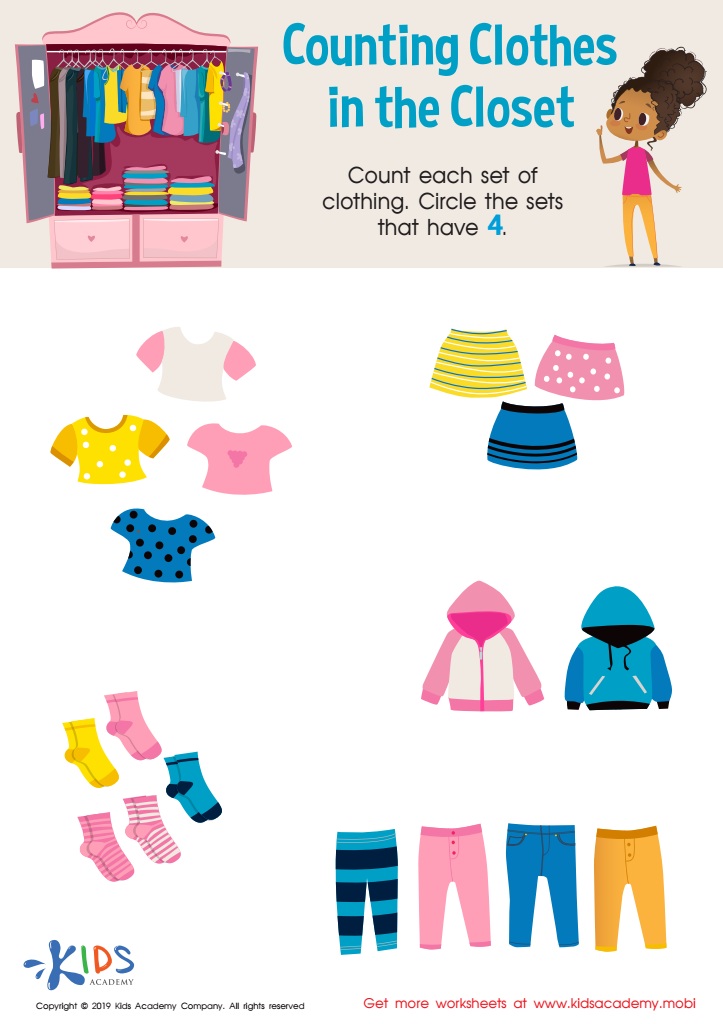
Counting Clothes Worksheet
Help your kids become better counters with fun exercises and objects they can relate to. Print out this worksheet and assist your kid in counting 5 sets of clothing. Have them circle the sets that have 4 so they can master counting small numbers. Strengthen their math skills with your help.
 Assign to My Students
Counting Clothes Worksheet
Worksheet
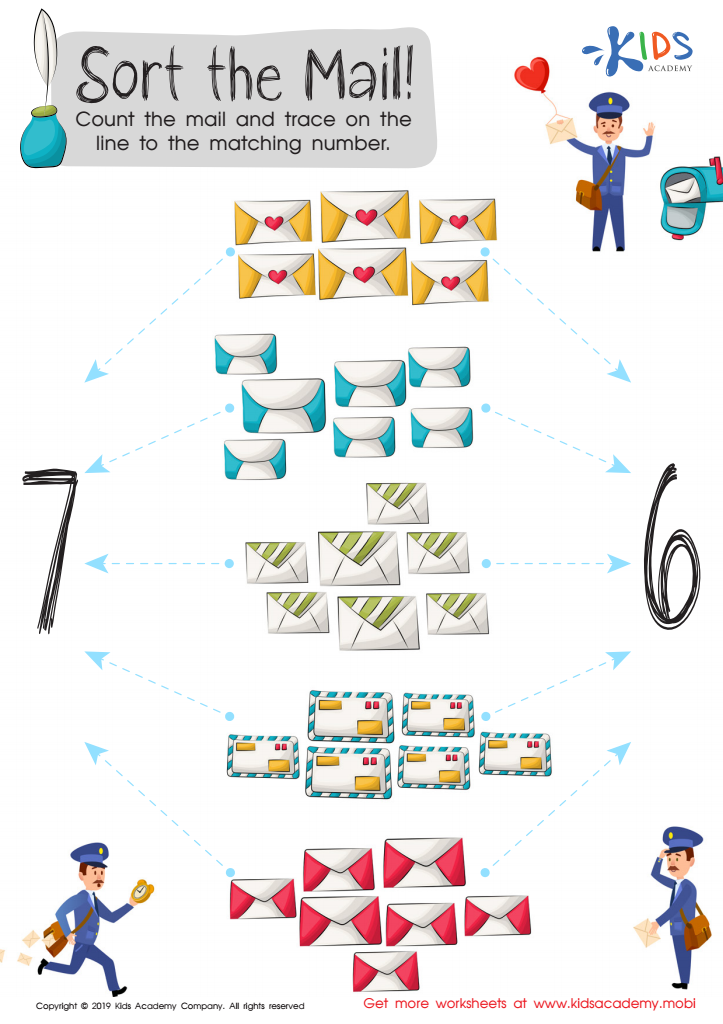
Sort the Mail Worksheet
Kids can learn number sense with one-to-one representation! This worksheet helps them connect groups of letters with the correct numbers by tracing the lines. They'll count and decide whether each group has 6 or 7 envelopes. This exercise gives children a better understanding of numerical representation.
Sort the Mail Worksheet
Worksheet
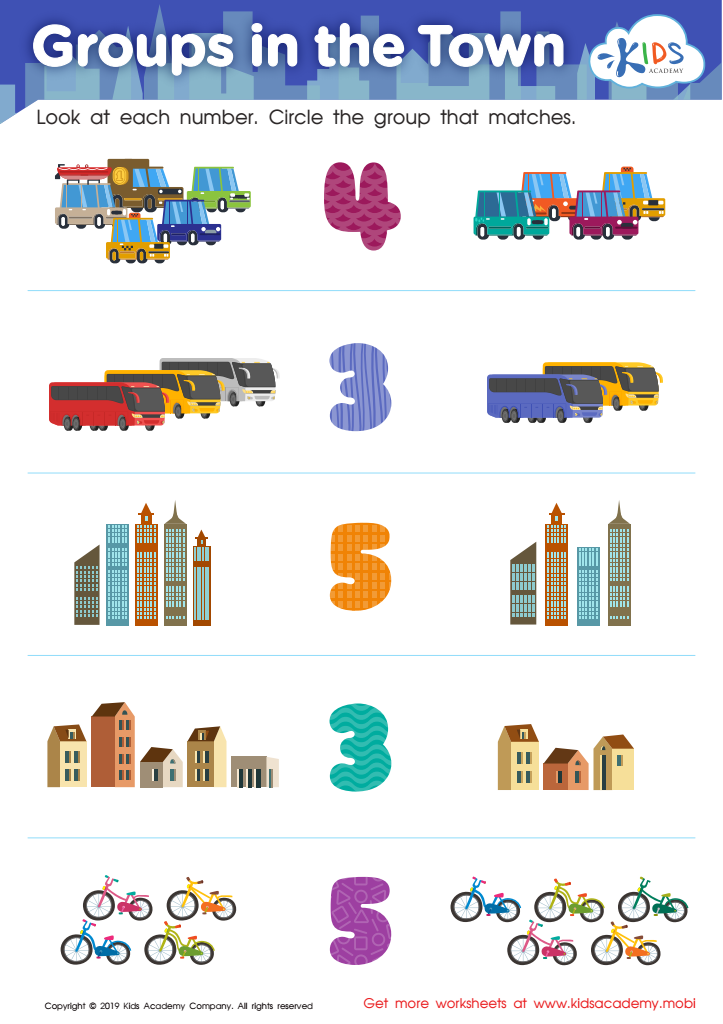
Groups in the Town Worksheet
Help your kids learn to count with this worksheet! Look at each number of objects and circle the group that matches. This simple activity can give them extra practice to support what they learn in school. Learning doesn't have to be a struggle; make it fun and interactive with this worksheet.
Groups in the Town Worksheet
Worksheet
Join Kids Academy for Free
Who is primarily going to use this learning content?








Parents and teachers should care about categorization skills concerning numbers 0–10 for children aged 3–5 because these foundational abilities are critical for early cognitive development. Firstly, categorization helps children understand how to group objects based on shared characteristics, which is not only fundamental in math but also in everyday decision-making. Knowing how to categorize enhances memory and comprehension, allowing kids to make sense of the world around them.
Learning numbers 0–10 at this age encourages numerical literacy, a crucial component of kindergarten readiness. It prepares children for more complex mathematical concepts and problem-solving tasks they will encounter in school. Children who struggle with these basics might find advanced topics more challenging, impacting their confidence and academic performance.
Furthermore, grasping numbers helps develop sequencing, pattern recognition, and logical thinking. These skills are extensively applicable beyond just math—they support literacy and general cognitive processes. For instance, understanding order and hierarchy in number sequences translates to recognizing the structure in stories and instructions.
In summary, nurturing categorization skills and numerical understanding between ages 3–5 sets a solid educational foundation and fosters lifelong learning abilities. It's an investment in a child's academic success and overall cognitive development.