Visual discrimination Sorting Worksheets for Ages 3-5
3 filtered results
-
From - To
Enhance your child's visual perception skills with our Visual Discrimination Sorting Worksheets designed for ages 3-5. These engaging activities help young learners distinguish between shapes, sizes, colors, and patterns, crucial for cognitive development. Each worksheet captivates preschoolers’ curiosity, making learning fun and interactive. Ideal for early childhood education, our thoughtfully crafted exercises promote critical thinking and attention to detail. Perfect for parents and teachers looking to support school readiness and foundational math skills. Give your child a head start in learning with our expertly designed, printable worksheets today!
Discover more at Kids Academy: [link].
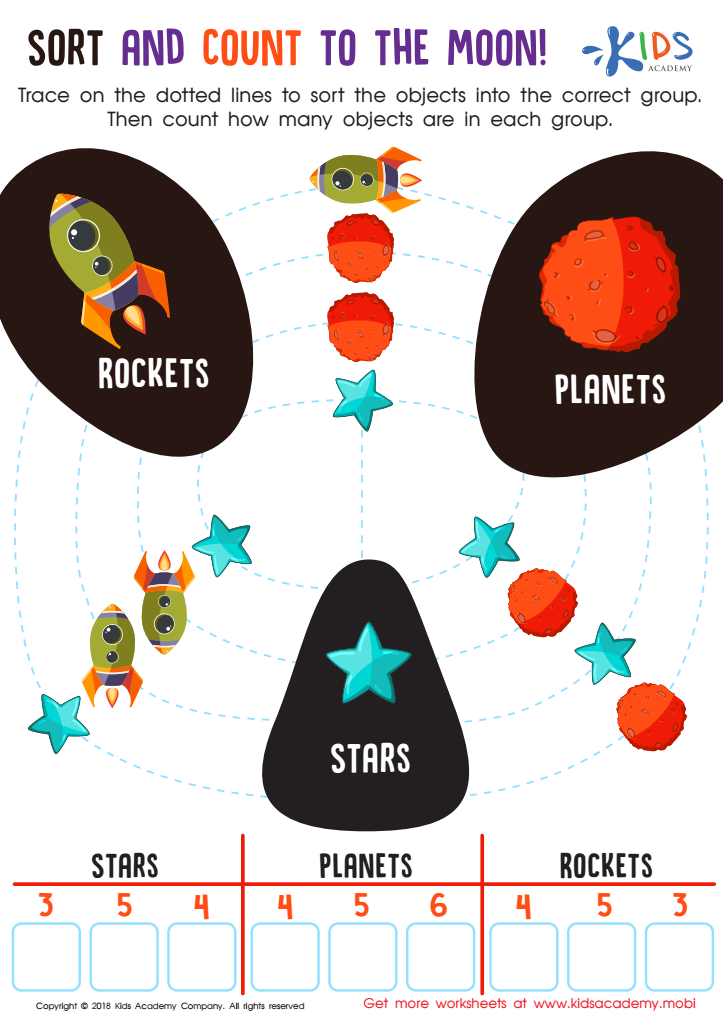
Sort and Count to the Moon Worksheet
 Assign to My Students
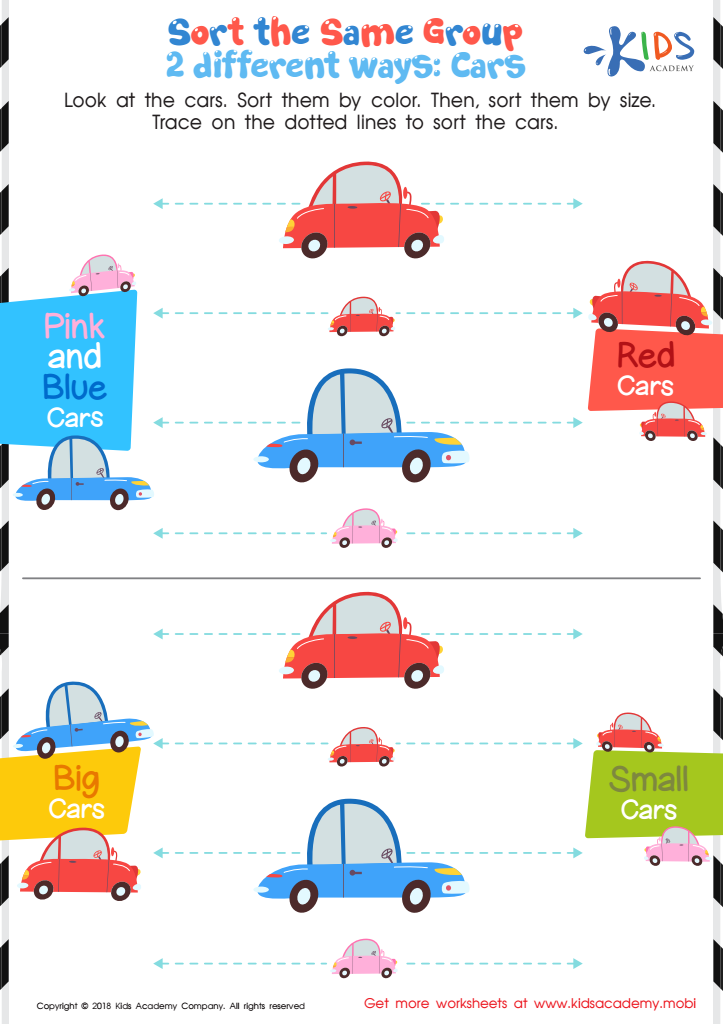
Sort the Same Group 2 Different Ways: Cars Worksheet
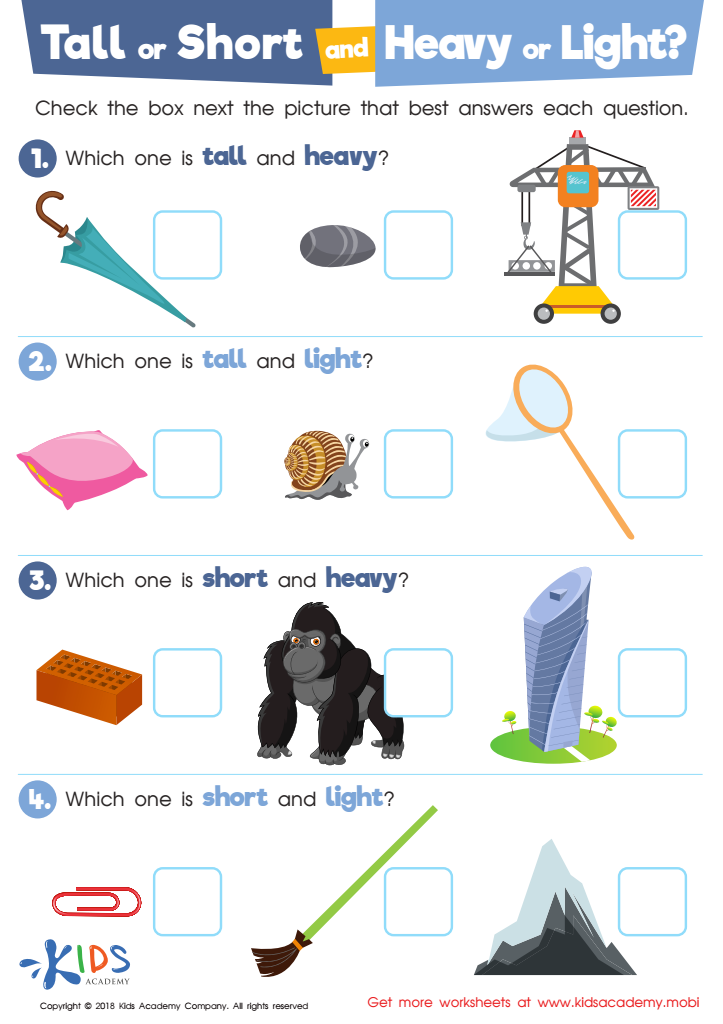
Tall or Short and Heavy or Light? Worksheet








Visual discrimination sorting for children aged 3-5 is a fundamental aspect of early childhood education, deeply impactful on their cognitive development. At this crucial age, children are developing essential brain functions that will support their learning throughout life. Visual discrimination sorting involves identifying differences and similarities in shapes, colors, sizes, and patterns, honing their observation and analytical skills.
One reason parents and teachers should care about this activity is its role in literacy and mathematics readiness. Recognizing letters, numbers, and geometric shapes depends on the child's ability to notice subtle distinctions. For example, distinguishing between 'b' and 'd' or sorting a series of numbers in the correct order relies on good visual discrimination skills, foundational for future reading and arithmetic abilities.
Moreover, visual sorting activities bolster fine motor skills, encouraging children to manipulate objects and enhancing their hand-eye coordination. This not only aids in developing writing skills but also in daily tasks requiring dexterity.
Incorporating visual discrimination exercises can also foster a love for learning by making discovery a playful and rewarding process. Engaging in sorting games can boost children's confidence and promote problem-solving abilities, key attributes for lifelong learning. Therefore, focusing on visual discrimination sorting is vital for laying the groundwork for a child's academic success and overall cognitive development.








