Basic Math Skills Subtraction Worksheets for Ages 3-5
6 filtered results
-
From - To
Explore our collection of Basic Math Skills Subtraction Worksheets designed specifically for children ages 3-5. These engaging, age-appropriate worksheets help young learners develop foundational subtraction skills through fun activities and colorful illustrations. Perfect for both home learning and classroom use, our worksheets are tailored to help children understand the concept of taking away and number relationships. From simple problems to more interactive tasks, each worksheet supports early math comprehension while encouraging critical thinking and problem-solving. Enhance your child's learning experience with our effective subtraction worksheets, paving the way for a strong mathematical foundation!
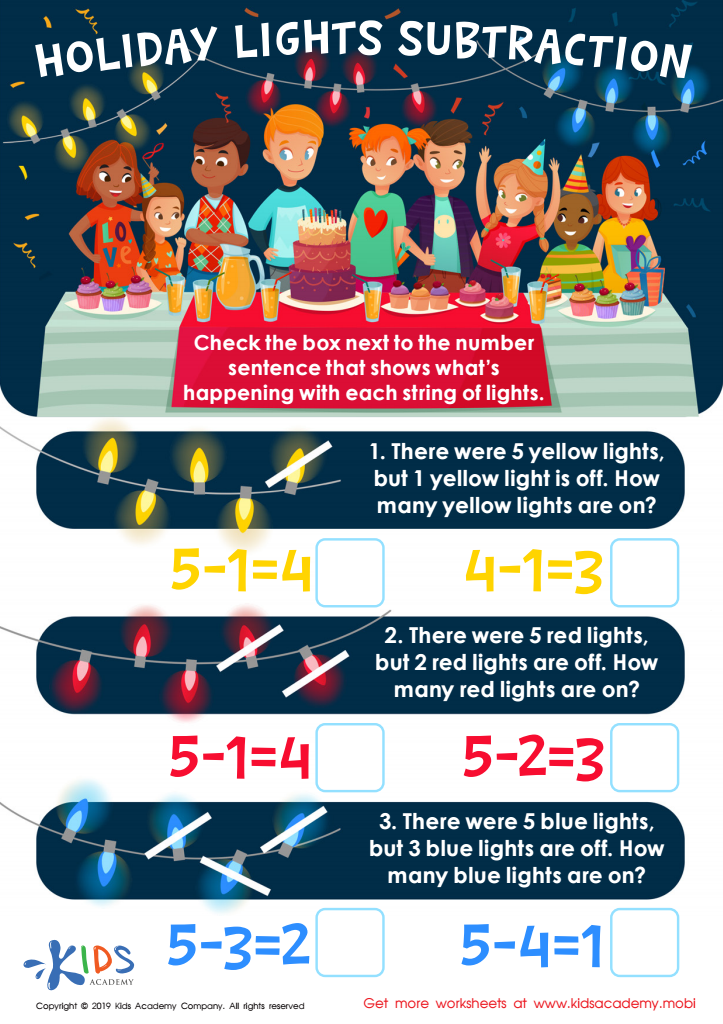
Holiday Lights Subtraction Worksheet
 Assign to My Students
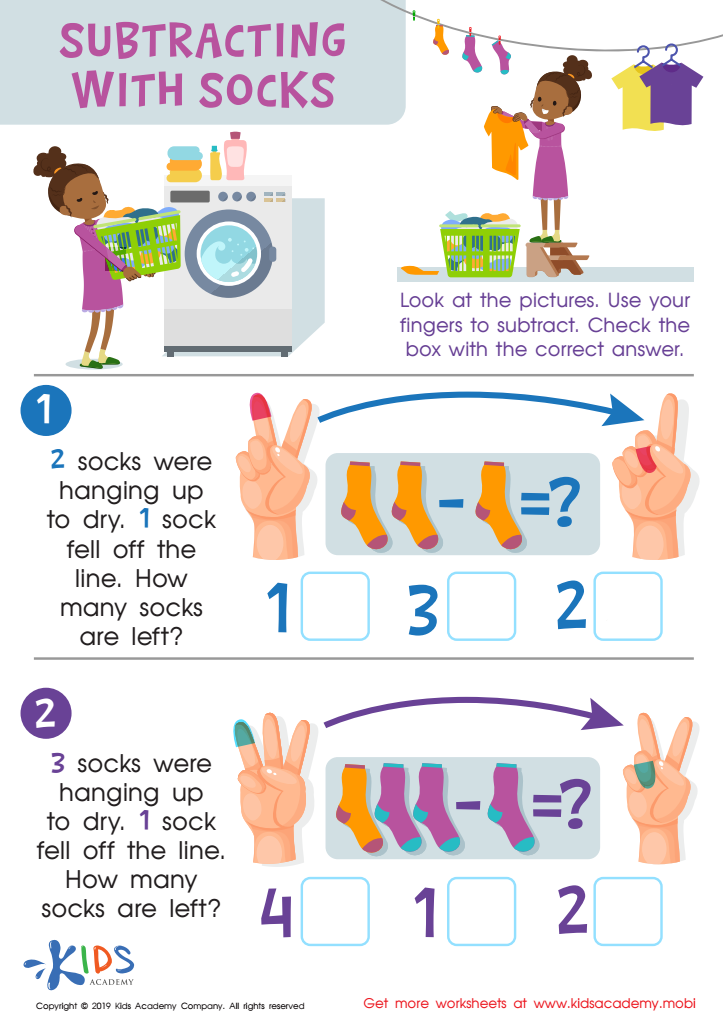
Subtracting Socks Worksheet
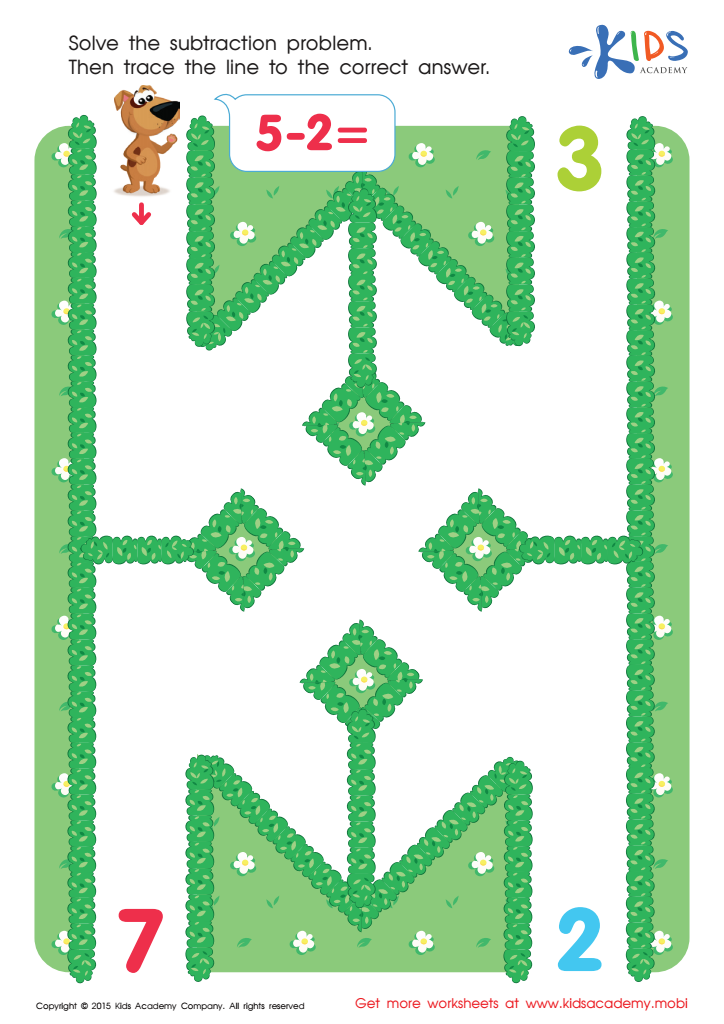
Five Minus Two Worksheet
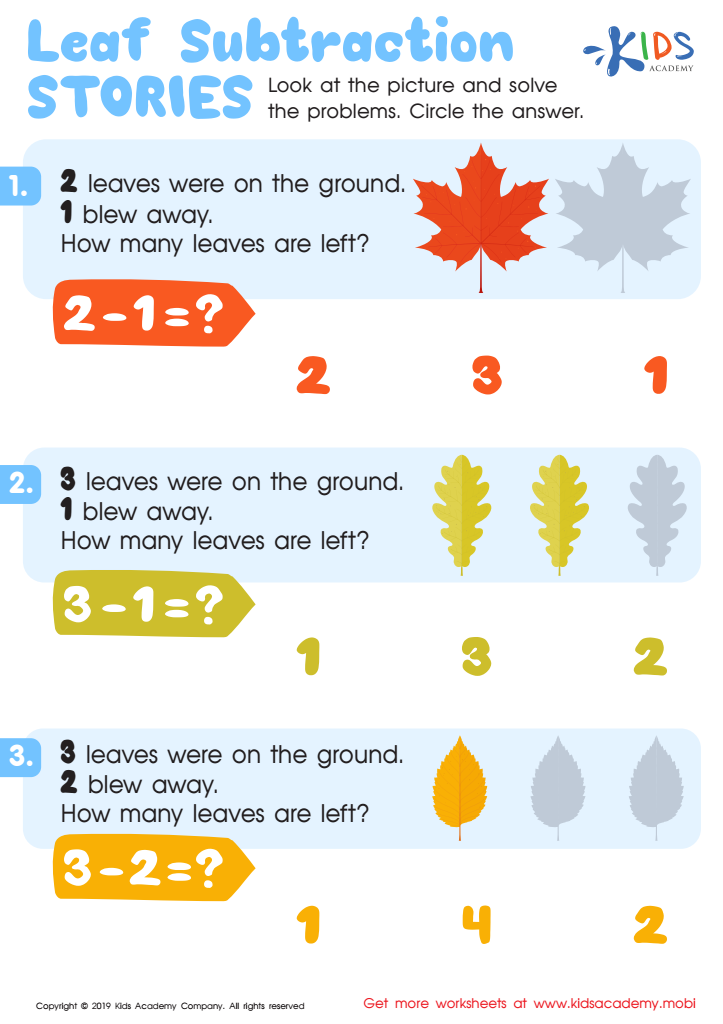
Leaf Subtraction Stories Worksheet
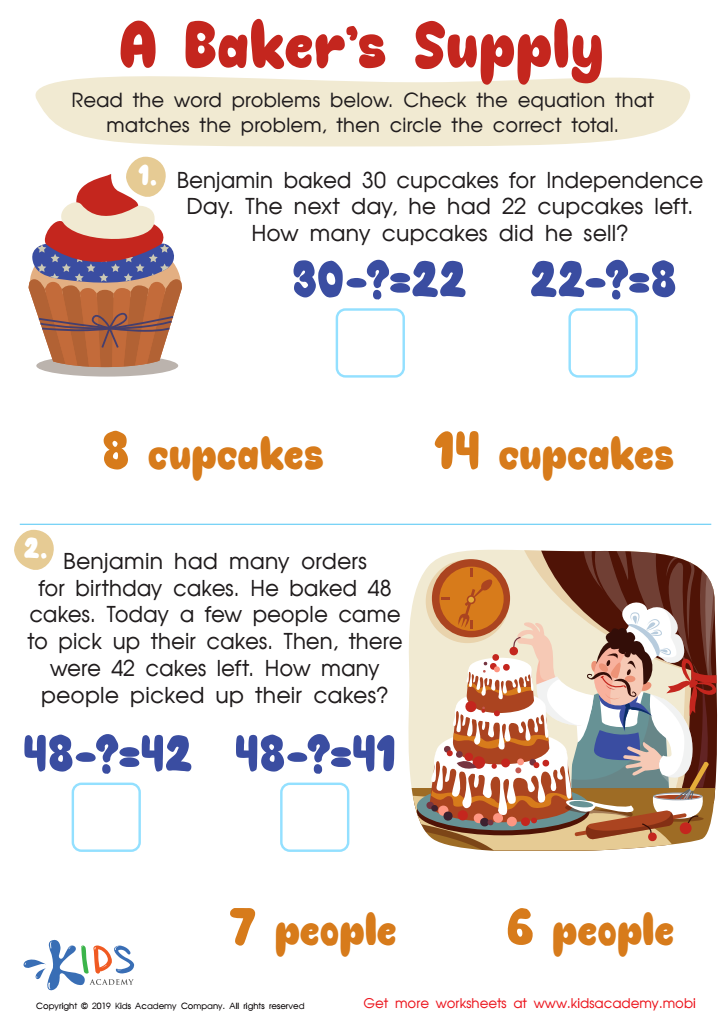
A Baker's Supply Worksheet
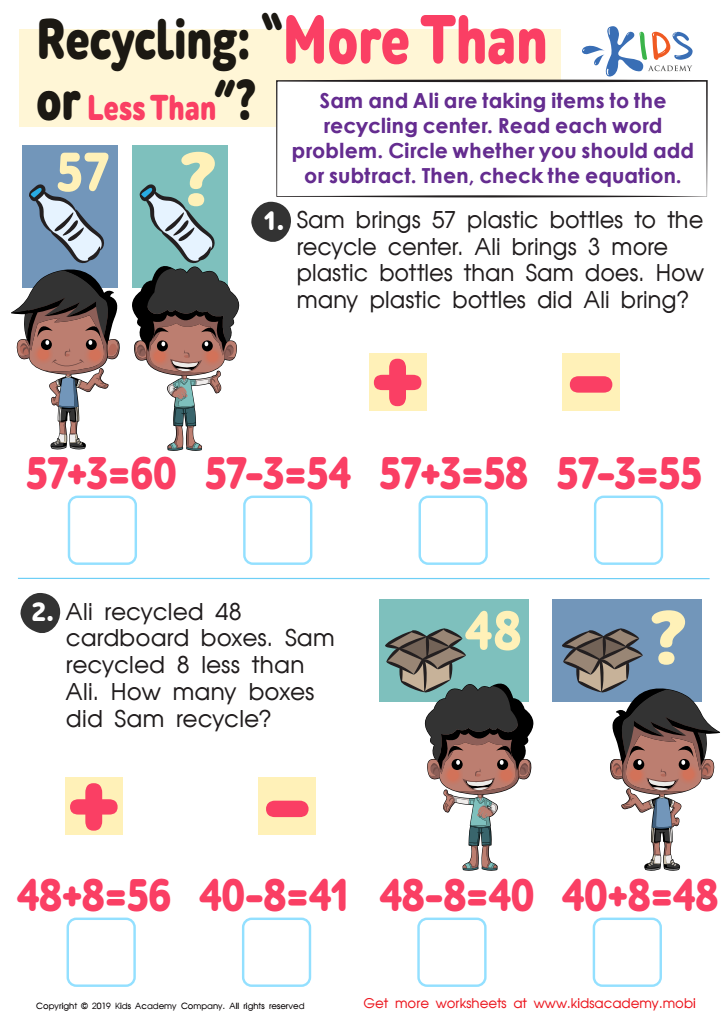
Recycling - More or Less Worksheet








Basic math skills, particularly subtraction, are crucial for children aged 3-5 as they form the foundation for higher-level mathematics and critical thinking. At this stage, children are naturally curious and eager to learn, making it the perfect time to introduce them to the concept of subtraction. Understanding this fundamental skill helps children develop problem-solving abilities, logical reasoning, and cognitive skills.
Moreover, subtraction is not just an academic skill; it’s a life skill. Young children often encounter situations where they need to understand the concept of "taking away" — such as sharing toys or counting snacks. When parents and teachers engage children in fun subtraction activities, it encourages a positive attitude toward math and builds their confidence in processing numerical information.
Early exposure to subtraction aids in mental arithmetic, which is vital as children progress through school. It promotes numerical literacy, enabling them to relate math to real-world scenarios, improving their communication skills related to quantitative ideas. Additionally, children who master basic math skills often perform better in later grades, creating a long-lasting love for learning. Hence, nurturing subtraction skills in young children ultimately sets them on a path to academic success and fosters a lifelong appreciation for mathematics.








