
Number Recognition Subtraction Worksheets for Ages 3-5
5 filtered results
Difficulty Level
Grade
Age
-
From - To
Subject
Activity
Standards
Welcome to our "Number Recognition Subtraction Worksheets" designed specifically for children ages 3-5! These engaging worksheets help young learners strengthen their foundational math skills while mastering number recognition and subtraction. Through fun illustrations and interactive exercises, kids will identify numbers and practice subtracting with like objects. Our resources cater to various learning styles, promoting independent practice while building confidence in early math concepts. Perfect for parents, educators, or caregivers, these worksheets foster a love for numbers and help set the groundwork for future math success. Explore our collection to support your child's learning journey today!
Favorites
With answer key
Interactive
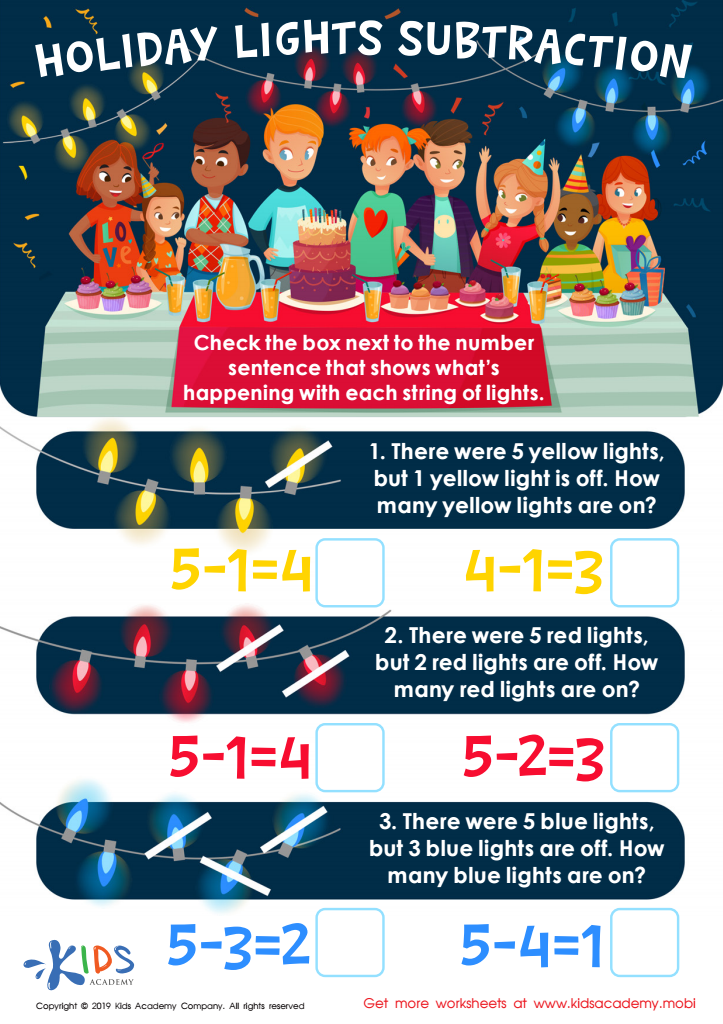
Holiday Lights Subtraction Worksheet
Before tackling the math problem, get your kids ready by asking them to share their favorite holiday and why. Then, look at the picture on the worksheet with them. Help them examine the numbers and problems, and select the number sentence that shows what's happening with each string of light. 80 words.
 Assign to My Students
Holiday Lights Subtraction Worksheet
Worksheet
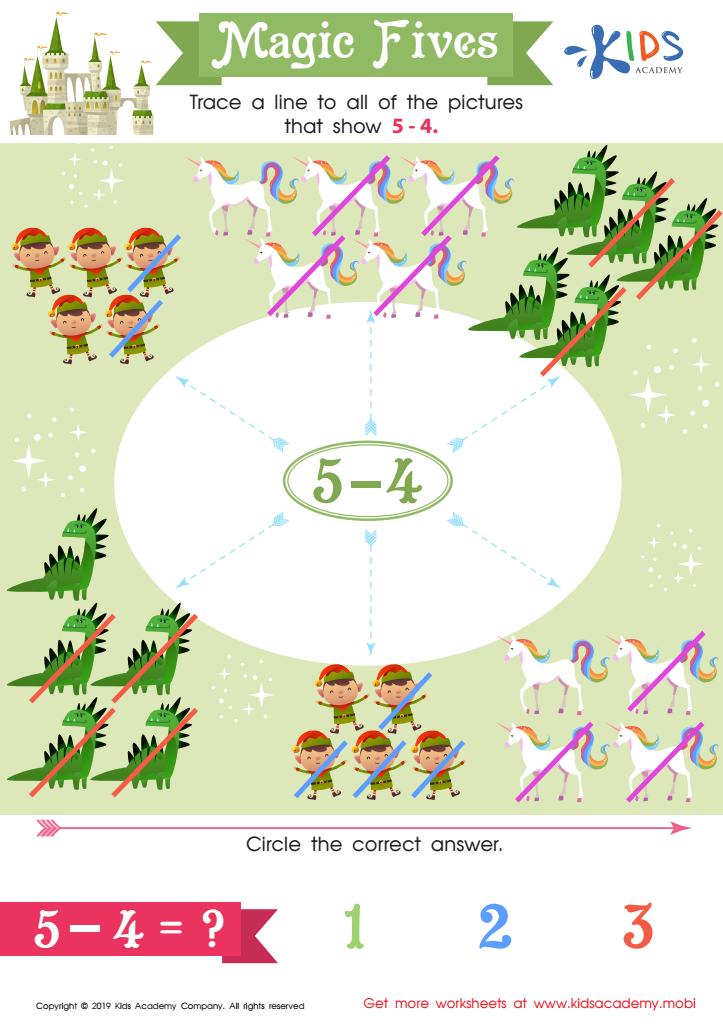
Magic Fives Worksheet
Help your students identify the objects & people in the worksheet. Point to the equation 5 -4 in the center, then get them to count the items and trace a line connecting those that add up to 5 - 4.
Magic Fives Worksheet
Worksheet
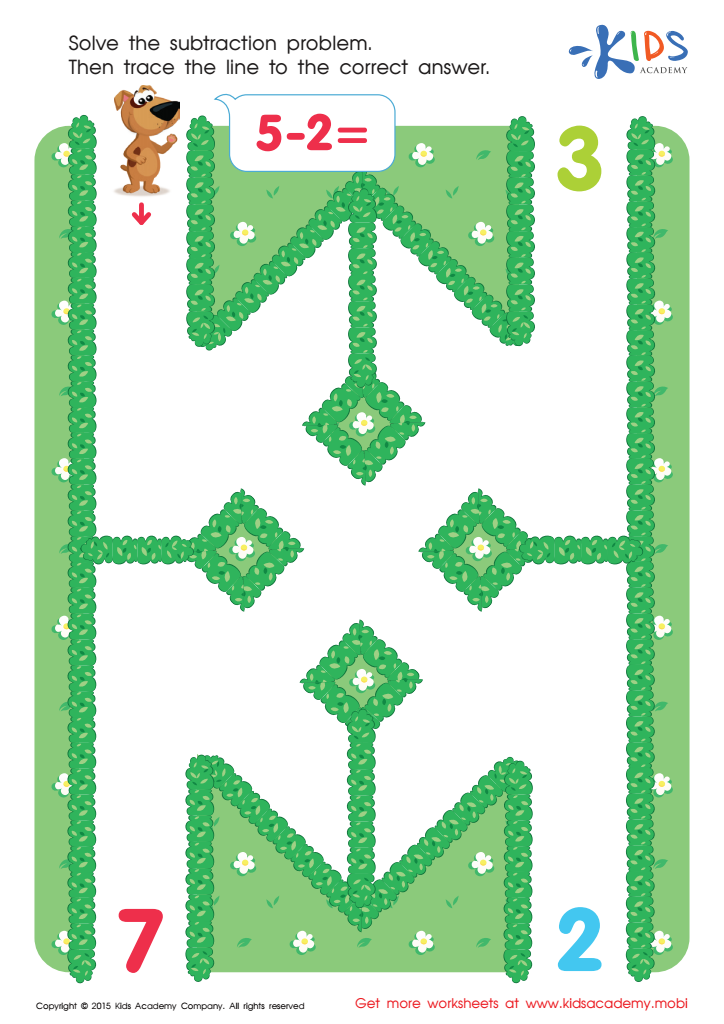
Five Minus Two Worksheet
Help the dog find its way by practising subtraction - trace the path and make sure to have fun!
Five Minus Two Worksheet
Worksheet
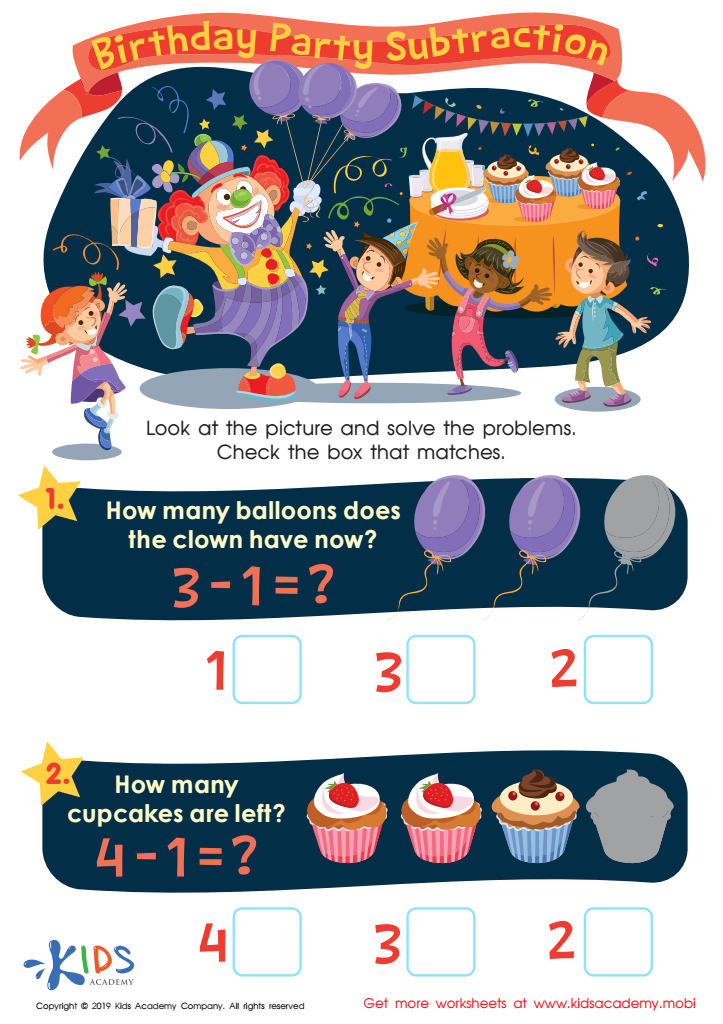
Birthday Party Subtraction Worksheet
Kids love birthday parties, with fun activities and yummy treats. Make math fun with this worksheet! It has pictures of a party, and your kids should solve the problems and check the matching box. They'll get to learn math, and have fun too!
Birthday Party Subtraction Worksheet
Worksheet
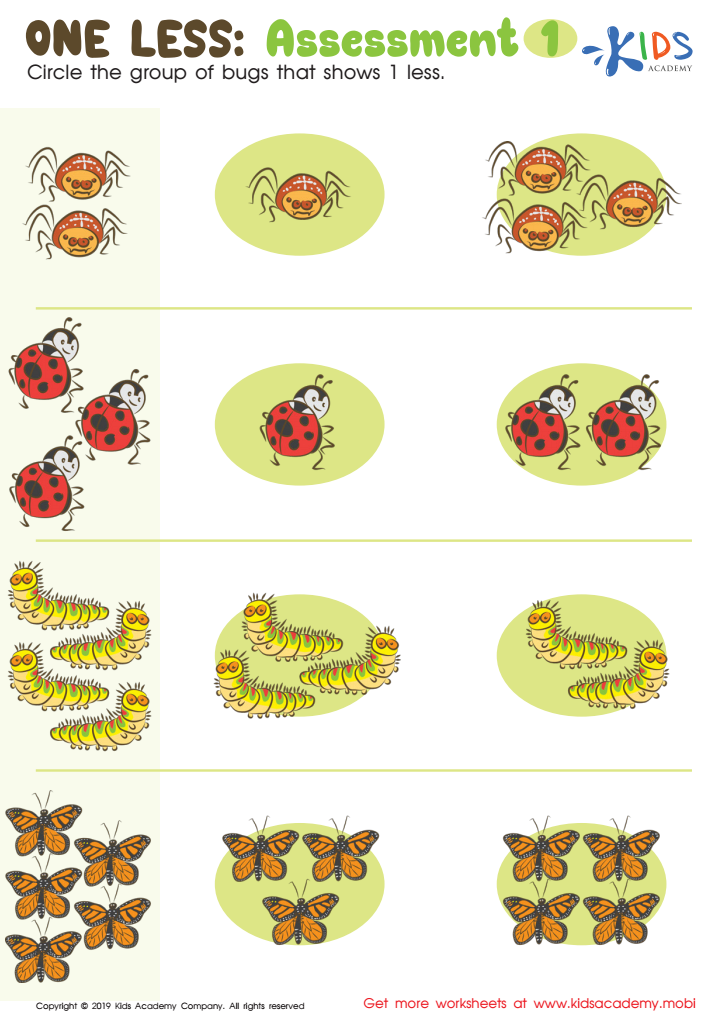
One Less: Assessment 1 Worksheet
Help your kids with counting using this worksheet that has pictures of bugs! There are four different bugs and insects. Show them each one and ask them to count, then circle the group that has 1 less than the previous group. Don't worry if your kids don't like bugs - it's just a picture!
One Less: Assessment 1 Worksheet
Worksheet
Join Kids Academy for Free
Who is primarily going to use this learning content?








Number recognition and subtraction skills are fundamental building blocks for early childhood development, particularly for children aged 3-5. At this stage, children develop critical cognitive and mathematical concepts that greatly influence their future learning trajectories. Understanding number recognition helps children identify and differentiate numbers, laying the groundwork for more complex mathematical operations later on.
Subtraction, a key aspect of early math, introduces the idea of taking away and understanding quantity in a relatable manner. It enhances problem-solving skills and supports cognitive development through engagement with real-life scenarios, such as sharing or dividing objects, which children naturally encounter. When parents and teachers focus on these skills, they foster a love for math and encourage a natural curiosity for learning.
Furthermore, early mastery of number recognition and basic subtraction can boost children's self-confidence in their mathematical abilities. As these skills are reinforced through play and interactive activities, children develop critical thinking and reasoning skills, promoting overall cognitive growth. Investing in early math education equips children with the essential tools they need, not only for academic success but also for practical life skills, ultimately setting them on a path toward lifelong learning and achievement.








