Hand-eye Coordination Word Problems Worksheets for Ages 3-5
3 filtered results
-
From - To
Our Hand-eye Coordination Word Problems Worksheets for ages 3-5 merge fun with essential learning. Designed to foster development through engaging exercises, these worksheets help young learners enhance their problem-solving abilities while improving their hand-eye coordination. Featuring colorful visuals and simple word problems, children practice counting, matching, and more. These activities not only stimulate cognitive growth but also refine motor skills, making learning enjoyable and effective. Perfect for early learners, parents, and educators, our comprehensive worksheets set a strong foundation for future academic success. Explore now and watch your child’s skills flourish!
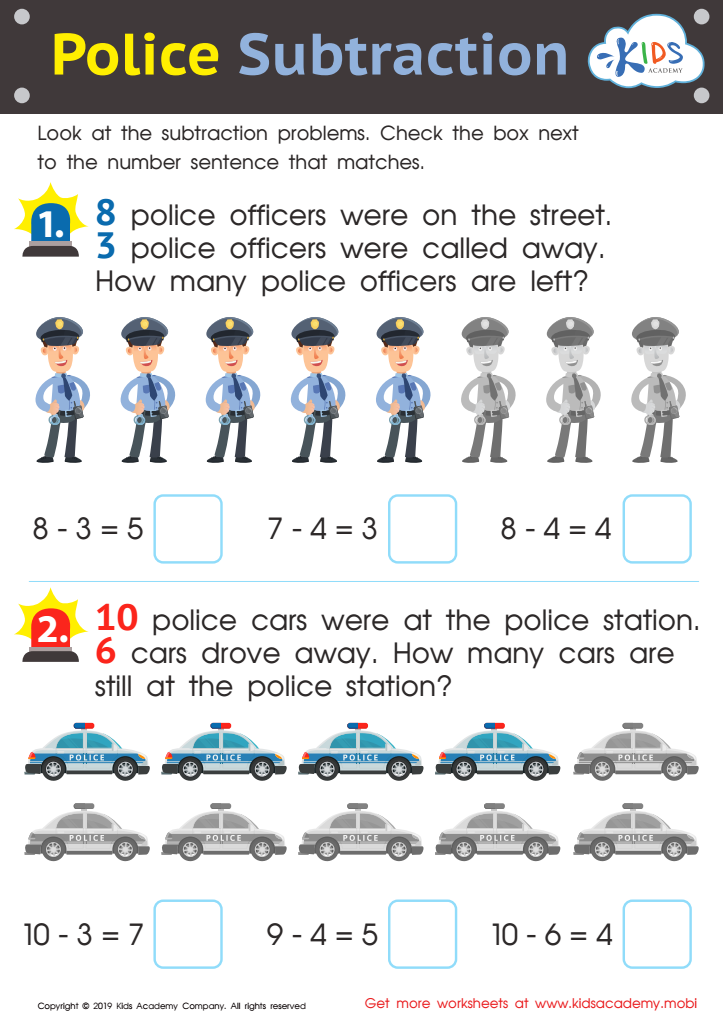
Police Subtraction Worksheet
 Assign to My Students
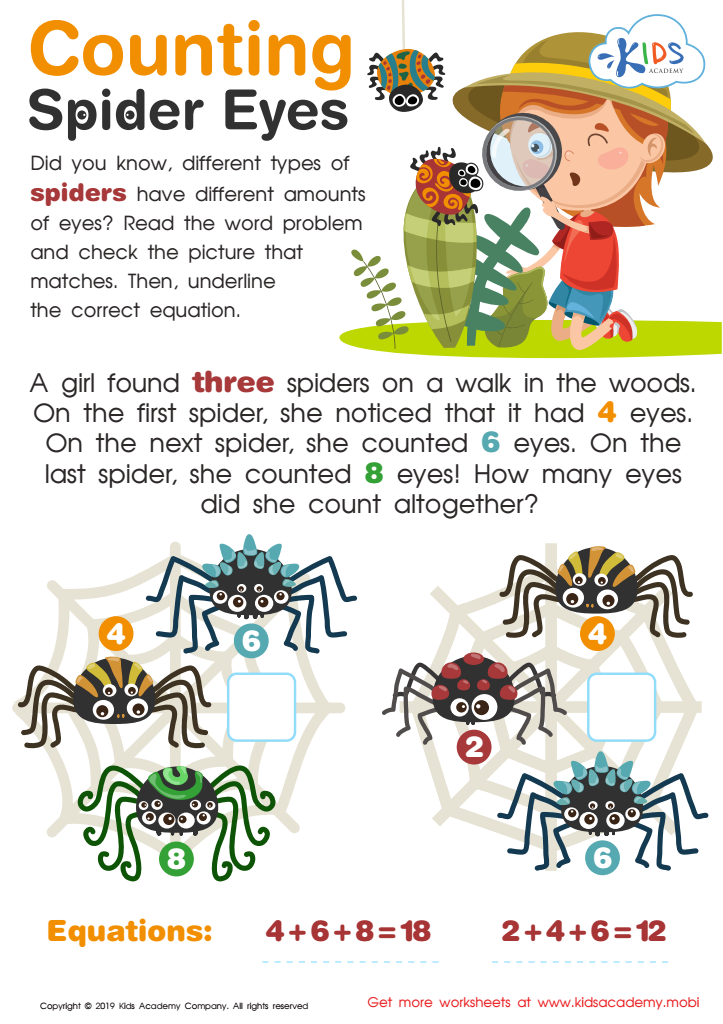
Counting Spider Eyes Worksheet
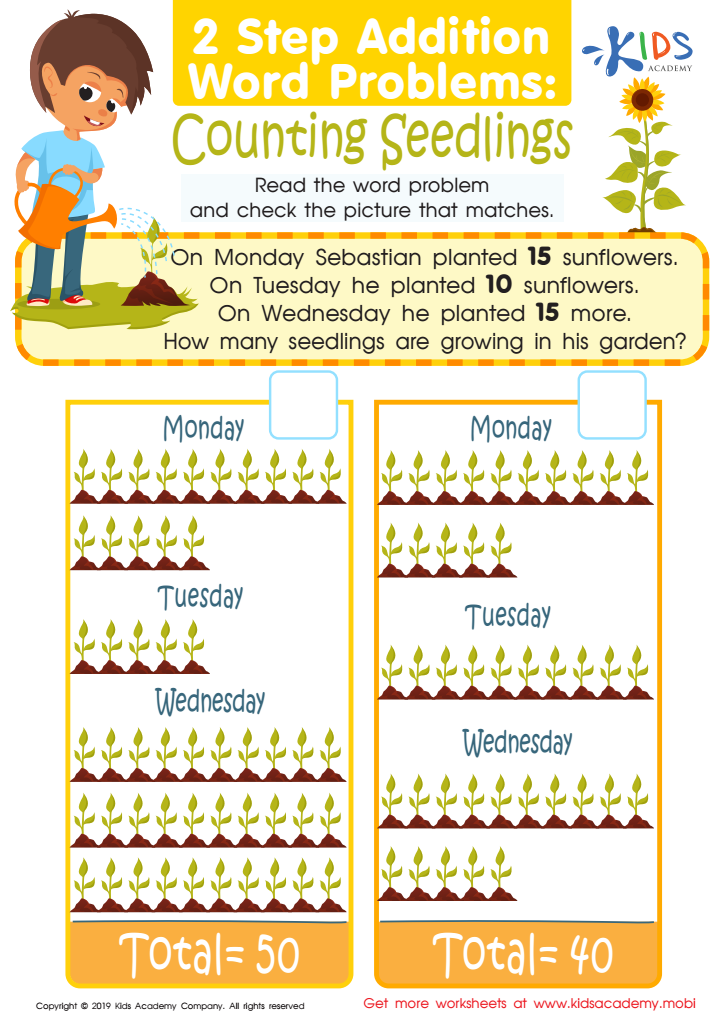
Counting Seedlings Worksheet






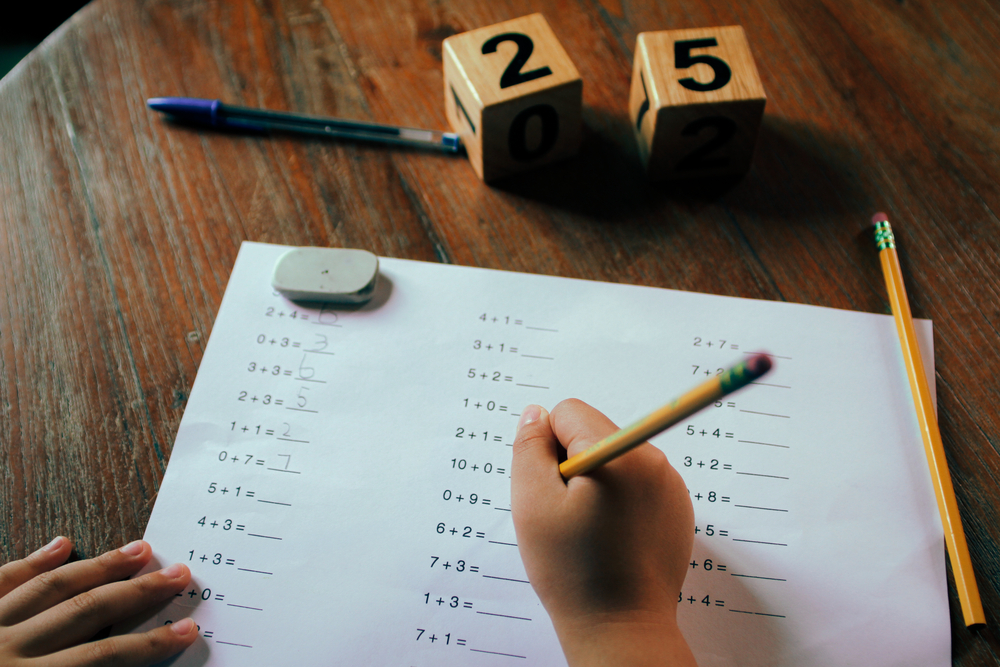

Hand-eye coordination word problems for children aged 3-5 are significant in early childhood development because they promote essential cognitive and motor skills. At this age, children are rapidly developing their ability to understand visual information and physically interact with their environment. Working on such problems helps enhance fine motor skills, which are crucial for everyday tasks such as writing, drawing, and manipulating objects.
Moreover, these activities foster problem-solving skills and spatial awareness. For instance, when a child engages in a game that requires placing blocks in corresponding holes or matching pictures with words, they are simultaneously improving their ability to interpret visual cues and coordinate muscle movements. This dual engagement nurtures both their analytical thinking and precision, setting a strong foundation for future academic and extracurricular activities.
Hand-eye coordination tasks are also instrumental in supporting language development. When children are prompted to solve word problems, they are exposed to new vocabulary and sentence structure. This exposure enhances their ability to follow instructions and boosts verbal communication skills.
Emphasizing hand-eye coordination early on is equally important for overall confidence and independence, as these tasks often require patience and perseverance. Hence, parents and teachers should care deeply about integrating such activities into playtime and learning routines to holistically support children's growth.








