Hand-eye Coordination Building Vocabulary Worksheets for Ages 3-5
3 filtered results
-
From - To
Explore our engaging Hand-eye Coordination Building Vocabulary Worksheets, specially designed for children ages 3-5! These interactive worksheets blend vocabulary building with hand-eye coordination exercises to promote essential early learning skills. Each activity encourages kids to improve fine motor skills while enhancing their word recognition and language comprehension. Perfect for both home and classroom settings, our resources are colorful, fun, and tailored to keep little learners motivated. Boost your child's cognitive development with exciting games that make learning enjoyable! Download our worksheets today and watch your child flourish as they develop their vocabulary and coordination in a playful, supportive environment.
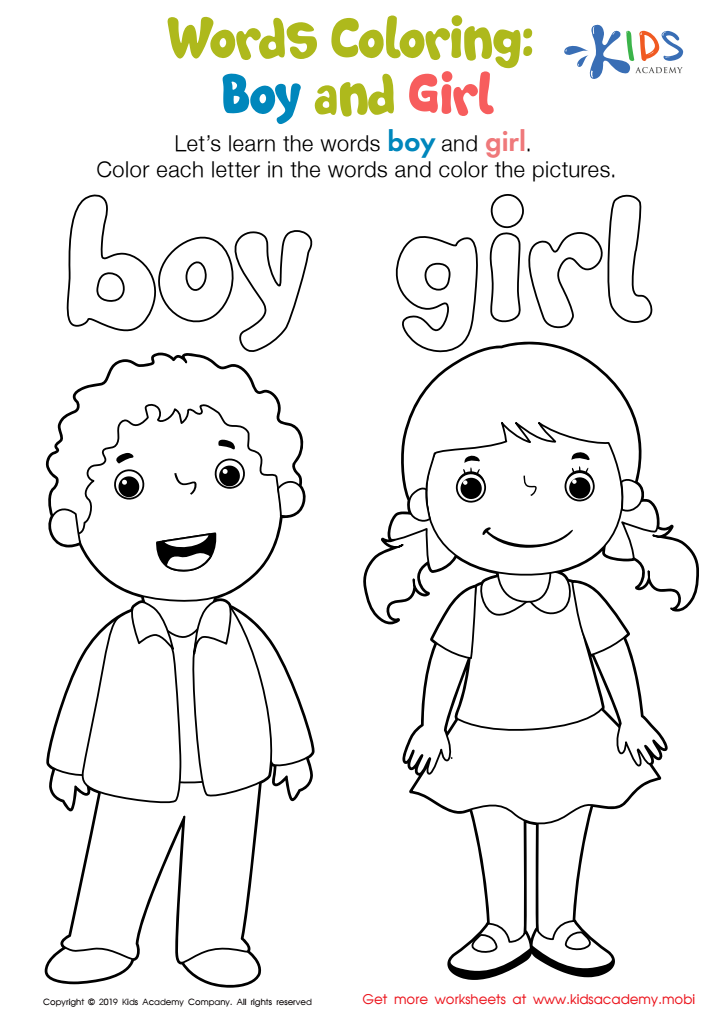
Boy and Girl Words Coloring Worksheet
 Assign to My Students











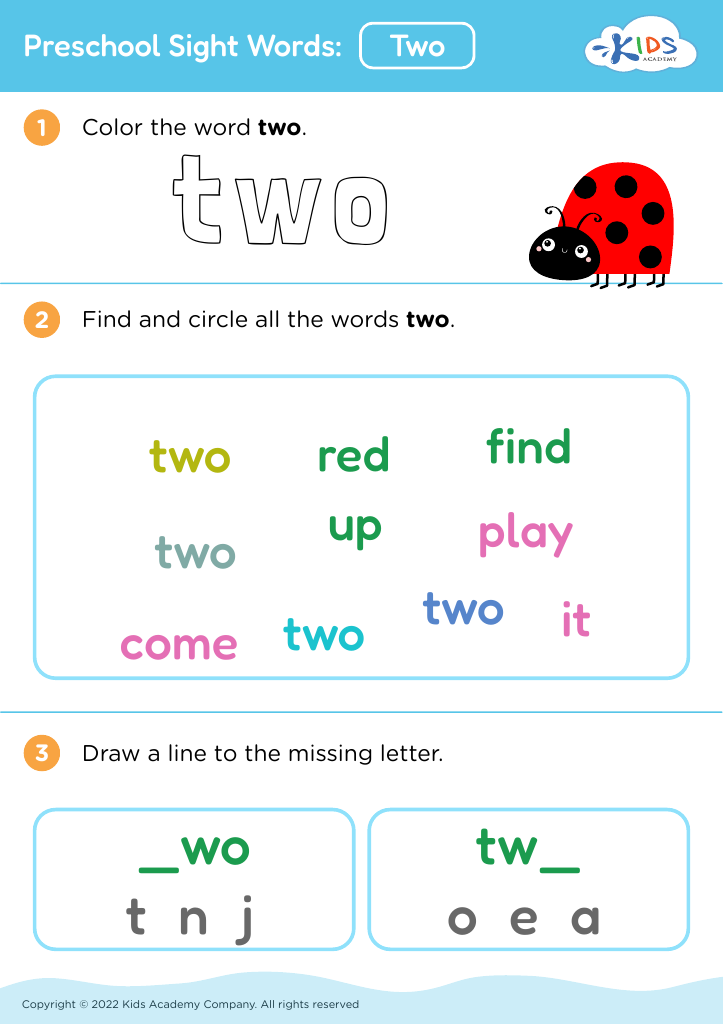
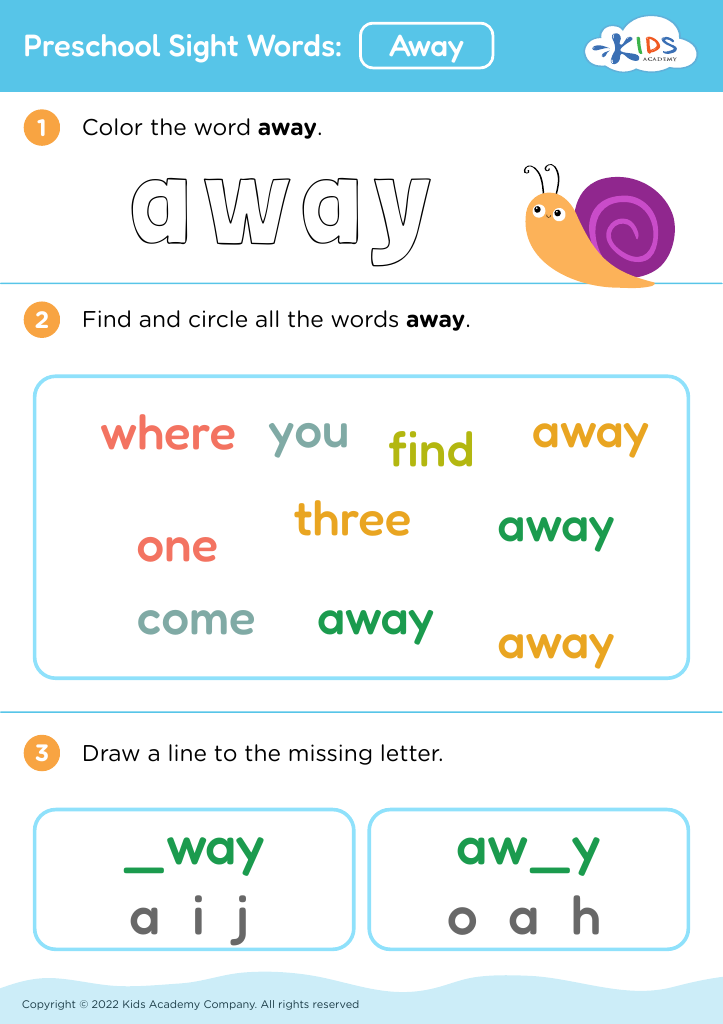



.jpg)



Hand-eye coordination is a crucial skill for young children, particularly those aged 3-5, as it lays the foundation for various developmental milestones. Parents and teachers should care about this skill because it significantly impacts a child's ability to engage in everyday activities, from simple tasks like grasping a crayon to more complex undertakings like catching a ball or dressing themselves. Building hand-eye coordination enhances fine motor skills, which are essential for writing, drawing, and other academic tasks.
Moreover, developing vocabulary around these skills promotes cognitive growth. When children learn the words associated with their physical movements, such as "throw," "catch," "grab," and "balance," they better understand their actions and can articulate their experiences. This link between vocabulary and physical skills encourages language development while reinforcing their ability to communicate effectively.
Additionally, improved hand-eye coordination fosters confidence. Children who excel in these skills often feel more capable and willing to try new activities, which further enhances their social interactions and willingness to learn. Ultimately, prioritizing hand-eye coordination and the coupling of vocabulary acquisition establishes a strong foundation for both physical and intellectual growth, preparing children for future academic success and broader life experiences.








