Reading practice Building Vocabulary Worksheets for Ages 3-5
3 filtered results
-
From - To
Enhance your child's vocabulary with our engaging Reading Practice Building Vocabulary Worksheets, specially designed for ages 3-5. These worksheets offer fun, interactive activities that foster early reading skills and word recognition. Each page is packed with vivid illustrations and playful exercises that make learning enjoyable and effective. Our worksheets support children's understanding of new words through context, repetition, and practical usage. By incorporating phonics and sight word practices, these resources help young learners build a strong vocabulary foundation. Perfect for parents and educators, these worksheets set the stage for a love of reading and lifelong learning.
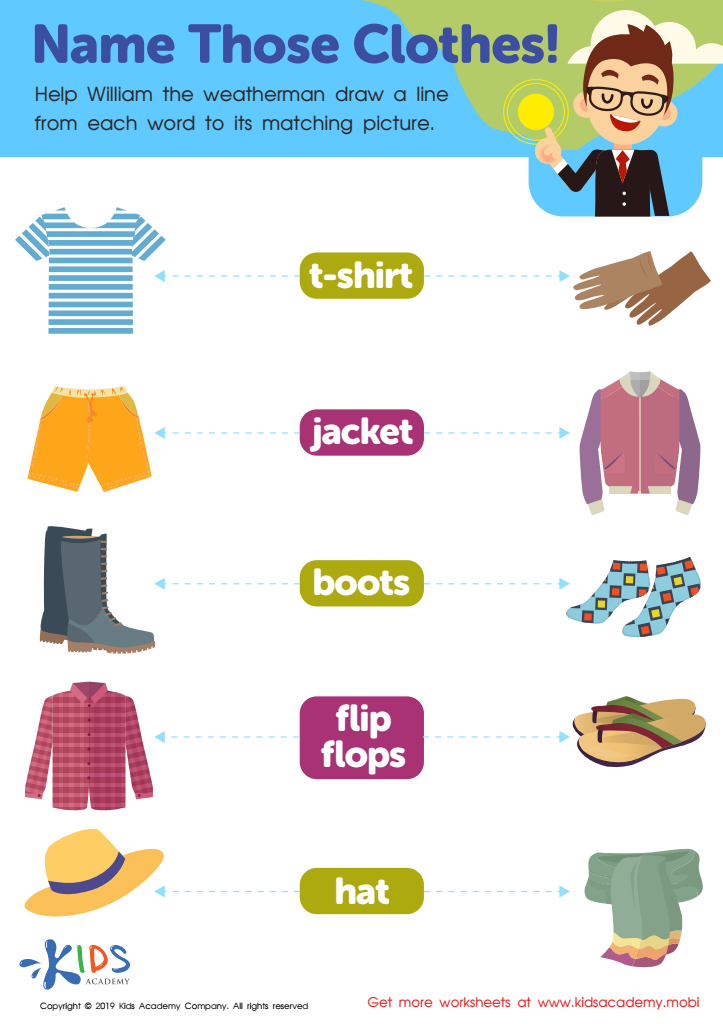
Name Those Clothes Worksheet











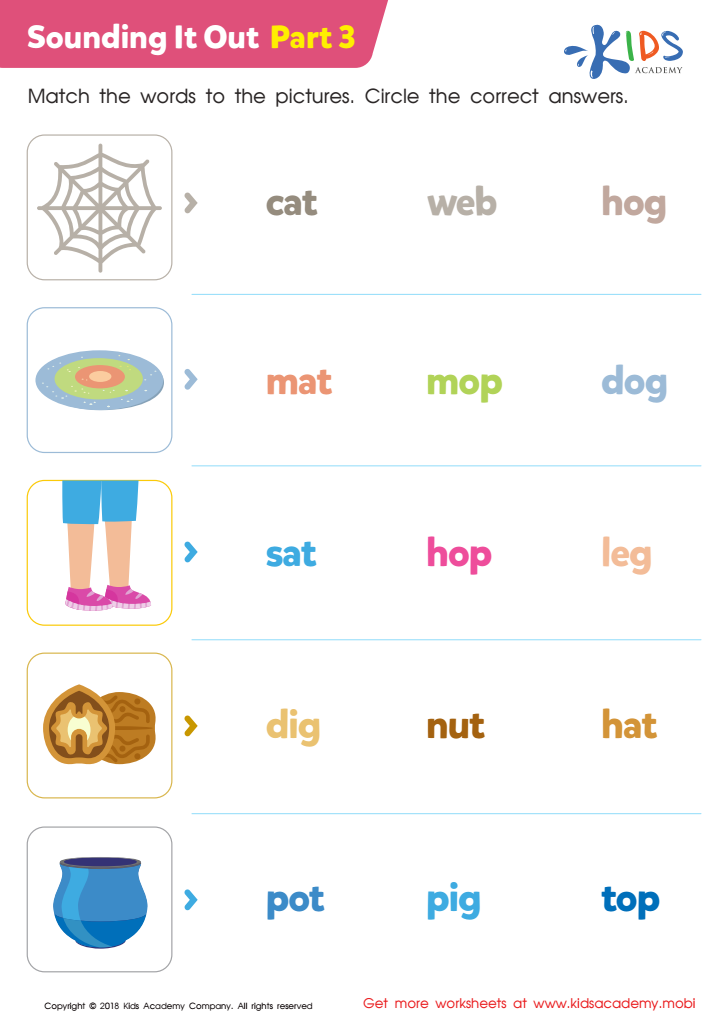
Sounding it Out: Part 3 Worksheet
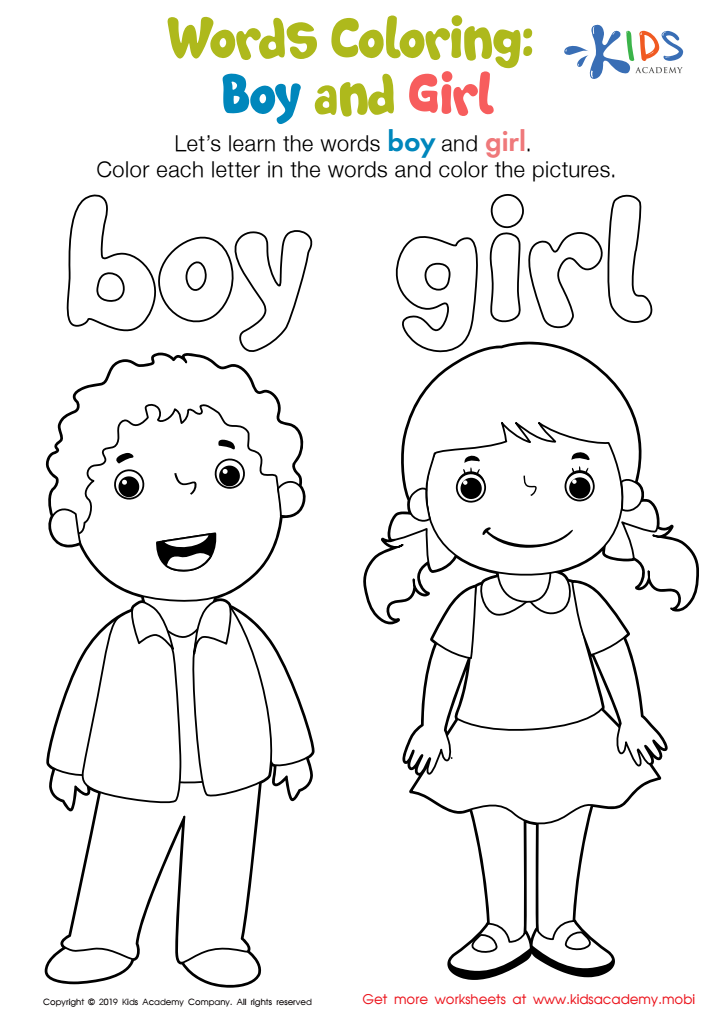
Boy and Girl Words Coloring Worksheet
 Assign to My Students








Ensuring children aged 3-5 engage in reading practice and vocabulary building is crucial for their developmental milestones and sets a solid foundation for lifelong learning. During these formative years, children's brains are highly receptive, making it the optimal period to cultivate essential language and cognitive skills.
Firstly, reading to young children introduces them to a rich variety of words and sentence structures they might not encounter in everyday conversations. This exposure helps expand their vocabulary and improves comprehension skills. As children learn new words, they develop better communication abilities, enabling them to express their thoughts and emotions more effectively.
Secondly, a robust vocabulary is closely linked to later reading success. When children enter school with a strong grasp of words, they find it easier to decode and understand text, leading to better academic performance in all subjects. Engaging with books also sparks a love for reading, contributing to a positive attitude towards learning.
Finally, reading practice enhances cognitive skills such as memory, attention, and critical thinking. It helps children understand sequences, recognize patterns, and make predictions, essential for problem-solving abilities.
Parents and teachers should prioritize reading and vocabulary activities to ensure children develop the necessary language, cognitive, and social-emotional skills. Fostering a language-rich environment at this age lays the groundwork for educational success and a lifelong passion for reading.








