
Spatial awareness Building Vocabulary Worksheets for Ages 3-5
3 filtered results
Difficulty Level
Grade
Age
-
From - To
Subject
Activity
Standards
Boost your child's understanding of spatial awareness with our engaging vocabulary building worksheets designed specifically for ages 3-5. These worksheets incorporate fun activities that help young learners grasp essential concepts of location, direction, and spatial relationships. Through vibrant illustrations and age-appropriate exercises, children develop critical language skills while exploring terms like "over," "under," "beside," and more. Our interactive approach encourages exploration and cognitive development, making learning enjoyable and effective. Perfect for home or classroom use, these resources provide a fantastic way to strengthen early literacy and math skills. Start nurturing your child's spatial awareness and vocabulary today!
Favorites
With answer key
Interactive
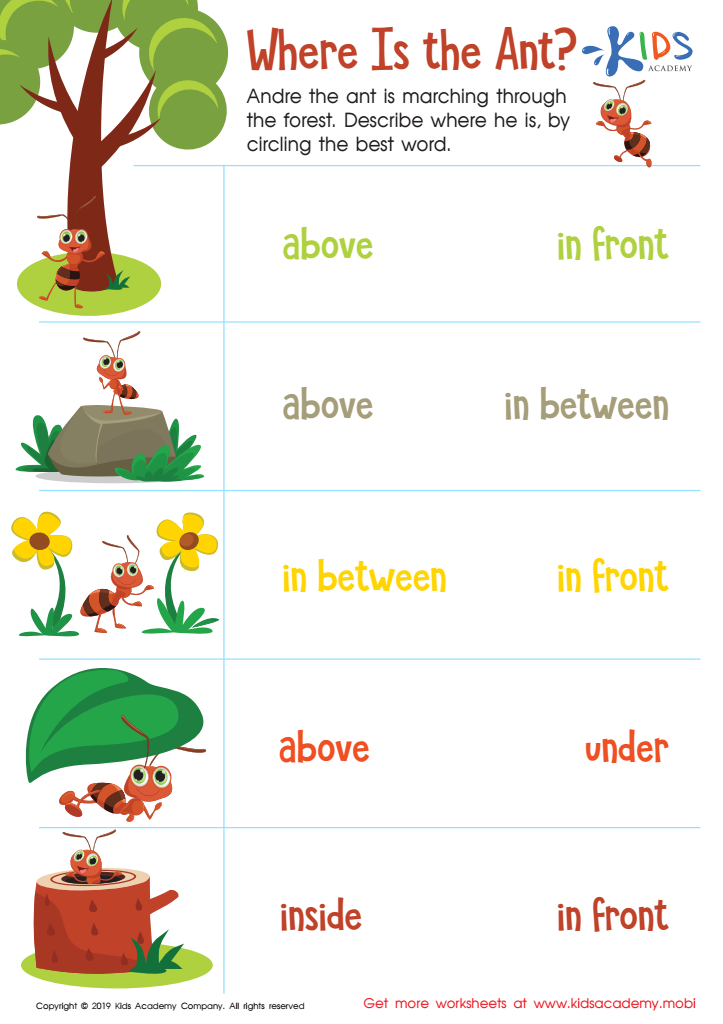
Where Is the Ant? Worksheet
Kids are captivated by ants. Andre is a busy ant, marching through the forest. Help your child circle the best word that best describes what he's doing in each picture. This colorful printout will show them the way.
 Assign to My Students
Where Is the Ant? Worksheet
Worksheet











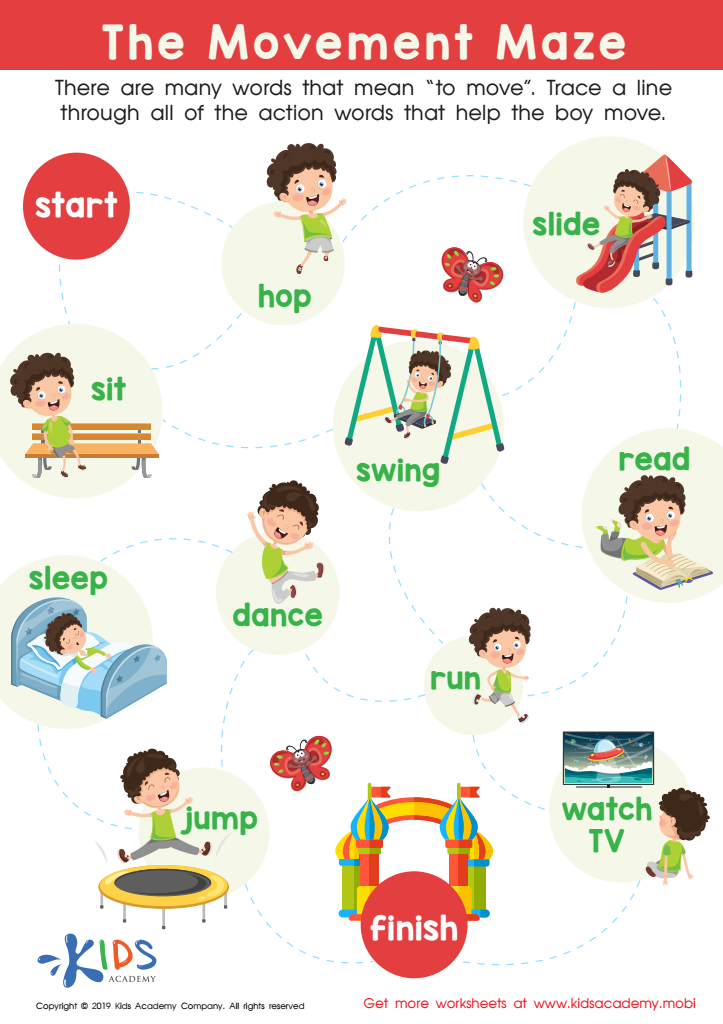
The Movement Maze Worksheet
Let your child have fun with this interactive PDF download. Kids will learn movement words with cute pictures, plus practice fine motor skills as they trace. A fun way to reinforce vocabulary. Jump, hop and sit – it's all here!
The Movement Maze Worksheet
Worksheet
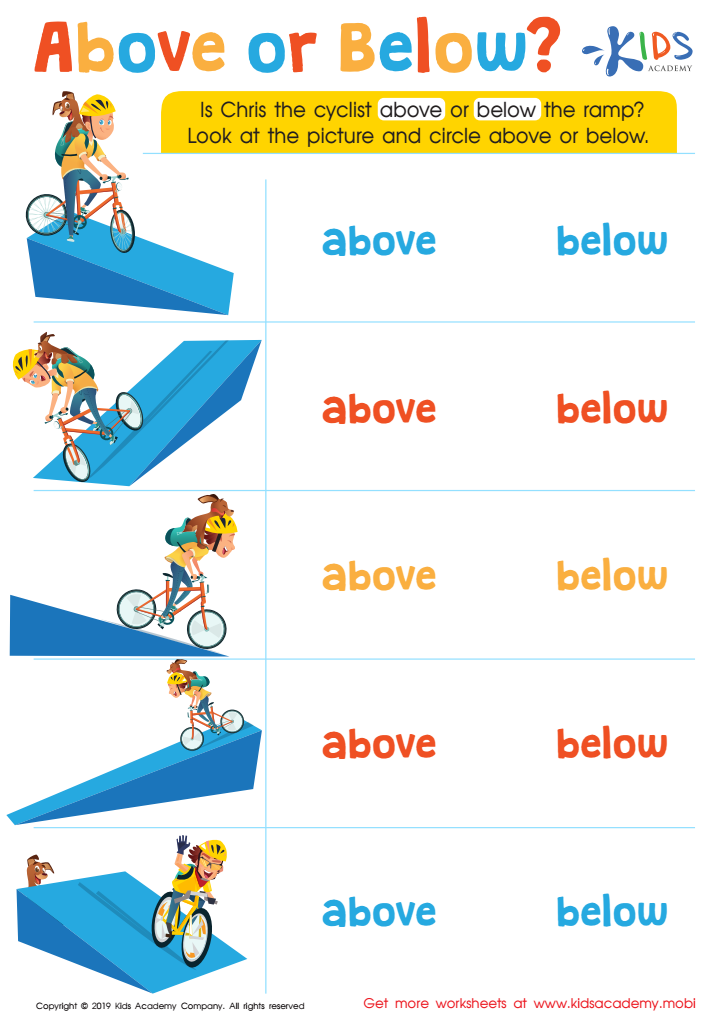
Above or Below? Worksheet
Do your kids cycle? Chris is a cyclist practicing on a ramp. Look at the pictures with them and decide if Chris is above or below the ramp. It's an important skill to help your kids become fluent speakers and writers - using the right words to describe something. Cycling is a fun sporting event.
Above or Below? Worksheet
Worksheet
Join Kids Academy for Free
Who is primarily going to use this learning content?





.jpg)


Spatial awareness is crucial for young children's overall development, particularly between the ages of 3-5. It involves the ability to recognize and understand the relationships between objects in space, which is foundational for many critical skills, including problem-solving, math, and literacy. When children have a strong grasp of spatial concepts, they can better understand directions, sizes, and shapes, which enhances their ability to navigate their surroundings and interact with the world effectively.
Building vocabulary in this area is equally important. Incorporating terms related to space—like "under," "over," "next to," "far," and "close"—helps create a language-rich environment. A robust vocabulary not only aids communication but also connects language skills to cognitive development. Engaging in playful activities that encourage spatial language use, such as building blocks or mapping out treasure hunts, makes learning interactive and enjoyable.
Parents and teachers play a pivotal role by introducing spatial concepts and vocabulary through engaging games, stories, and everyday experiences. Supporting spatial awareness development prepares children for future learning challenges, making it a fundamental aspect of early childhood education. By focusing on this, adults can equip children with essential skills that lay the groundwork for academic success and everyday life navigation.








