
Vocabulary development Building Vocabulary Worksheets for Ages 3-5
5 filtered results
Difficulty Level
Grade
Age
-
From - To
Subject
Activity
Standards
Encourage your child's language skills with our "Vocabulary Development Building Vocabulary Worksheets" for ages 3-5! Designed to enhance early literacy, these engaging worksheets introduce young learners to new words and concepts in a fun and interactive manner. Through colorful illustrations and simple exercises, children can expand their vocabulary, improve comprehension, and develop critical thinking. Perfect for preschool and kindergarten, these printable worksheets set a strong foundation for reading and communication success. Help your little one explore the wonderful world of words right from the start! Visit Kids Academy to download our free worksheets today.
Favorites
With answer key
Interactive
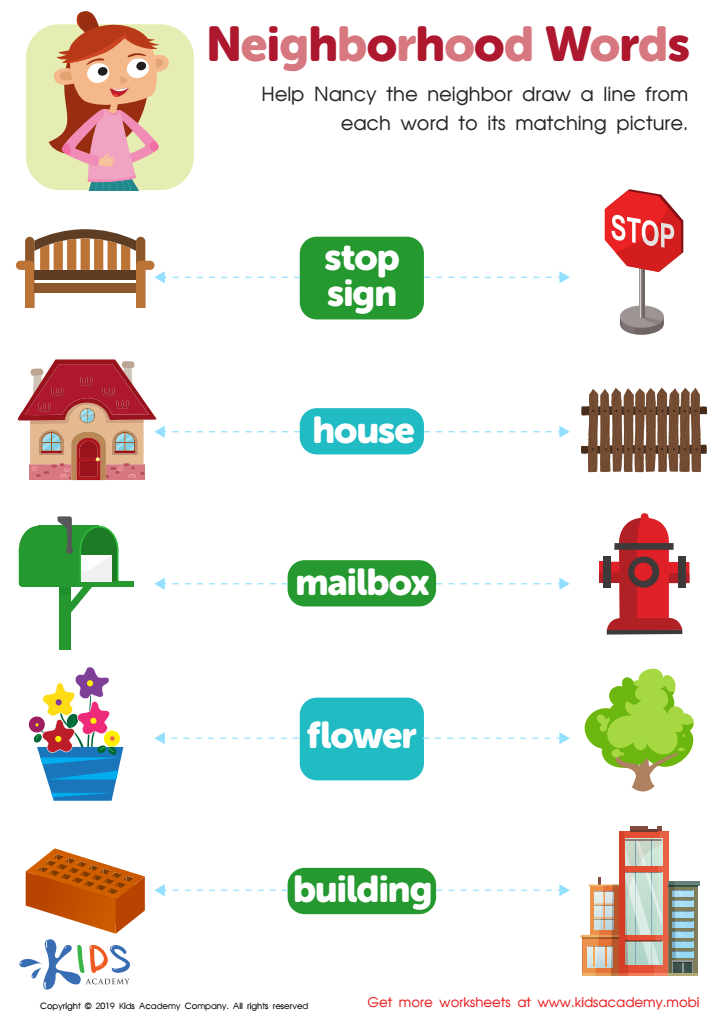
Neighborhood Words Worksheet
Help preschoolers develop life skills and familiarize them with words and concepts with this worksheet! It'll also boost their fine motor skills as they trace lines to match pictures with the words. They'll learn new words and feel more confident in their reading.
 Assign to My Students
Neighborhood Words Worksheet
Worksheet











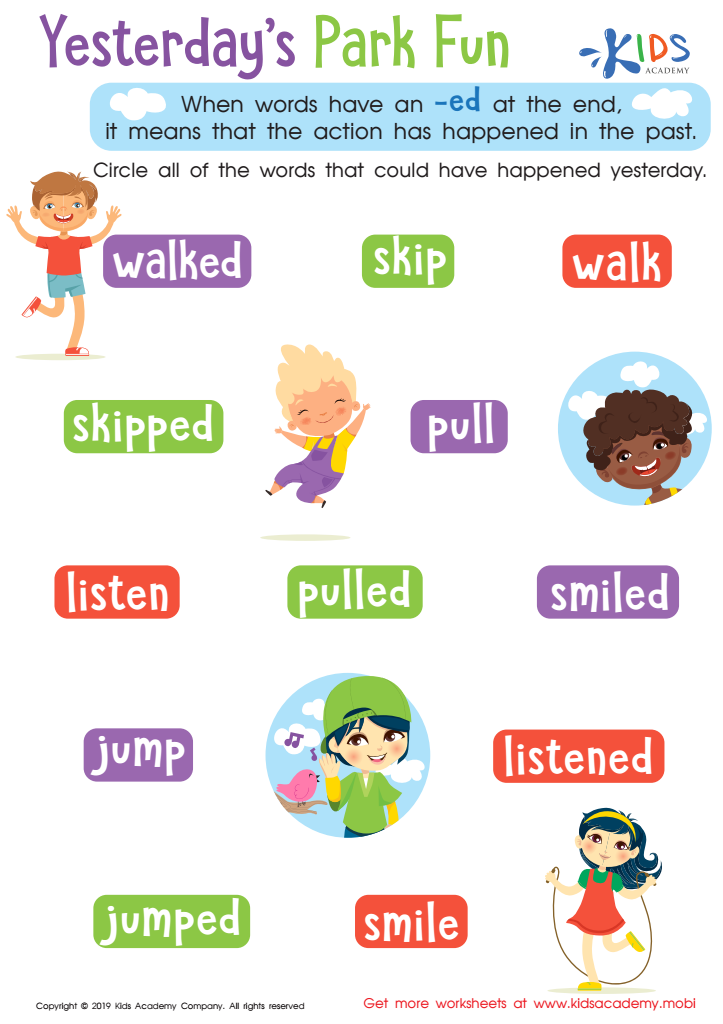
Yesterday's Park Fun Worksheet
Add -ed to the end of words and you get a word that happened in the past. This PDF helps your child understand this concept by giving practice examples: walk, pull, jump and smile can all be transformed into the past tense with a -ed suffix. They'll circle all the words that happened yesterday and learn about the past tense.
Yesterday's Park Fun Worksheet
Worksheet
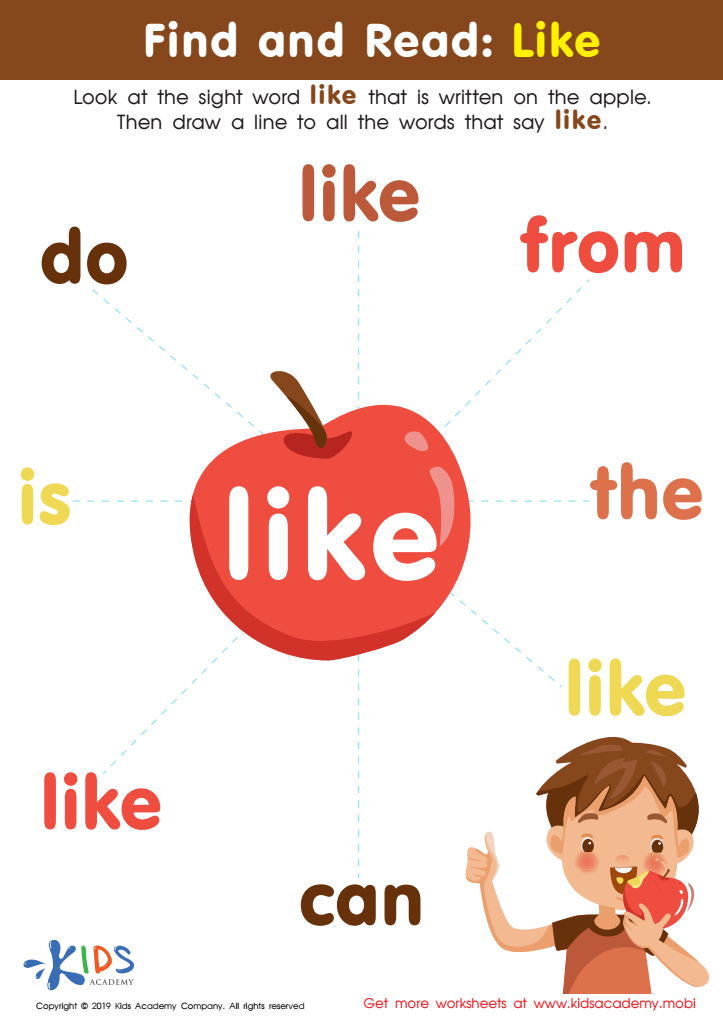
Find and Read: Like Worksheet
Reading starts with learning sight words. This free PDF worksheet helps kids learn the word "like" in various ways. It encourages their visual discrimination skills with its colorful design and traceable lines. It's a great way to help them recognize and differentiate this common sight word from other words that look similar.
Find and Read: Like Worksheet
Worksheet
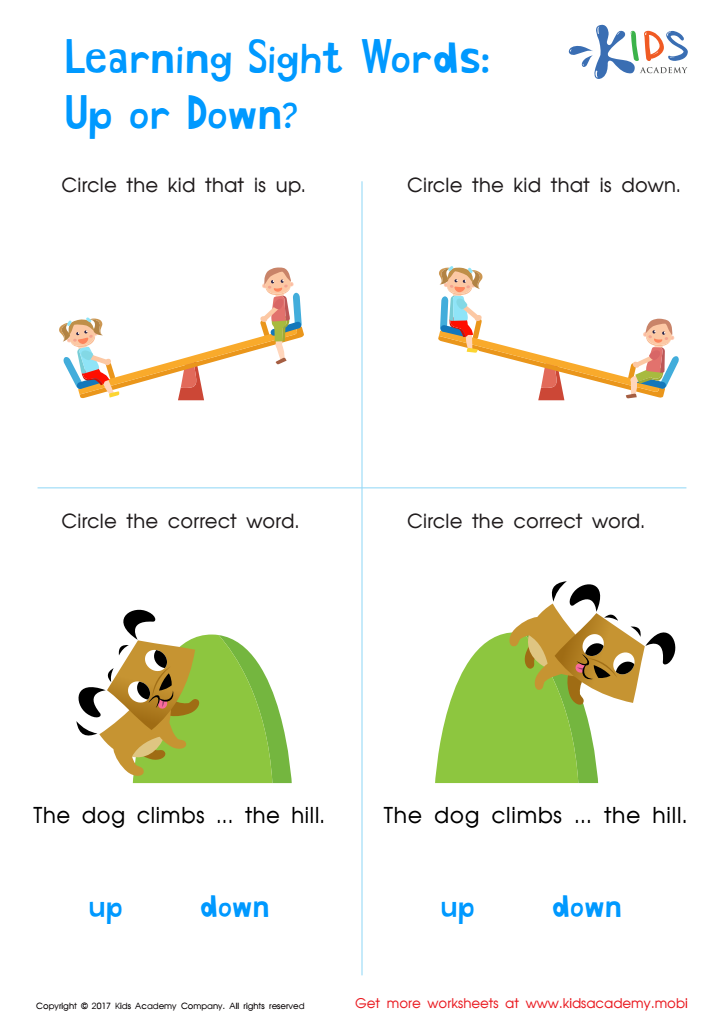
Up or Down Printable Sight Words Worksheet
Help your child identify up and down in print with this sight words worksheet. It has simple sentences, vibrant images and easy-to-read language that allow your little learner to practice these essential sight words. Perfect for early readers!
Help your early reader identify and read up and down with this sight words worksheet. It provides simple sentences, clear language and vibrant images to help them practice these essential sight words. Perfect for toddlers!
Up or Down Printable Sight Words Worksheet
Worksheet
Join Kids Academy for Free
Who is primarily going to use this learning content?




.jpg)


.jpg)
Vocabulary development during ages 3-5 is crucial and deserves the attention of both parents and teachers. This formative period is marked by rapid brain development and a window of heightened language acquisition. Robust vocabulary skills serve as the foundation for effective communication, reading comprehension, and overall academic success.
First, a strong vocabulary increases a child’s ability to express their thoughts and emotions clearly. This communication skill is crucial for social interactions, helping children build relationships and collaborate effectively within a classroom setting. Rich vocabulary also plays an important role in comprehension; a larger array of words makes it easier for children to grasp new concepts and follow instructions.
Teachers use defined curriculums and activities aimed at vocabulary building, such as reading storybooks, engaging in conversations, and playing word games. Parents contribute by fostering an enriched language environment through talking, storytelling, and interactive play. This joint effort ensures that children encounter a wide variety of words and contexts in which those words are used.
Children equipped with a broad vocabulary are more likely to excel in literacy as they grow, setting them up for long-term academic achievement. Therefore, investing time and attention in building vocabulary at this age yields lasting benefits that reach far beyond preschool.








