Cognitive Development Reading Fiction Worksheets for Ages 3-5
3 filtered results
-
From - To
Unlock your child’s imagination with our Cognitive Development Reading Fiction Worksheets designed for ages 3-5! These engaging and interactive worksheets encourage early literacy and critical thinking skills through imaginative storytelling. Children will explore various narratives, enhancing their comprehension and cognitive abilities as they answer questions and complete fun activities related to the stories. Each worksheet is crafted to support developmental milestones while fostering a love for reading. Ideal for both parents and educators, these resources provide a splendid way to nurture young minds. Help your little ones embark on exciting adventures and watch their cognitive skills flourish with our delightful fiction worksheets!
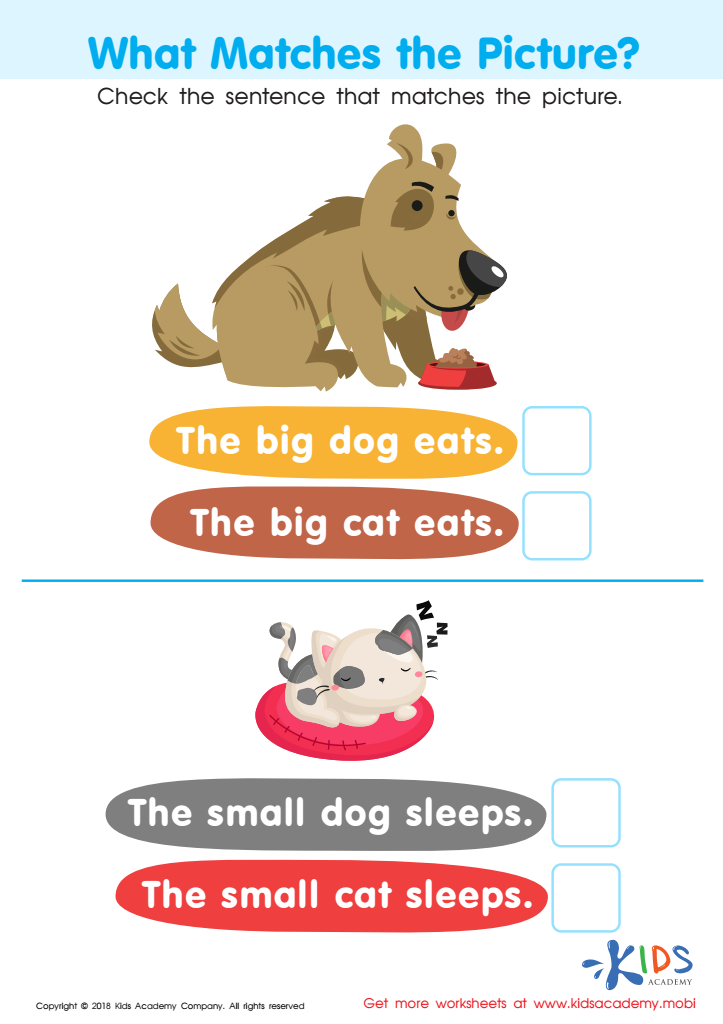
What Matches the Picture? Worksheet
 Assign to My Students
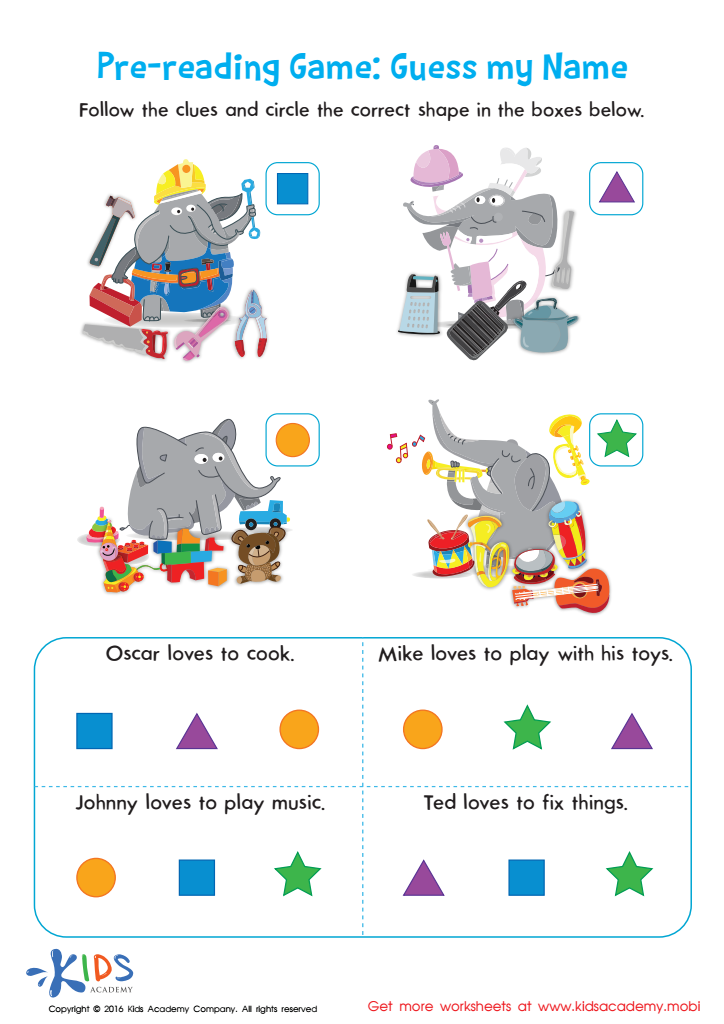
Pre Reading Worksheet Guess My Name
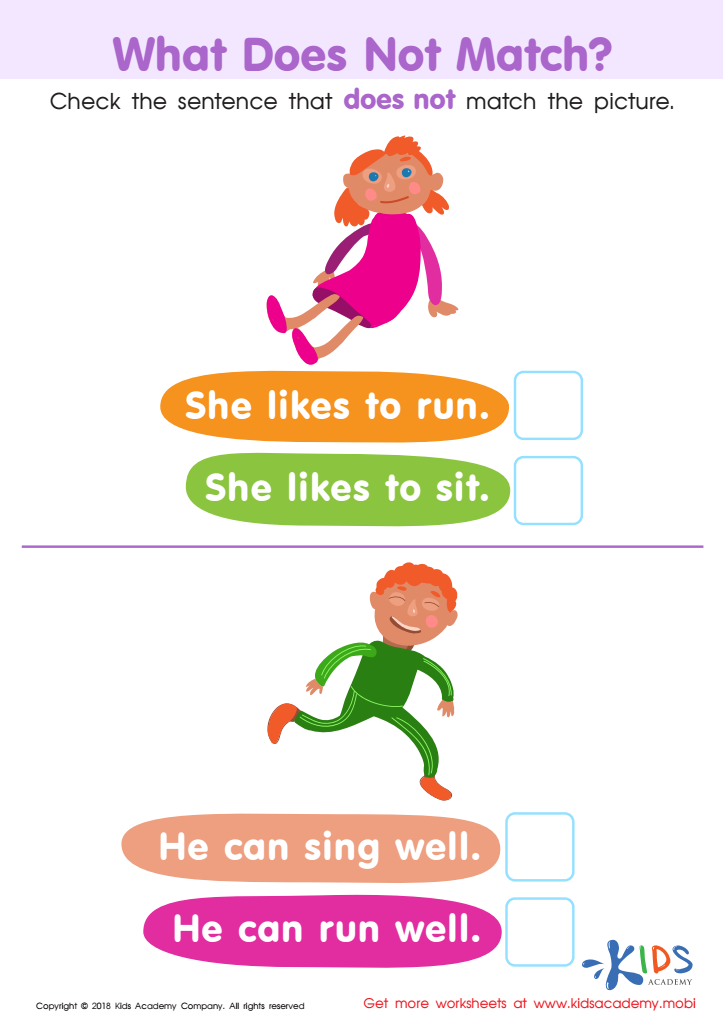
What Does Not Match? Worksheet





.jpg)


Cognitive development in early childhood is crucial, as it lays the foundation for future learning and overall cognitive abilities. Reading fiction to children aged 3-5 plays a vital role in this process. Engaging with stories helps young minds develop critical thinking skills, enhance imagination, and improve comprehension abilities. Fiction introduces abstract concepts and emotions, fostering empathy as children learn to understand perspectives different from their own.
Additionally, narrative structures in stories teach children about sequences and cause-and-effect relationships. This understanding aids in problem-solving skills and boosts their ability to reason. Exposure to varied vocabulary within context-rich fictional texts also enhances language skills, supporting an expanding vocabulary crucial for effective communication.
Moreover, reading fiction can reduce anxiety and stress, as stories provide a safe space to explore emotions and experiences. For parents and teachers, promoting cognitive development through fiction is not just about entertainment; it's about enriching a child's learning journey. Bonding during storytime enhances social skills, promotes discussion, and encourages curiosity. Overall, prioritizing fiction reading in early childhood is a simple yet powerful investment in nurturing well-rounded, intellectually curious, and empathetic individuals.








