Visual interpretation Reading Fiction Worksheets for Ages 3-5
3 filtered results
-
From - To
Discover our engaging Visual Interpretation Reading Fiction Worksheets designed specifically for children aged 3-5. These worksheets aim to enhance young learners' comprehension skills by encouraging them to interpret illustrations and connect them to stories. With vibrant visuals and cozy narratives, children will explore character emotions, setting details, and plot elements through fun activities tailored to their developmental level. The worksheets promote critical thinking, creativity, and language skills, making reading a delightful experience. Perfect for both classrooms and home learning, our resources help cultivate a lifelong love for reading while developing essential comprehension abilities in a playful and supportive environment. Start your journey today!
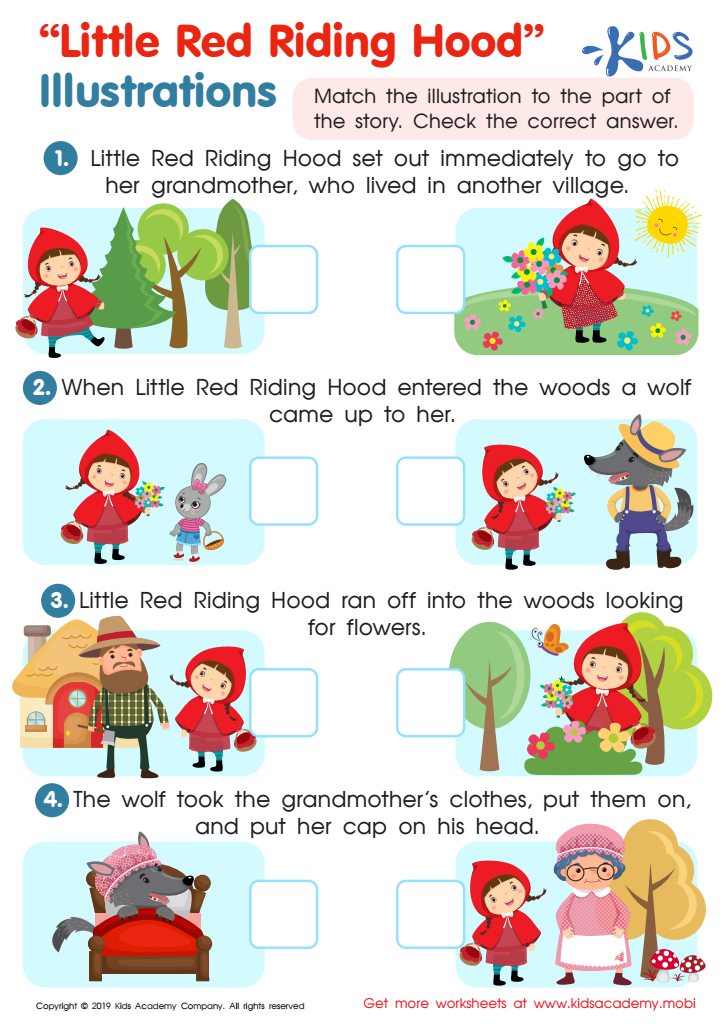
Little Red Riding Hood: Illustrations Worksheet
 Assign to My Students
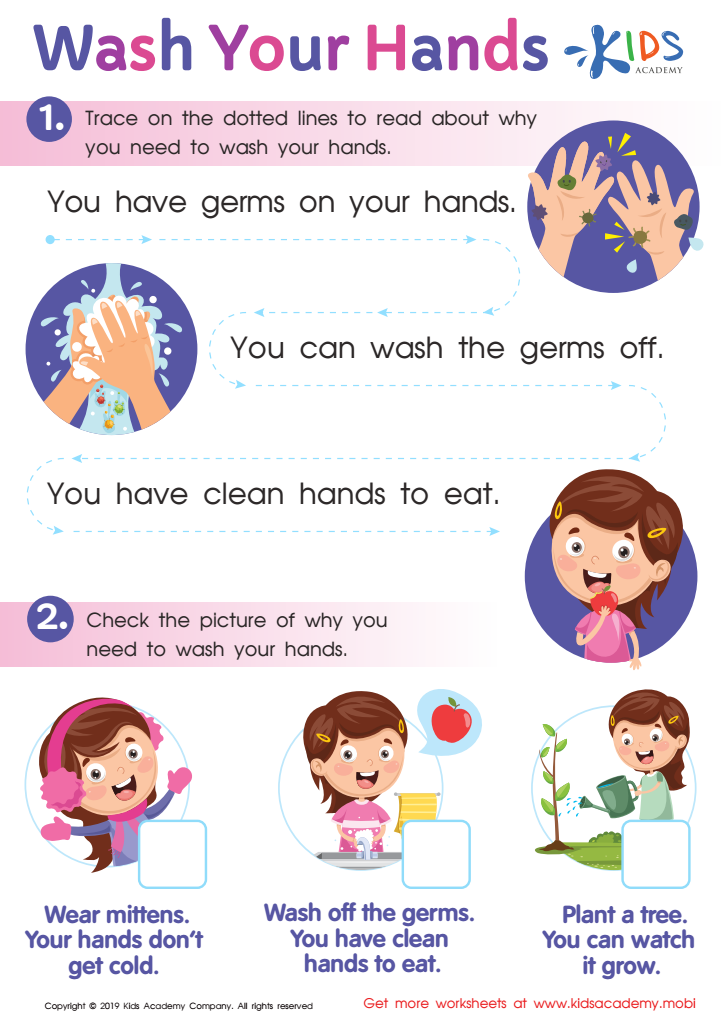
Wash Your Hands Worksheet
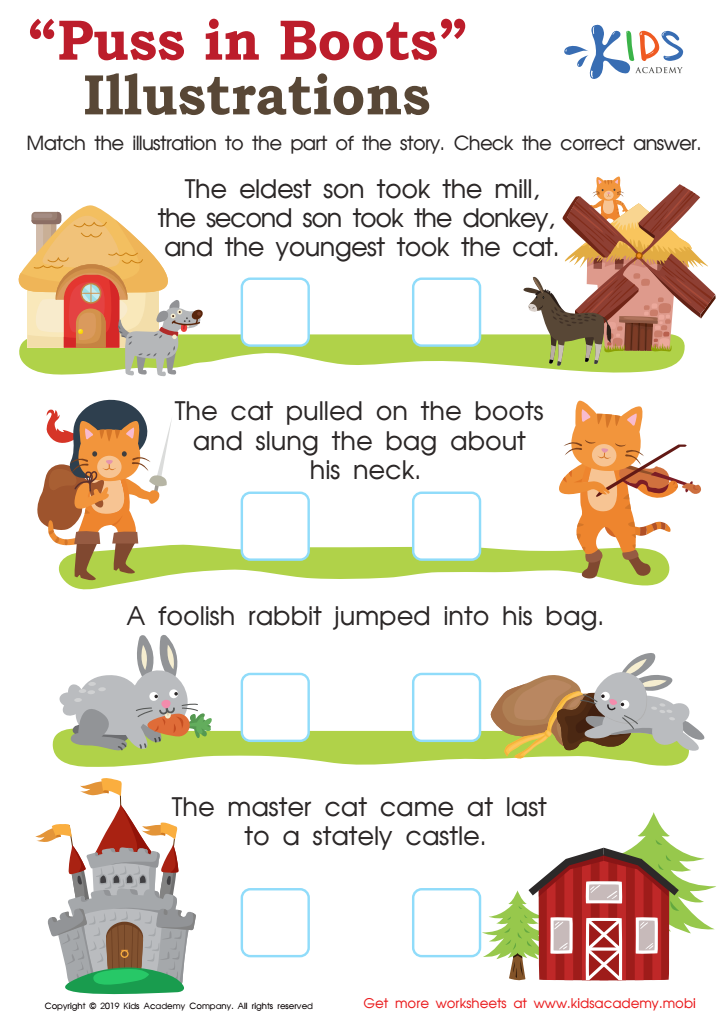
Puss in Boots Illustrations Worksheet





.jpg)


Visual interpretation in reading fiction for ages 3-5 is crucial as it lays the foundation for early literacy and cognitive development. At this stage, children are exceptionally receptive to visual stimuli, making illustrations a powerful tool for understanding narratives. Engaging with pictures alongside text helps kids to comprehend storylines, develop vocabulary, and make connections between visual elements and spoken language.
Parents and teachers should prioritize this aspect of reading because it fosters imagination and creativity. When children learn to interpret images, they develop critical thinking skills, enabling them to analyze and infer meanings beyond the text. This skill not only enhances their reading experience but also boosts confidence as they learn to voice their interpretations and opinions.
Moreover, visual cues aid in memory retention, allowing children to recall stories and characters more easily. This leads to more impactful discussions about stories, enhancing relational skills as children share their perspectives with peers and adults. In a world increasingly dominated by visual media, understanding how to decode images helps young learners adapt and thrive, preparing them for more complex reasoning in future academic settings. Investing time in visual interpretation during these formative years equips children with essential skills for lifelong learning.








