Categorization skills Animals Worksheets for Ages 3-5
4 filtered results
-
From - To
Enhance young learners’ understanding of the animal kingdom with our engaging Categorization Skills Animals Worksheets tailored for ages 3-5. These interactive worksheets are designed to help children identify, sort, and categorize various animals based on distinct attributes such as habitat, diet, and physical characteristics. With colorful illustrations and fun activities, kids will enjoy expanding their knowledge while developing critical thinking and organizational skills. Perfect for preschool and kindergarten settings, these resources make learning about animals both educational and entertaining. Foster a love for nature and enhance cognitive abilities with our fun and informative categorization worksheets today!
 Assign to My Students
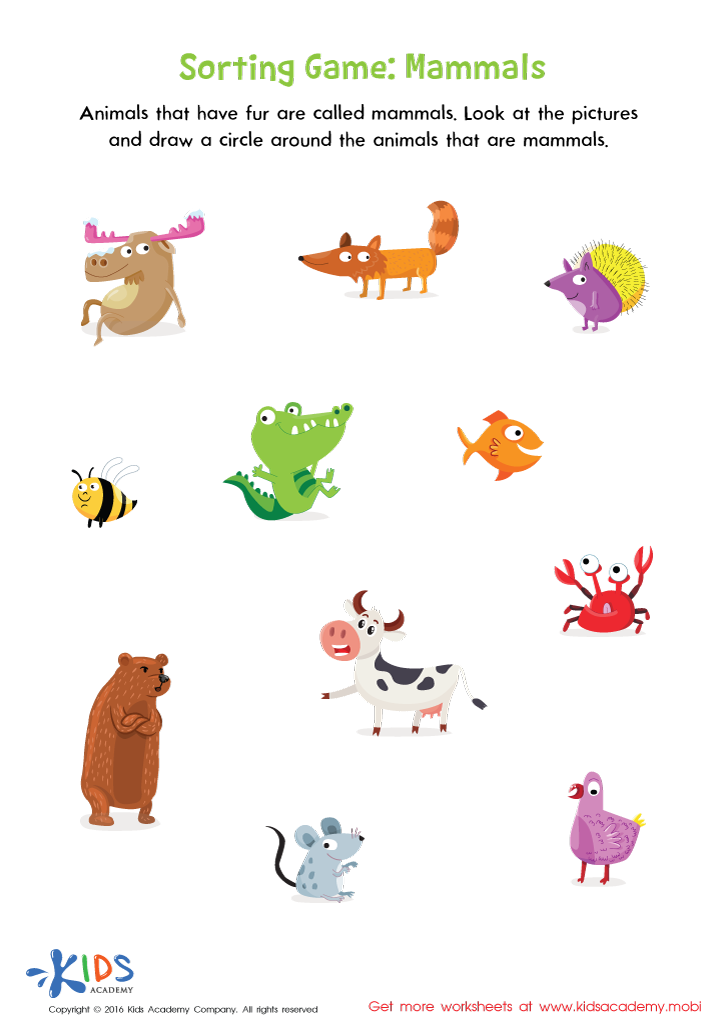
Mammals Sorting Worksheet
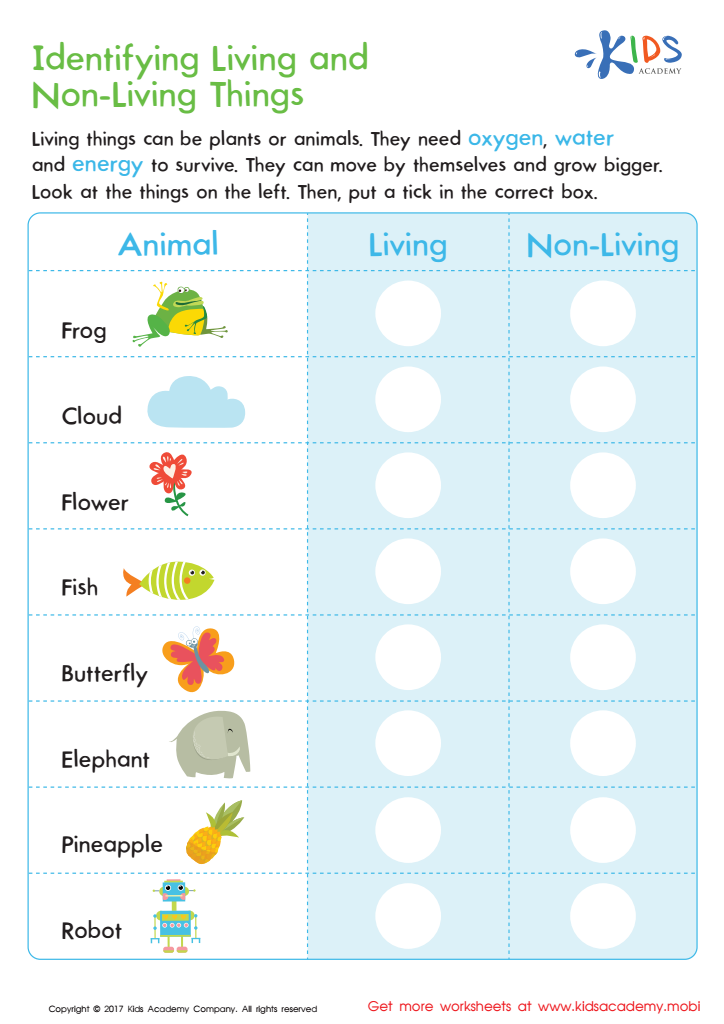
Identifying Living or Non–living Worksheet
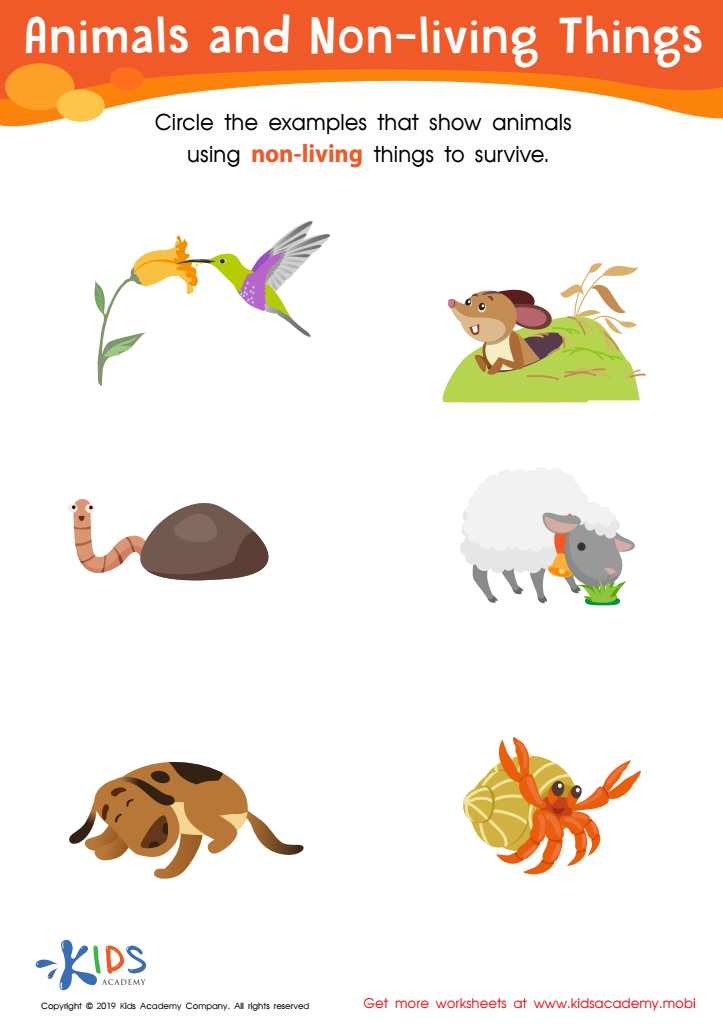
Animals and Non-Living Things Worksheet







Categorization skills are fundamental for children aged 3 to 5, especially in the context of learning about animals. Parents and teachers should care about fostering these skills because they form the foundation for critical thinking, problem-solving, and cognitive development. When children categorize animals, they learn to group creatures based on shared characteristics such as habitat, size, or diet. This encourages observational skills and enhances their understanding of the natural world.
Moreover, categorization helps develop language skills. As children label and discuss various animals—whether they are mammals, birds, or reptiles—they expand their vocabulary and improve their communication abilities. Reflection on differences and similarities between different animal types promotes linguistic enrichment and cognitive flexibility.
Additionally, engaging in categorization activities can spark curiosity and enthusiasm about science and nature, laying the groundwork for future learning. Through play and exploration, children develop social-emotional skills as they engage in collaborative activities, fostering teamwork and respect for differing perspectives.
In summary, nurturing categorization skills related to animals not only enhances cognitive and linguistic development but also ignites a lifelong love for learning about the world around them, making it crucial for parents and teachers to prioritize these experiences.