Weather Vocabulary World Around Us Worksheets for Ages 3-5
3 filtered results
Difficulty Level
Grade
Age
-
From - To
Subject
Activity
Standards
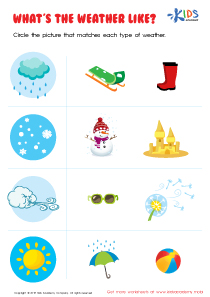
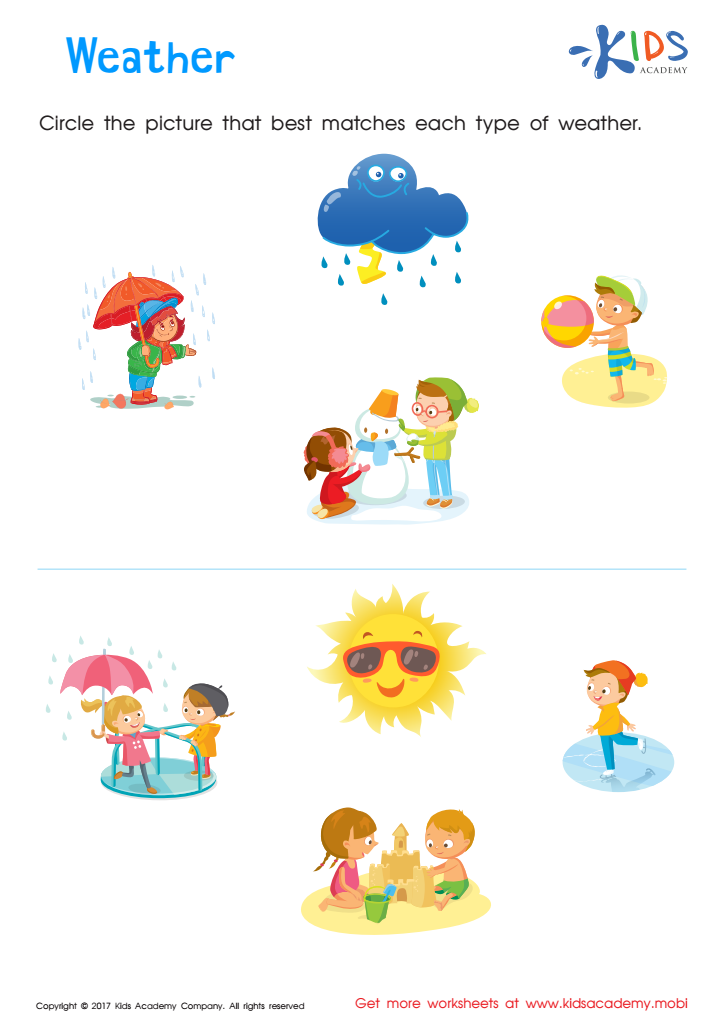
Introduce young learners to the fascinating world of weather with our "Weather Vocabulary World Around Us Worksheets" for ages 3-5. Through engaging and interactive activities, children will explore key weather-related terms, enhancing their vocabulary and understanding of the natural world around them. These visually appealing, printable worksheets are designed to captivate curious minds while promoting critical thinking and observational skills. Perfect for early childhood educators and parents, share the wonders of sunny days, rainy skies, and snowy scenes with your little meteorologists. Spark a love for learning and nature with our age-appropriate weather vocabulary resources!
Favorites
With answer key
Interactive
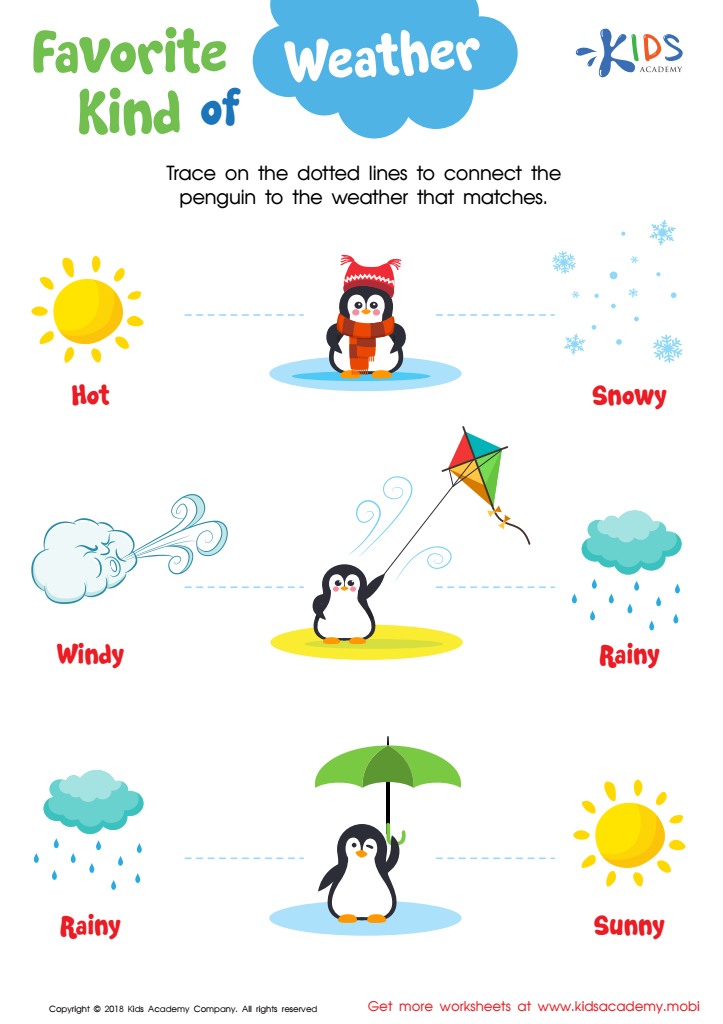
Favorite Kind of Weather Worksheet
!
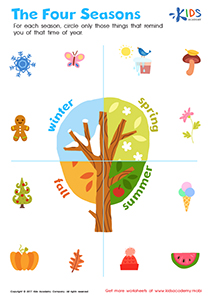
Help your child understand weather and seasons with this fun worksheet featuring a cute penguin. They'll learn to recognize types of weather and associate them with seasons. To practice their fine motor skills, they'll trace lines to select the right seasons and weather. Kids will make a new friend while broadening their knowledge of nature.
Favorite Kind of Weather Worksheet
Worksheet
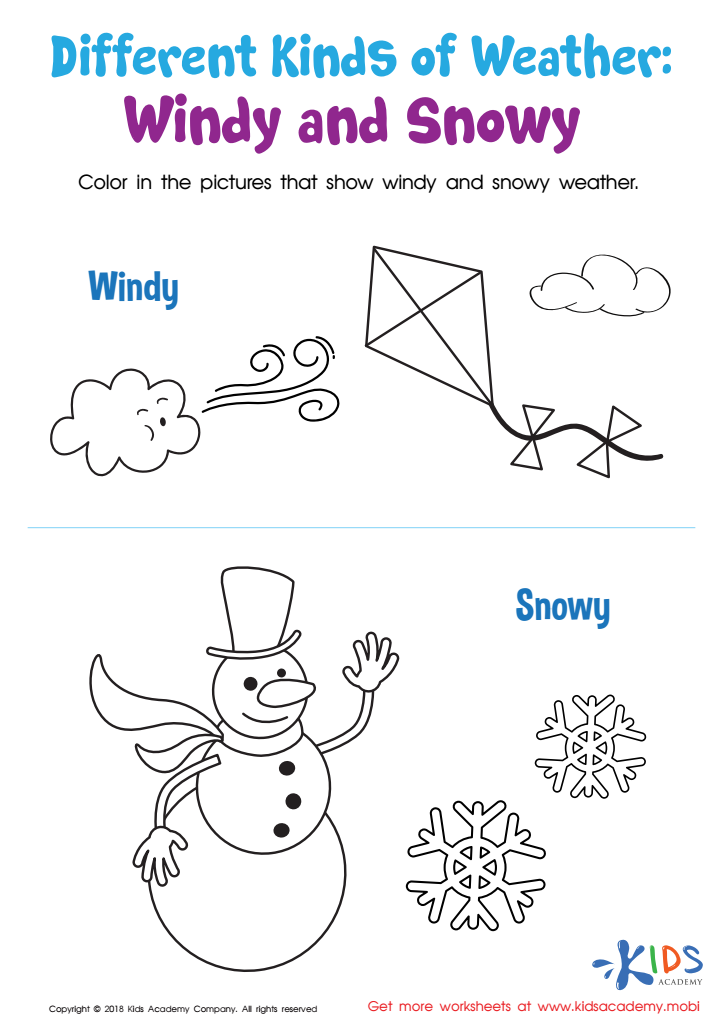
Different Kinds of Weather: Windy and Snowy Worksheet
Invite your little learner to practice their fine motor skills and learn about nature with this fun and charming PDF worksheet! Reinforce weather patterns and examine their environment as they color, giving them a foundation for understanding how weather affects them. No matter the weather, your learner will have a blast!
Download (PDF)
 Assign to My Students
Assign to My Students
Different Kinds of Weather: Windy and Snowy Worksheet
Worksheet
Join Kids Academy for Free
Who is primarily going to use this learning content?






.jpg)

Parents and teachers should care about teaching weather vocabulary to children aged 3-5 because it has substantial developmental benefits and fosters an early appreciation for the natural world. At this age, children's brains are exceptionally receptive to new concepts, making it an ideal period to introduce complex ideas in a simplified manner.
Understanding weather vocabulary such as "sunny," "rainy," "cloudy," and "windy," allows young children to better comprehend and articulate their observations of the environment, promoting language development and cognitive growth. Describing the weather can enhance their critical thinking and observational skills, as they learn to notice patterns and make predictions.
Weather vocabulary also links to scientific literacy. Early exposure to basic weather concepts lays the groundwork for more complex scientific understanding later in life. It bridges the gap between curiosity and knowledge, turning daily weather changes into practical learning experiences.
Additionally, learning about weather helps children develop empathy and preparedness. Understanding weather conditions can guide their choices in dressing appropriately and engaging in suitable activities. In summary, integrating weather vocabulary into early education not only enriches language and cognitive skills but also cultivates a lifelong interest in the world around us.