Verb identification Grammar Worksheets for Ages 3-5
3 filtered results
-
From - To
Unlock the world of language for your little learners with our engaging Verb Identification Grammar Worksheets for ages 3-5! Designed to enhance early literacy skills, these worksheets introduce young children to the essential concept of verbs through fun and interactive activities. Kids will enjoy colorful visuals and simple exercises that encourage them to recognize and use action words. Perfect for homeschools and preschool classrooms, our resources promote cognitive development and boost vocabulary. Help your child gain confidence in their language abilities while enjoying quality learning time. Start nurturing their language skills today with our playful and educational verb identification worksheets!
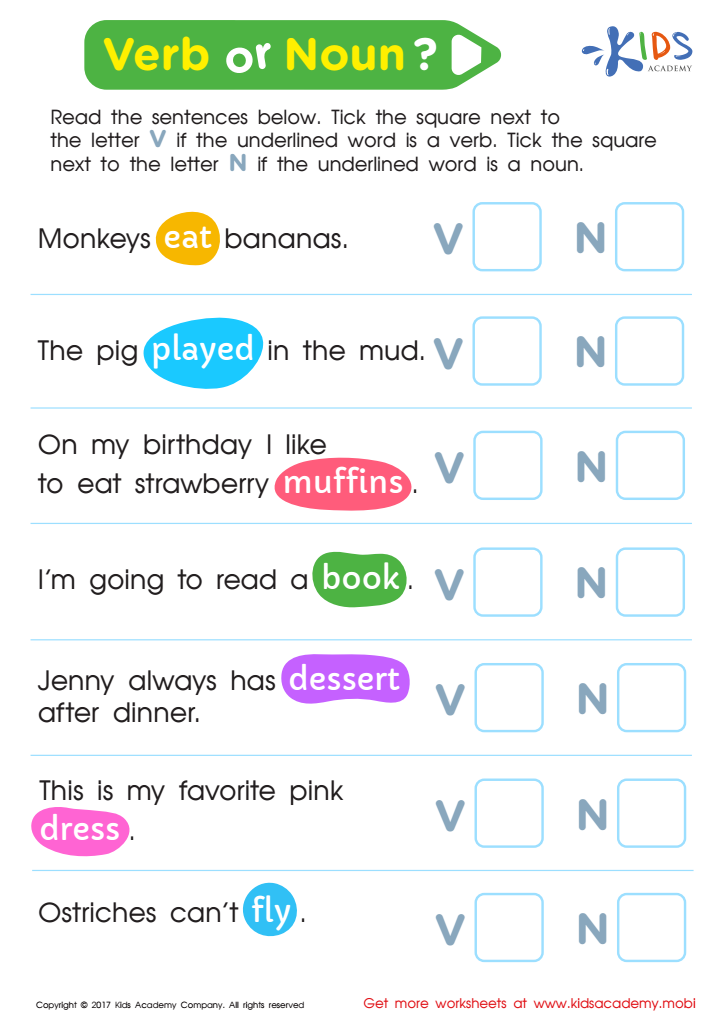
Verb or Noun Worksheet
 Assign to My Students
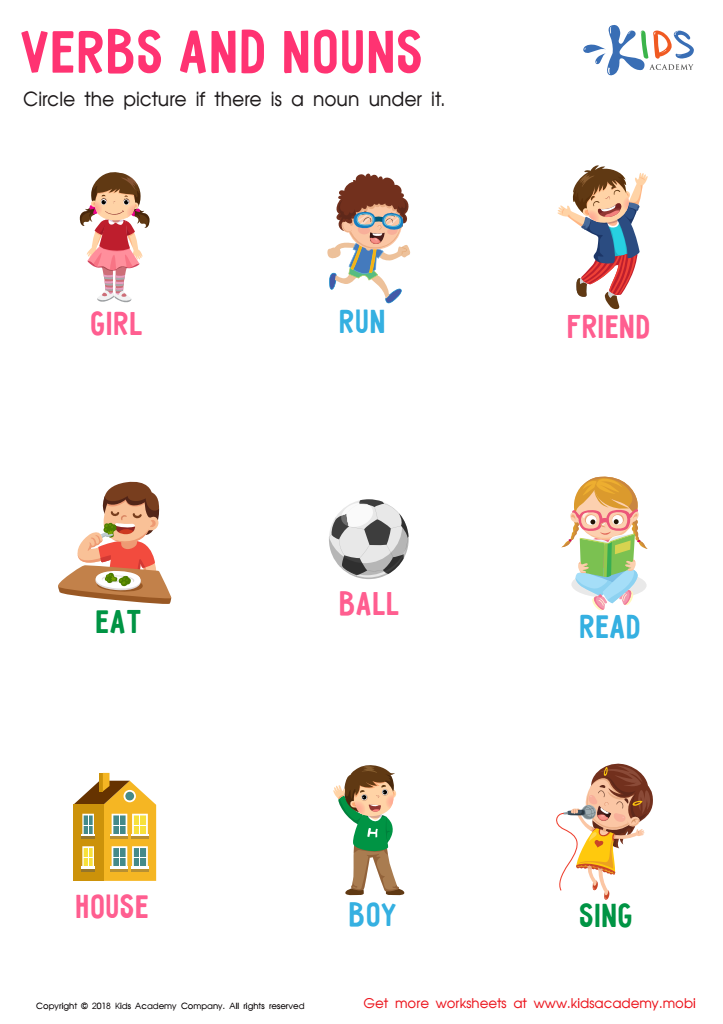
Verbs and Nouns Worksheet
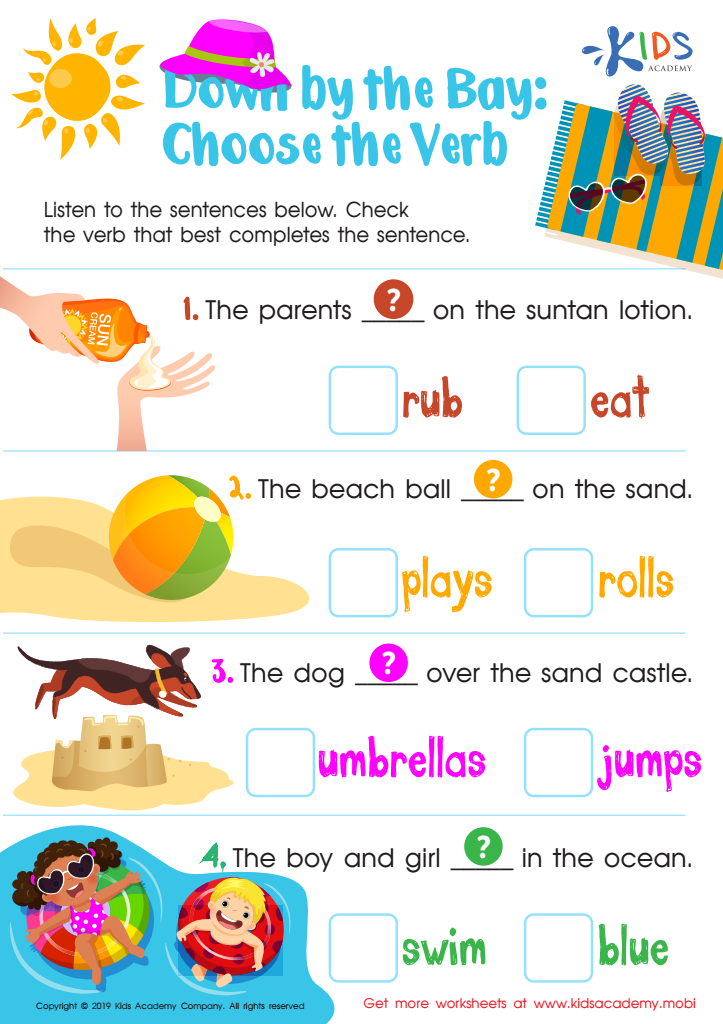
Down by the Bay: Choose the Verb Worksheet








Verb identification is a crucial aspect of early language development for children aged 3-5. Parents and teachers should care about this concept because verbs are foundational to constructing sentences and communicating ideas effectively. By learning to identify verbs, young children begin to understand actions, which enhances their comprehension of language and storytelling.
When children can recognize verbs, they become more adept at following instructions, engaging in conversations, and expressing their thoughts. This skill also supports vocabulary expansion, as action words often introduce new concepts and experiences. Furthermore, strong verb identification skills contribute to reading and writing proficiency, as children learn to construct grammatically correct sentences as they progress in their literacy journey.
Early exposure to verbs through play, songs, and interactive activities fosters a positive attitude towards learning. It encourages curiosity and creativity, enabling children to explore language in a fun and engaging way. Active involvement from parents and teachers can strengthen verbal skills and bolster self-confidence. Ultimately, prioritizing verb identification during these formative years lays a strong foundation for effective communication and academic success in the future.








