Long Vowels Worksheets for Ages 3-6 - Page 2
26 filtered results
-
From - To
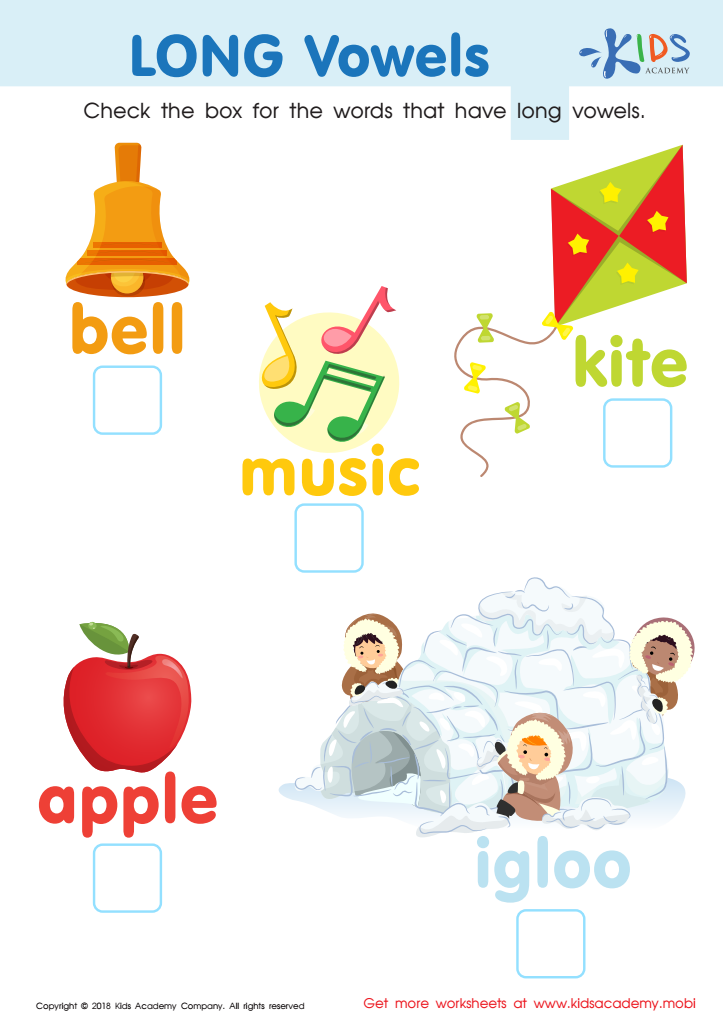
long vowels Worksheet
 Assign to My Students
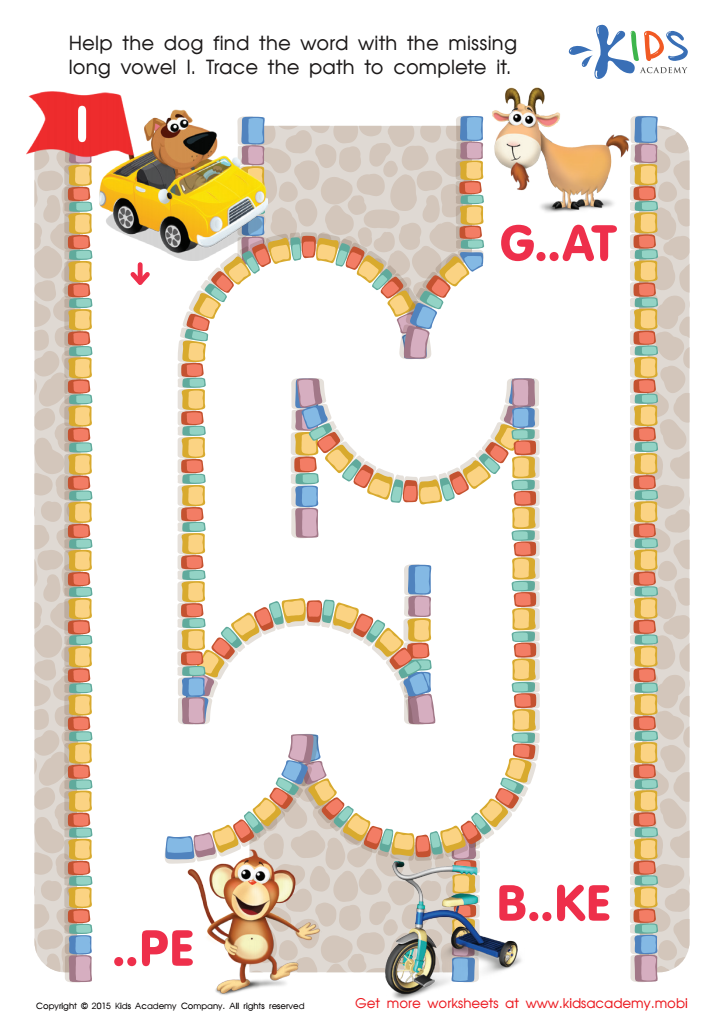
Long Vowel Sound I Worksheet



Long vowels are a fundamental aspect of early literacy and phonics for children aged 3-6, and understanding their importance is crucial for parents and teachers. Long vowels, such as the sounds made by the letters A, E, I, O, and U in words like "cake," "beet," "ride," "cloud," and "tube," provide key building blocks for reading proficiency.
Learning about long vowels helps children recognize patterns in words, promoting phonemic awareness—the ability to hear, identify, and manipulate sounds. This skill is essential for decoding unfamiliar words, boosting reading fluency and comprehension. When children understand the concept of long vowels and can identify them appropriately, they gain confidence in their reading abilities.
Incorporating long vowels into everyday activities, such as playful songs, interactive games, and storytelling, makes the learning process engaging and enjoyable. Furthermore, it lays the groundwork for spelling as children progress, enabling them to better understand vowel patterns and word formation. For parents and teachers, addressing long vowels is not just about teaching individual sounds; it's a stepping stone toward nurturing a lifelong passion for reading and learning throughout a child's educational journey. Supporting this early literacy component ultimately fosters well-rounded, competent readers.








