Middle Vowel Worksheets for Ages 3-6
4 filtered results
-
From - To
Enhance your child's phonics skills with our "Middle Vowel Worksheets for Ages 3-6"! Designed to help early learners identify and pronounce vowels within words, these engaging worksheets blend fun and education seamlessly. Your child will enjoy coloring, tracing, and matching activities that solidify vowel recognition while expanding their vocabulary. Perfect for preschool and kindergarten, these resources support foundational literacy skills and build confidence in young readers. Whether at home or in the classroom, our middle vowel worksheets are ideal tools for developing essential reading abilities. Download today and unlock the joy of learning vowels with your little ones!
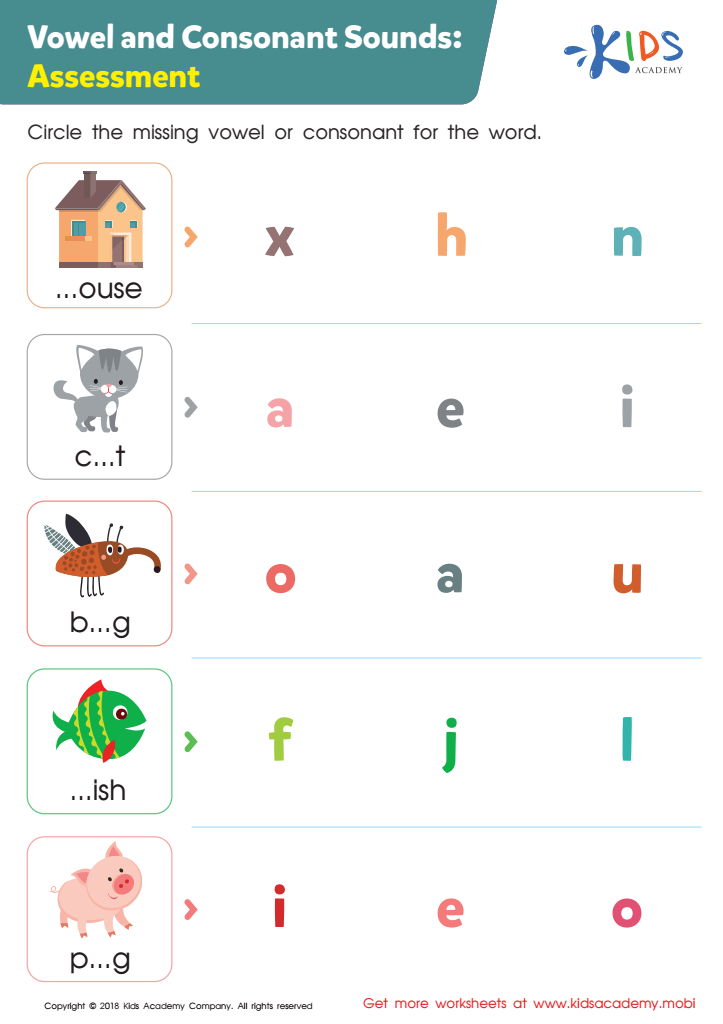
Vowel and Consonant Sounds: Assessment Worksheet
 Assign to My Students
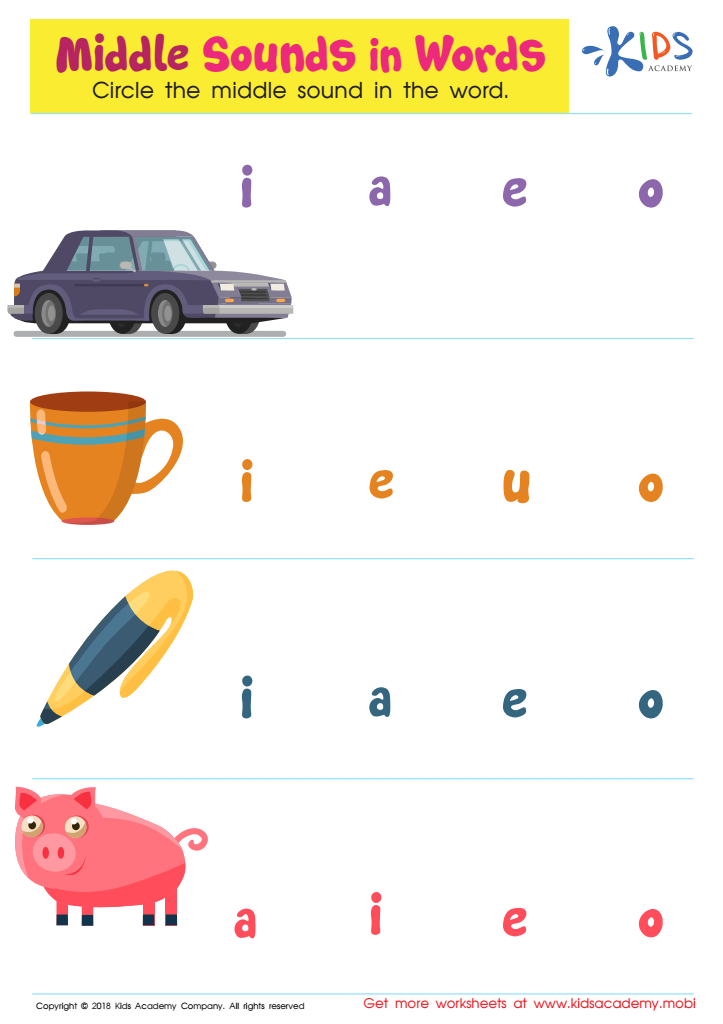
Middle Sounds in Words Worksheet
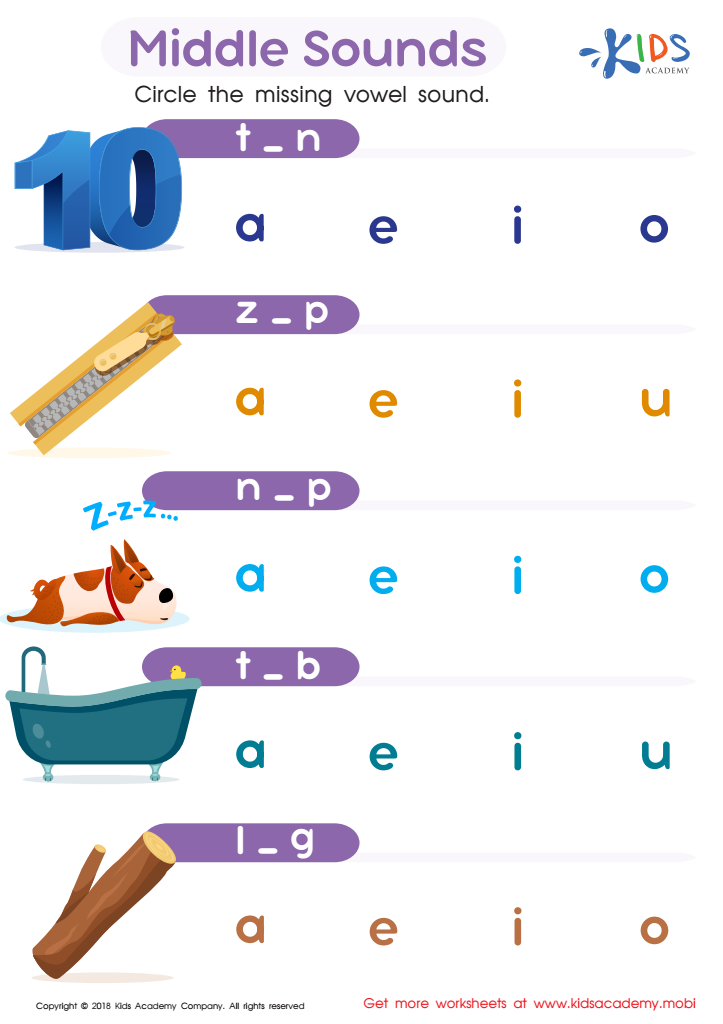
Middle Sounds Worksheet
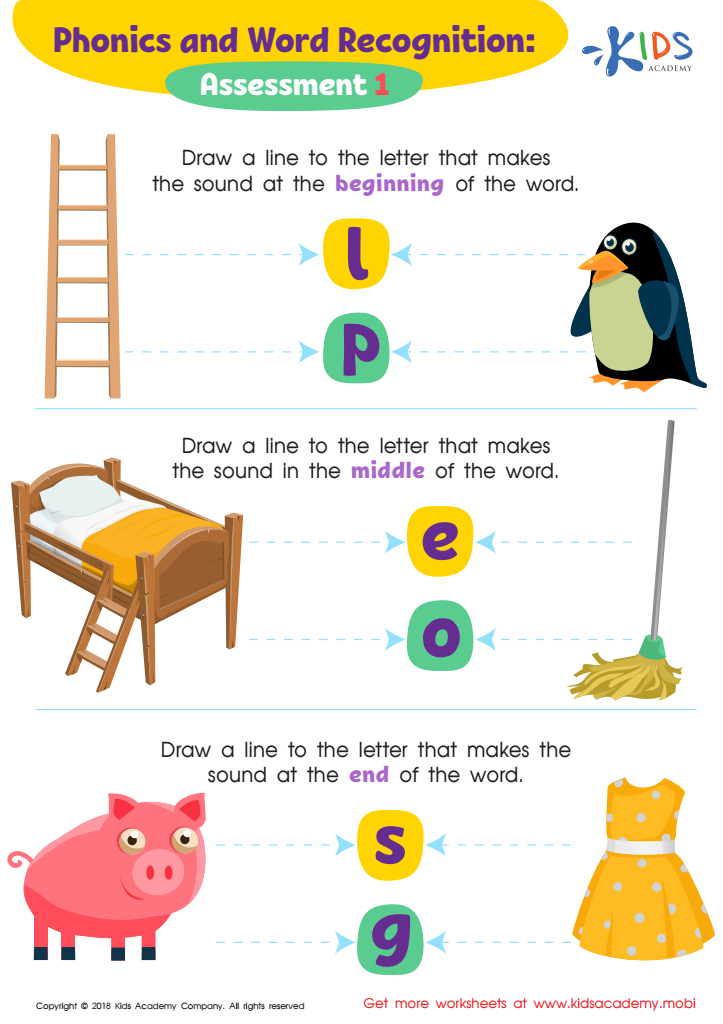
Phonics and Word Recognition: Assessment 1 ELA Worksheet



Middle vowels, often referred to as medial vowels, are crucial for children ages 3-6 as they begin their language development journey. These vowels appear in the middle of words, like "cat" or "bed," and play a vital role in a child's ability to decode and construct words correctly. Parents and teachers should care about middle vowels because understanding them enhances phonemic awareness, which is the ability to recognize and manipulate individual sounds in words.
Phonemic awareness is a fundamental skill for reading and writing, as it allows children to segment and blend sounds to form words. By focusing on middle vowels, children learn to differentiate between similar words, such as "cat" and "cot," which is essential for accurate reading and spelling. Additionally, mastering middle vowels aids in proper pronunciation and helps build a broader vocabulary, as children can tackle more complex words confidently.
During ages 3-6, children's brains are incredibly receptive to language learning. Early intervention and consistent practice with middle vowels provide a strong foundation, making the transition to formal reading instruction much smoother. Parents and teachers play a critical role in this process by incorporating fun and engaging vowel activities, thus ensuring children develop the essential skills needed for future academic success.