
Reading proficiency Phonics Worksheets for Ages 3-6
6 filtered results
Difficulty Level
Grade
Age
-
From - To
Subject
Activity
Standards
Unlock your child's reading potential with our engaging Reading Proficiency Phonics Worksheets for ages 3-6! Designed to cultivate early literacy skills, these worksheets focus on essential phonics concepts, helping children decode letters, sounds, and words with ease. Featuring vibrant illustrations and interactive activities, our resources make learning fun and effective. Ideal for parents and educators alike, these worksheets guide young learners through phonemic awareness and vocabulary development, laying a solid foundation for future reading success. Enhance your child's reading journey and nurture a lifelong love for books with our thoughtfully crafted phonics worksheets today! Perfect for at-home or classroom use.
Favorites
With answer key
Interactive
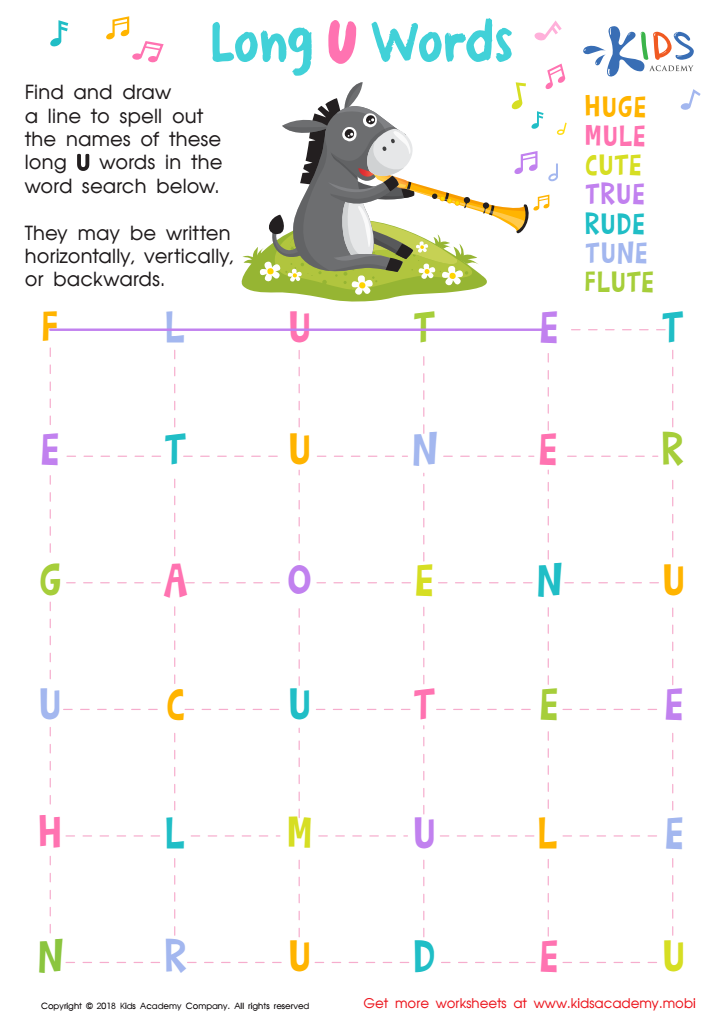
Long /u/ Words Worksheet
Your child needs to learn phonetics to enunciate and differentiate words. This fun worksheet encourages them to find and draw lines connecting the long 'U' words in the word search. Help them read the words on the right side of the picture, then look for them in the word search (horizontally, backwards or vertically).
Long /u/ Words Worksheet
Worksheet
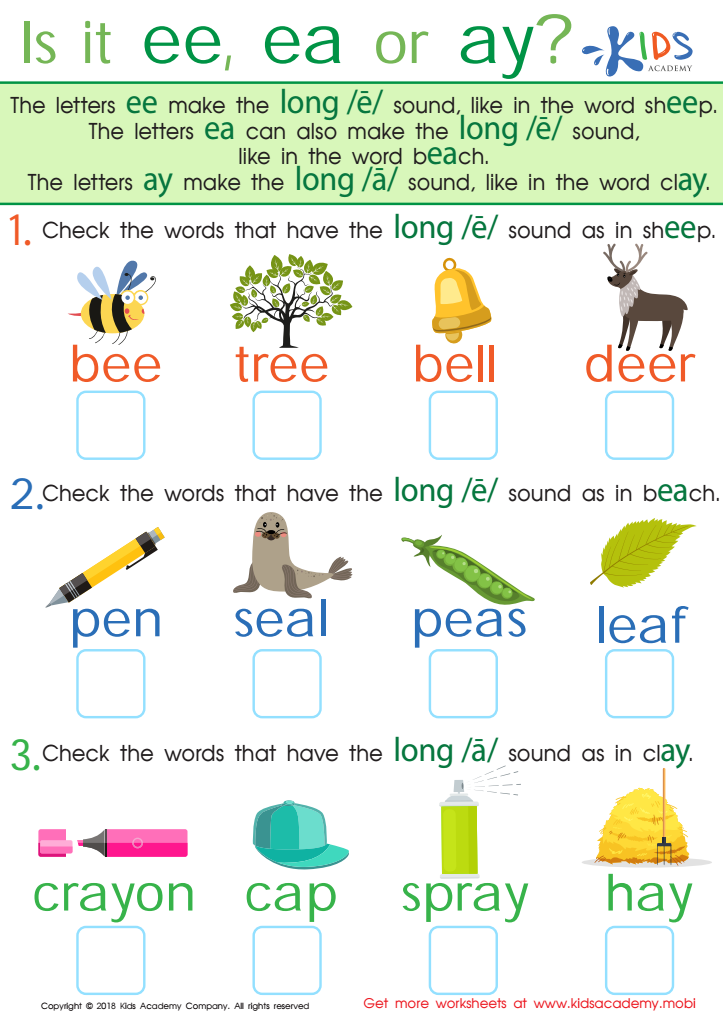
Is It EE, EA, or AY? Worksheet
When 'ee', 'ea' and 'ay' are in words, they usually make the long /e/ and /a/ sounds. Examples of words with 'ee' are "sheep", 'beach' and 'seat' with 'ea', and 'clay' and 'play' with 'ay'. Check this colourful worksheet with your kids; help them find the words that make the long /e/ sound like 'sheep'.
Is It EE, EA, or AY? Worksheet
Worksheet
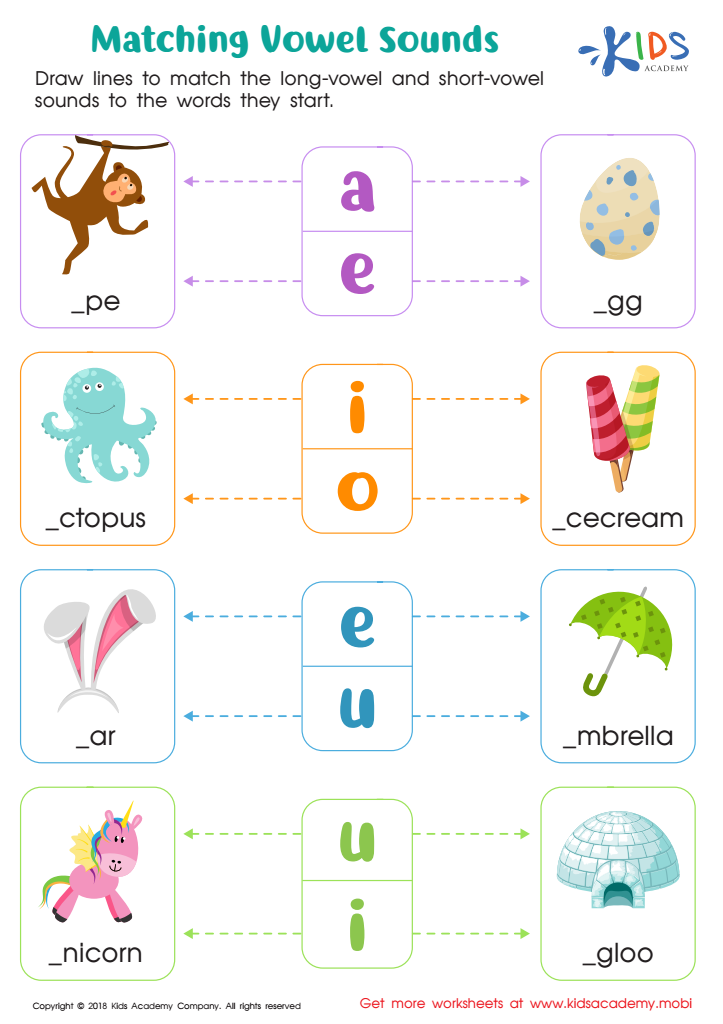
Matching Vowel Sounds Worksheet
Teach your child phonics with a fun worksheet! Ask your child to name a vowel sound and listen if it's long or short. Differentiating between long and short vowel sounds can be tricky, but this matching worksheet makes it easy for kids to understand. Have fun and master phonics - the worksheet will help them understand the difference between long and short vowel sounds!
Matching Vowel Sounds Worksheet
Worksheet

Long and Short U Worksheet
Revised: Spice up your lesson on long and short vowels with this fun printout! Kids read the words "tube" and "tub," then reinforce the sound by coloring in the words and pictures. It's a great way to make phonics class enjoyable!
Download (PDF)
 Assign to My Students
Assign to My Students
Long and Short U Worksheet
Worksheet
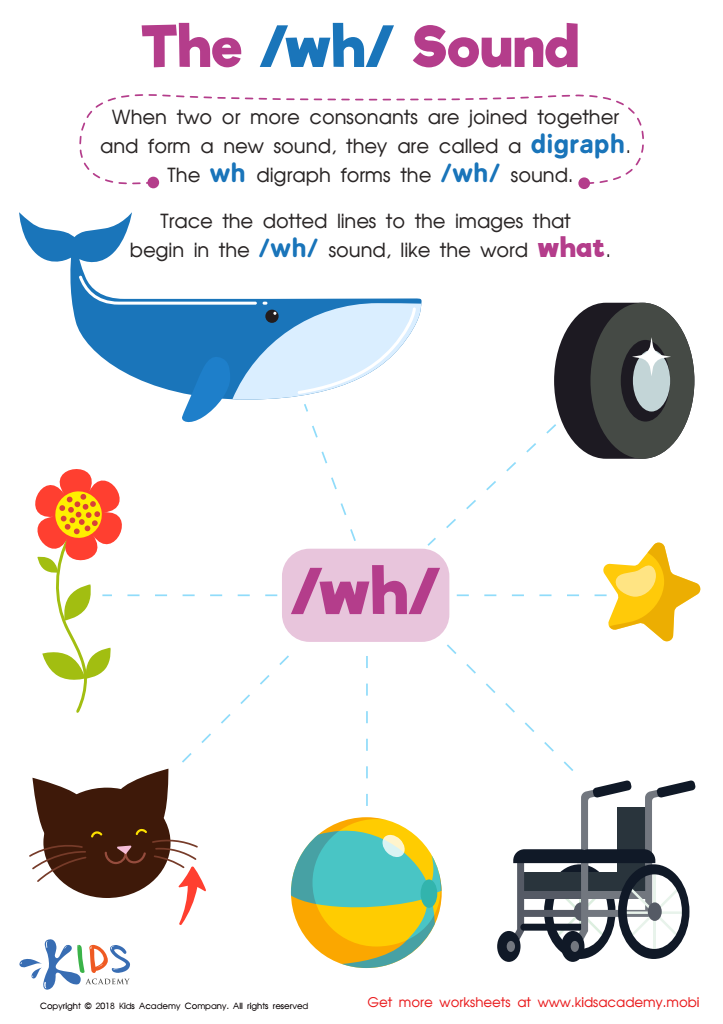
The /wh/ Sound Worksheet
Digraphs join two consonants to make a new sound, like /wh/. Give examples, like "whale", "when" and "why". Ask kids to name pictures in a worksheet and trace dotted lines to images beginning with the /wh/ sound; "what" is one example.
The /wh/ Sound Worksheet
Worksheet
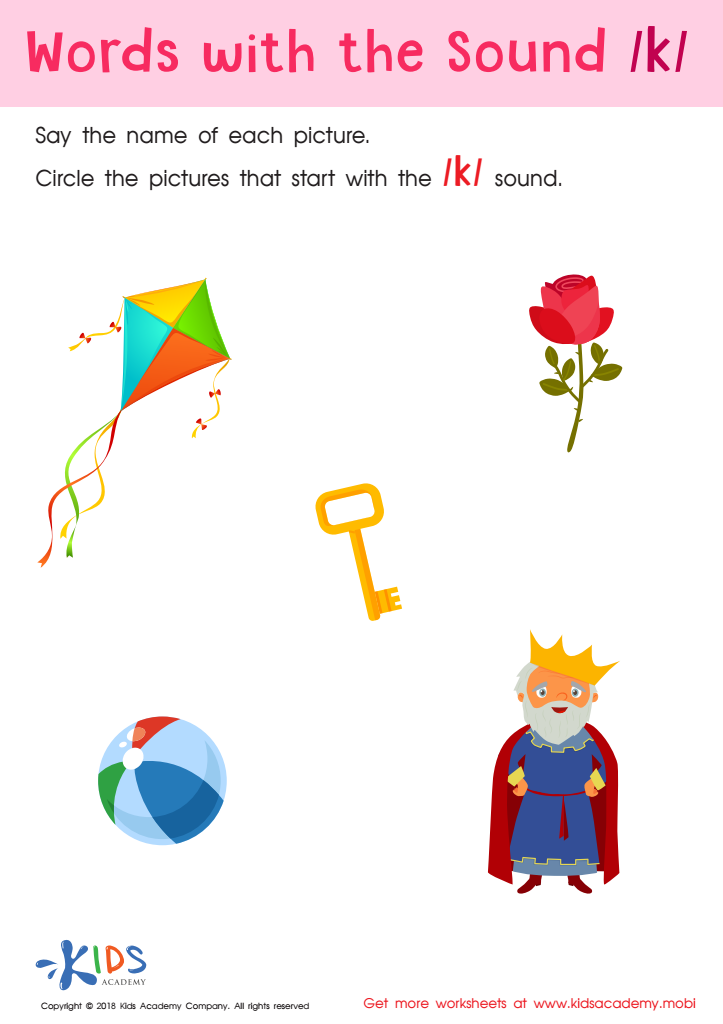
Words with sound k Reading Worksheet
Help your preschooler master the hard "k" sound with this fun worksheet from Kids Academy! Ask your child to say each picture aloud and circle only the pictures that start with "k". This early reading exercise will boost phonics skills and is sure to be loved by your little learner!
Words with sound k Reading Worksheet
Worksheet
Join Kids Academy for Free
Who is primarily going to use this learning content?








Reading proficiency, particularly through phonics, is crucial for children aged 3-6. At this age, children are in a vital developmental stage where they form foundational skills that will influence their educational journey. Phonics, which involves the relationship between letters and sounds, is essential because it equips young learners with the tools needed to decode words. Mastery of phonics enhances their ability to read fluently and with comprehension, laying a solid groundwork for future literacy.
When parents and teachers prioritize phonics instruction, they help foster a love for reading from an early age, creating enthusiastic and confident readers. Engaging students with phonics activities can significantly boost their vocabulary and language skills, crucial for effective communication.
Moreover, reading proficiency is linked to better academic performance across all subjects, as reading is foundational to learning. Children who struggle with reading in their early years are at risk of falling behind, which can lead to a cycle of frustration and lack of motivation. By focusing on phonics, parents and teachers can ensure that all children have equal opportunities to succeed and flourish academically, socially, and emotionally. Thus, supporting phonics education is an investment in a child’s future success.







