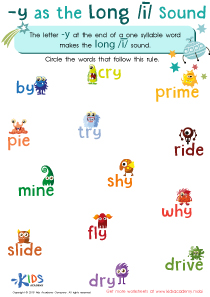
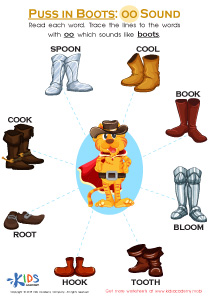
Silent Vowels Worksheets for Ages 3-6
3 filtered results
-
From - To
Explore our engaging Silent Vowels Worksheets designed specifically for ages 3-6! These fun and interactive resources introduce young learners to the concept of silent vowels in words, essential for building phonetic awareness and enhancing reading skills. Each worksheet features colorful illustrations and easy-to-follow activities that captivate children's attention while promoting letter recognition and word formation. Perfect for at-home learning or classroom activities, our worksheets encourage kids to identify silent letters in a playful, hands-on way. Support your child’s literacy journey with these valuable tools that ignite a love for language and pave the way for reading success!
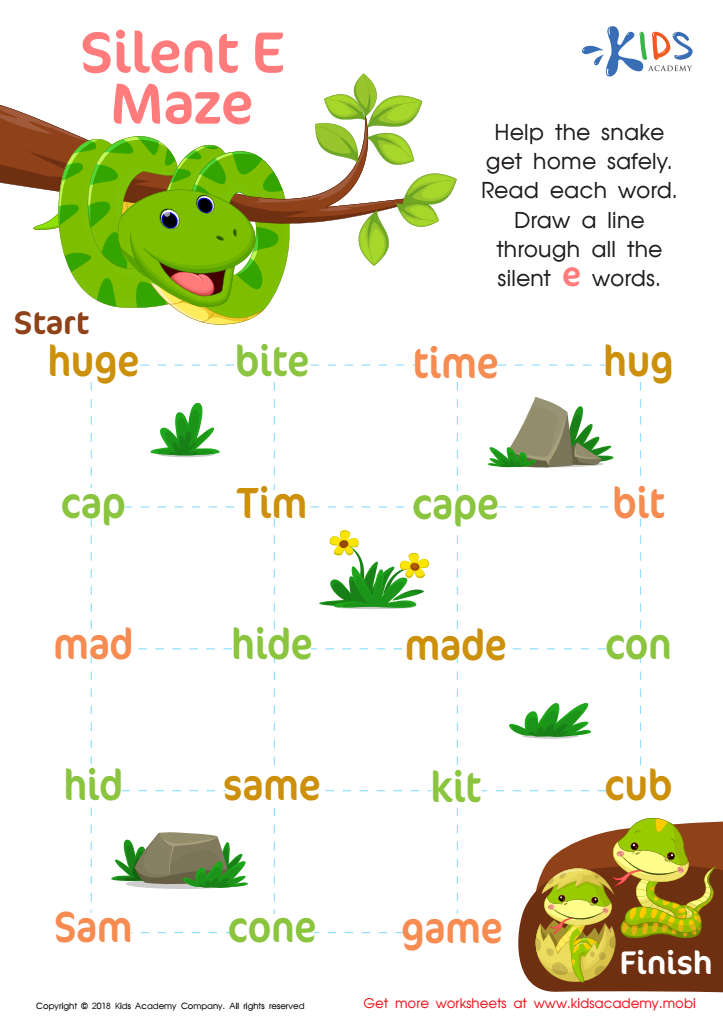
Silent E Maze Worksheet
 Assign to My Students
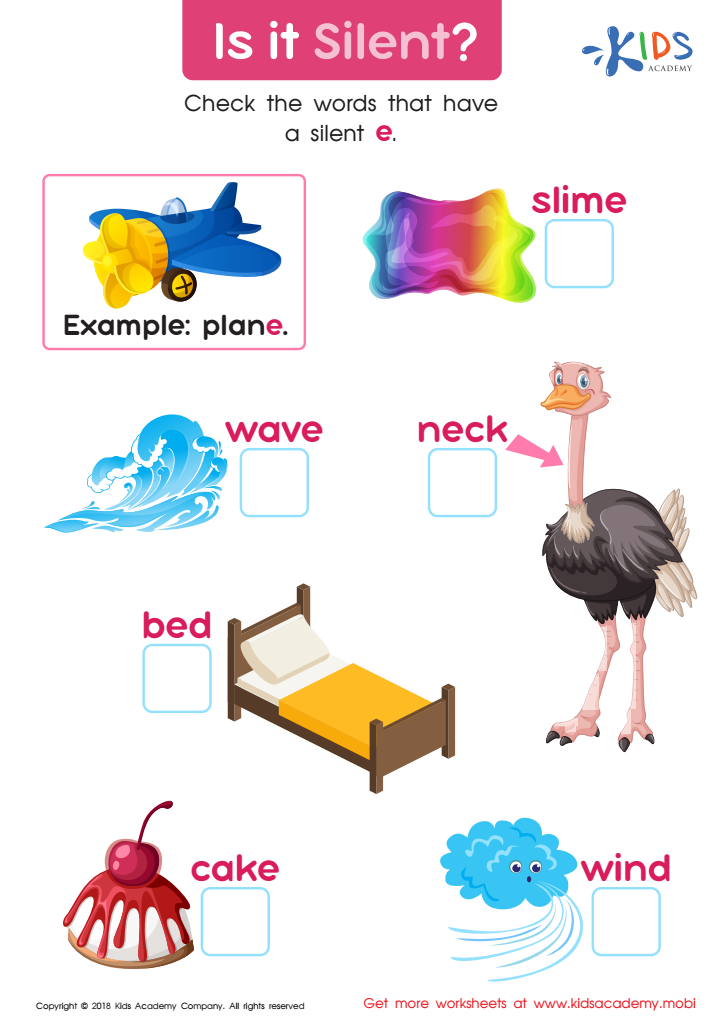
Is It Silent? Worksheet
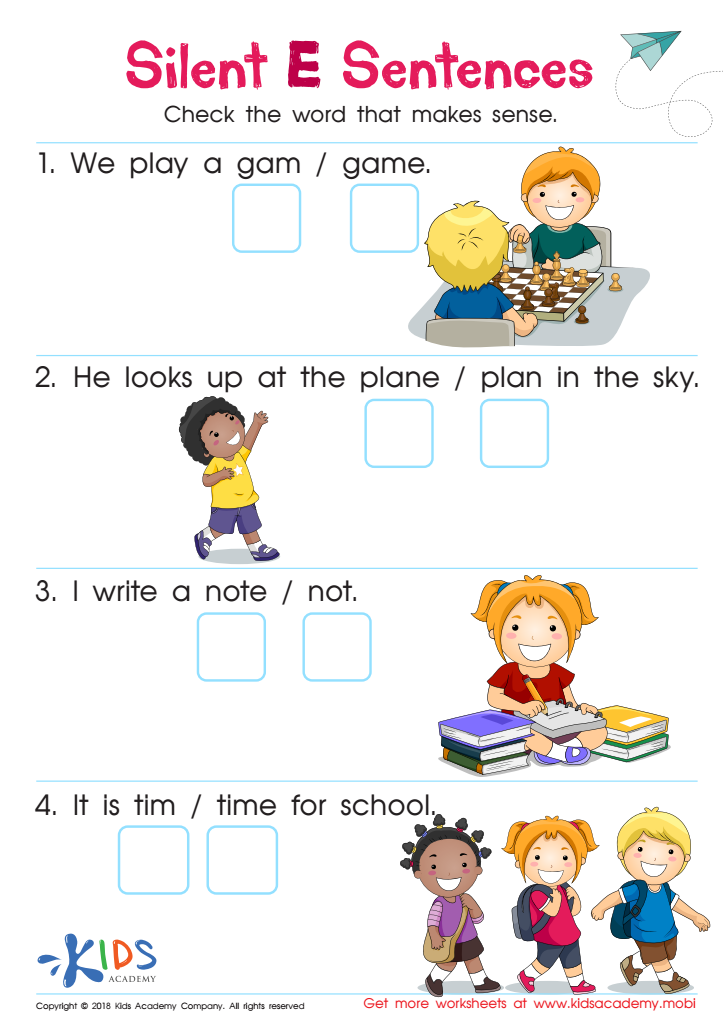
Silent E Sentences Worksheet


Silent vowels are an essential aspect of early language development for children aged 3-6. Understanding silent vowels, such as the 'e' in "cake" or the 'p' in "knock," can significantly enhance a child's reading and spelling skills. Parents and teachers play a crucial role in this developmental phase, as recognizing these vowels fosters phonemic awareness, a foundation for literacy.
By emphasizing silent vowels, caregivers help children decode unfamiliar words, improving their confidence in reading. Early exposure to patterns in language prepares young learners to tackle more complex language concepts later, making the transition to reading less daunting. Engaging children in playful activities centered around silent vowels—such as rhyming games or word puzzles—can pique their interest while reinforcing their phonetic understanding.
Silent vowels also contribute to better communication, allowing children to articulate their thoughts and express themselves more clearly. In the long run, being adept with silent vowels supports academic success and cultivates a love for reading. By caring about this crucial component of early literacy, parents and teachers can empower their children to embrace language, nurturing their development into proficient readers and confident communicators.