Letter tracing skills Tracing Letters Worksheets for Ages 3-6
3 filtered results
-
From - To
Enhance your child's handwriting with our specially designed Tracing Letters Worksheets for children aged 3-6. These interactive sheets help kids develop essential letter tracing skills, combining fun with foundational learning. Each worksheet is crafted to improve fine motor skills, reinforce letter recognition, and boost confidence in early writing. Perfect for preschool and kindergarten students, our worksheets offer a clear, step-by-step approach to mastering both uppercase and lowercase letters. Promote a love for learning and get your child ready for reading and writing success with our comprehensive letter tracing resources. Start tracing today!
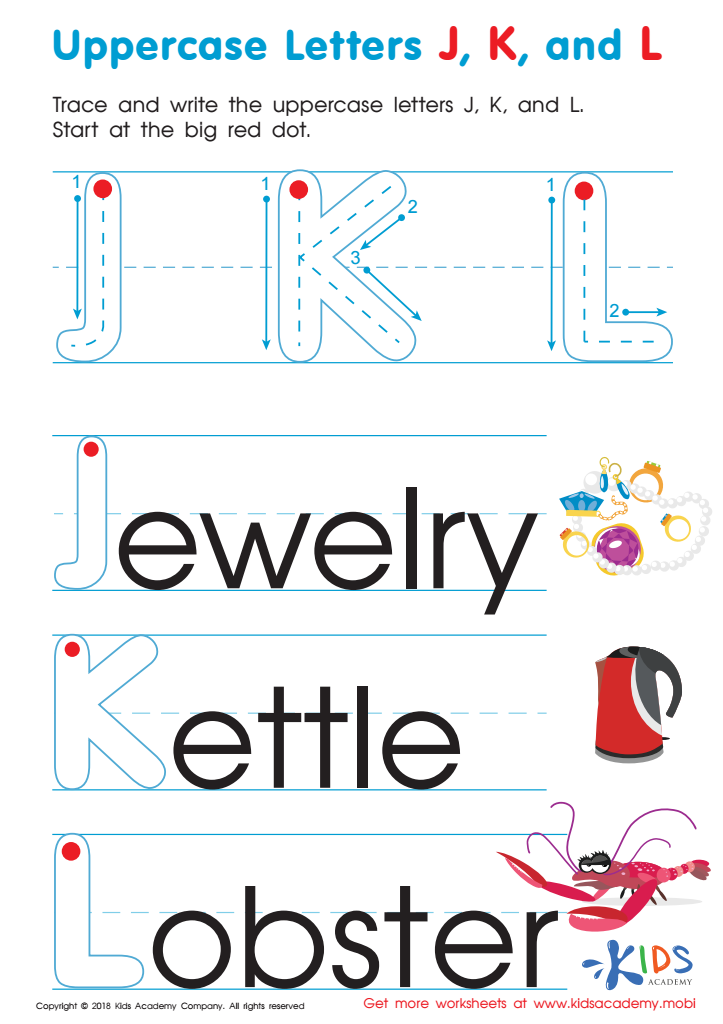
Uppercase Letters J, K, and L Worksheet
 Assign to My Students

Letter C Tracing Page

Uppercase Letters Y Z Worksheet








Parents and teachers should deeply care about letter tracing skills for children aged 3-6 because these foundational activities lay the groundwork for essential literacy and fine motor development. At this critical early age, children are in a prime position to develop the fine motor control needed for writing. Tracing letters helps them practice the proper formation of each character, ensuring that children adopt the correct techniques from the start.
Letter tracing enhances hand-eye coordination, reinforcing a child's ability to control writing instruments like pencils and crayons, which are skills they'll soon need in school. Moreover, this activity strengthens cognitive skills by promoting memory recall of letter shapes and sequences, aiding in quicker letter recognition and eventually, independent writing.
Recognition and familiarity with letters gained through tracing also support early reading skills. When children can confidently identify and write their letters, they are better prepared for reading comprehension and diverse literacy tasks, which are crucial for later academic success. Additionally, these tasks foster patience and concentration, key characteristics beneficial in all learning experiences.
For teachers and parents, encouraging letter tracing offers insights into a child's developmental progress and areas needing reinforcement. Collectively, these skills ensure that children are building the essentials they need for a seamless transition into more complex literacy and educational activities as they grow.








