Chess strategy understanding Chess Worksheets for Ages 3-6
15 filtered results
-
From - To
Discover the world of chess with our engaging "Chess Strategy Understanding Worksheets" designed specifically for young learners aged 3-6. These worksheets provide a fun and interactive way for children to begin grasping key chess concepts, enhancing their critical thinking and problem-solving skills from an early age. Through colorful visuals and age-appropriate activities, kids will explore essential chess strategies, learn about piece movement, and develop a foundational understanding of the game. Perfect for parents and educators alike, these printable resources foster cognitive growth while instilling a love for chess in your little ones. Start their chess journey today!
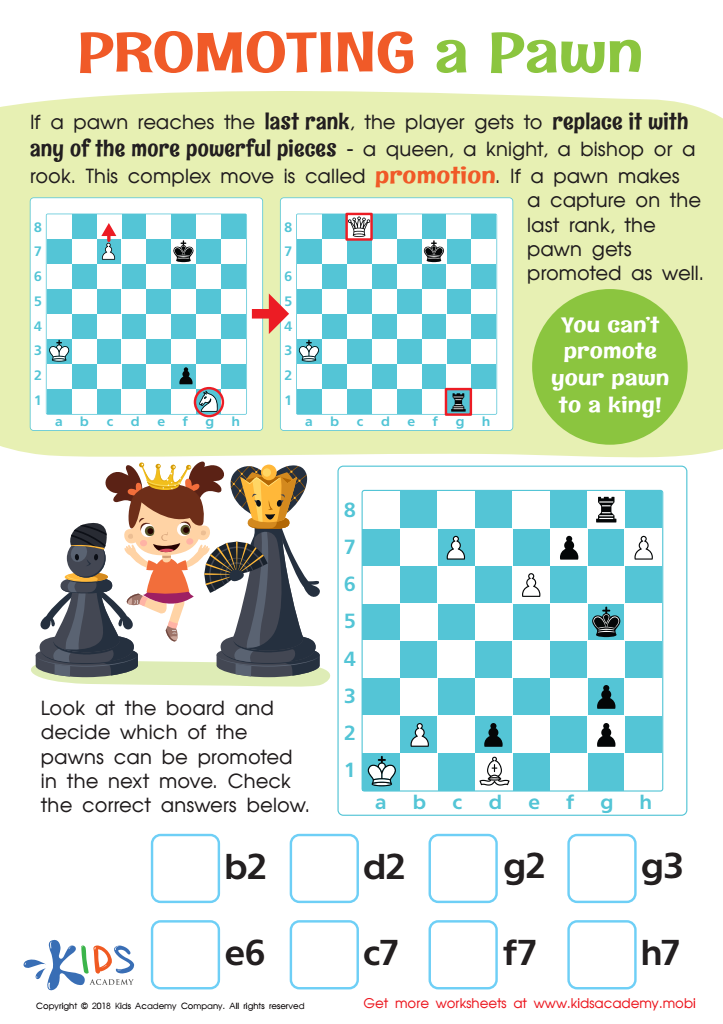
Promoting a Pawn Worksheet
 Assign to My Students
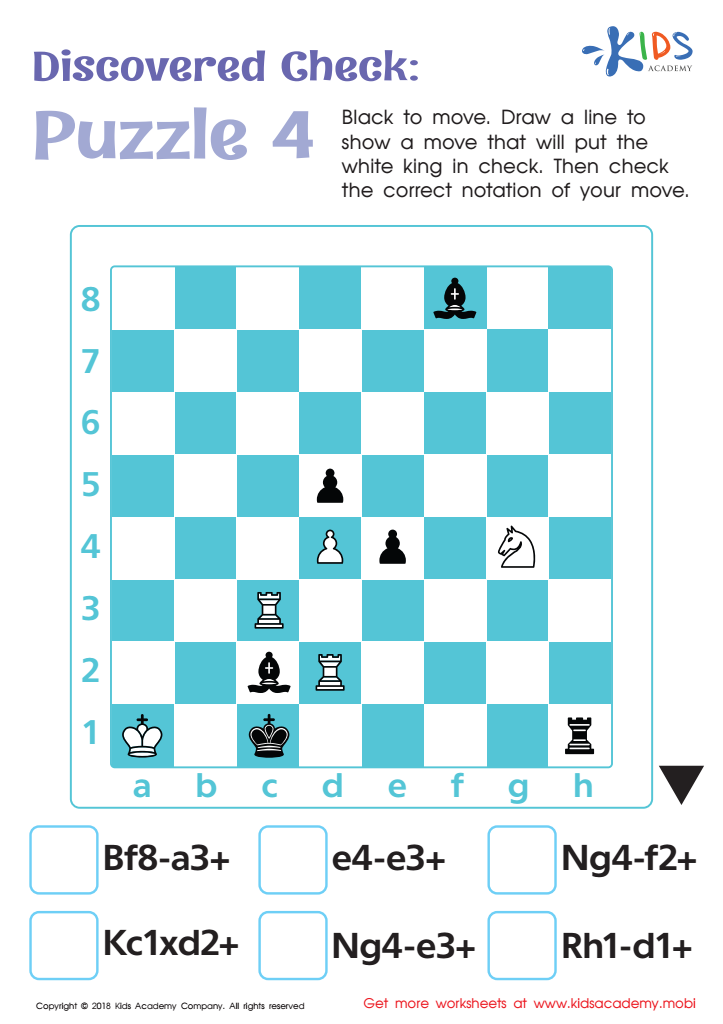
Discovered Check: Puzzle 4 Worksheet
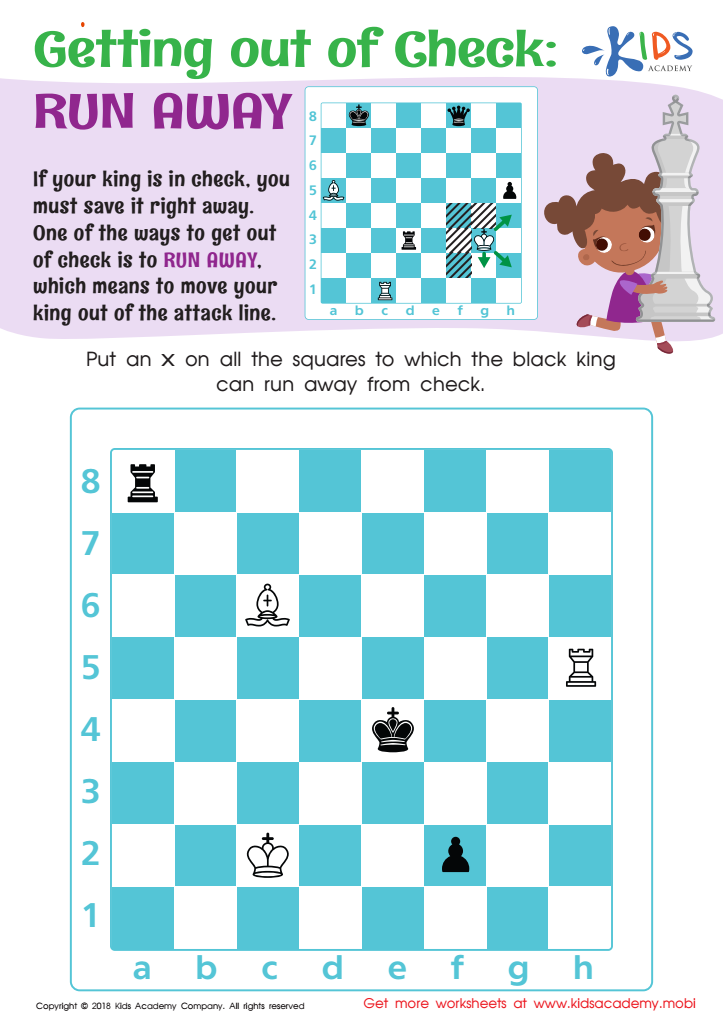
Getting out of Check: Run Away Worksheet
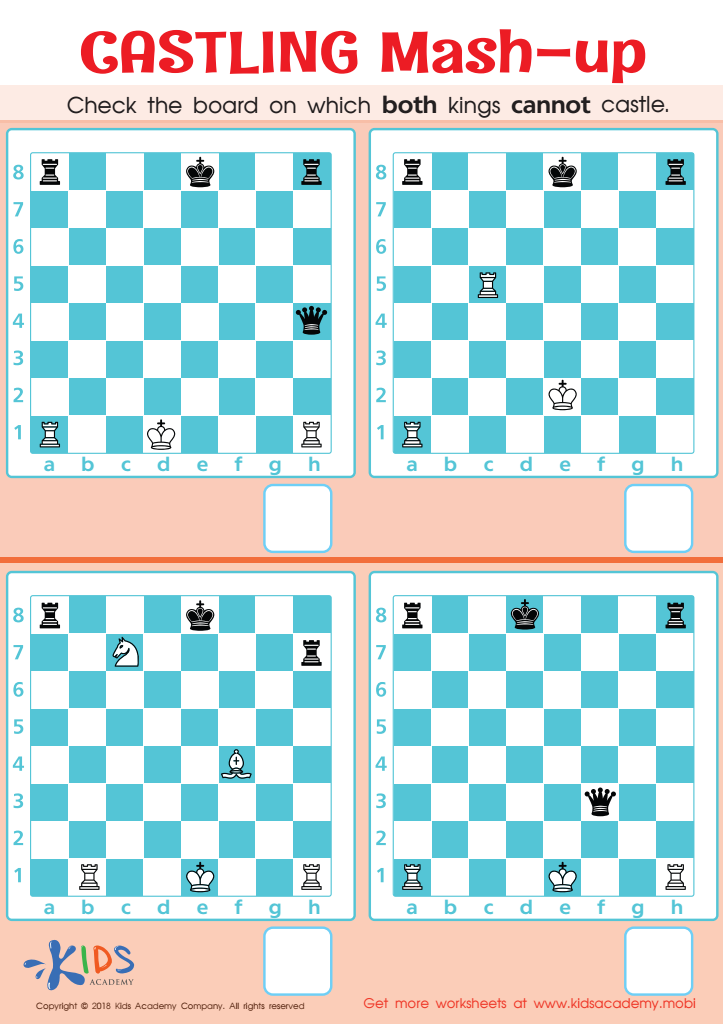
Castling Mash–up Worksheet
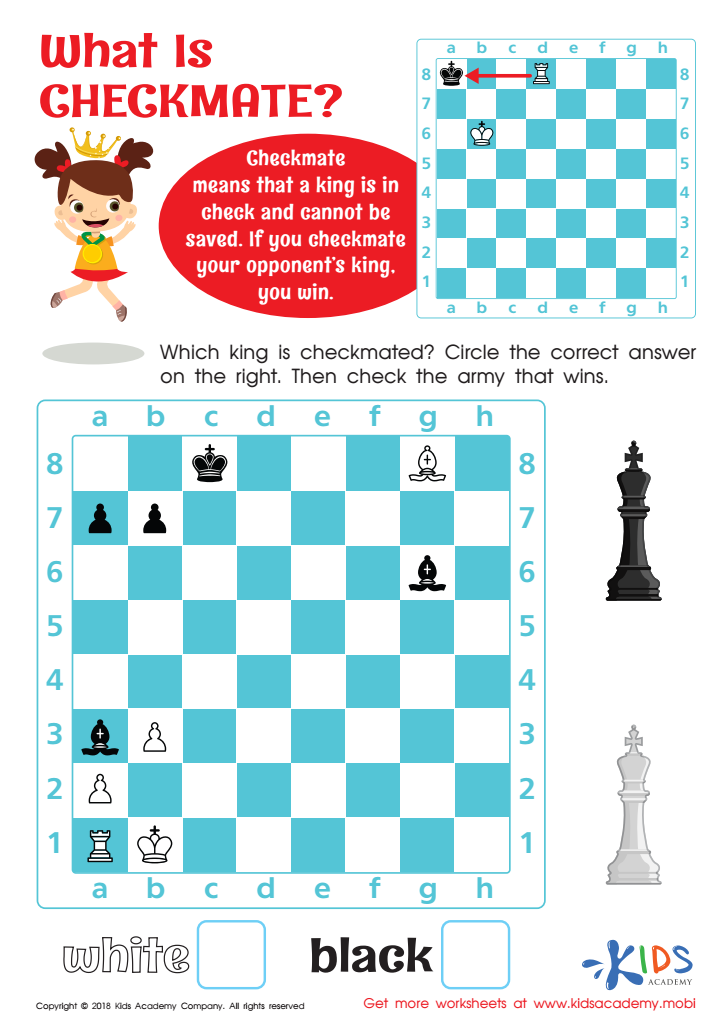
What is Checkmate? Worksheet
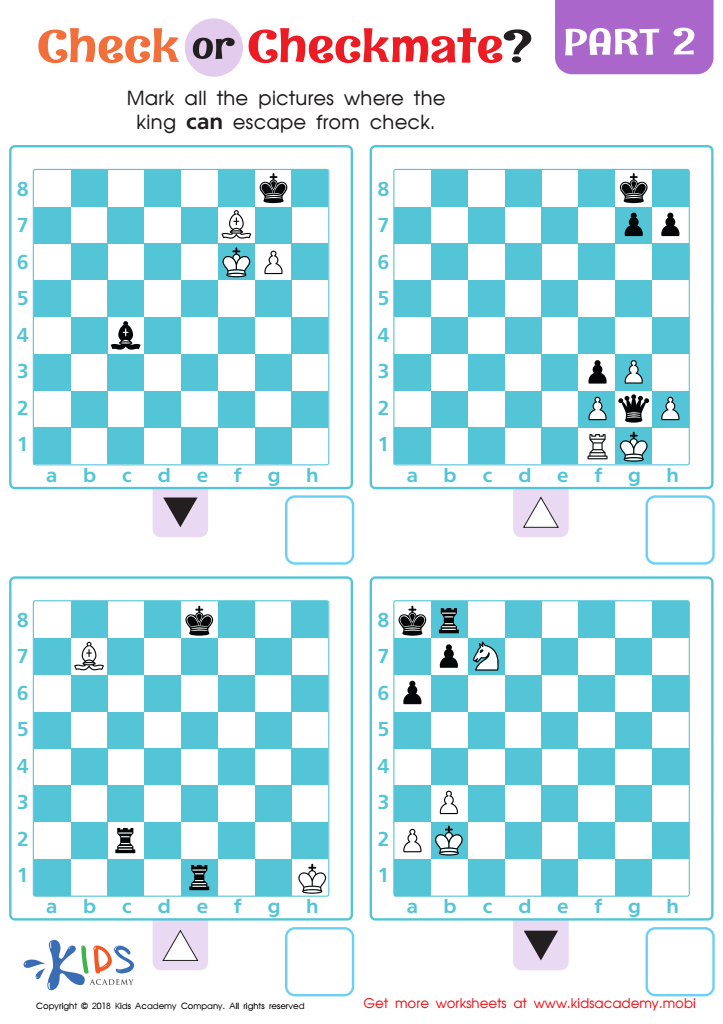
Check or Checkmate: Part 2 Worksheet
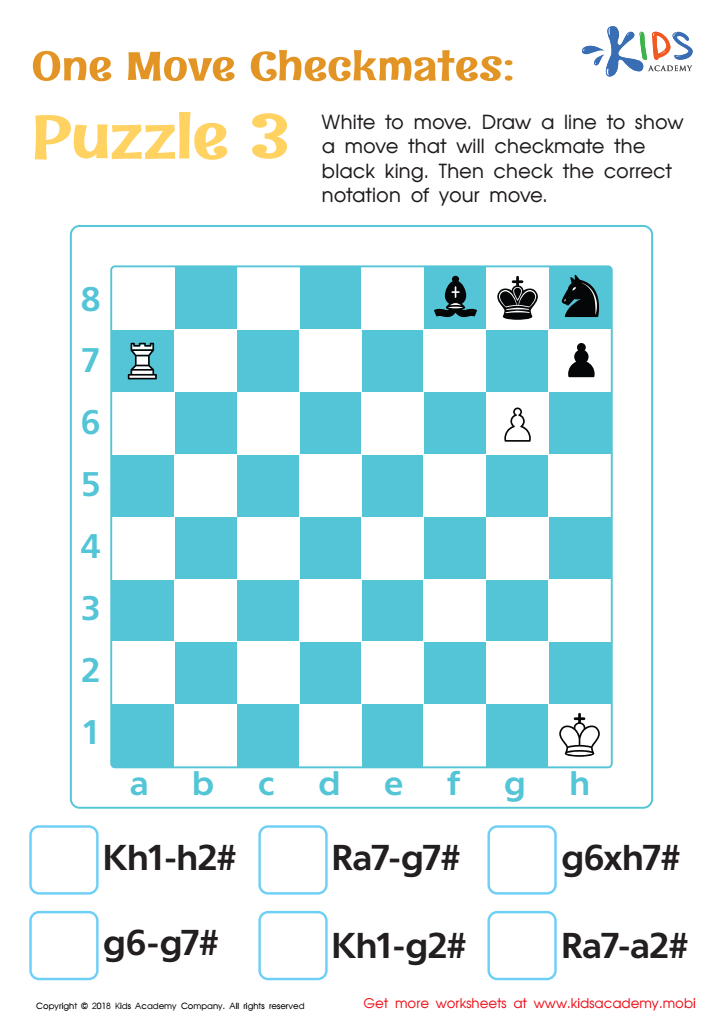
One Move Checkmates: Puzzle 3 Worksheet
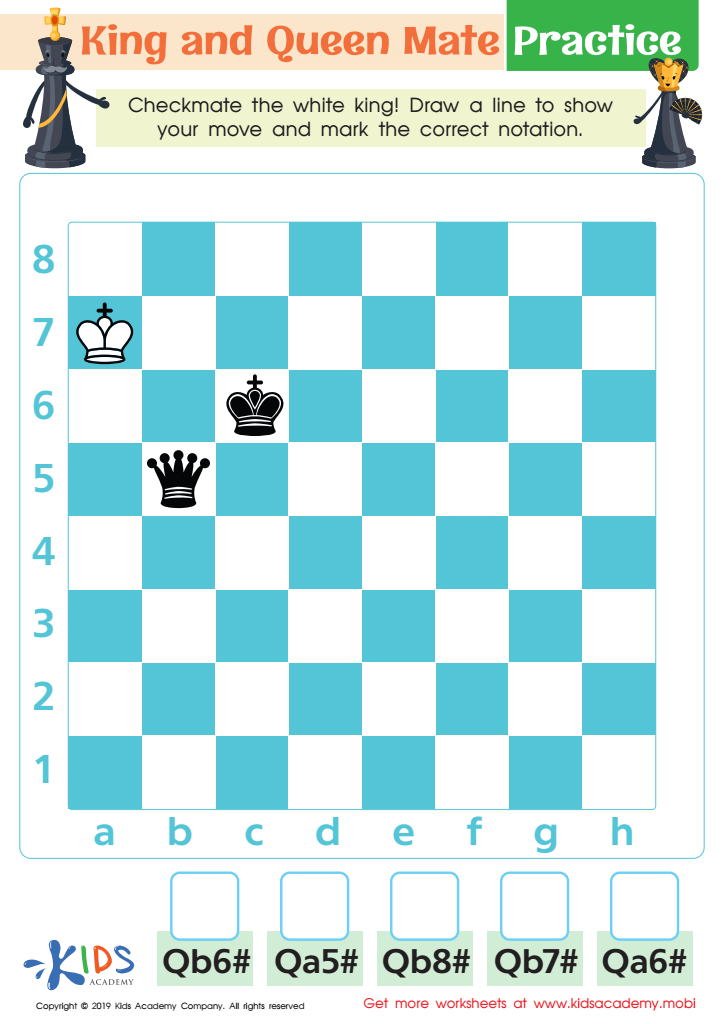
King and Queen Mate Practice Worksheet

Discovered Check: Puzzle 2 Worksheet
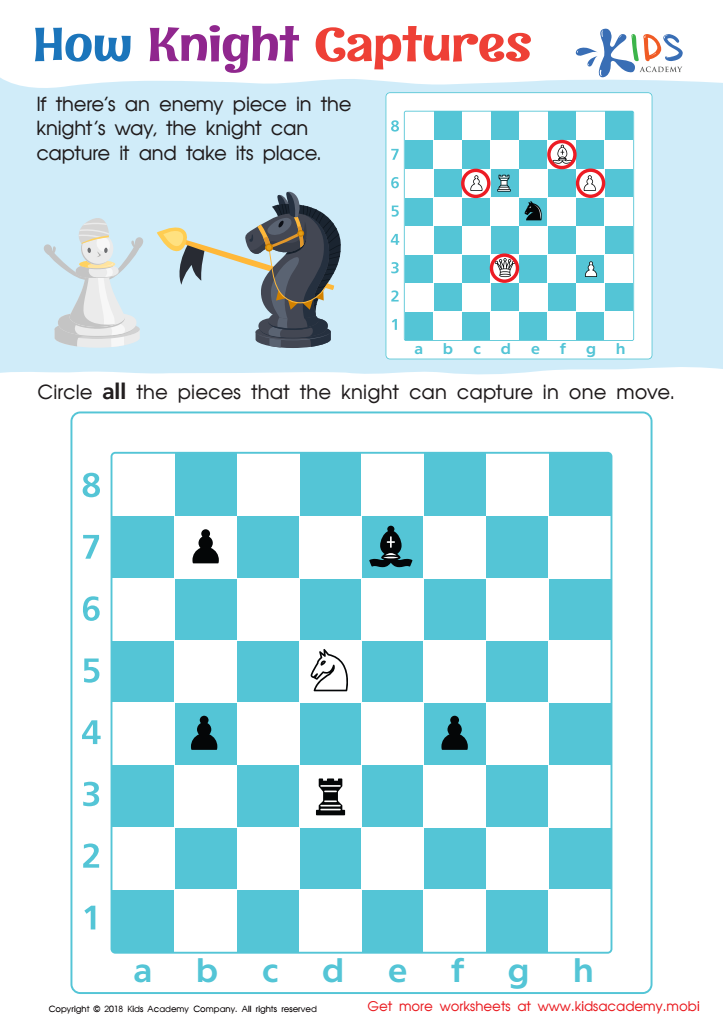
How Knight Captures Worksheet
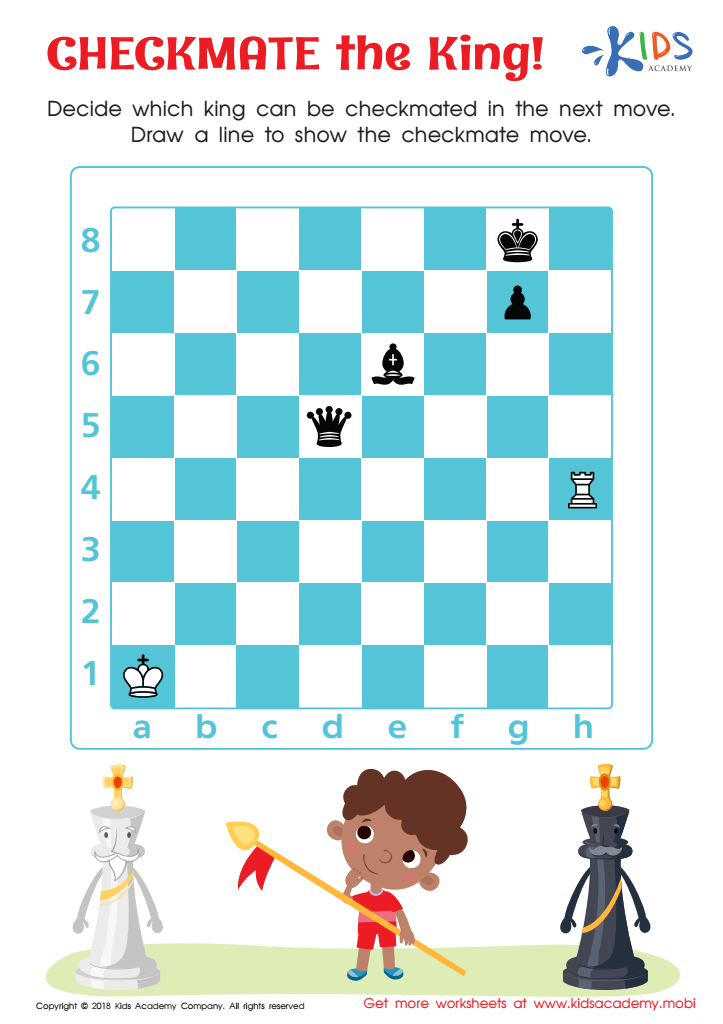
Checkmate the King Worksheet
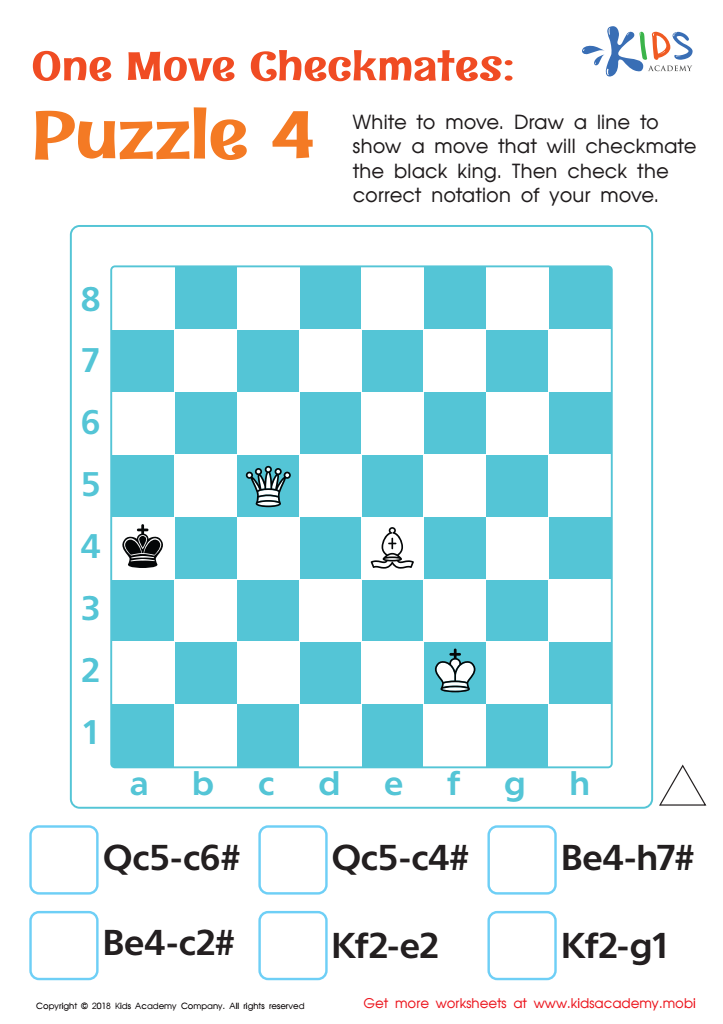
One Move Checkmates: Puzzle 4 Worksheet
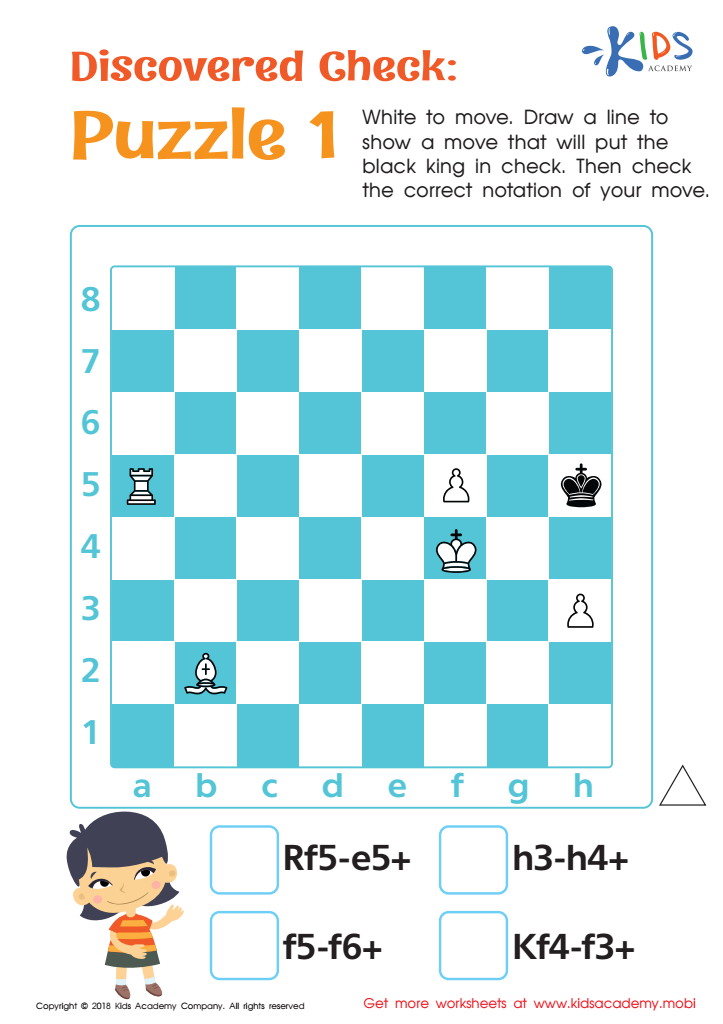
Discovered Check: Puzzle 1 Worksheet
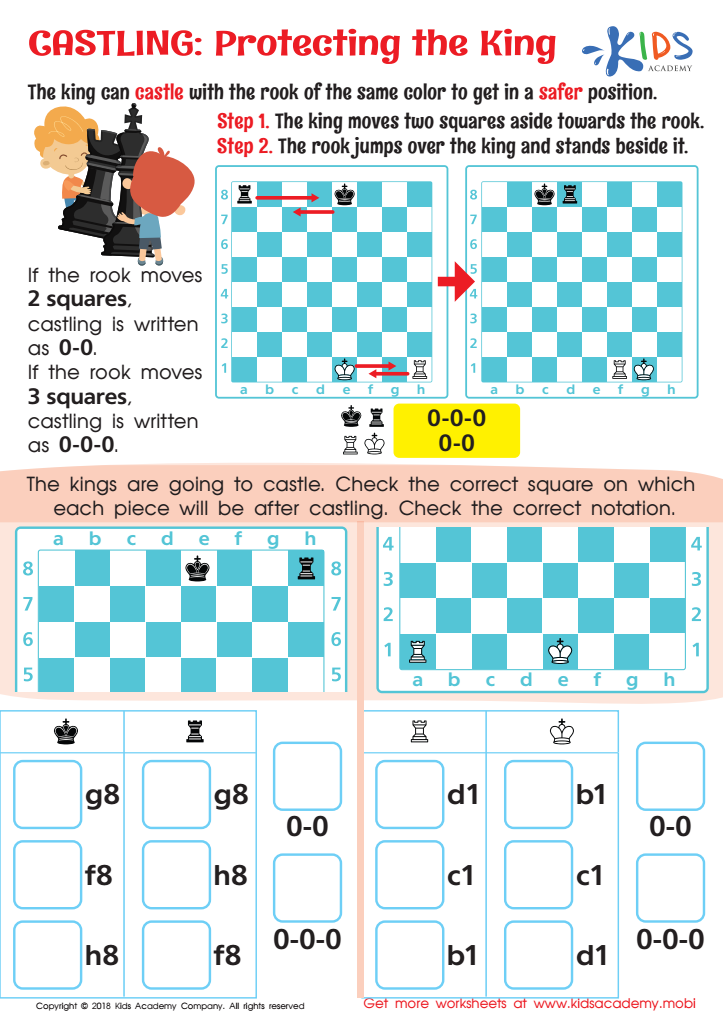
Castling: Protecting the King Worksheet
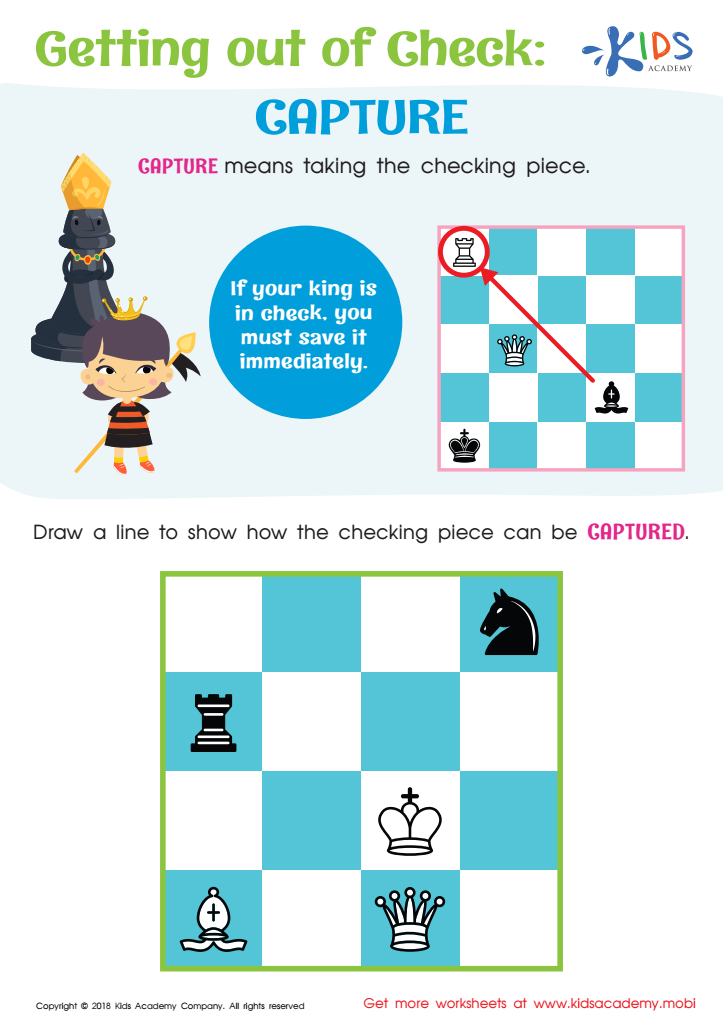
Getting out of Check: Capture




Understanding chess strategy is vital for young children aged 3-6 because it nurtures essential cognitive and social skills that support their overall development. Chess is more than just a game; it teaches critical thinking, problem-solving, and decision-making. At this tender age, children's brains are highly receptive to learning patterns and strategies, making it an ideal time to introduce them to the foundational concepts of chess.
Engaging with chess helps develop patience and focus as children learn to concentrate on their moves and anticipate the opponent's responses. It also encourages creativity as they explore different strategies and solutions. Understanding chess fosters emotional intelligence, teaching children how to cope with wins and losses gracefully. Moreover, participating in chess activities can enhance communication skills when discussing strategies and challenges with peers or adults.
From an academic perspective, chess has been linked to improved performance in areas such as mathematics and reading. By introducing chess strategy to preschoolers, parents and teachers not only help them build a framework for analytical thinking but also provide a fun and engaging activity that promotes social interaction and cooperative play. In turn, these skills lay the groundwork for lifelong learning and personal growth.