Animal Classification Worksheets for Ages 3-6
5 filtered results
-
From - To
Explore our vibrant and engaging Animal Classification Worksheets designed specifically for ages 3-6! Foster a love for learning as children discover the animal kingdom through fun and educational activities that emphasize sorting and categorizing. Perfect for early learners, these printable worksheets aid in the development of critical thinking and observation skills while introducing young minds to different habitats, characteristics, and groups of animals. Whether for homeschool, classroom, or supplementary learning, these colorful and interactive sheets make learning an adventure. Help your little ones become mini zoologists today with our thoughtfully crafted resources!
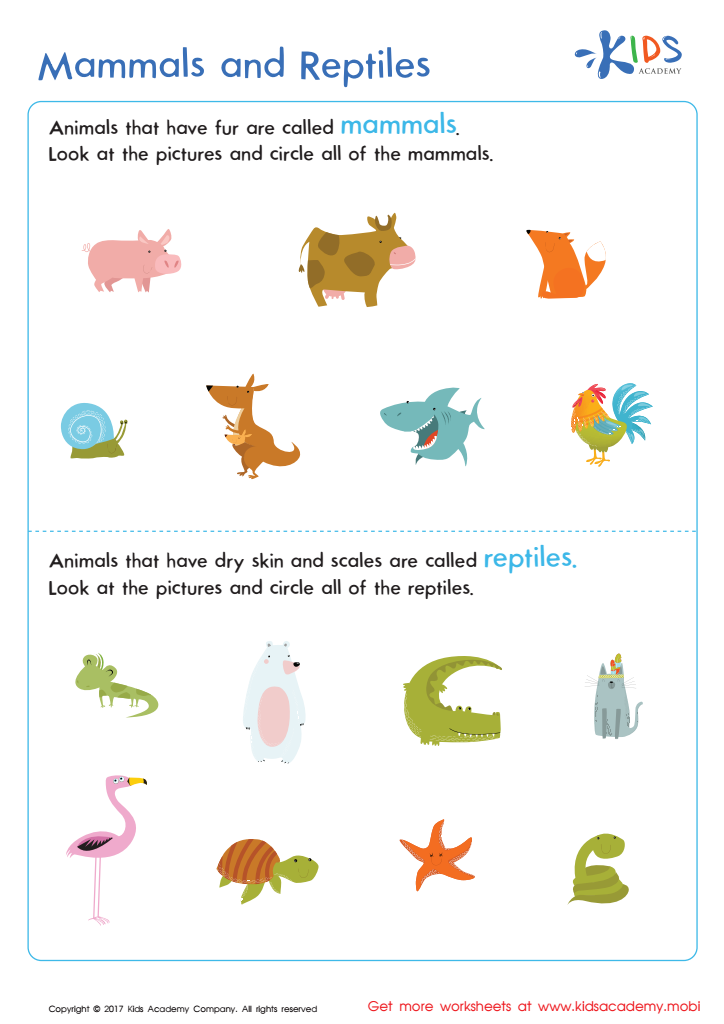
Mammals and Reptiles Worksheet
 Assign to My Students
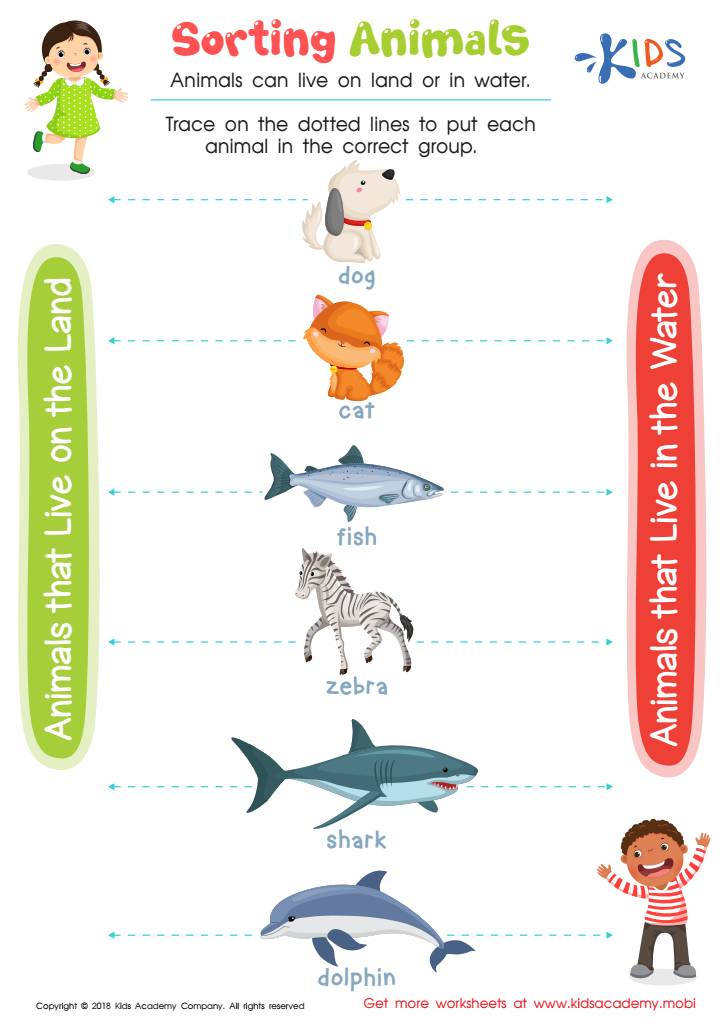
Sorting Animals Worksheet
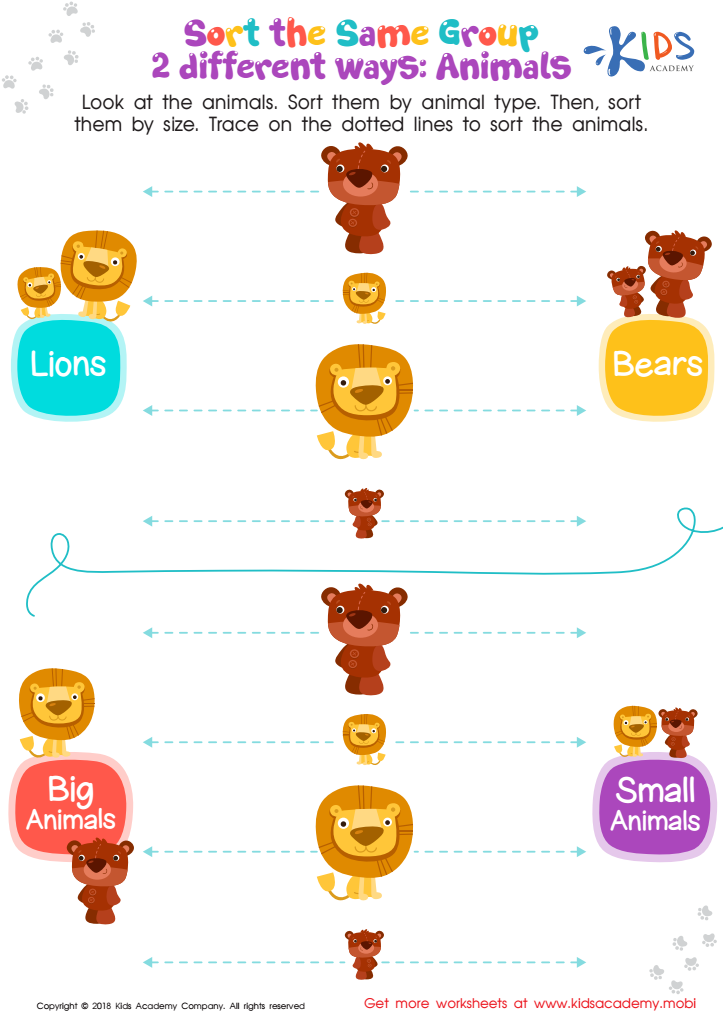
Sort the Same Group 2 Different Ways: Animals Worksheet
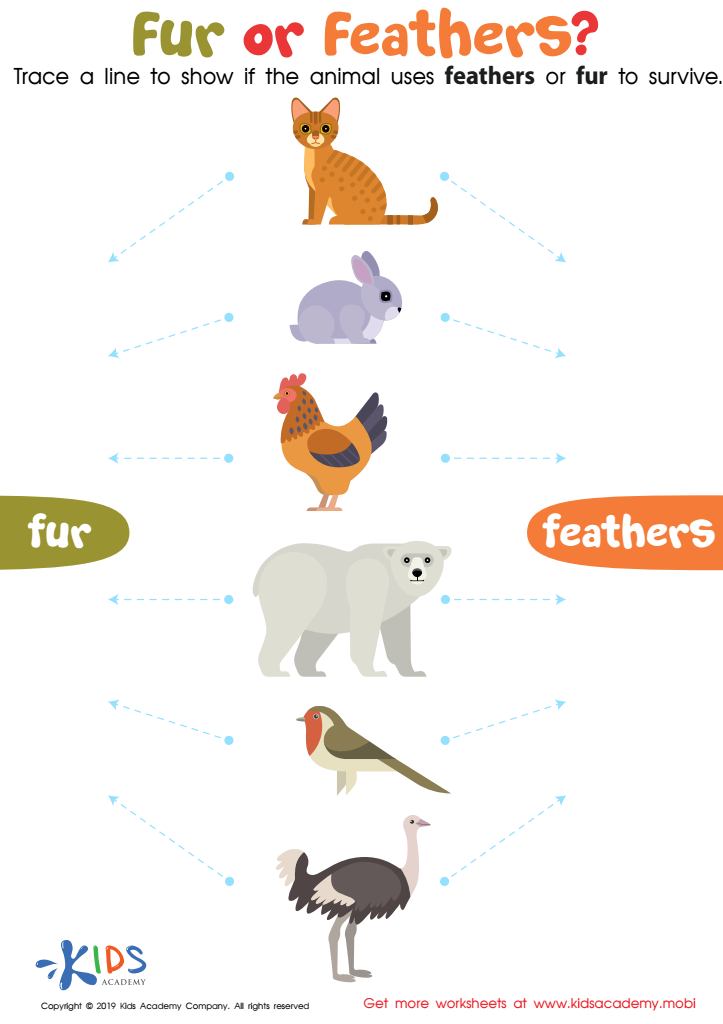
Fur or Feathers? Worksheet
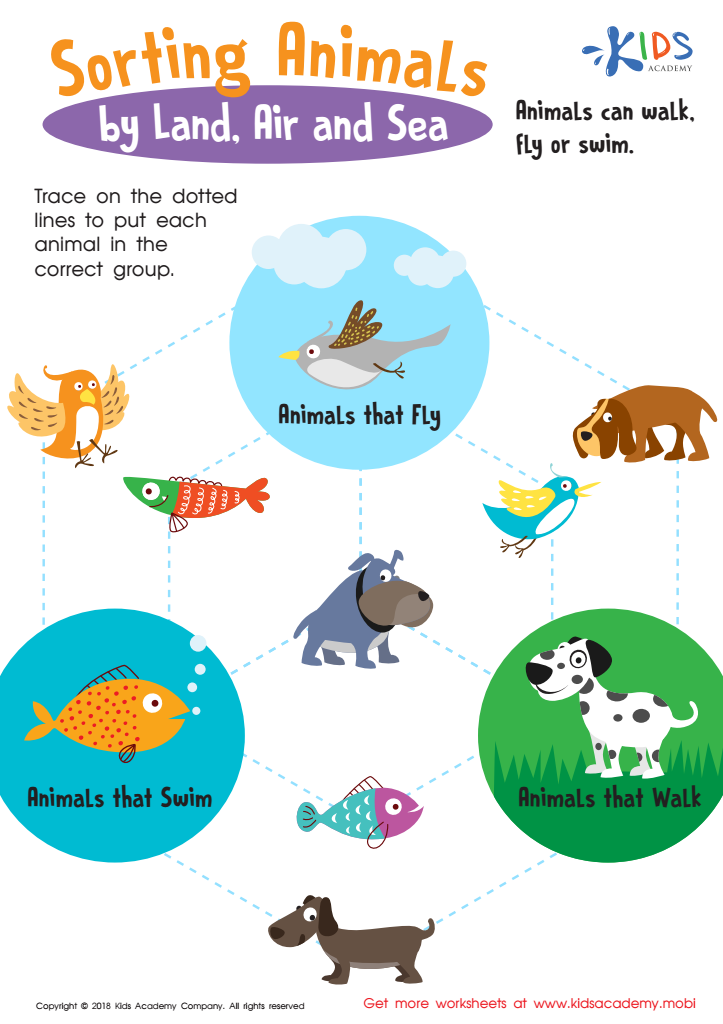
Sorting Animals by Land, Air and Sea Worksheet





Understanding animal classification is vital for young children aged 3-6 because it fosters holistic development and forms a foundation for future learning. This age marks a pivotal time for cognitive growth where children are learning to categorize the world around them. Introducing them to animal classification flares their curiosity, enhances their vocabulary, and sharpens their observational skills.
Categorizing animals into groups such as mammals, birds, reptiles, amphibians, and fish encourages comparative and analytical thinking. It helps children not only recognize physical features like feathers, scales, and fur but also understand behavioral traits and habitats. By grasping these basic concepts, children develop the skills to categorize and organize information, which are crucial cognitive abilities.
Additionally, early exposure to animal classification can instill a deep-seated respect and empathy for wildlife and the environment. Understanding diverse species sensitizes children to ecological balance and interconnectedness, fostering a sense of responsibility towards nature.
For parents and educators, this subject is a gateway to engage children in meaningful, interactive learning activities. Storybooks, outdoor exploration, and educational games centered on animals can make learning fun and impactful. Thus, valuing animal classification in early education unlocks doors to scientific inquiry, environmental stewardship, and cognitive development.








