Comparing sizes Worksheets for Ages 3-6
10 filtered results
-
From - To
Introduce young learners to important math concepts with our "Comparing Sizes Worksheets for Ages 3-6". Specifically crafted for preschool and kindergarten children, these engaging worksheets help kids grasp the basics of measurement and size comparison in a fun, interactive way. Through hands-on activities like sorting objects, distinguishing between big and small, and ordering items by size, children develop critical thinking and observational skills. Perfect for classroom or at-home learning, these printable worksheets make mastering early math skills an enjoyable experience. Foster your child's growth and confidence with our helpful and educational resources today!
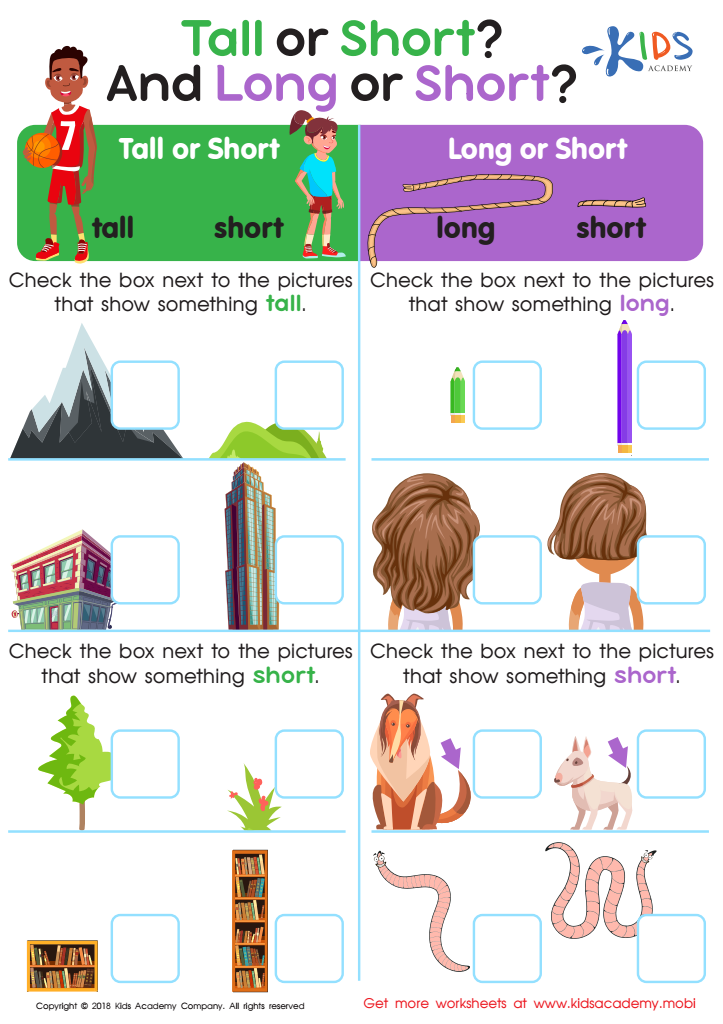
Tall or Short and Long or Short? Worksheet
 Assign to My Students
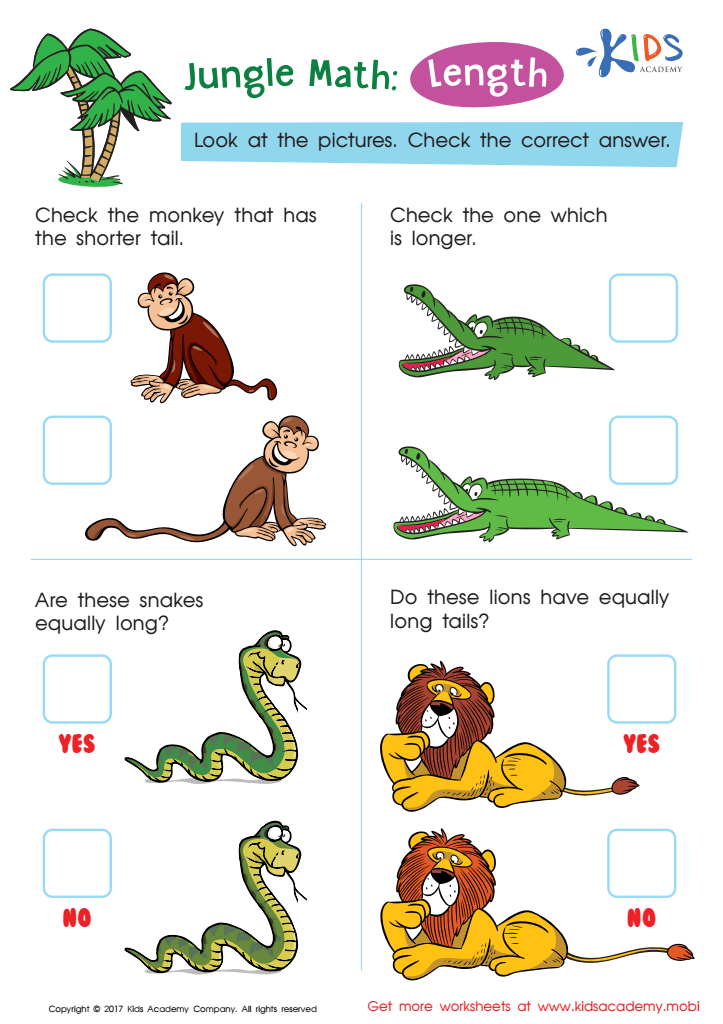
Which One Is Longer - Length Worksheet
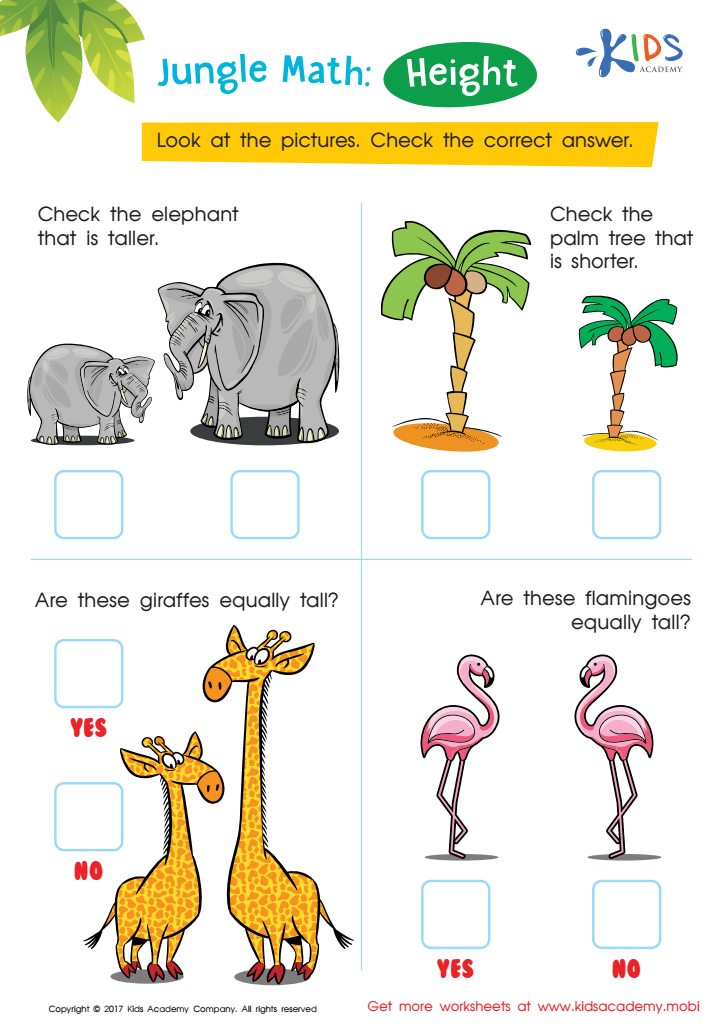
Which Is Taller Worksheet
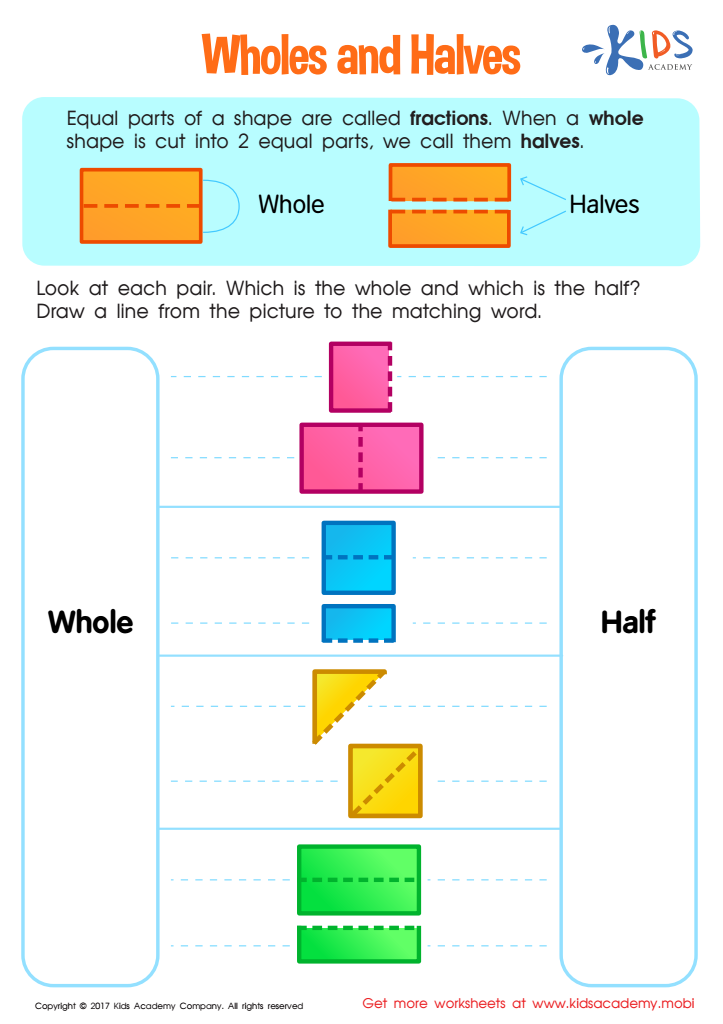
Wholes and Halves Worksheet
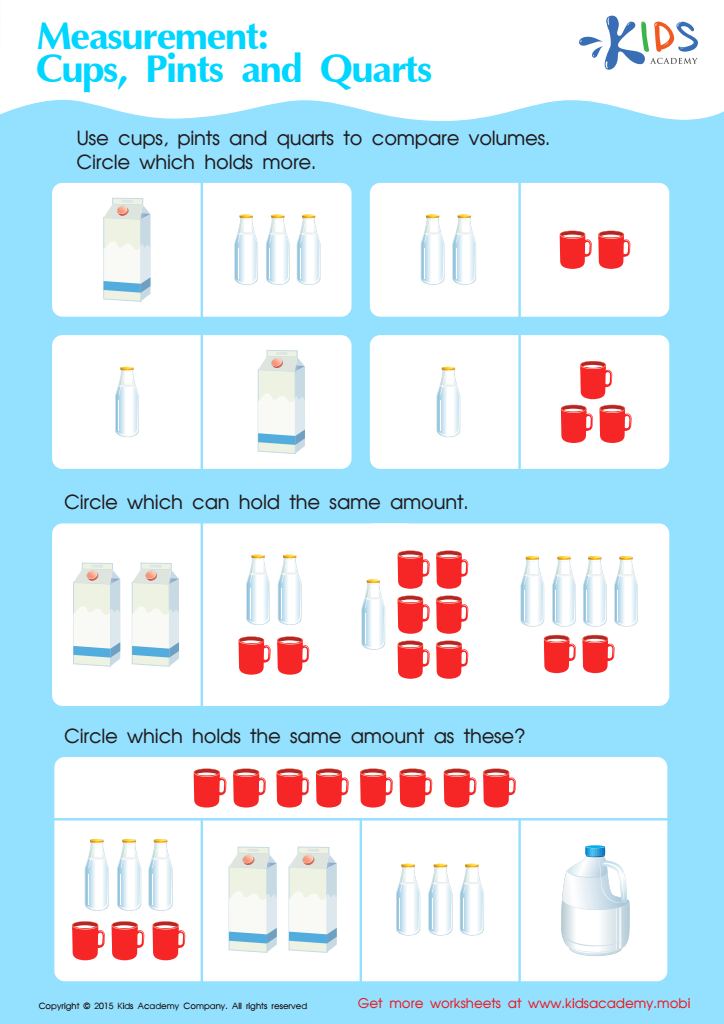
Measurement: Compare Volumes Worksheet
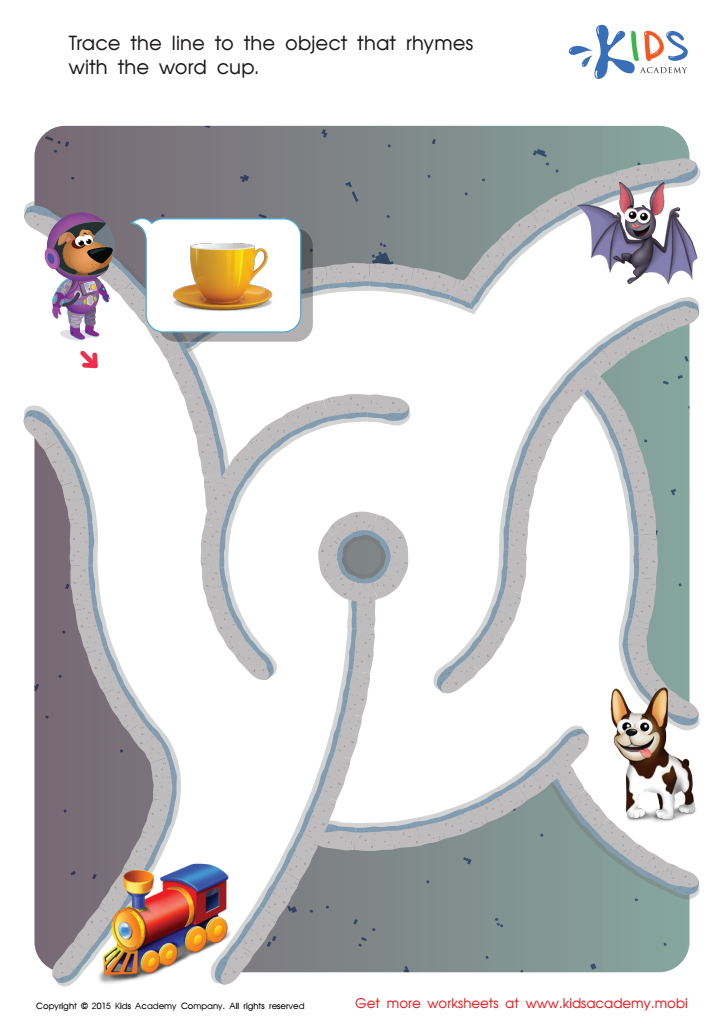
Cup Rhyming Words Worksheet
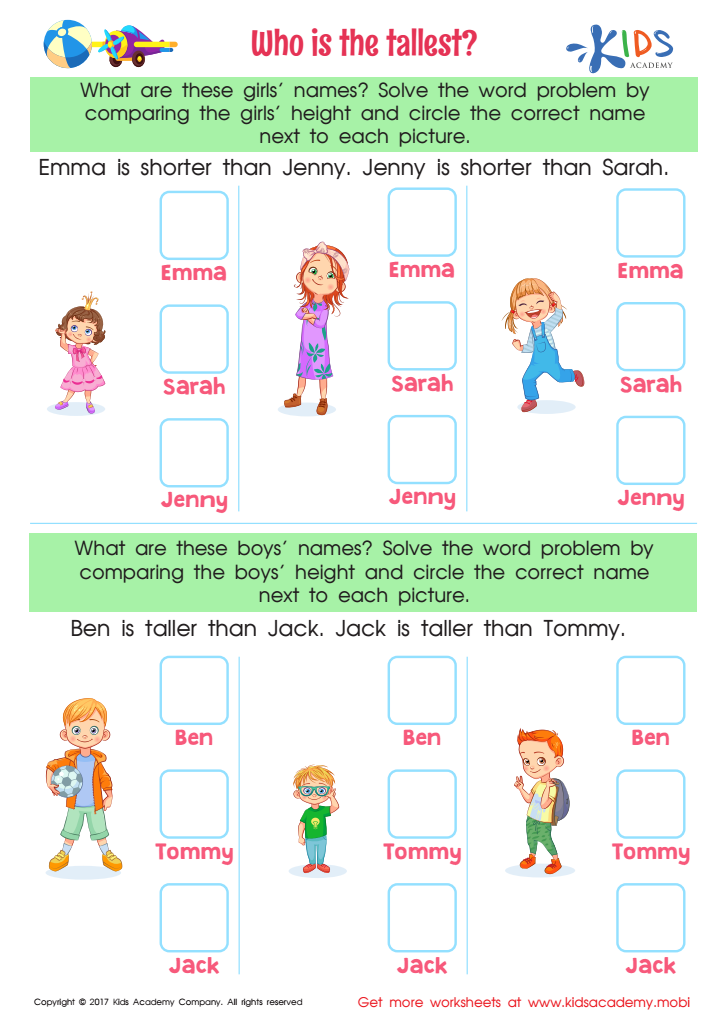
Who Tallest Printable
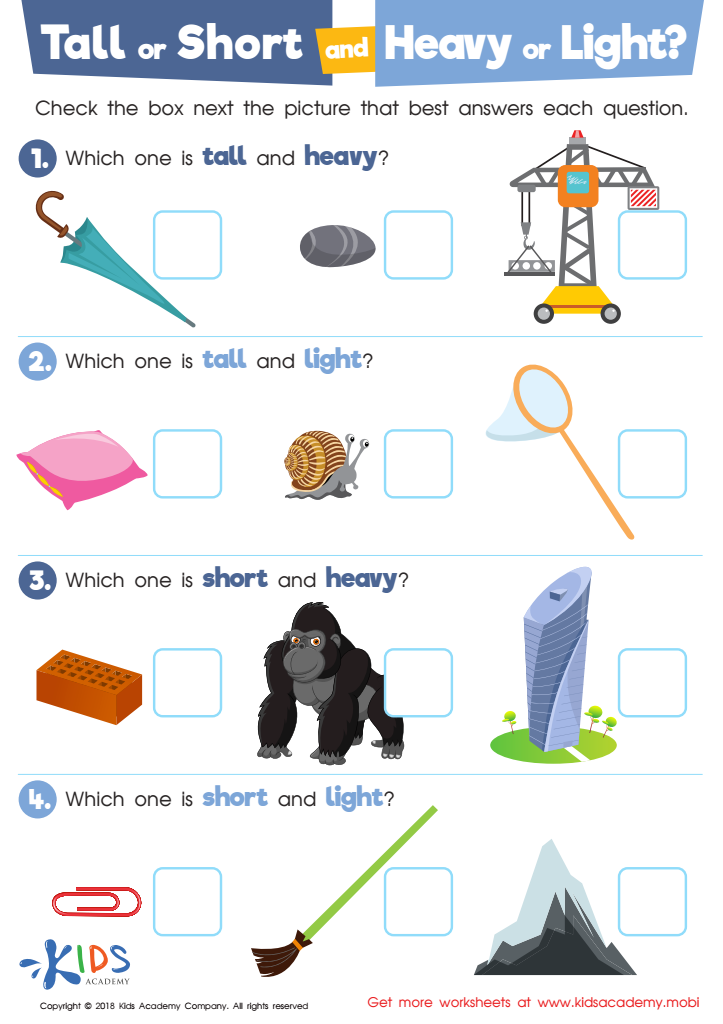
Tall or Short and Heavy or Light? Worksheet
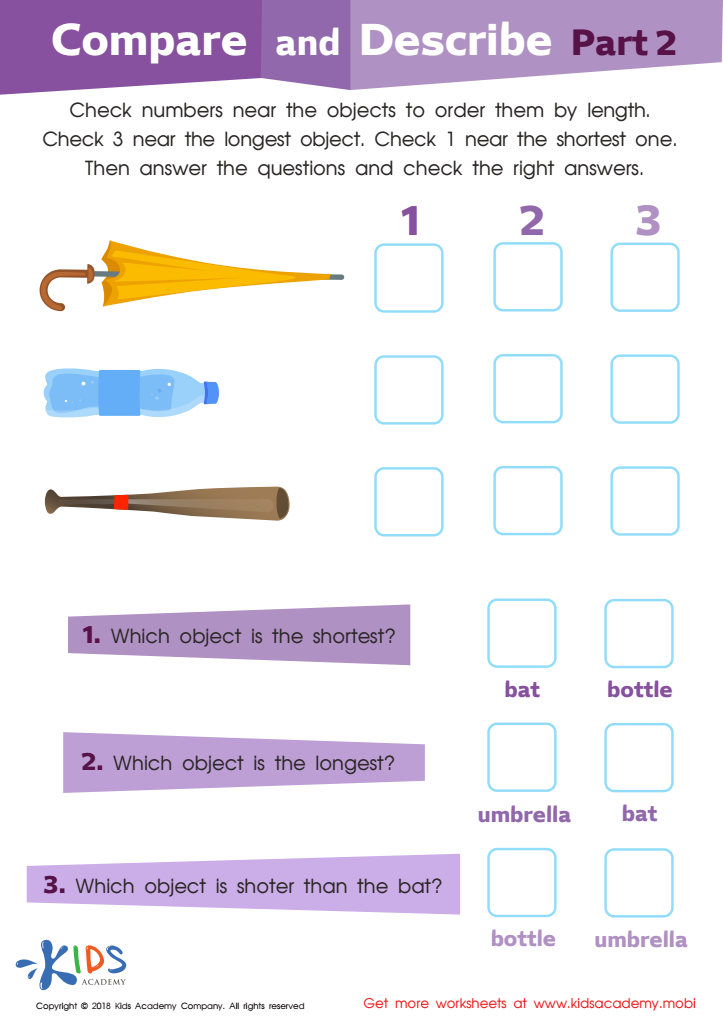
Compare and Describe: Part 2 Worksheet
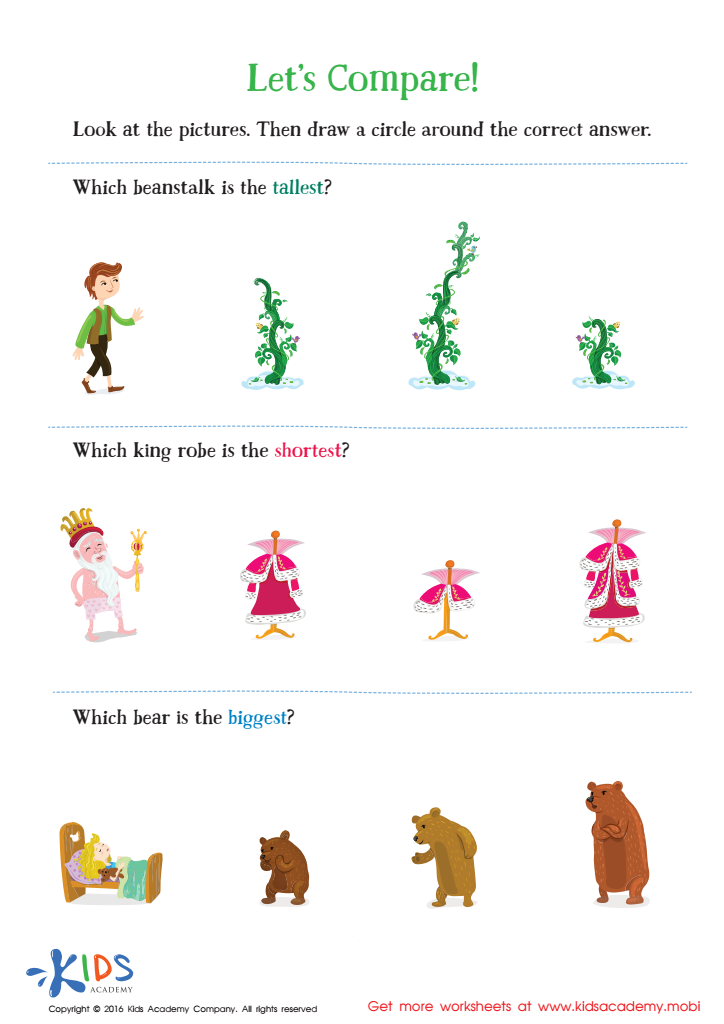
Fairy Tale Worksheet: Let's Compare


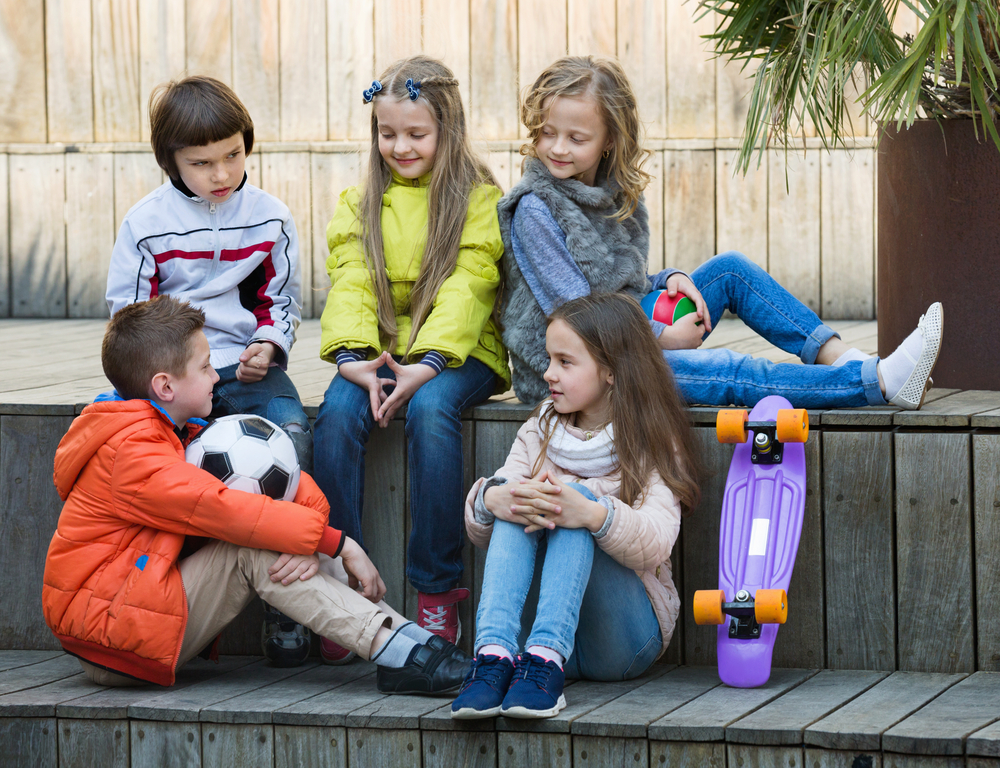



Comparing sizes for children ages 3-6 plays a fundamental role in their early cognitive and perceptual development. This simple yet crucial skill lays the groundwork for mathematical concepts, language development, and critical thinking.
First and foremost, understanding and comparing sizes help with mathematical readiness. Children begin to develop a sense of measurement, which is essential for later learning about numbers, counting, and eventually arithmetic operations. By comparing and contrasting sizes, they build a solid foundation for understanding concepts of quantity and seriation (arranging objects in order).
Cognitively, children enhance their observational skills and attention to detail. They learn to notice differences and similarities, fostering analytical thinking. This ability to compare and categorize shapes their ability to solve problems and think logically.
Language development is another significant benefit. Describing objects in terms of size helps children expand their vocabulary with words like "bigger," "smaller," "tall," and "short." Communicating these observations verbally also improves their expressive language skills.
Finally, such activities support social learning. When kids discuss their findings with peers or adults, they practice turn-taking and listening, which are key components of social interaction.
Therefore, guiding young children through size comparisons supports diverse areas of growth, making it an essential aspect of early childhood education.








