
Identifying differences Worksheets for Ages 3-6
3 filtered results
Difficulty Level
Grade
Age
-
From - To
Subject
Activity
Standards
Explore our "Identifying Differences Worksheets for Ages 3-6," designed to enhance critical thinking and observational skills in young learners. These engaging worksheets feature colorful images tailored for preschool and kindergarten-aged children, making learning fun and interactive. Children will develop attention to detail as they spot variations in illustrations, fostering cognitive growth and improving focus. Each worksheet encourages creativity and boosts confidence by allowing kids to express their findings. Perfect for both home and classroom use, these printables support early childhood education and can easily be integrated into lesson plans or used as supplementary activities. Start enhancing your child's skills today!
Favorites
With answer key
Interactive
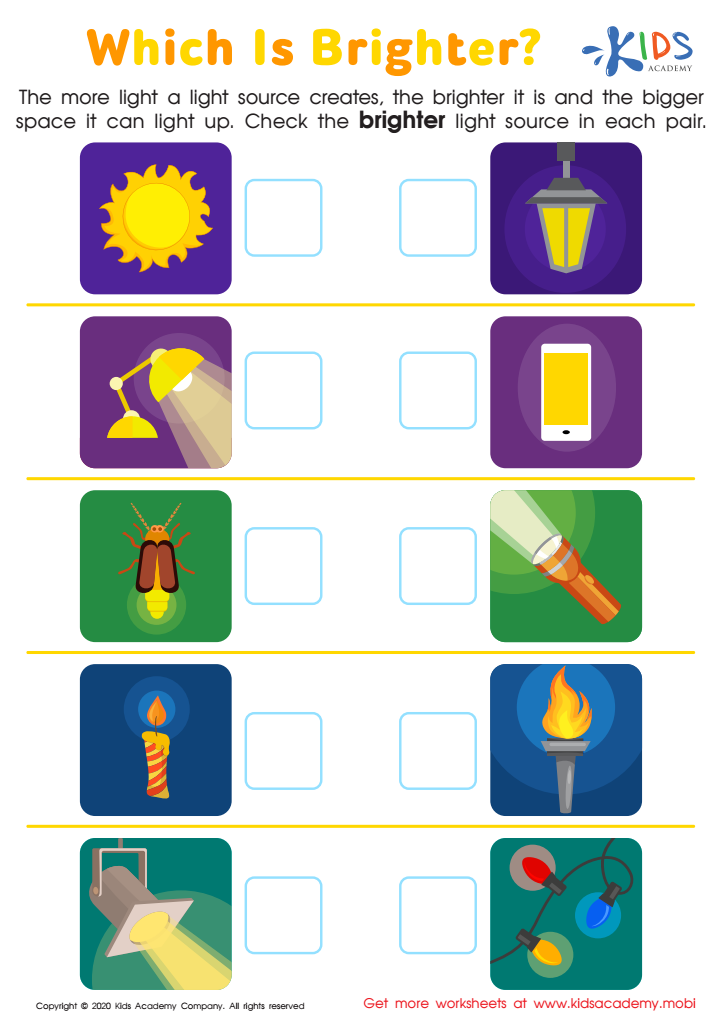
Which Is Brighter? Worksheet
Before the exercise, ask students to recall sources of light. Use this worksheet to explain that the brighter the light source, the more space it can light up. Identify the different light sources in the pictures, then check the brighter light source in each pair. The biggest natural source of light is the sun.
 Assign to My Students
Which Is Brighter? Worksheet
Worksheet
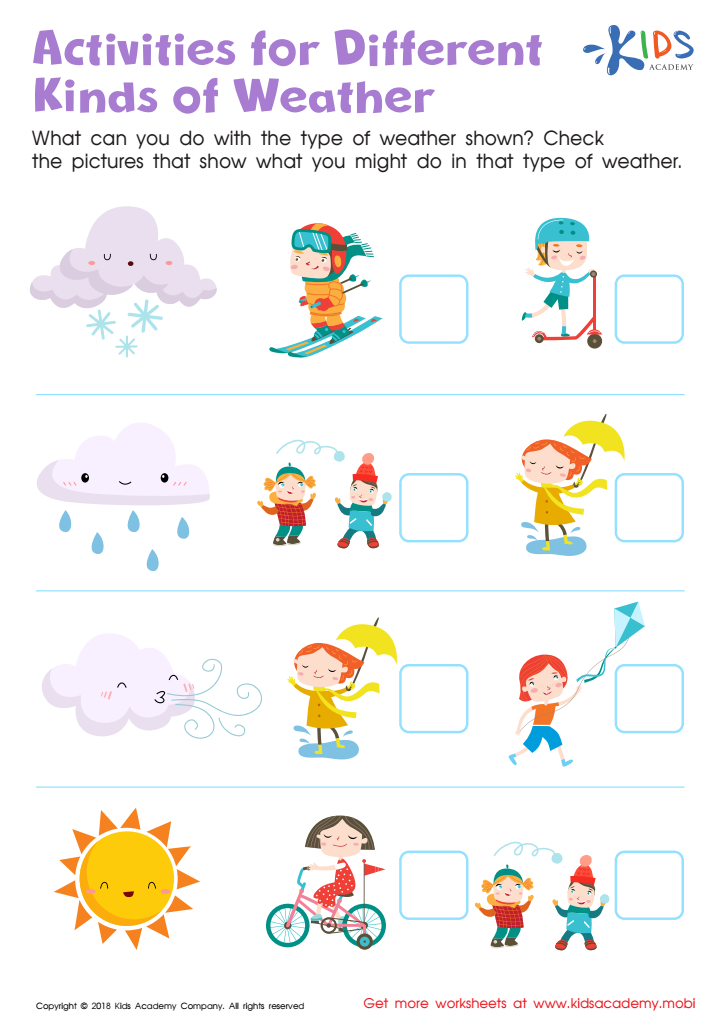
Activities for Different Kinds of Weather Worksheet
Help your child explore the changing seasons with this interactive worksheet. Ask them to name the different seasons and activities associated with each type of weather. Show the pictures and explain what they can do in that kind of weather. Have them check off the activities to help them learn and enjoy the changing seasons.
Activities for Different Kinds of Weather Worksheet
Worksheet
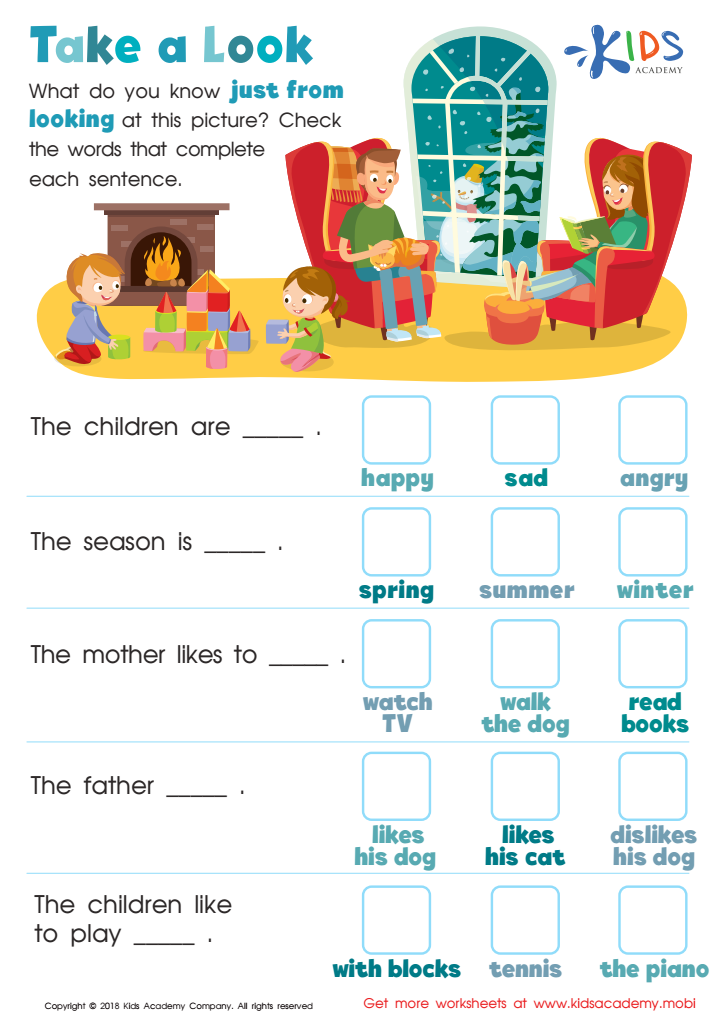
Take a Look - Part 1 Worksheet
Young learners gain understanding when using picture clues when reading. Looking at illustrations can help students learn the meaning of key vocabulary when reading fiction or informational text. Ask your students to look at the worksheet and observe what they can learn from the picture. It's a great comprehension strategy for early readers.
Take a Look - Part 1 Worksheet
Worksheet
Join Kids Academy for Free
Who is primarily going to use this learning content?




Identifying differences is crucial for children aged 3-6, as it fosters their cognitive, social, and emotional development. At this age, children are naturally curious and exploring their surroundings. Recognizing differences helps them develop critical thinking and observation skills, allowing them to compare and contrast various objects, concepts, and ideas. This foundational skill enhances their ability to classify and categorize, promoting their overall understanding of the world.
Additionally, teaching children to identify differences in social contexts plays a vital role in their emotional intelligence. It encourages empathy, as they learn to recognize and appreciate diversity in peers, inclusive of cultural, physical, and behavioral variations. Shared experiences stemming from understanding differences can build stronger social connections and foster cooperative play.
For parents and teachers, nurturing this skill at a young age equips children with the tools they need to navigate and celebrate diversity throughout their lives. Furthermore, early identification of differences in learning styles or behaviors can lead to tailored support, helping to address any challenges before they become barriers. Overall, promoting the ability to identify differences lays a strong foundation for lifelong learning, inclusivity, and success in an increasingly diverse society.








