Lowercase identification Worksheets for Ages 3-6
5 filtered results
-
From - To
Our "Lowercase Identification Worksheets for Ages 3-6" are perfect for young learners beginning their literacy journey. Specially designed to engage kids in recognizing and identifying lowercase letters, these worksheets help reinforce early reading and writing skills through fun, interactive activities. With captivating illustrations and diverse exercises, children can effectively develop their letter recognition abilities. Ideal for both in-classroom and at-home learning, these printable resources offer a comprehensive foundation for developing critical pre-reading skills in an enjoyable, hands-on manner. Unlock your child's potential and make lowercase learning a delightful adventure with these expertly crafted worksheets from Kids Academy.
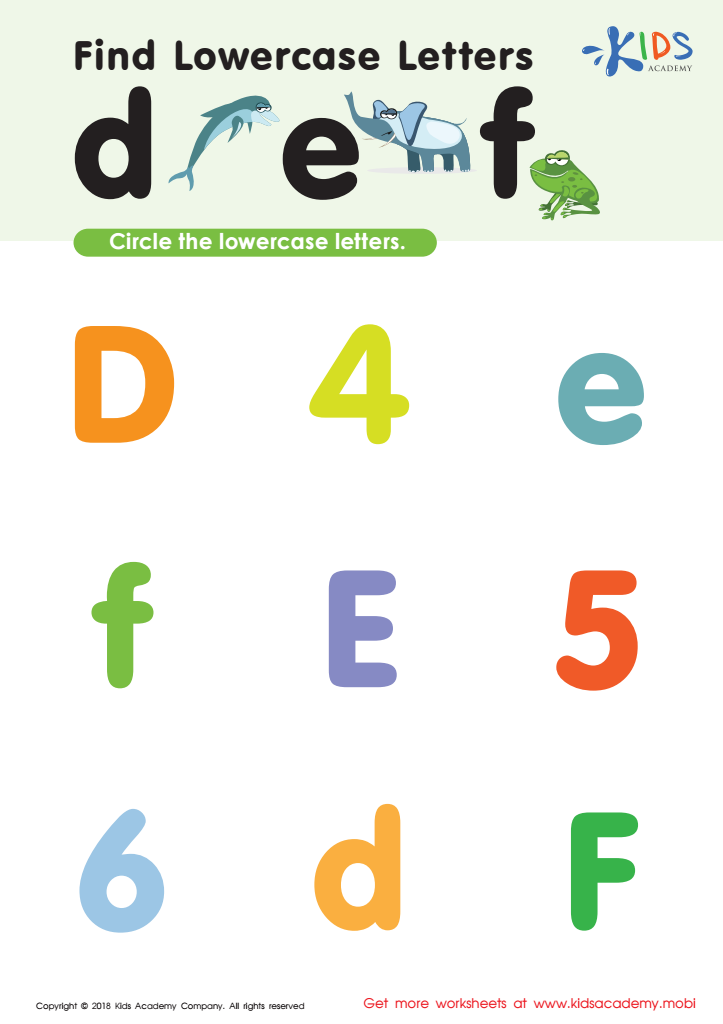
Find Lowercase Letters d e f Worksheet
 Assign to My Students
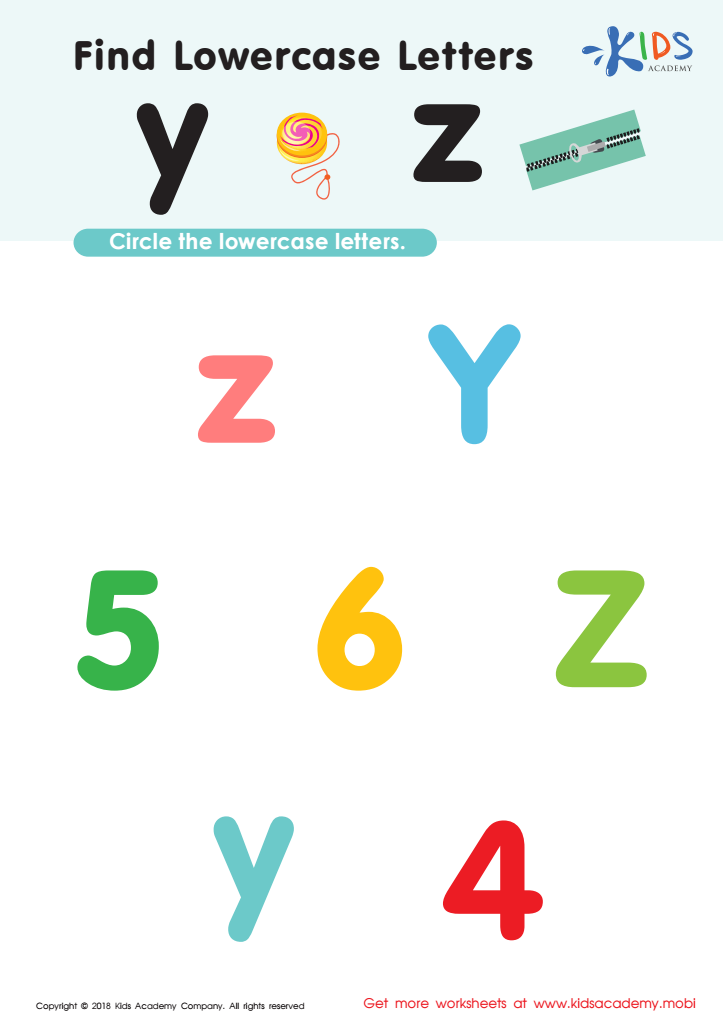
Find Lowercase Letters y z Worksheet
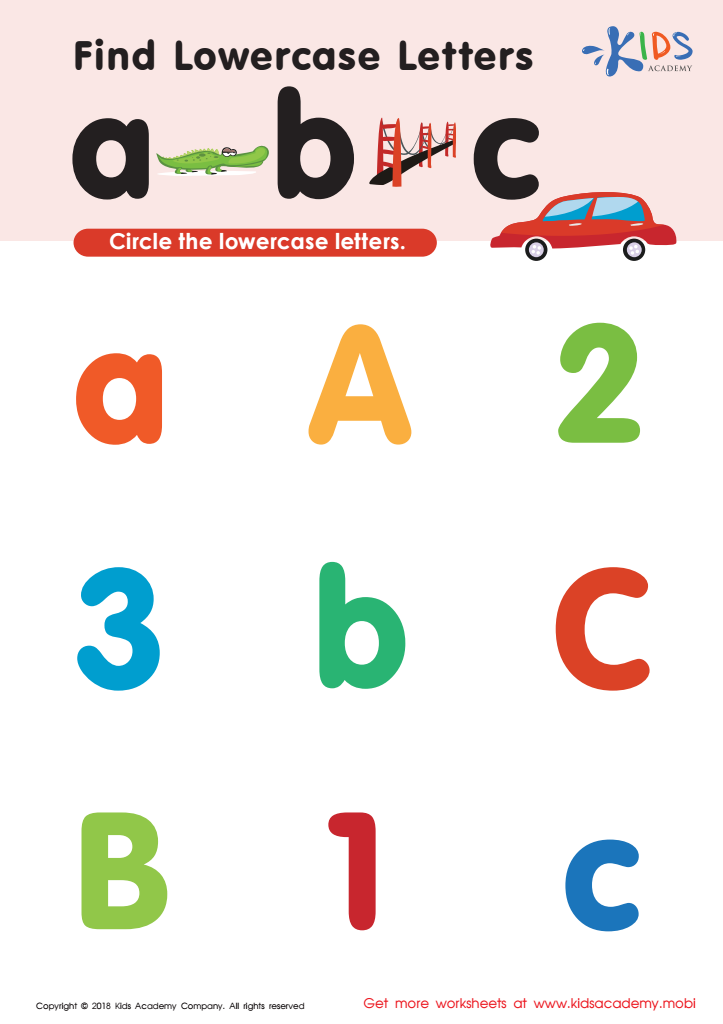
Find lowercase letters a b c Worksheet
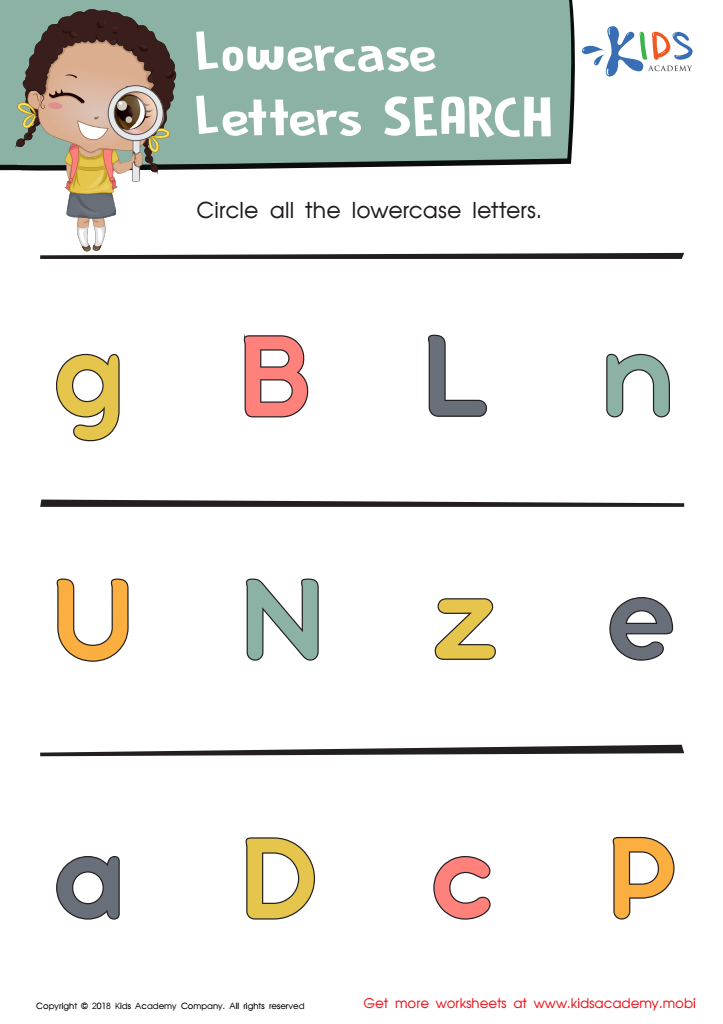
Lowercase Letters Search: Assessment Worksheet
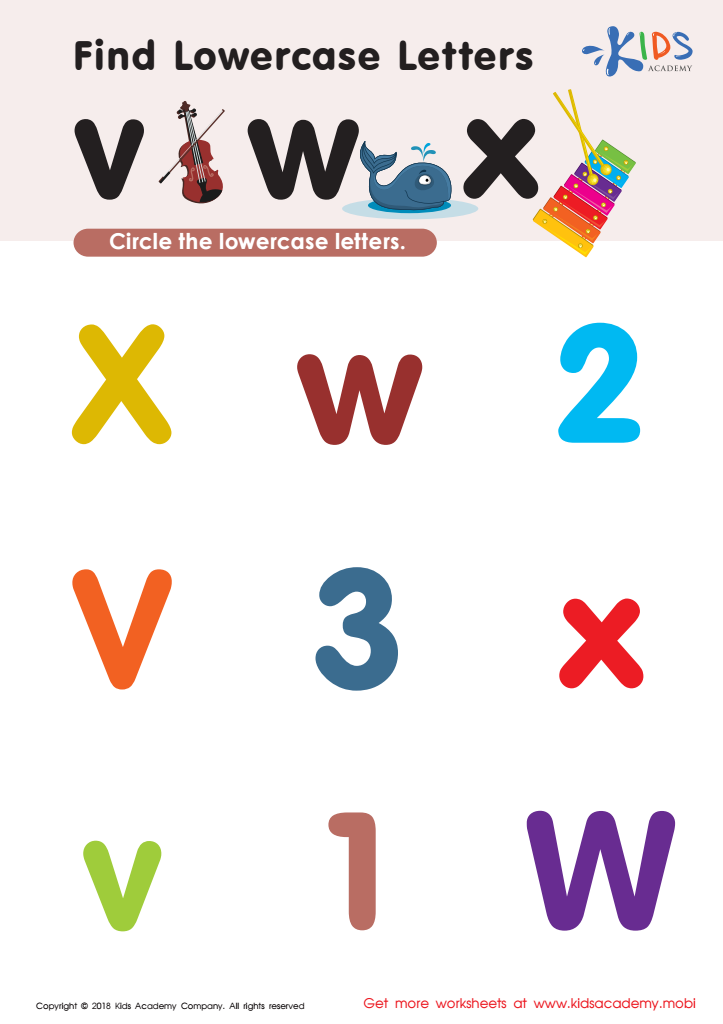
Find Lowercase Letters v w x Worksheet







During the formative years of ages 3-6, children are like sponges, absorbing information rapidly. One critical aspect of early childhood education involves the identification of lowercase letters. Parents and teachers should place significant importance on this for several reasons.
First, lowercase letters are more prevalent in written text. Most of the words children will encounter in books, signs, and everyday print are in lowercase. Recognizing these letters helps young readers become more familiar with common text and builds confidence as they learn to read.
Second, strong knowledge of both uppercase and lowercase letters lays a solid foundation for literacy development. It aids in letter recognition, which is directly linked to phonemic awareness—the ability to hear, identify, and manipulate phonemes. This skill is crucial for learning to decode words and read fluently.
Third, lowercase letter identification supports fine motor skills development. Children practicing writing lowercase letters are also improving their hand-eye coordination and pencil control, essential skills for writing readiness.
Lastly, early mastery of lowercase letters can boost a child's confidence and enthusiasm toward learning. By ensuring that children are comfortable with both uppercase and lowercase letters, parents and teachers can equip them with essential tools for academic success in reading and writing.








