
Mathematical reasoning Worksheets for Ages 3-6
36 filtered results
Difficulty Level
Grade
Age
-
From - To
Subject
Activity
Standards
Discover engaging and educational Mathematical Reasoning Worksheets designed for children aged 3-6, available at Kids Academy. These expertly crafted printable worksheets are tailored to enhance your child's critical thinking and problem-solving skills through fun and interactive activities. Concepts such as pattern recognition, shape identification, and basic addition are introduced in an age-appropriate manner to foster a strong mathematical foundation. Parents and teachers alike can use these resources to provide meaningful learning experiences that align with early childhood education standards. Boost your child's confidence and love for math with these delightful and effective worksheets today! Explore and download now!
Favorites
With answer key
Interactive
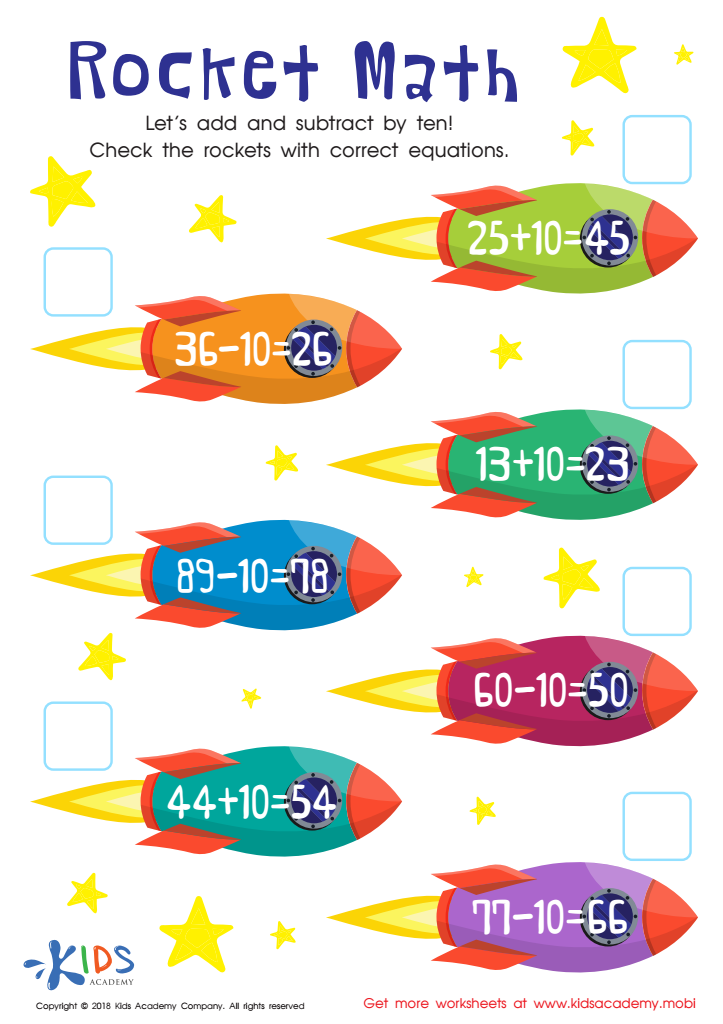
Rocket Math Worksheet
Your students will be math wizards in no time as they blast off on this exciting and colorful PDF worksheet. They'll use the 10s strategy to practice addition and subtraction, and they'll learn to skip count forwards and backwards. Keep them engaged and make learning fun!
 Assign to My Students
Rocket Math Worksheet
Worksheet
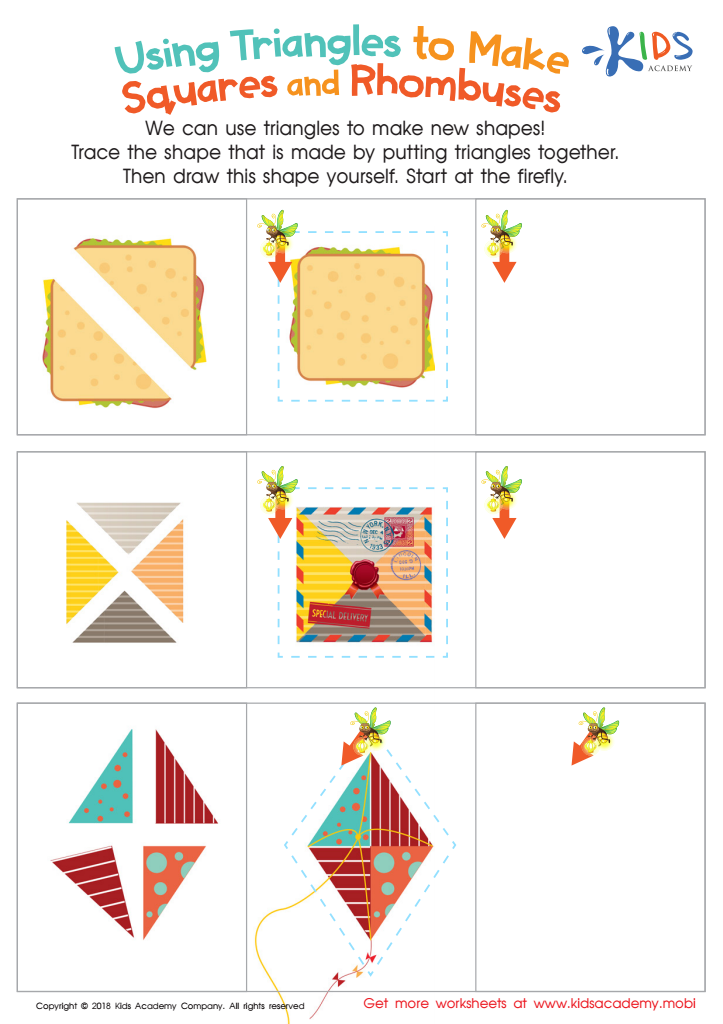
Using Triangles to Make Squares and Rhombuses Worksheet
Learning shapes is a fun way to boost spatial skills and critical thinking. This worksheet shows children how to use triangles to construct squares and rhombuses. Clear illustrations and a printout help children draw the new shape. A great activity for the math classroom! 80 words.
Using Triangles to Make Squares and Rhombuses Worksheet
Worksheet
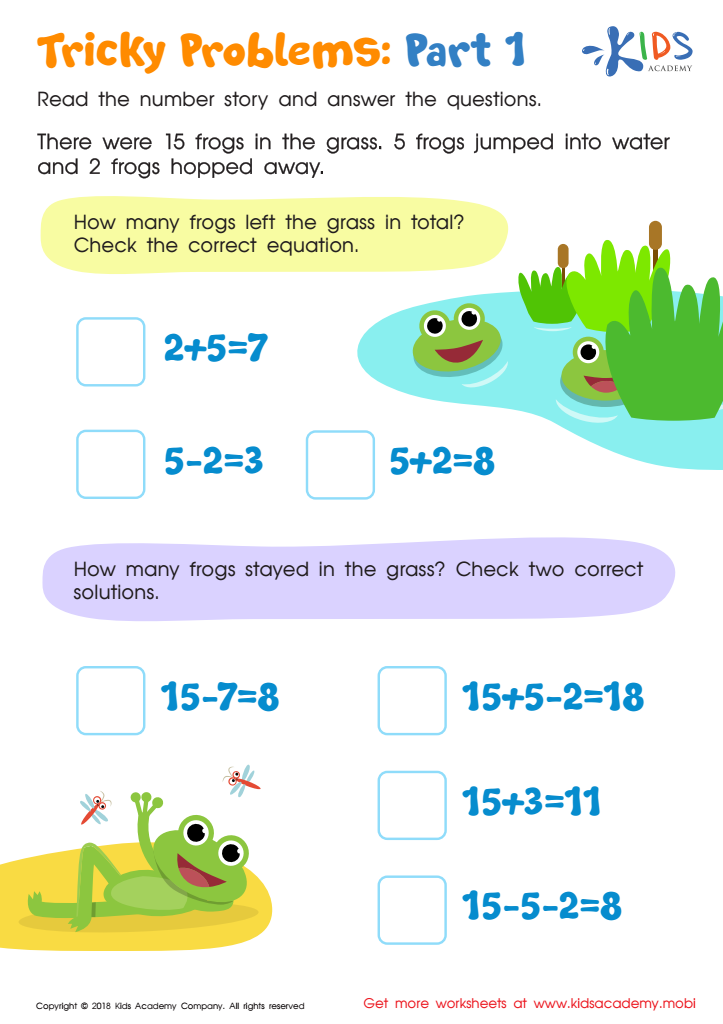
Tricky Problems Worksheet: Part 1
Visualizing word problems can help students solve them. This fun PDF worksheet encourages students to create mental images using math facts, then check boxes to match the equations for basic addition problems. It's a great way to build confidence in solving math.
Tricky Problems Worksheet: Part 1
Worksheet
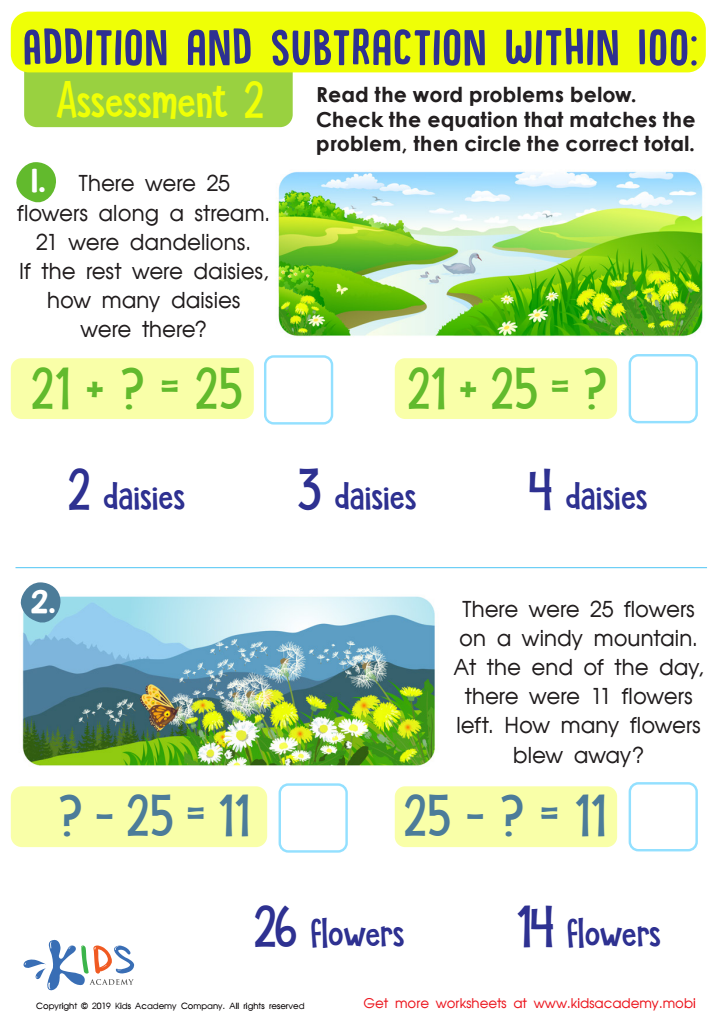
Assessment 2 Math Worksheet
Using fun exercises and pictures, you can get kids excited about math. With practice and reminders of what they've learnt, they'll be solving simple addition and subtraction equations with ease. Read the word problems in the picture to them, then help them check the equation and choose the correct answer.
Assessment 2 Math Worksheet
Worksheet
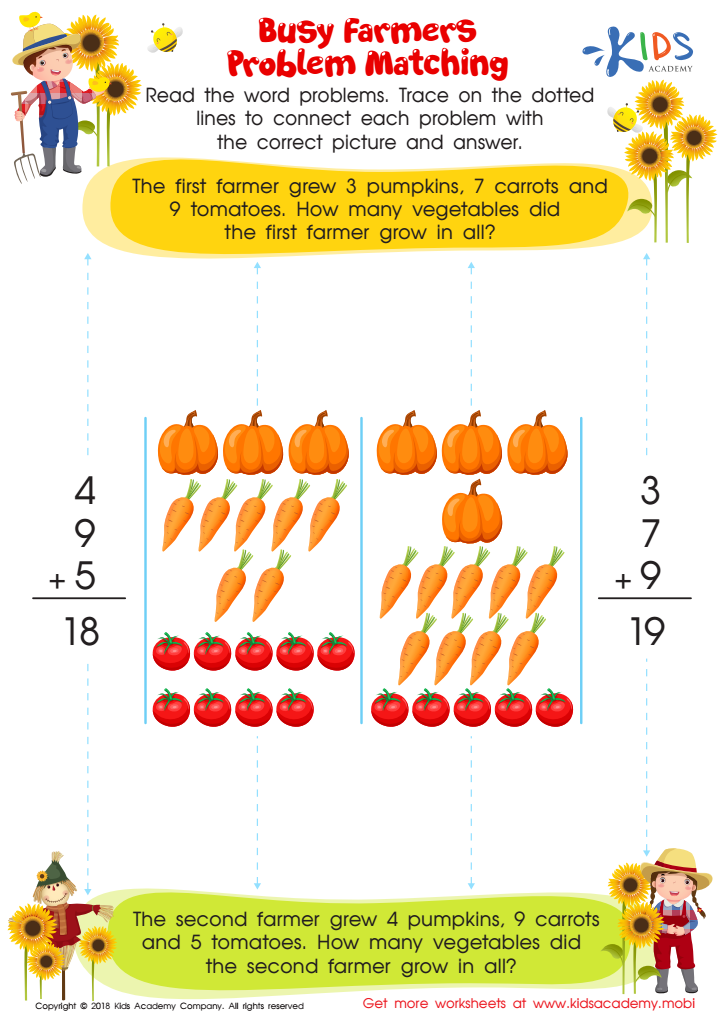
Busy Farmers: Problem Matching Worksheet
Farming is tough, so help your mathematician out with this fun and stimulating worksheet! They'll read word problems and connect each to its correct picture, using traceable lines. They'll practice addition with three addends, and use the harvest veg pictures to ensure accuracy.
Busy Farmers: Problem Matching Worksheet
Worksheet
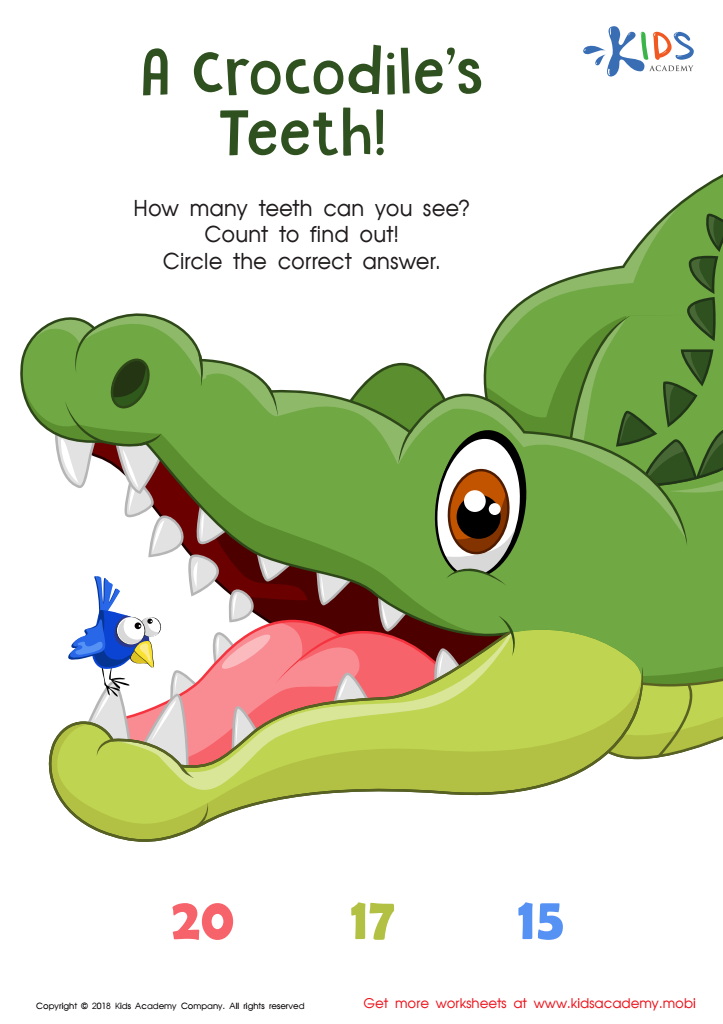
A Crocodile's Teeth Worksheet
Show your child the animal image and ask them to identify it. If they watch animal shows, they'll likely be interested. Count the teeth together, then look at the options and help them circle the right one.
A Crocodile's Teeth Worksheet
Worksheet
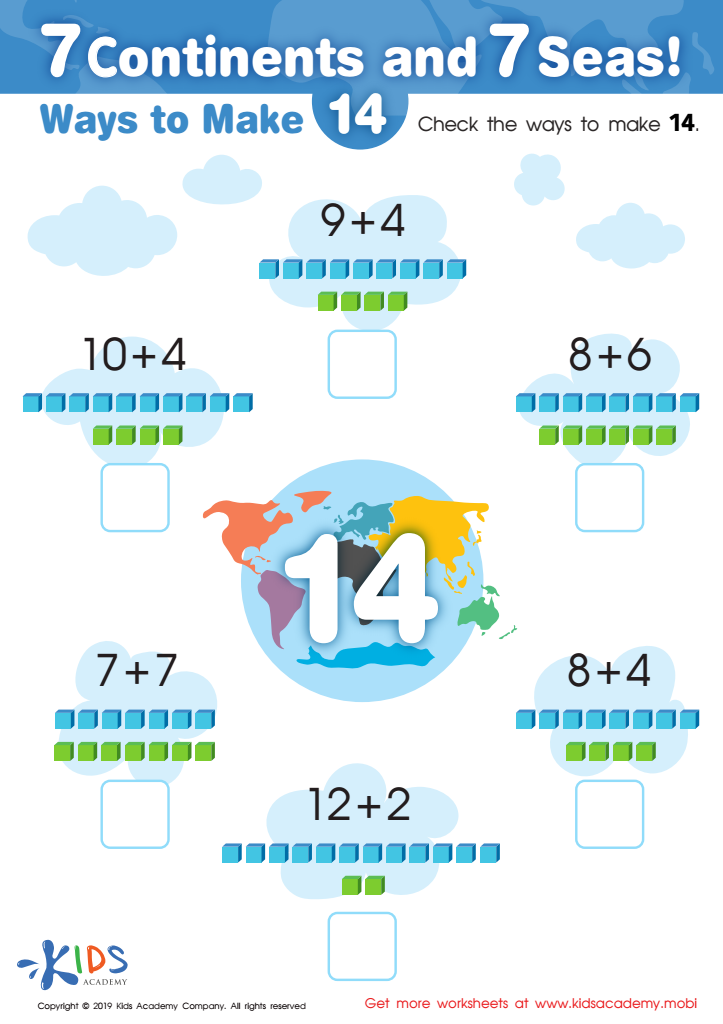
7 Continents and 7 Seas Worksheet
Remind kids of the continents and show them how different numbers can add up to the same figure. Give examples, like 2+2 =4, and 3+1 =4. Ask if they can provide other examples, then work through the simple additions in this worksheet with them. Ask them to circle all equations that make 14.
7 Continents and 7 Seas Worksheet
Worksheet
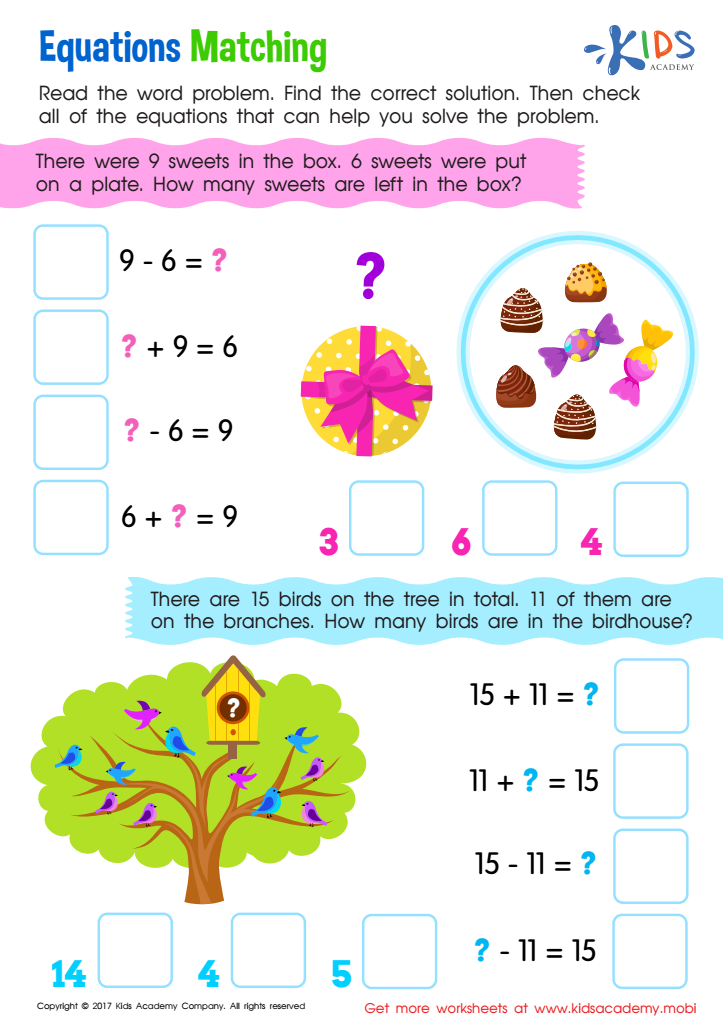
Equations Matching Word Problems Worksheet
Download this worksheet and give your young mathematician practice in solving equations using matching numbers and number family facts. They'll solve word problems, develop critical thinking and algebraic reasoning, and gain success with addition and subtraction.
Equations Matching Word Problems Worksheet
Worksheet
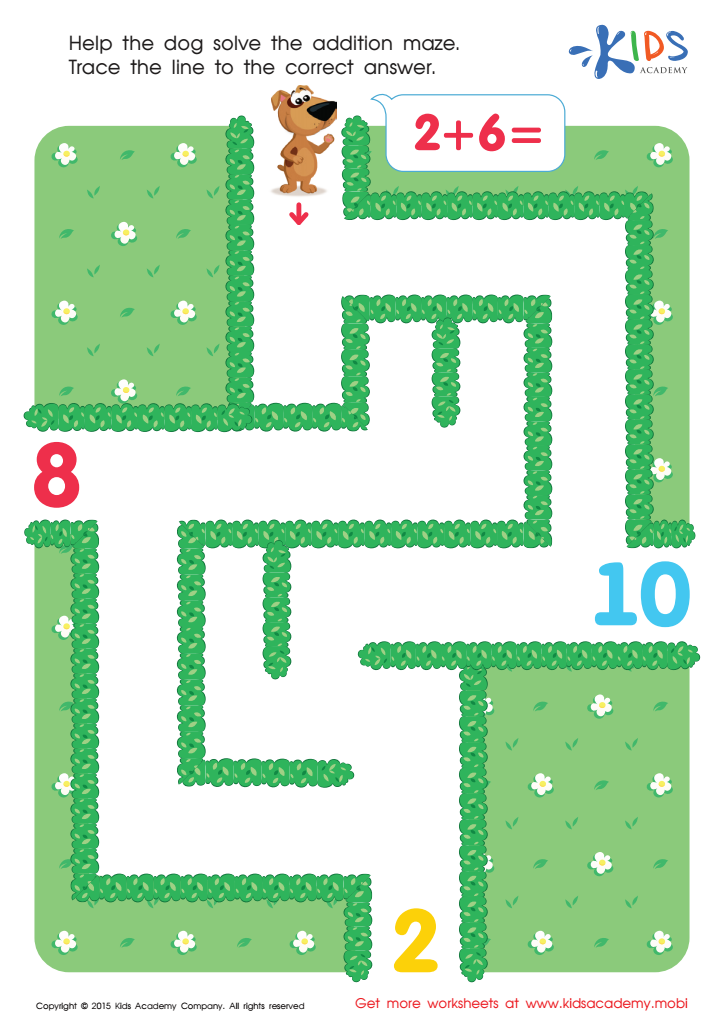
Two Plus Six Addition Worksheet
Make maths fun and interesting for your preschooler with our kindergarten addition worksheets. Help the dog to trace the right path to the correct answer and explore our free printable addition and subtraction worksheets. Visit our site for more study materials.
Two Plus Six Addition Worksheet
Worksheet
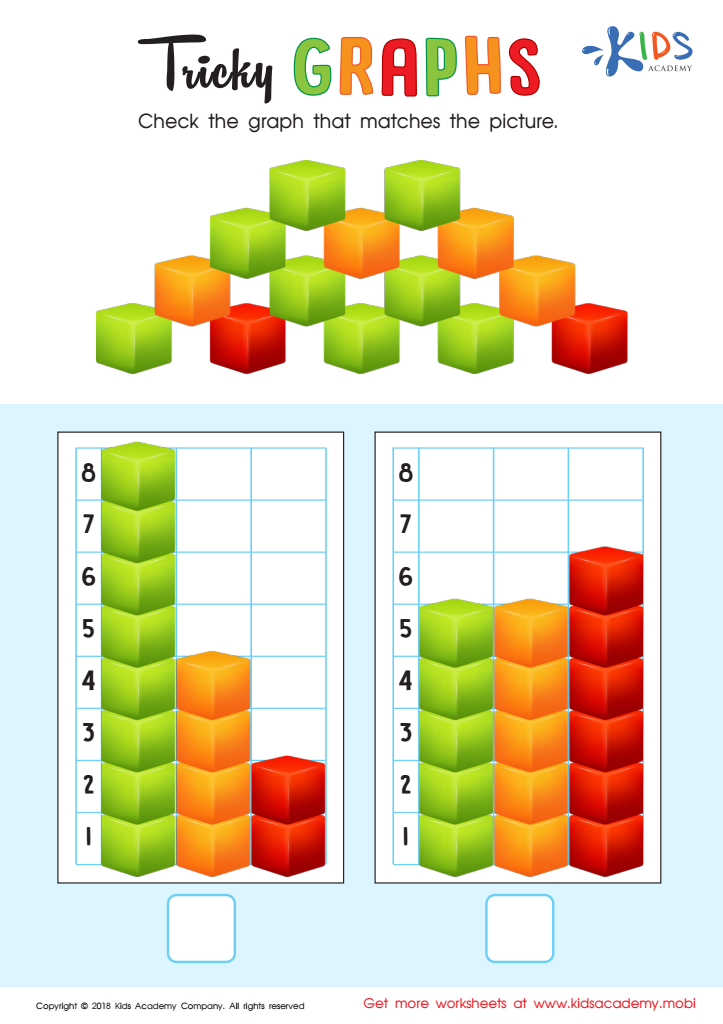
Tricky Graphs Worksheet
Looking for a fun way to sharpen your kid's graphing skills? Get this colorful PDF worksheet! They'll get to practice visual discrimination, counting, and creating bar graphs. Plus, graphing and reading graphs are essential for problem-solving in math.
Tricky Graphs Worksheet
Worksheet
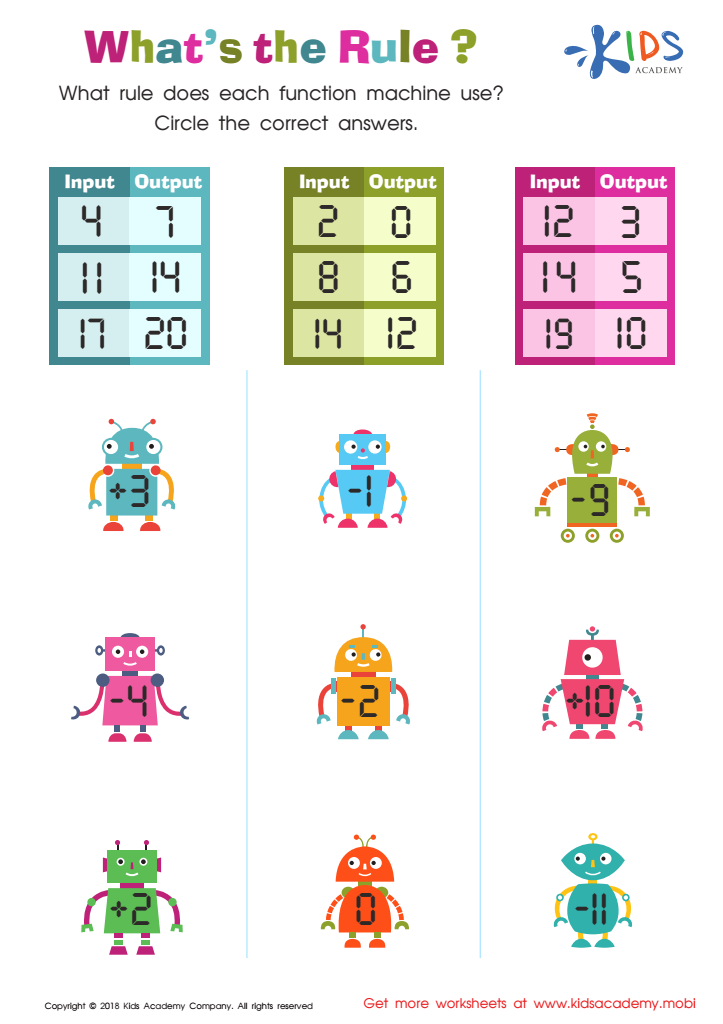
What's the Rule Worksheet
Robots are here to help your child find the relationship between each set of numbers! Adorably illustrated worksheets use vivid pictures that each contain a rule. Look at each function machine and find the pattern or relationship between the input and output. Then, complete the sheet by circling the correct answer!
What's the Rule Worksheet
Worksheet
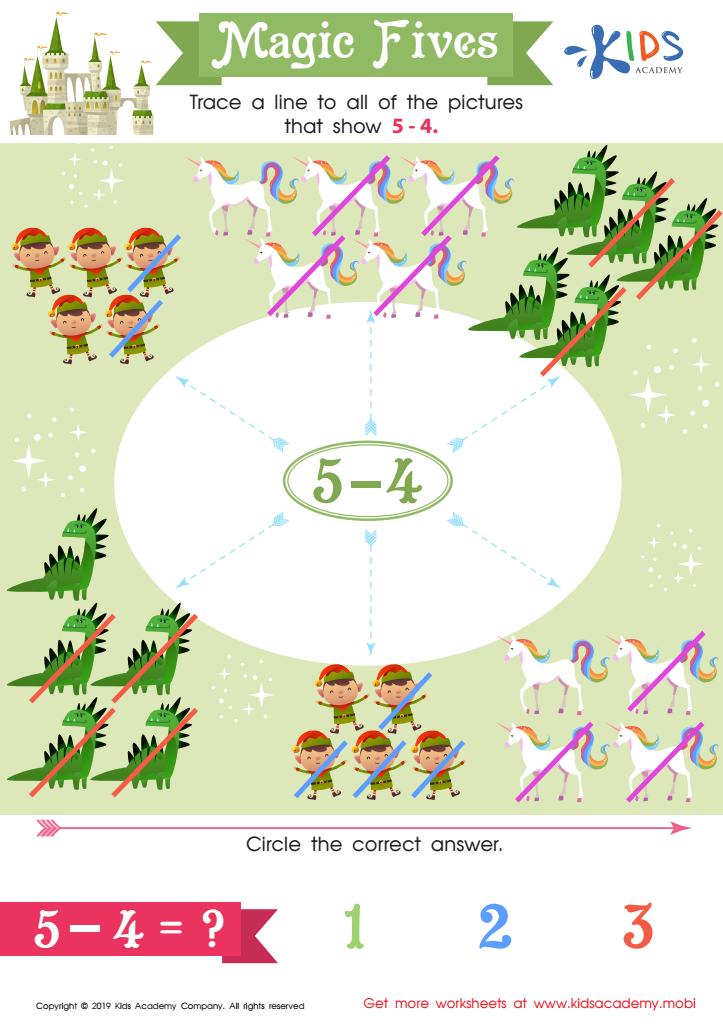
Magic Fives Worksheet
Help your students identify the objects & people in the worksheet. Point to the equation 5 -4 in the center, then get them to count the items and trace a line connecting those that add up to 5 - 4.
Magic Fives Worksheet
Worksheet
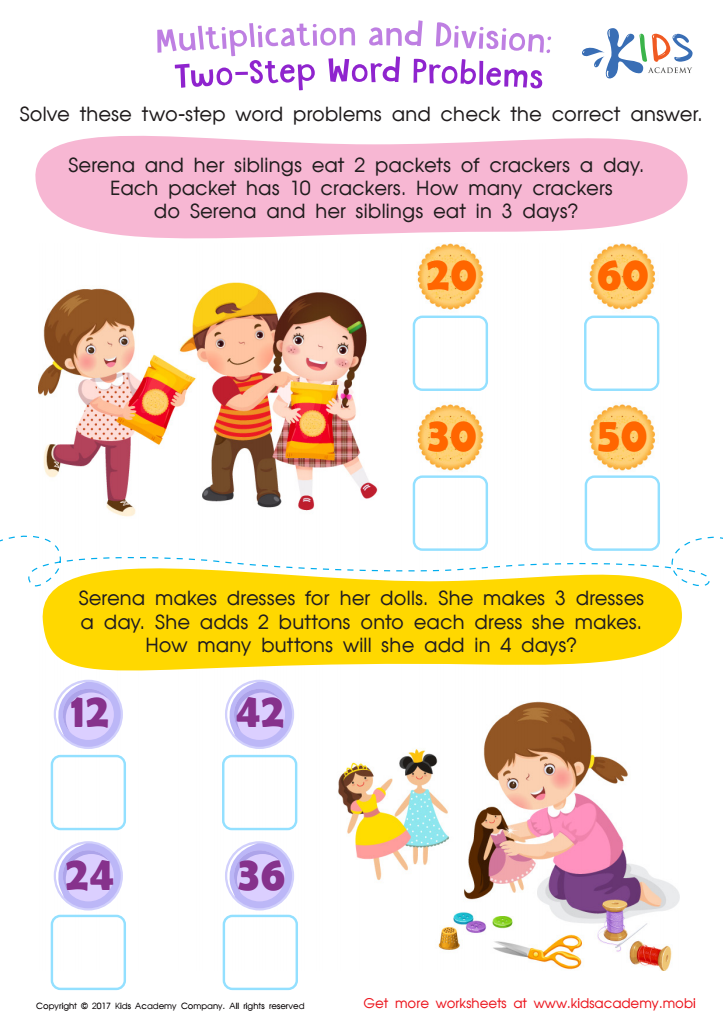
Two Step Word Problems Worksheet
Boost your child's math skills with this fun and realistic two-step word problems worksheet! Kids will learn to break down complex multiplication word problems into easier steps to solve. Download this free PDF worksheet and help them reach the next level.
Two Step Word Problems Worksheet
Worksheet
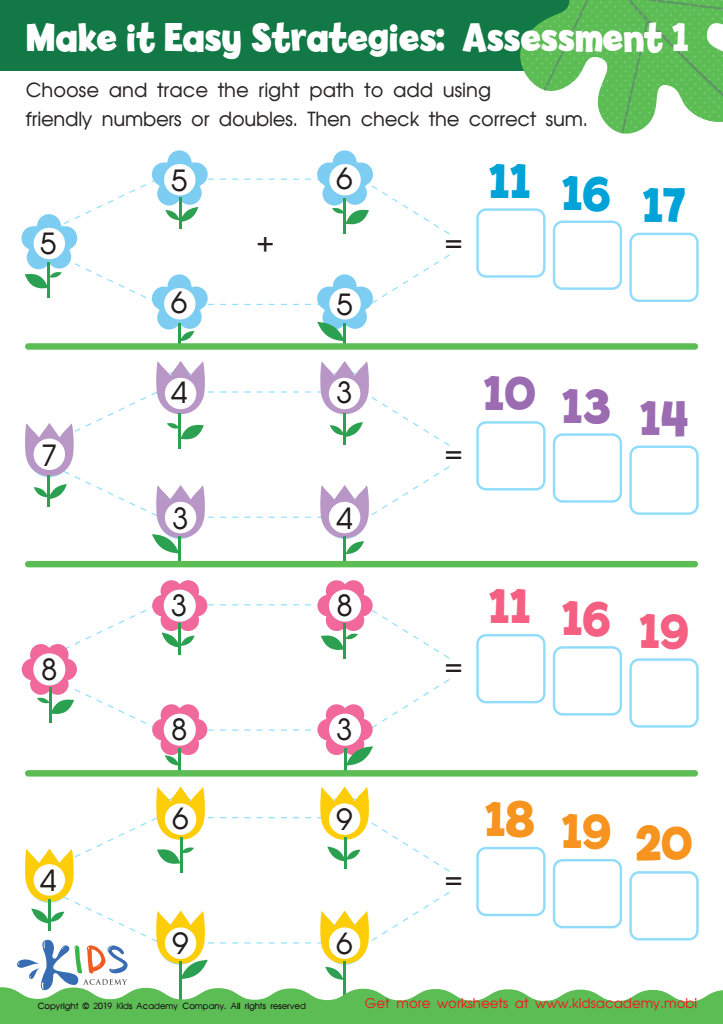
Make it Easy Strategies: Assessment 1 Worksheet
This tracing worksheet helps kids learn to add numbers and count with fun! Start by doing some simple math additions with your child. Guide them to trace the right path with friendly numbers or doubles, and check the sum. Make math enjoyable and rewarding while they learn!
Make it Easy Strategies: Assessment 1 Worksheet
Worksheet
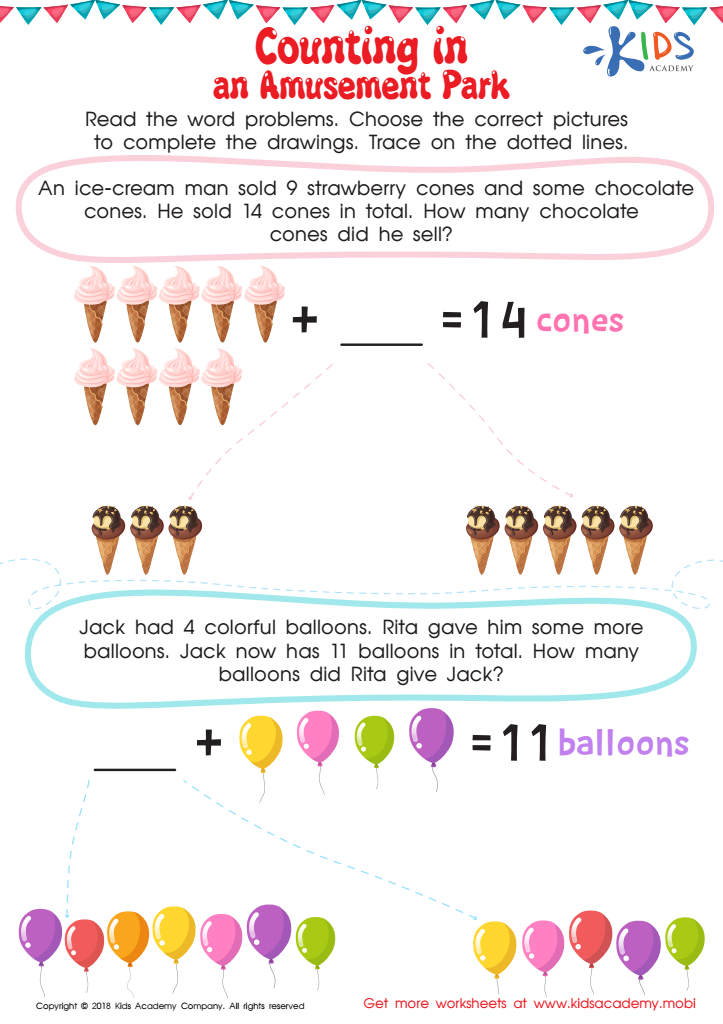
Counting in an Amusement Park Worksheet
Love amusement parks? This colorful worksheet is sure to delight your child as they solve basic addition problems with missing addends. Picture representations help them solve the math equations, while traceable lines help them accurately complete the drawings. No roller coaster ride here, but still loads of fun!
Counting in an Amusement Park Worksheet
Worksheet
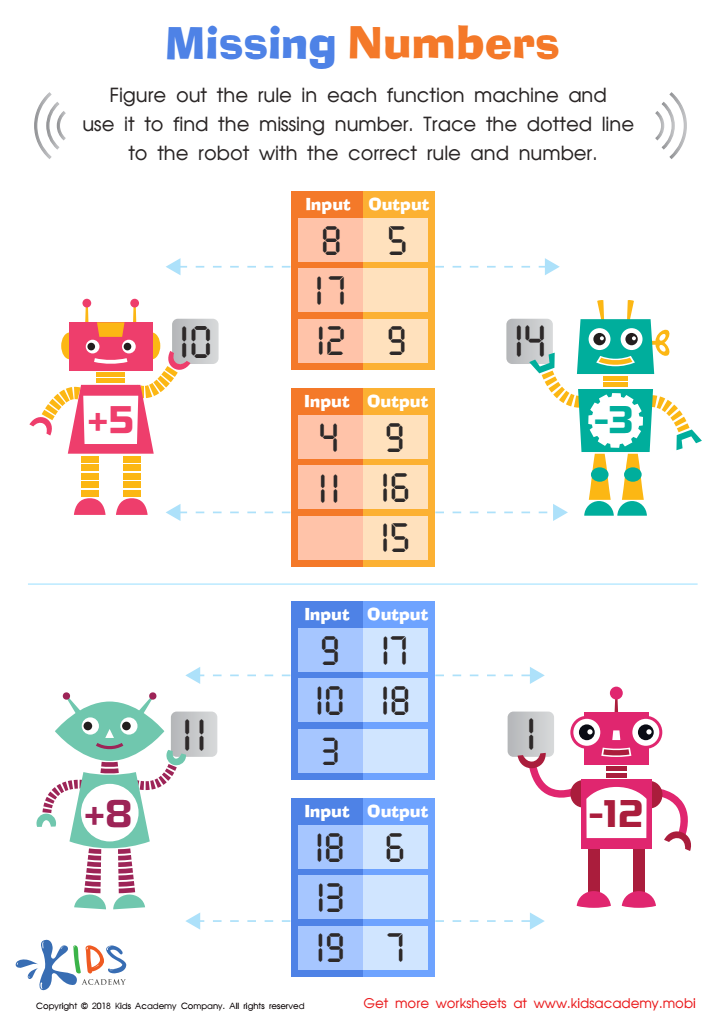
Missing Numbers Worksheet
Elementary students can learn the important pre-algebra skill of solving for missing numbers! Our robots guide them along with number-filled bellies and missing answers in their hands. Kids can examine the other numbers in each graph, use the rule to solve the missing number, and check their work with the missing number to ensure correctness.
Missing Numbers Worksheet
Worksheet
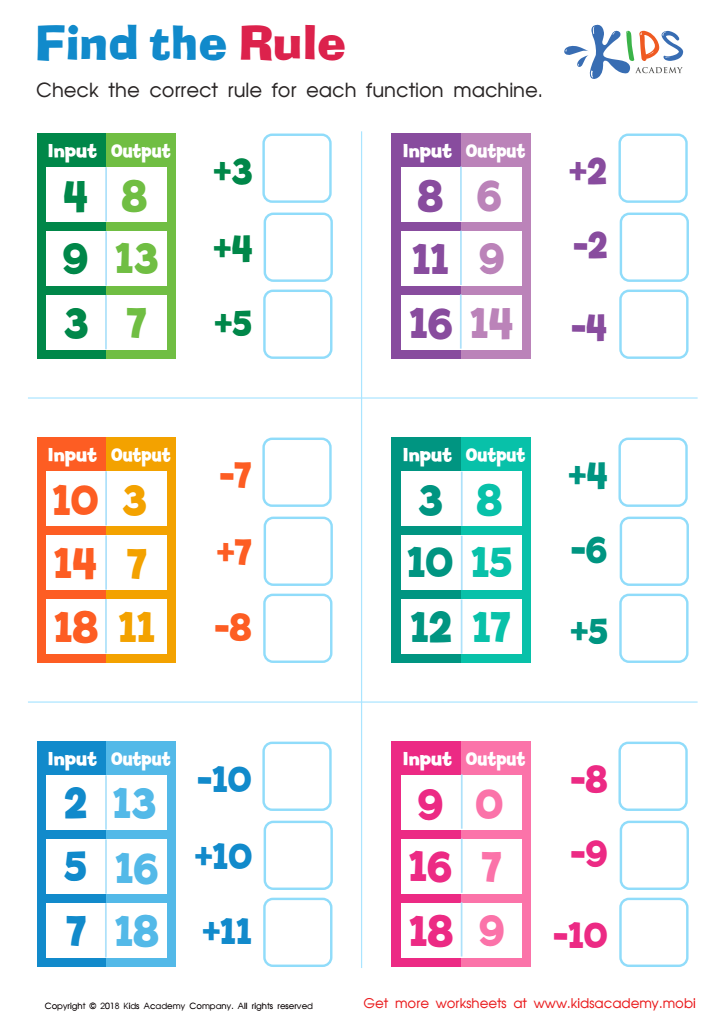
Find the Rule Worksheet
A function machine is an elementary math tool used to find an output by applying a rule, like addition or subtraction, to an input. Children use the diagram to understand the relationship between each input and output, with this worksheet helping them to analyze the machine and find the rule being used.
Find the Rule Worksheet
Worksheet
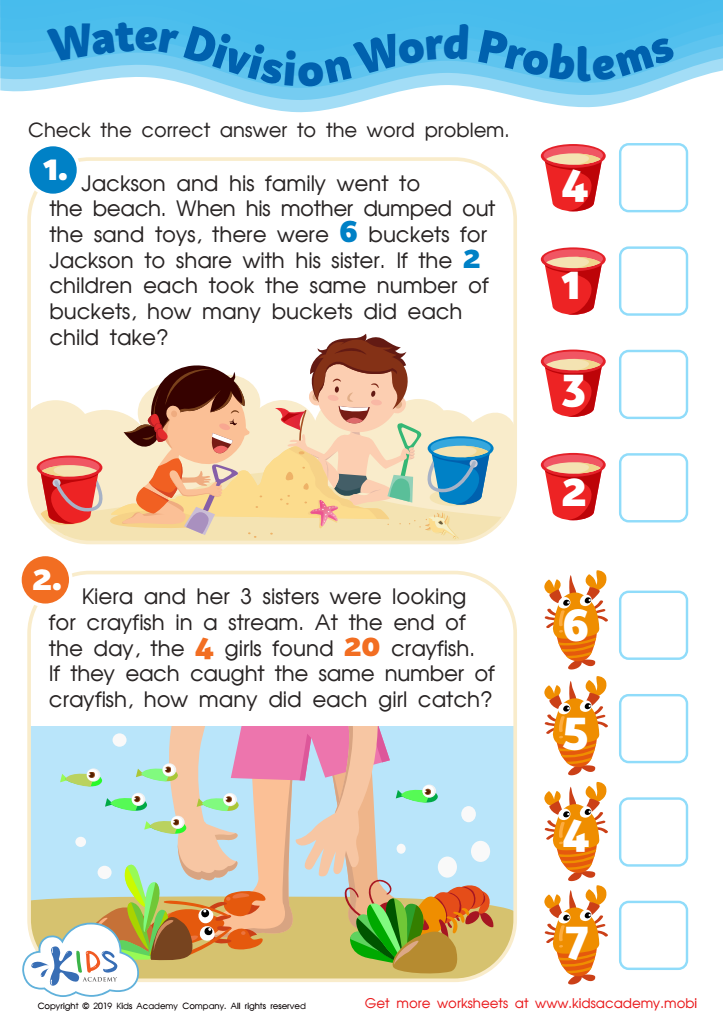
Water Division Word Problems Worksheet
Kids can sharpen their math skills with this fun PDF! They'll see pictures of friends at the beach, plus bold numbers and colorful pictures. All they need to do is read and understand the problem to find the answer - without even realizing they're doing division. A great way to make math enjoyable!
Water Division Word Problems Worksheet
Worksheet
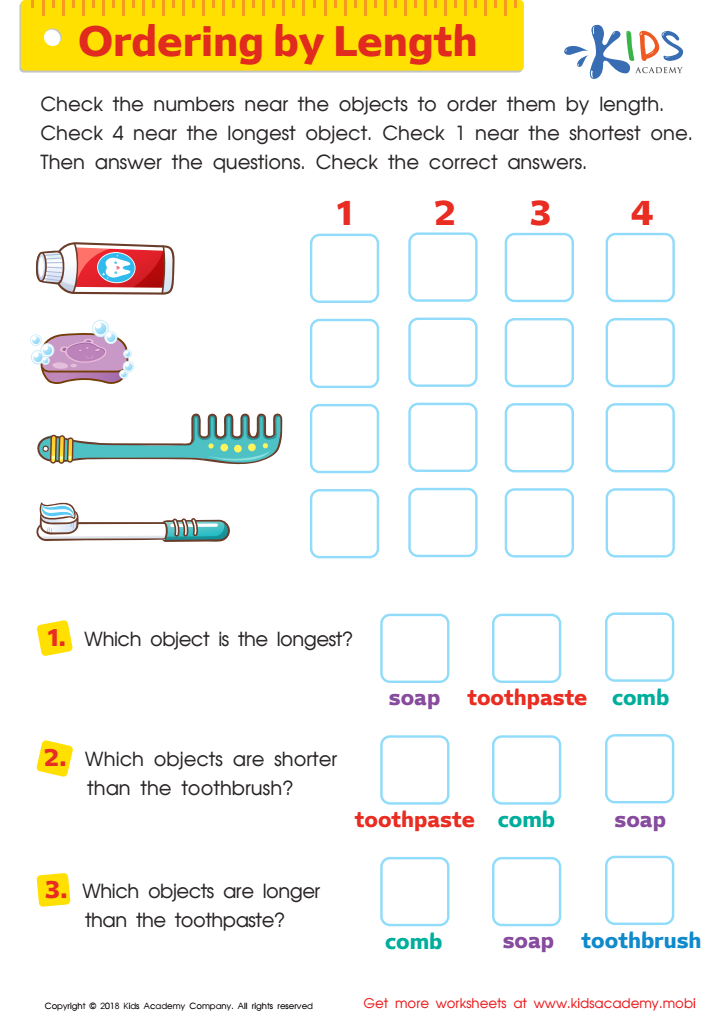
Ordering by Length Worksheet
Compare objects to learn about measurement! Before purchasing a ruler, get kids to understand length by comparing objects and labeling them as longer or shorter than others. Use this printable math worksheet to help children think about measurement. It will show pictures of objects and ask children to categorize them by length.
Ordering by Length Worksheet
Worksheet
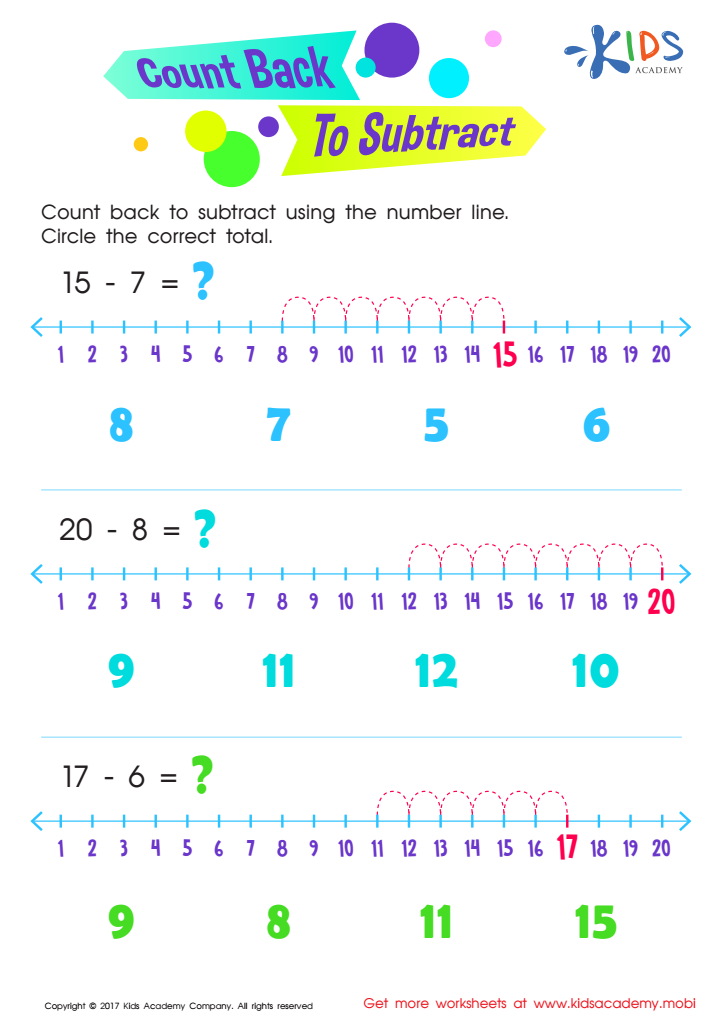
Count Back to Subtract Substraction Worksheet
With this worksheet, your child can visually see and count each number they’re subtracting.
This worksheet provides a number line to help your child master subtraction visually. Counting back on the line will give them a deeper understanding of the concept. It's a great way to teach subtraction and help children gain confidence with the subject.
Count Back to Subtract Substraction Worksheet
Worksheet
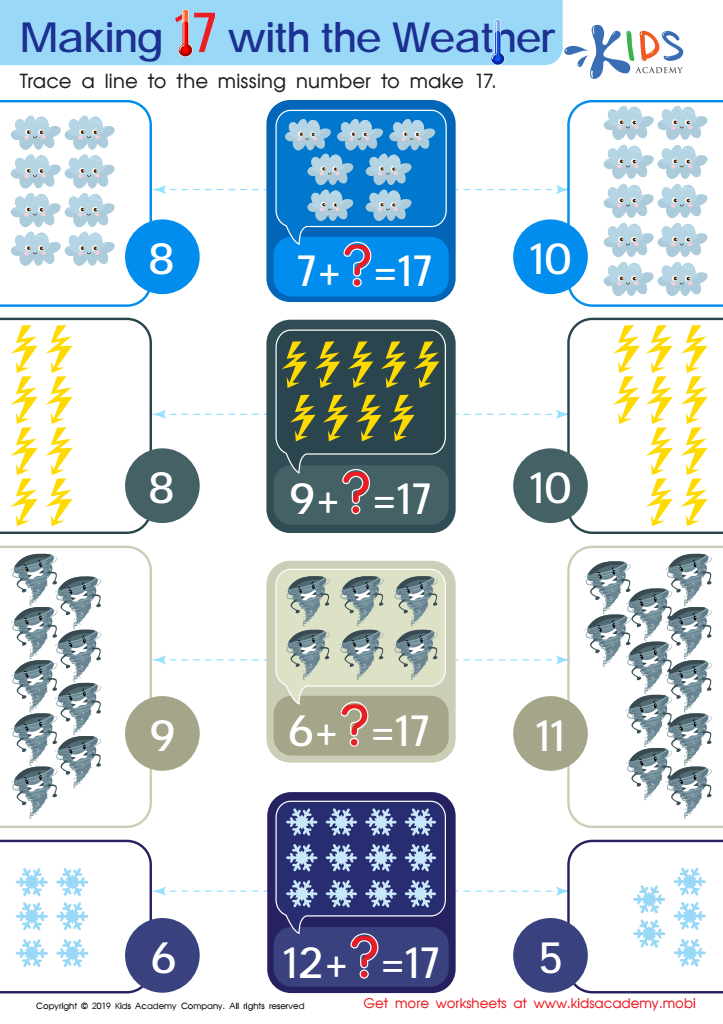
Making 17 with the Weather Worksheet
Show your kids the pictures in the worksheet and identify the weather. This exercise is to help them add simple numbers. There are 4 equations in the printout. Help them figure out the numbers to make 17, then trace a line to the missing number to complete the equation.
Making 17 with the Weather Worksheet
Worksheet
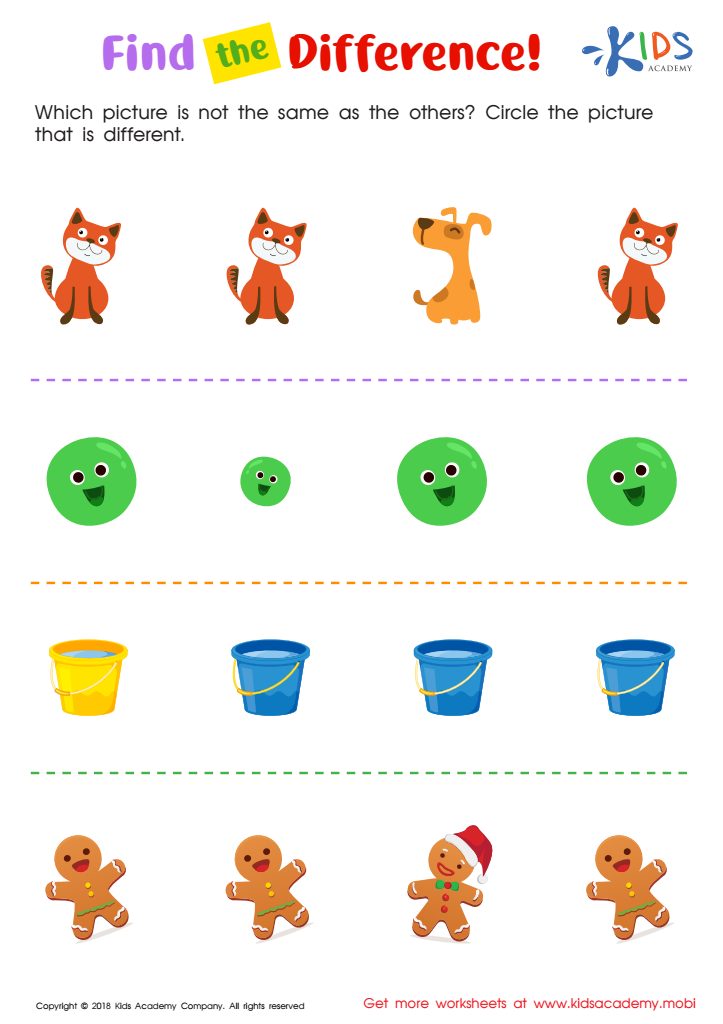
Find the Difference Worksheet
Test your kids' skills with this worksheet! Ask them to look at the pictures in each row and tell you what the objects are. Help them identify the odd item in each row by circling it. See if they can spot the difference!
Find the Difference Worksheet
Worksheet
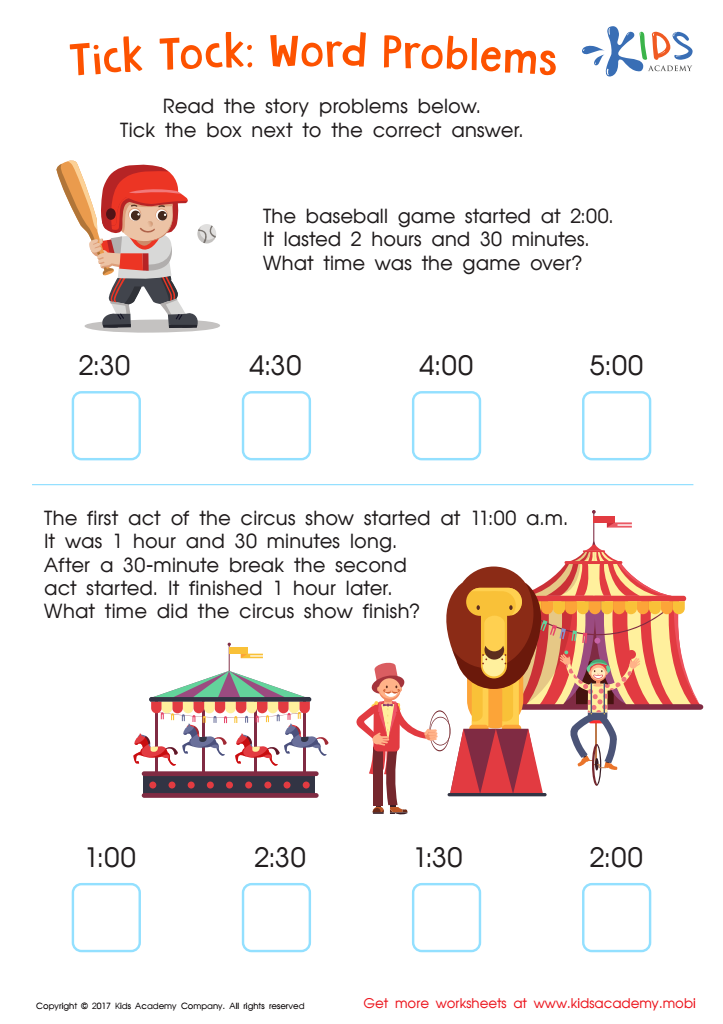
Tick Tock Word Problems Time Worksheet
Mix math and fun with this telling time word problems worksheet! Your child will love solving the events' finishing times using the vivid colors and joyful illustrations. Tick Tock!
Tick Tock Word Problems Time Worksheet
Worksheet
Join Kids Academy for Free
Who is primarily going to use this learning content?







Mathematical reasoning for ages 3-6 is crucial because it lays the foundation for later success in both academics and everyday life. When parents and teachers focus on developing these skills early, they help children build essential cognitive abilities like problem-solving, critical thinking, and logical reasoning.
First, young children with strong mathematical reasoning skills are better at understanding shapes, numbers, and patterns, which are the building blocks for more complex math concepts. For example, recognizing that two sets of objects are equal in number fosters early numeracy. These concepts are vital for future learning in subjects like science, technology, engineering, and math (STEM).
Secondly, fostering an early interest in mathematics helps build confidence. When children successfully figure out a puzzle or solve a problem, they feel a sense of achievement that boosts their self-esteem. This positivity towards math can diminish math anxiety, a common issue that often persists into later schooling.
Moreover, mathematical reasoning supports other areas of development, such as language skills. For example, describing the size or quantity of objects introduces new vocabulary and helps children communicate more precisely.
In summary, by prioritizing mathematical reasoning for young children, parents and teachers equip them with critical skills necessary for academic success and competent daily living, setting them on a path of lifelong learning and problem-solving.








