
Musical instrument recognition Worksheets for Ages 3-6
3 filtered results
Difficulty Level
Grade
Age
-
From - To
Subject
Activity
Standards
Introduce your young learner to the world of music with our engaging Musical Instrument Recognition Worksheets for ages 3-6. Designed to enhance auditory and visual identification skills, these colorful and interactive worksheets make learning fun. Perfect for preschool and kindergarten students, each sheet features vibrant images of various musical instruments, encouraging children to match names and sounds to pictures. Promote cognitive development, memory retention, and a love for music through playful activities that captivate young minds. Ideal for both classroom settings and at-home practice, these worksheets are essential tools to spark an early interest in music education.
Favorites
With answer key
Interactive
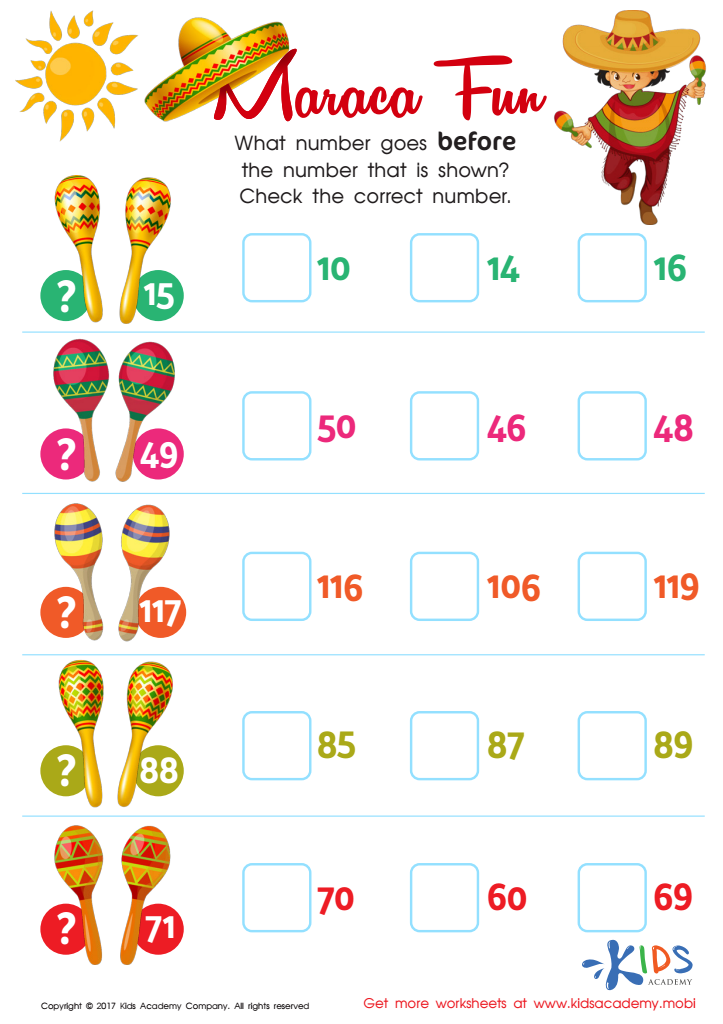
Counting: Maraca Fun Worksheet
Let your child add some Maraca fun to their math lessons by using this printable worksheet! They must figure out the numbers that come before the ones shown. Answers are provided on the other side; all your child needs to do is check the boxes with the correct numbers. Help them improve their counting and have fun along the way!
 Assign to My Students
Counting: Maraca Fun Worksheet
Worksheet
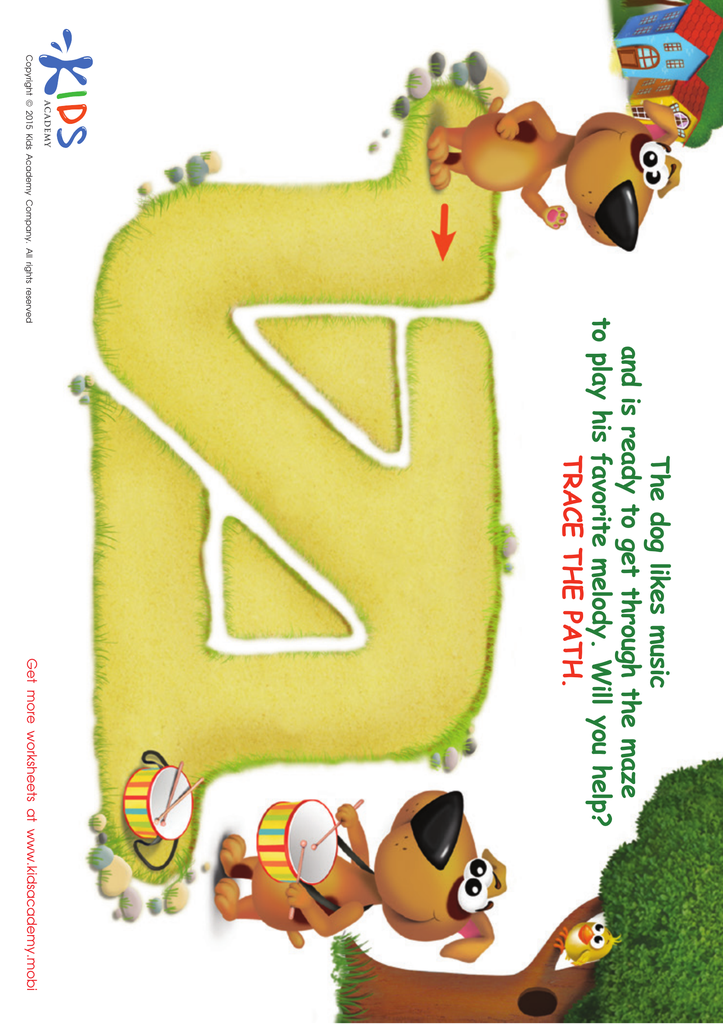
Drummer Maze Worksheet
Enjoy!
Kids Academy's new maze games are perfect for you and your little learners. Help the dog find the drum at the end of the maze! Once they reach it, you can play music together. Visit Kids Academy's website to find free printable mazes and other worksheets. Have fun!
Drummer Maze Worksheet
Worksheet
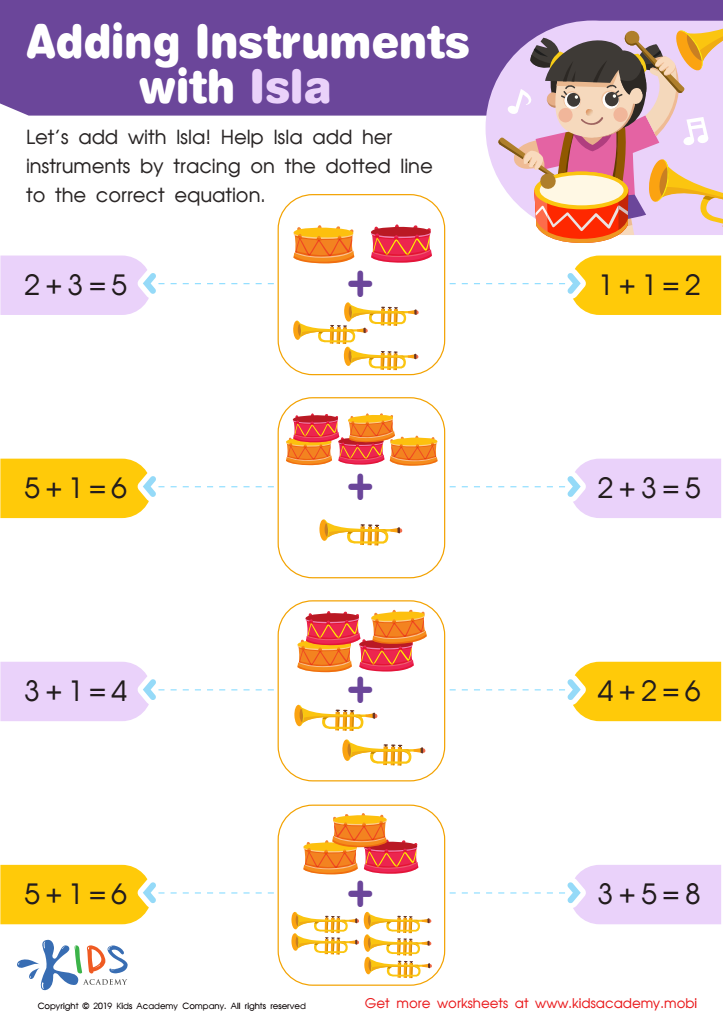
Adding Instruments with Isla Worksheet
Your kids can have fun helping Isla add her musical instruments. With colorful pics and one-to-one representation, they can pick the correct addition sentence. They can connect each pic with traceable lines and get to the right sum up to 10.
Adding Instruments with Isla Worksheet
Worksheet
Join Kids Academy for Free
Who is primarily going to use this learning content?



.jpg)

.jpg)

Musical instrument recognition for children aged 3-6 is incredibly beneficial for multiple reasons, and both parents and teachers should actively consider its integration into early education. Firstly, music bridges developmental gaps by enhancing cognitive abilities. Learning to recognize different musical instruments fosters memory retention, auditory discrimination, and attention to detail—skills crucial for later academic success.
Secondly, it cultivates emotional intelligence and social skills. Children learn to express emotions and collaborate with peers better when exposed to musical activities. For instance, recognizing the gentle strumming of a guitar versus the sharp sound of a trumpet helps children understand different emotions and moods conveyed through music.
Moreover, exposure to musical instruments can ignite a lifelong passion or interest in music, which can be both personally fulfilling and academically enriching. For students, music can serve as a creative outlet, providing a productive means to channel energy and emotion.
Additionally, kinesthetic learning opportunities abound when children can see, hear, and interact with instruments. This multi-sensory engagement bolsters fine and gross motor skills, essential at this developmental stage.
Overall, encouraging musical instrument recognition is not just about music appreciation; it’s about nurturing a well-rounded, emotionally intelligent, and cognitively sharp individual. Teachers and parents who emphasize this in early education lay a foundation for holistic development.








