Time reading skills Worksheets for Ages 3-6
9 filtered results
-
From - To
Discover our engaging Time Reading Skills Worksheets designed specifically for children ages 3-6! These fun and interactive printable resources help young learners grasp the concept of telling time through colorful visuals and hands-on activities. Our worksheets introduce essential skills such as recognizing clock parts, differentiating between hours and minutes, and interpreting time in daily routines. Perfect for preschool and early grade settings, these activities promote both reading and critical thinking in a playful environment. Enhance your child's learning experience and boost their confidence with our age-appropriate, skill-focused worksheets that make mastering time reading enjoyable and effective!
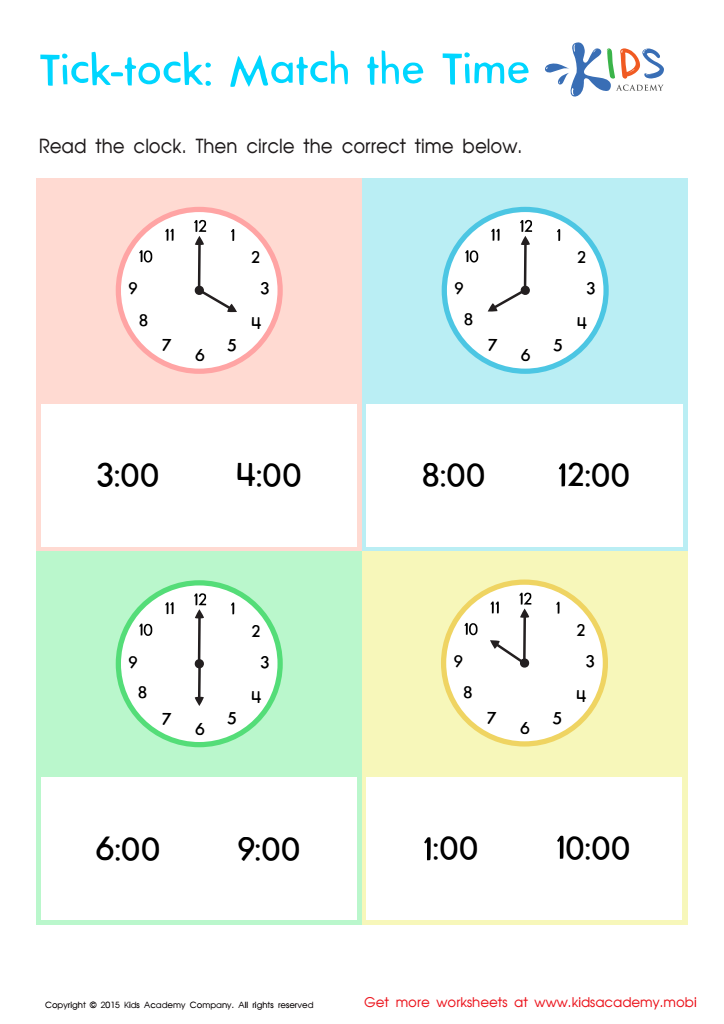
Telling The Time Worksheet: Part 4
 Assign to My Students
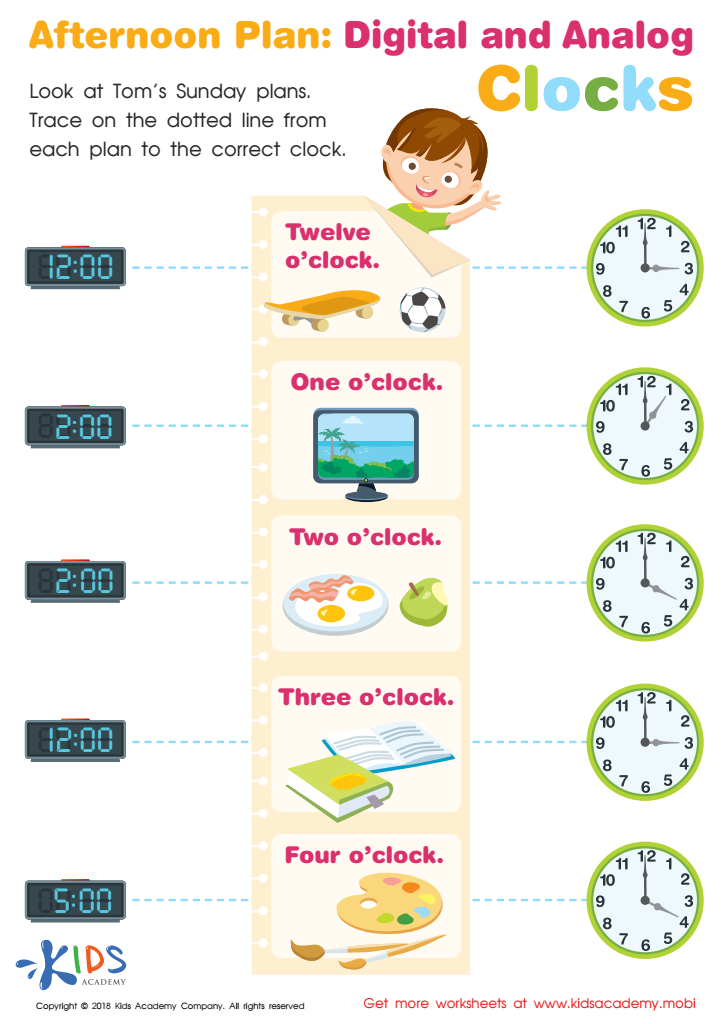
Afternoon Plan: Digital and Analog Clocks Worksheet
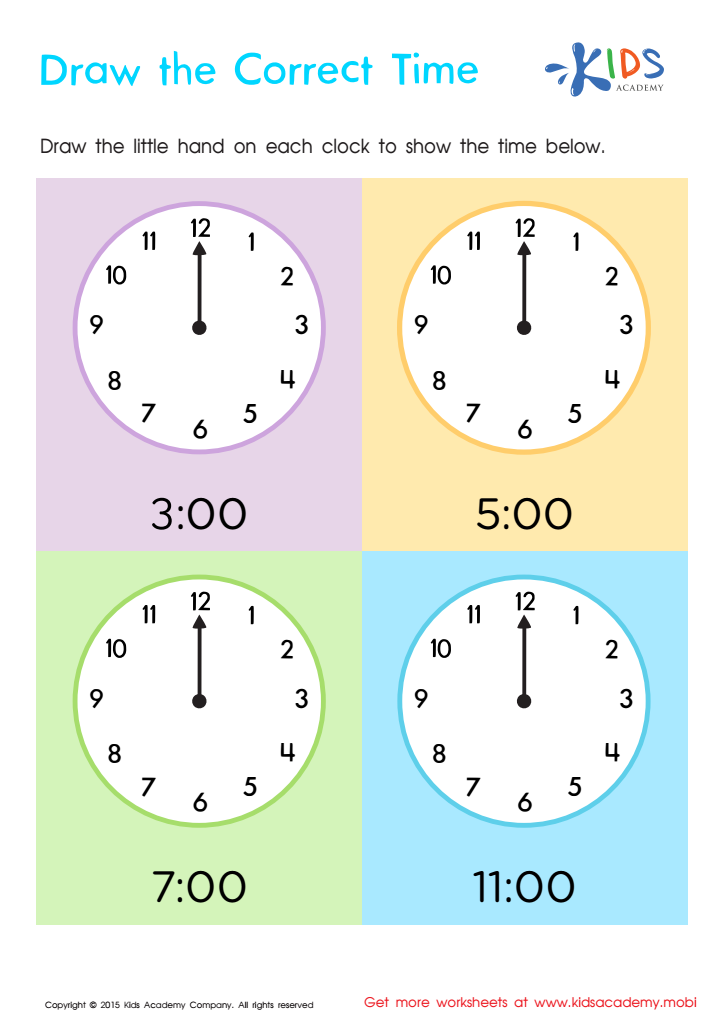
Telling The Time Worksheet: Part 1
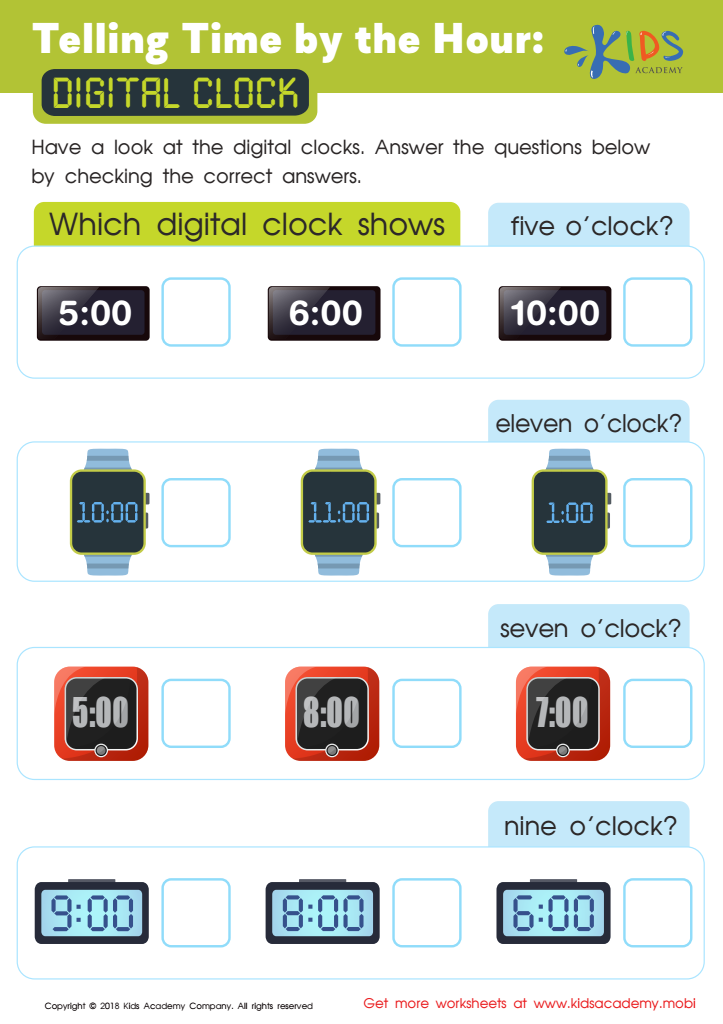
Telling Time by the Hour: Digital Clock Worksheet
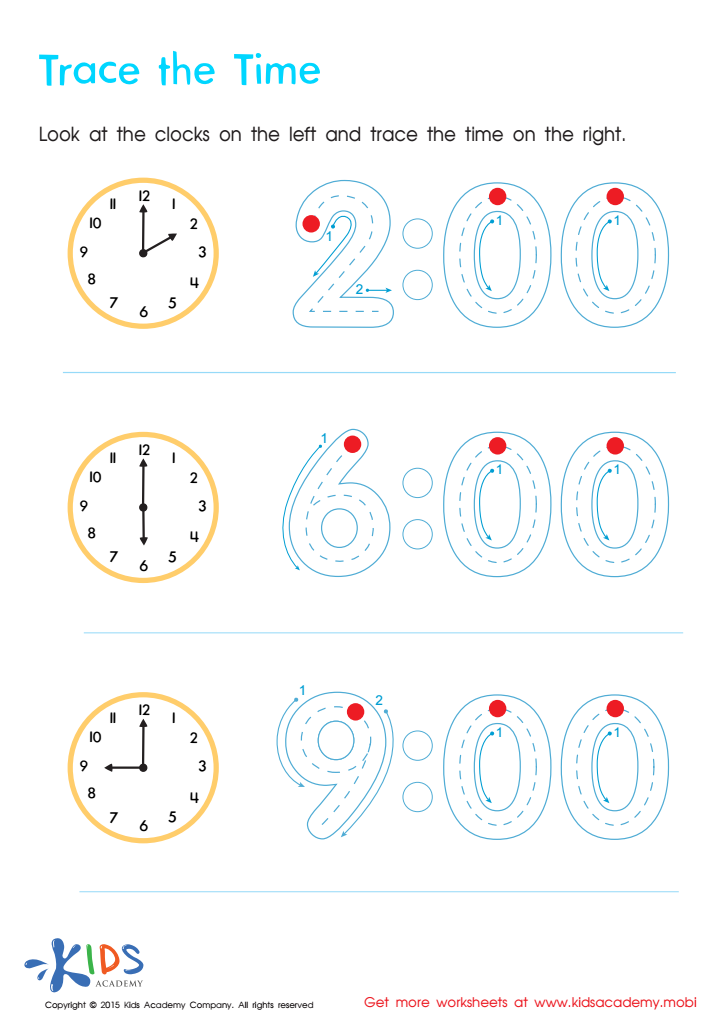
Telling The Time Worksheet: Part 2
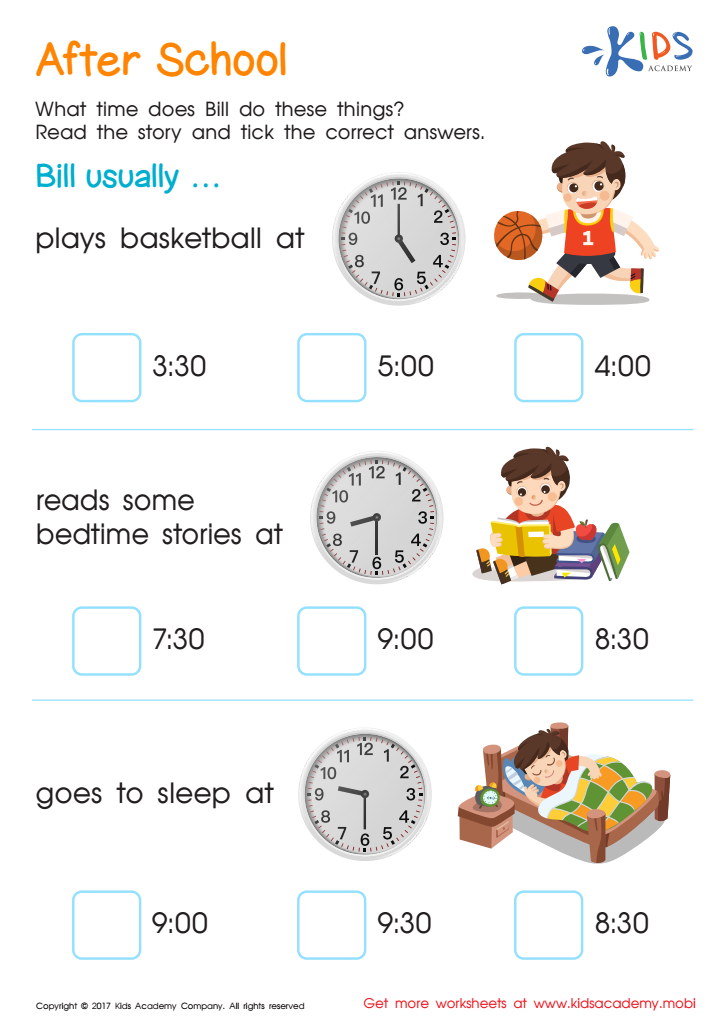
After School Time Printable
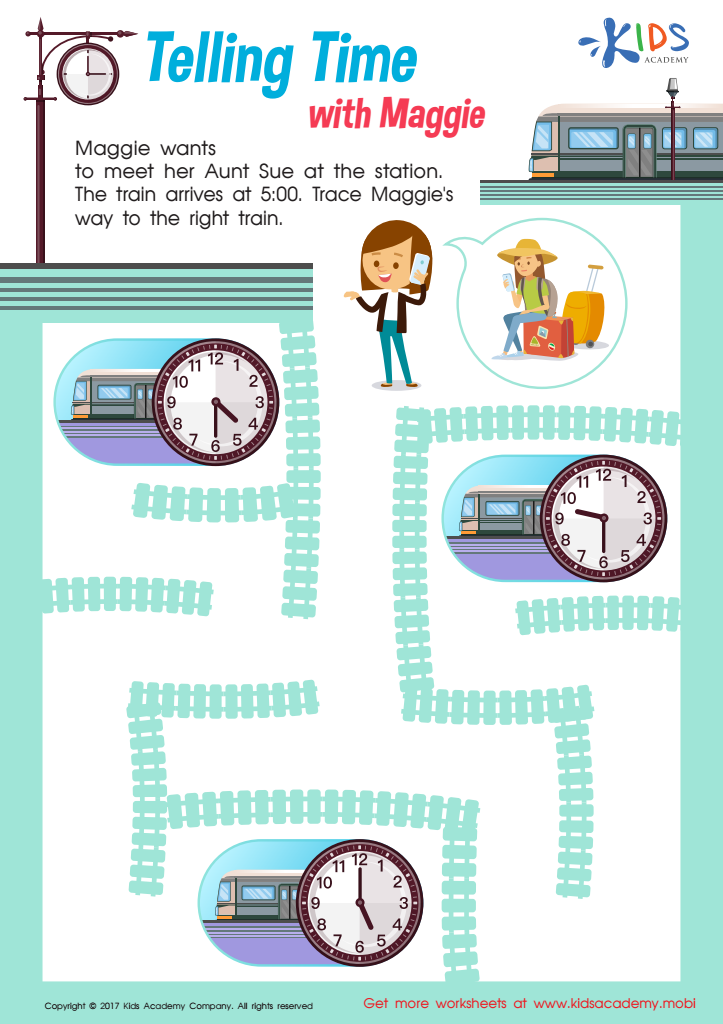
Telling Time With Maggie Time Worksheet
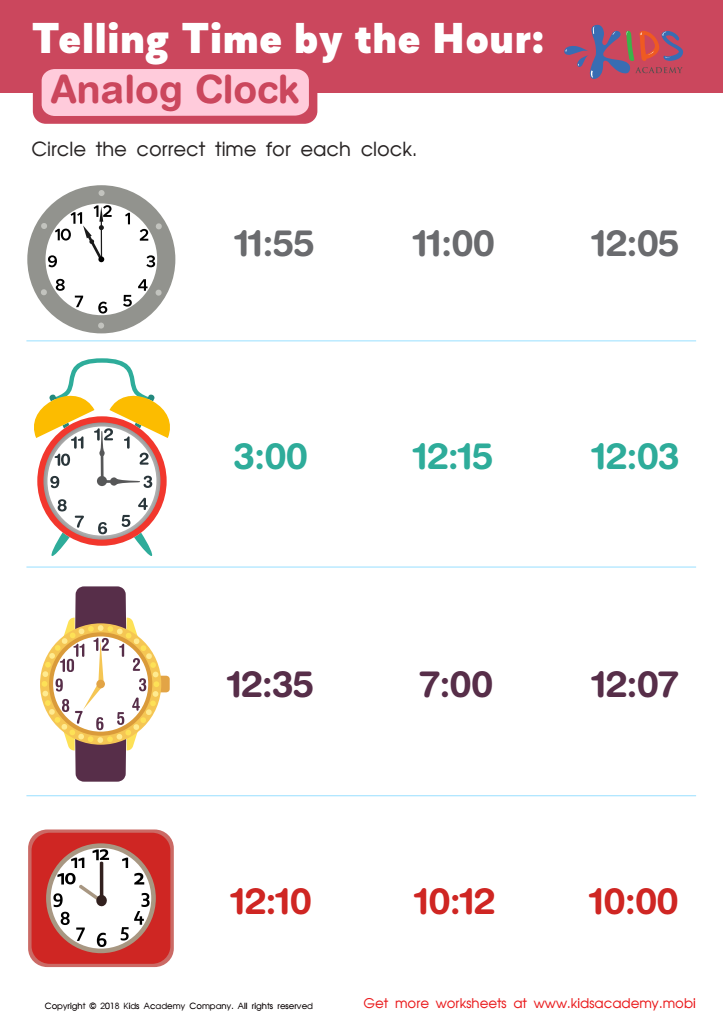
Telling Time by the Hour: Analog Clock Worksheet
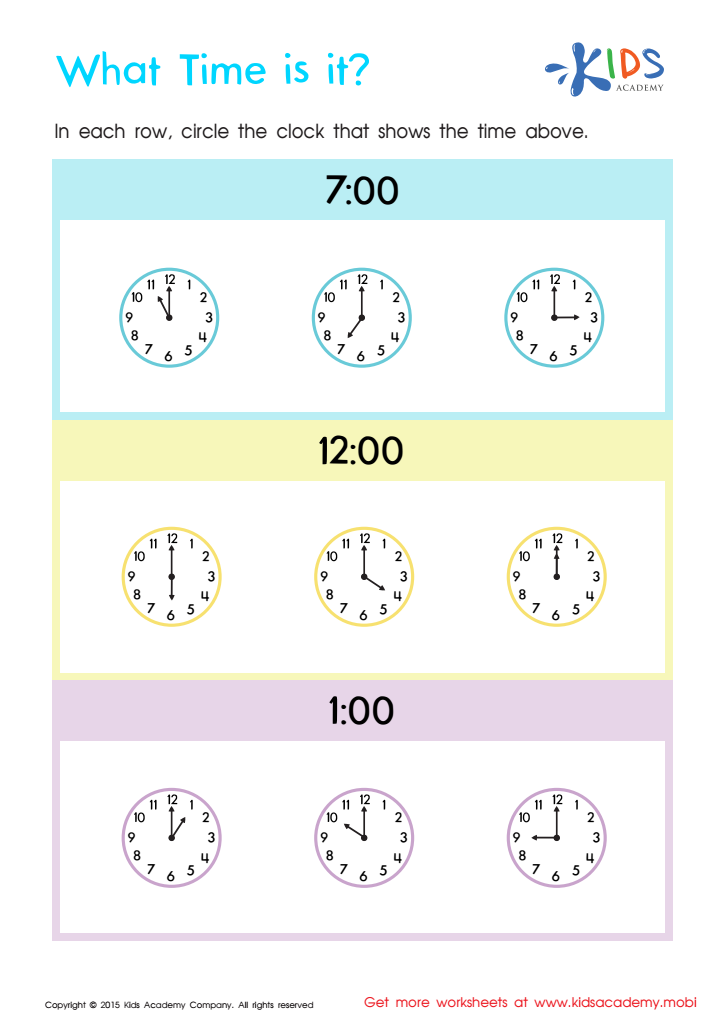
Telling The Time Worksheet: Part 3








Time reading skills are crucial for children aged 3-6 as they lay the foundation for future literacy development and overall academic success. During these formative years, children are naturally curious and receptive to learning, making it an optimal time to introduce language concepts, especially reading.
First, developing reading skills enhances vocabulary and comprehension, which are vital for effective communication. Engaging children in reading activities fosters a love for books, encouraging them to explore new ideas and cultures. This curiosity broadens their worldview and stimulates cognitive development.
Second, early reading skills are linked to greater academic achievement later in life. Children who are proficient in reading by the end of kindergarten are more likely to excel in their educational pursuits. Thus, parents and teachers should promote reading as a fun and enjoyable experience to motivate children.
Moreover, reading skills bolster critical thinking and social-emotional development. Discussing stories encourages kids to relate to characters, which can enhance empathy and understanding of different perspectives.
In summary, nurturing time reading skills in early childhood sets the stage for lifelong learning habits, critical thinking, emotional intelligence, and successful academic trajectories, making it essential for both parents and teachers to prioritize.








