Understanding sequence Worksheets for Ages 3-6
5 filtered results
-
From - To
Welcome to our "Understanding Sequence Worksheets" for ages 3-6! These engaging worksheets are designed to help young learners develop their sequencing skills through fun and interactive activities. By using colorful illustrations and simple exercises, children can practice arranging events and objects in order, enhancing their cognitive abilities and critical thinking. Our resources encourage curiosity and creativity, making learning enjoyable and effective. Perfect for teachers and parents, these worksheets can be easily downloaded and printed, providing a convenient way to incorporate sequential learning into daily activities. Join us in fostering essential skills that lay the foundation for future learning successes!
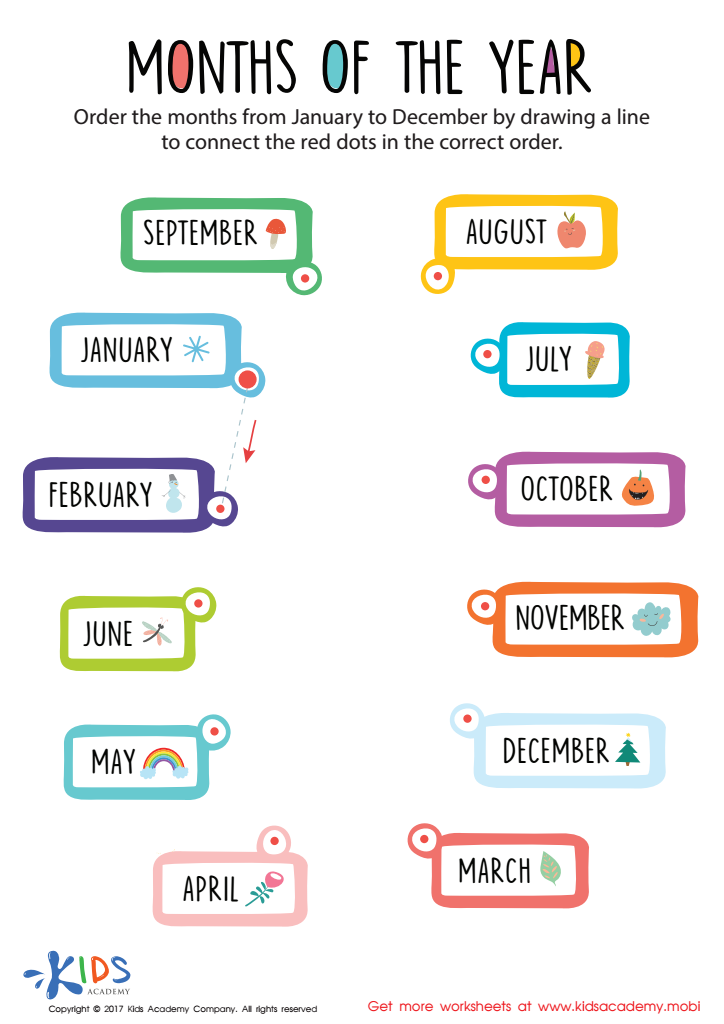
Months of the Year Worksheet
 Assign to My Students
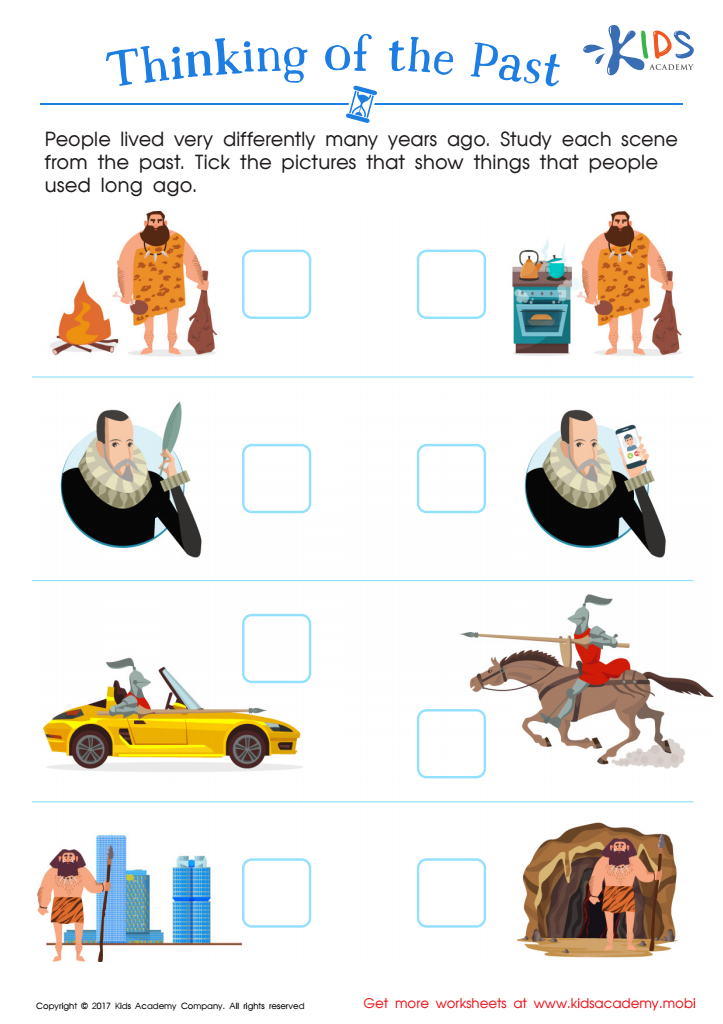
Thinking Past Printable
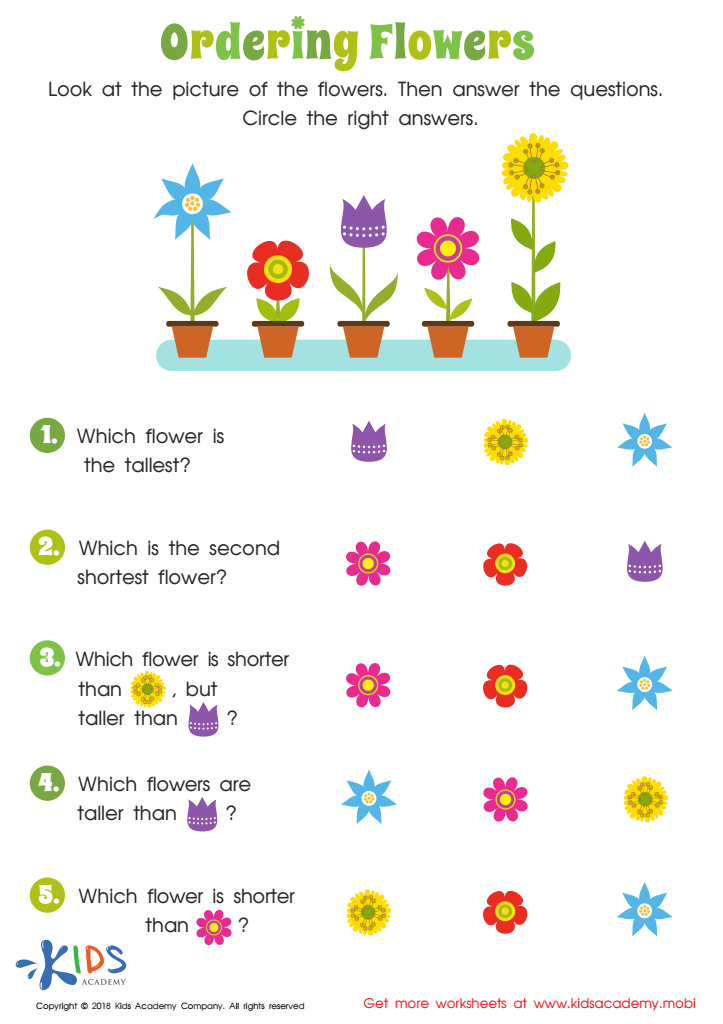
Ordering Flowers Worksheet
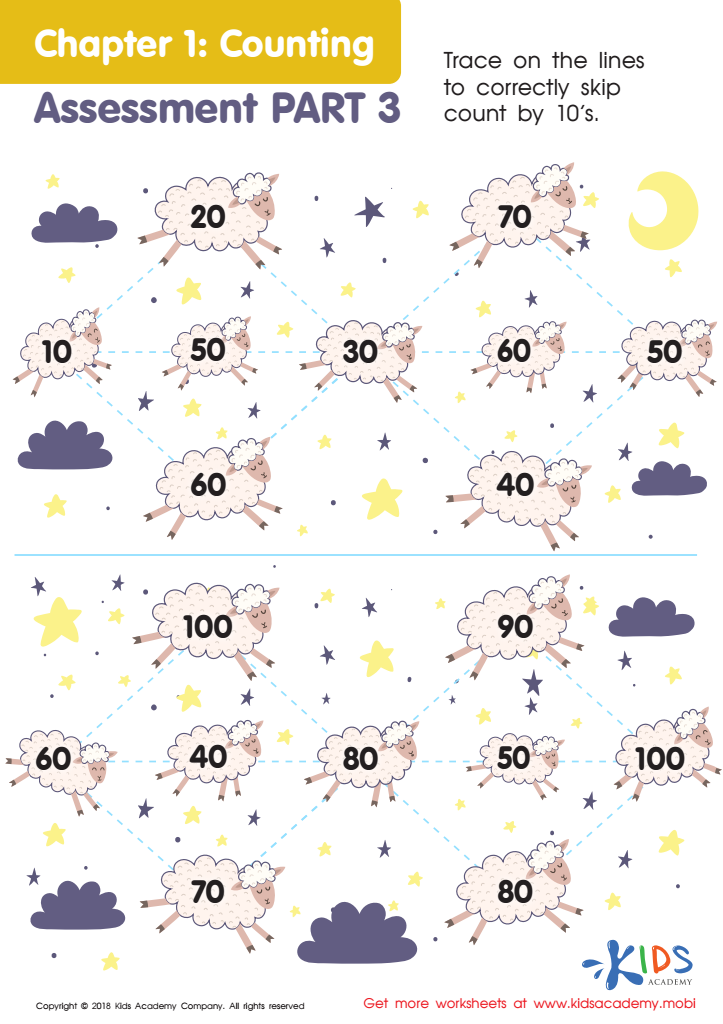
Counting: Assessment 3 Worksheet







Understanding sequences is crucial for children ages 3-6, laying the groundwork for cognitive development and critical thinking skills. Parents and teachers should prioritize this concept as it encompasses both academic and life skills. At this age, children are beginning to learn how to organize their thoughts and experiences chronologically, which is essential for storytelling, following instructions, and developing a sense of time.
By grasping sequences, children learn to recognize patterns, an important precursor to math skills. For example, understanding the order of numbers in counting or arranging objects aids in future arithmetic concepts. Additionally, sequencing helps in strengthening memory and attention span, as kids practice recalling events or steps.
For social development, sequencing activities, such as sharing a classroom routine or relating their day’s events, enhances communication skills. It helps build comprehension skills, aiding children in following multi-step directions, a skill needed for academic tasks.
Ultimately, early exposure to sequencing fosters independence, as children start to manage tasks in a step-by-step manner. Moreover, engaging with sequences through fun activities like storytelling, puzzle-making, or craft projects aligns with their innate curiosity, supporting lasting growth across multiple domains.








