
Understanding tens Worksheets for Ages 3-6
4 filtered results
Difficulty Level
Grade
Age
-
From - To
Subject
Activity
Standards
Explore our "Understanding Tens Worksheets" designed specifically for children ages 3-6. These engaging and interactive worksheets help young learners grasp the concept of tens as a foundational skill in math. With colorful visuals and playful activities, kids will develop their number sense through counting, writing, and identifying groups of ten. These worksheets promote essential cognitive skills and encourage independent learning, making math fun and accessible. Perfect for classrooms or home use, our carefully crafted resources support early math education, setting the stage for future success. Begin your child's journey in understanding numbers today with our engaging worksheets!
Favorites
With answer key
Interactive
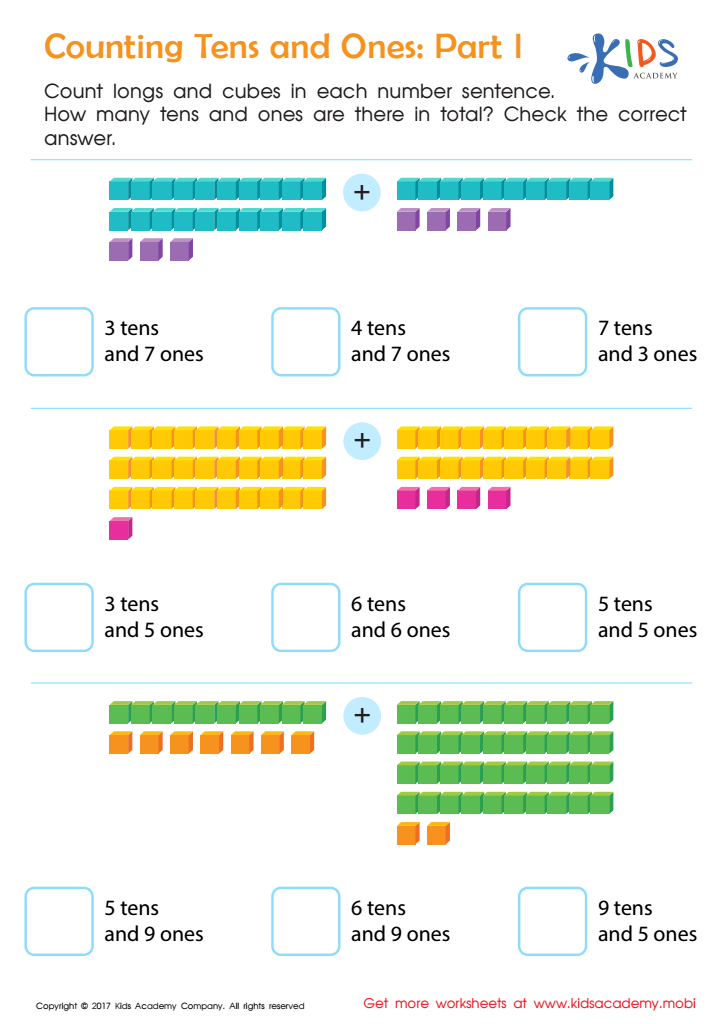
Counting Tens and Ones: Part 1 Worksheet
Kids Academy has a great place value worksheet to help kids learn when they don't have manipulatives at home! It includes longs and cubes that kids can count and add to find the sum. Colorful and downloadable, this page will help kids understand addition and place value better. Give it a try!
 Assign to My Students
Counting Tens and Ones: Part 1 Worksheet
Worksheet
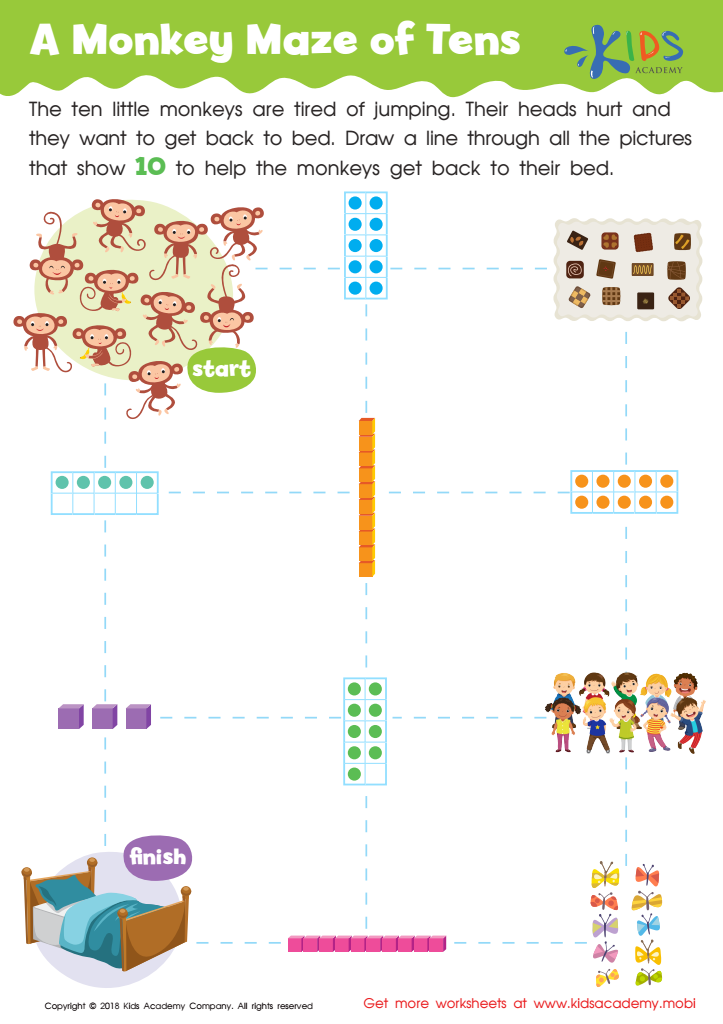
A Monkey Maze of Tens Worksheet
Kids can enjoy helping 10 little monkeys get to bed in this fun worksheet! They'll draw a line through all the pictures that show 10 to help the monkeys get back to their bed. Monkeys are an animal loved by many, from pet monkeys to zoo visits, and kids will adore this worksheet.
A Monkey Maze of Tens Worksheet
Worksheet
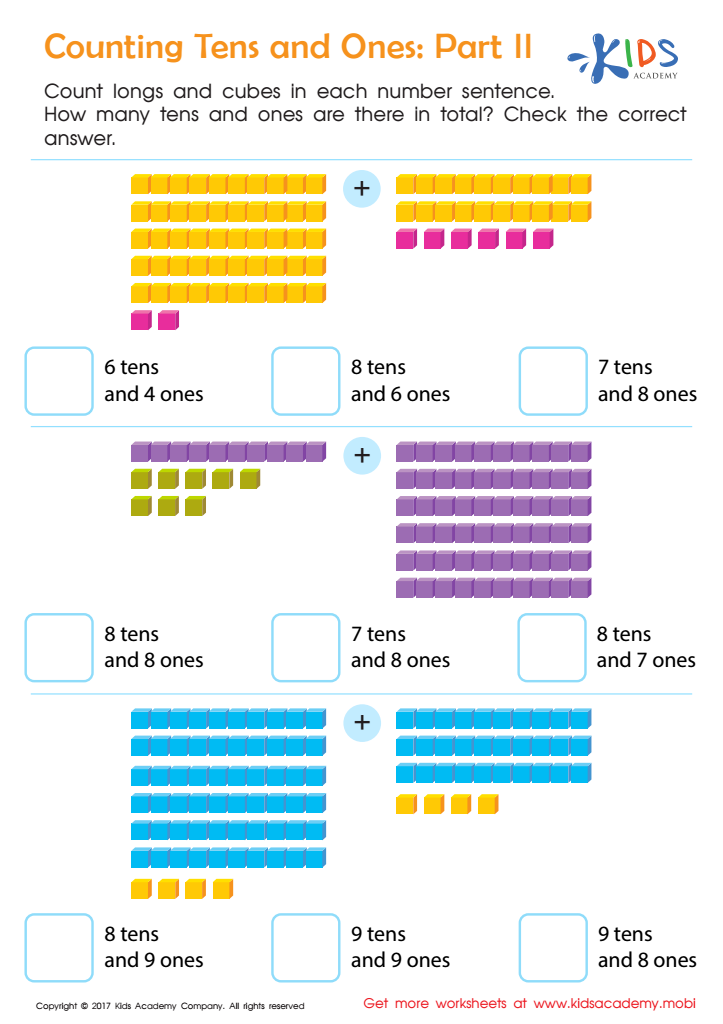
Counting Tens and Ones: Part 2 Worksheet
Adding two-digit numbers can be tough for kids. It's essential to give them a strong foundation of numeracy and math, not just teaching them to add. Use longs and cubes to help them get a visual grasp of place value and addition. This fun worksheet can help your child take their skills to the next level, with problems featuring larger numbers.
Counting Tens and Ones: Part 2 Worksheet
Worksheet
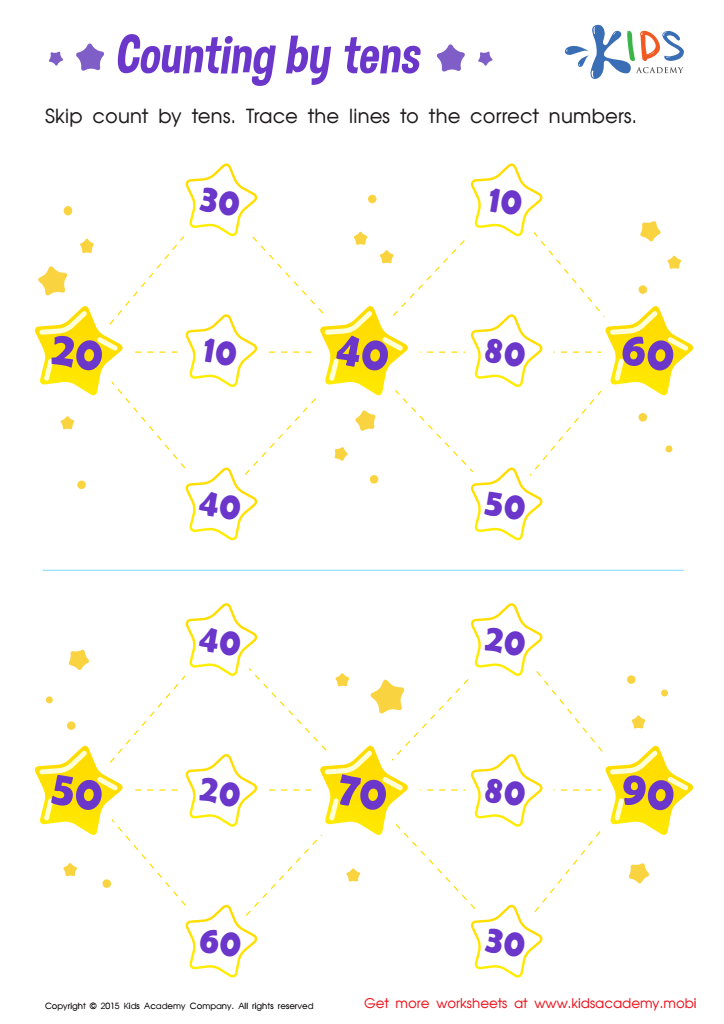
Learn Dozens: Counting by Tens Printable
Kindergartners need to learn skip counting - counting in number groups - to increase number sense and be ready for more advanced math. Our kindergarten worksheet featuring a starry trip to outer space will help your child practice this valuable skill. Your child will choose correct answers to trace the lines to the stars, building fluency in skip counting. They'll also strengthen problem solving and see the pattern it creates. Get your little learner to the next level with this skip counting worksheet!
Learn Dozens: Counting by Tens Printable
Worksheet
Join Kids Academy for Free
Who is primarily going to use this learning content?






Understanding tens is crucial for children aged 3-6 as it lays the foundation for their mathematical skills and overall cognitive development. During these formative years, children begin to grasp basic number concepts, and recognizing tens helps them to make sense of our base-10 number system.
One of the primary reasons parents and teachers should prioritize understanding tens is that it encourages number sense, which facilitates easier addition and subtraction. When children learn to see numbers as combinations of tens and ones, they develop strategies that lead to higher-level math skills, such as place value understanding, which is critical for future arithmetic operations.
Additionally, teaching young children about tens promotes resilience and critical thinking. When they engage with tens, they practice problem-solving skills and learn to explore different ways to group numbers, leading to a deeper comprehension of quantities and relationships among numbers.
Furthermore, fostering this understanding at an early age keeps children motivated and interested in learning, making math a fun and engaging topic. This positive connection enhances their attitude towards education as a whole. Therefore, by supporting early comprehension of tens, parents and teachers equip children with essential tools for their academic journey and instill a lifelong love for learning.








