Filters

18 filtered results

Clear all filters
Favorites
With answer key
Interactive

18 filtered results

Difficulty Level

Grade


Discover the joy of learning with our "Visual Learning Adding in the Sea Worksheets" designed for ages 3-6! These engaging worksheets use vibrant marine themes, encouraging young learners to grasp basic addition concepts visually. With colorful illustrations of sea creatures and interactive activities, children will enhance their math skills while exploring fun undersea adventures. Perfect for both classroom and home use, these worksheets foster creativity, boost problem-solving abilities, and make learning math enjoyable. Help your little ones dive into the world of numbers and cultivate a love for education through playful and immersive visual learning experiences.
Check out this FREE Trial Lesson on Adding in the Sea for age 3-6!

Exactly the Same, or Not

Favorites
With answer key
Interactive
  • 3-6
  • Visual Learning
  • Adding in the Sea
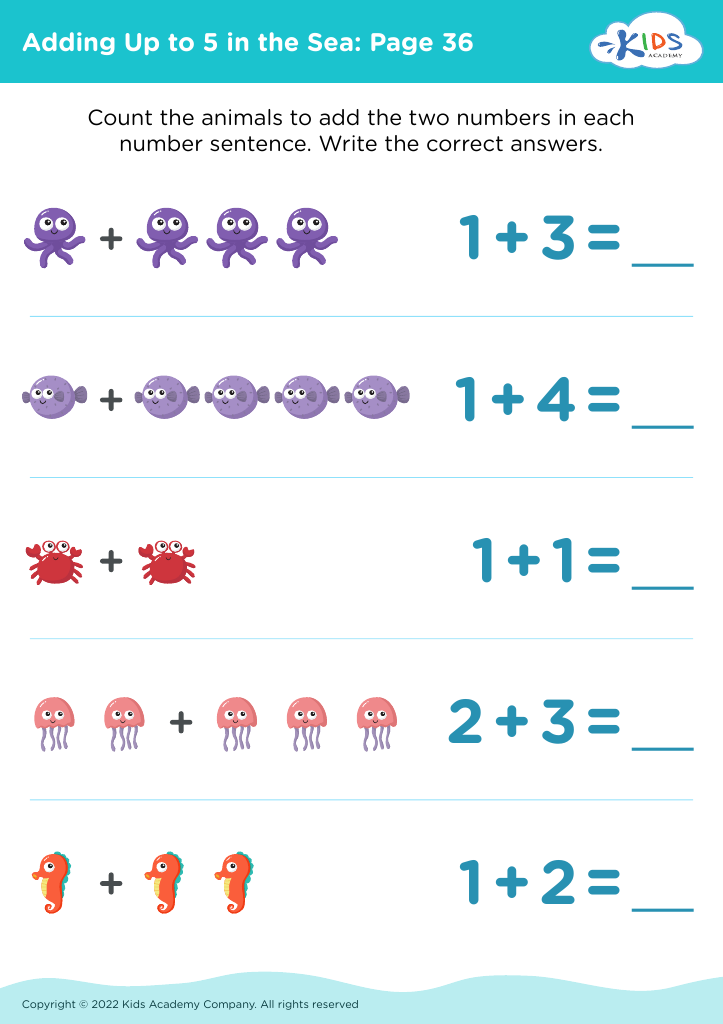
Adding Up to 5 in the Sea: Page 36
Worksheet
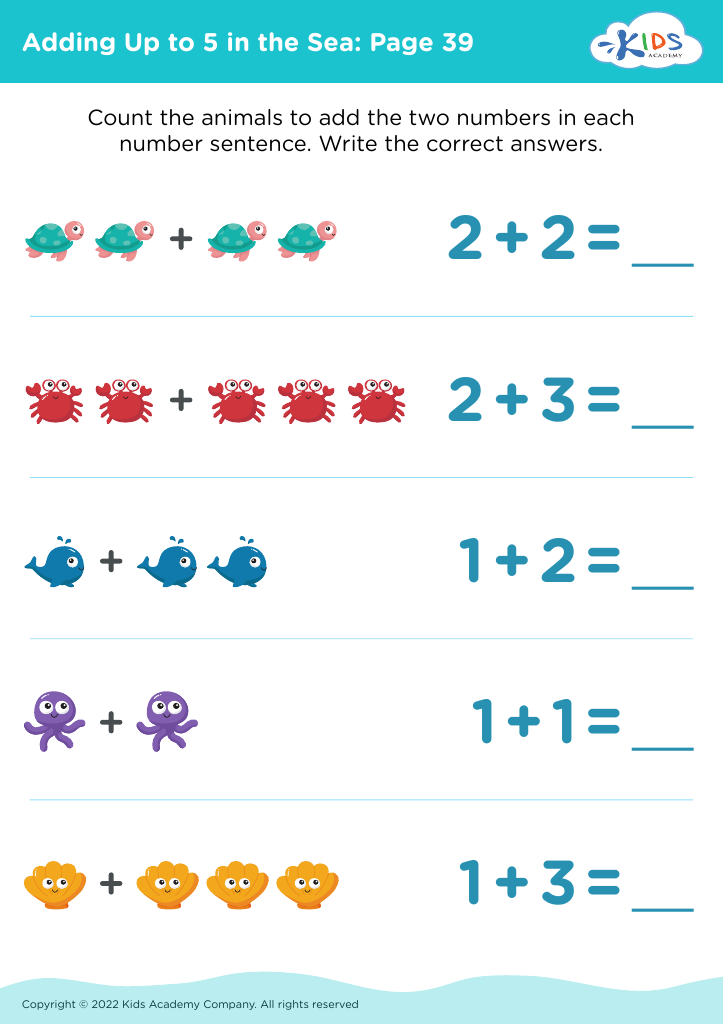
Adding Up to 5 in the Sea: Page 39
Worksheet
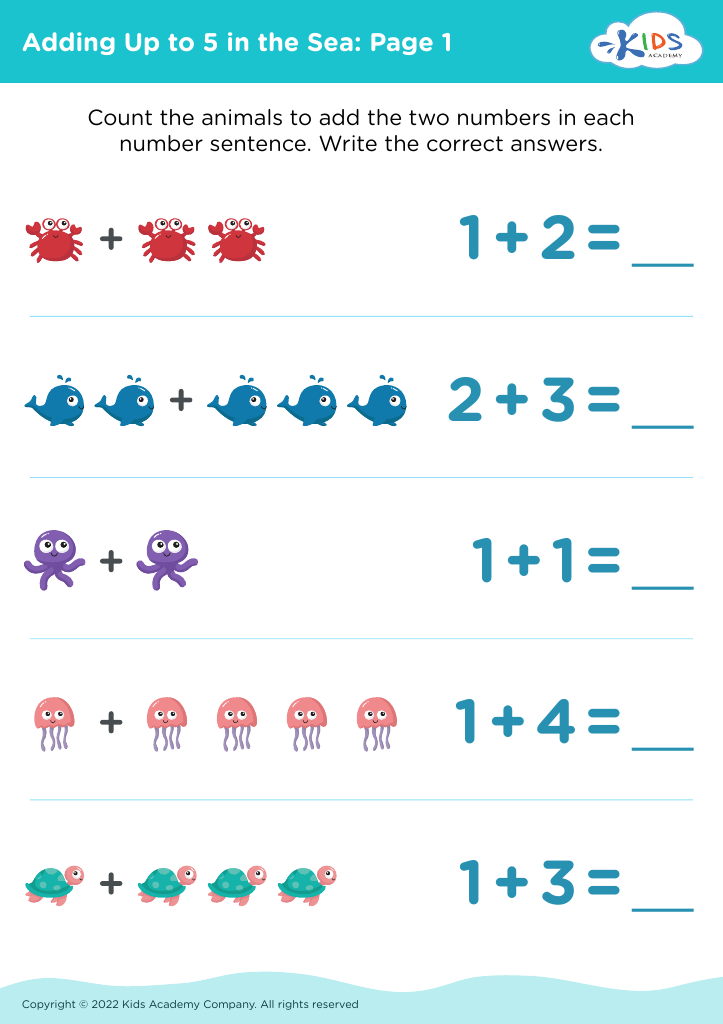
Adding Up to 5 in the Sea: Page 1

Adding Up to 5 in the Sea: Page 1

Adding Up to 5 in the Sea: Page 1
Worksheet
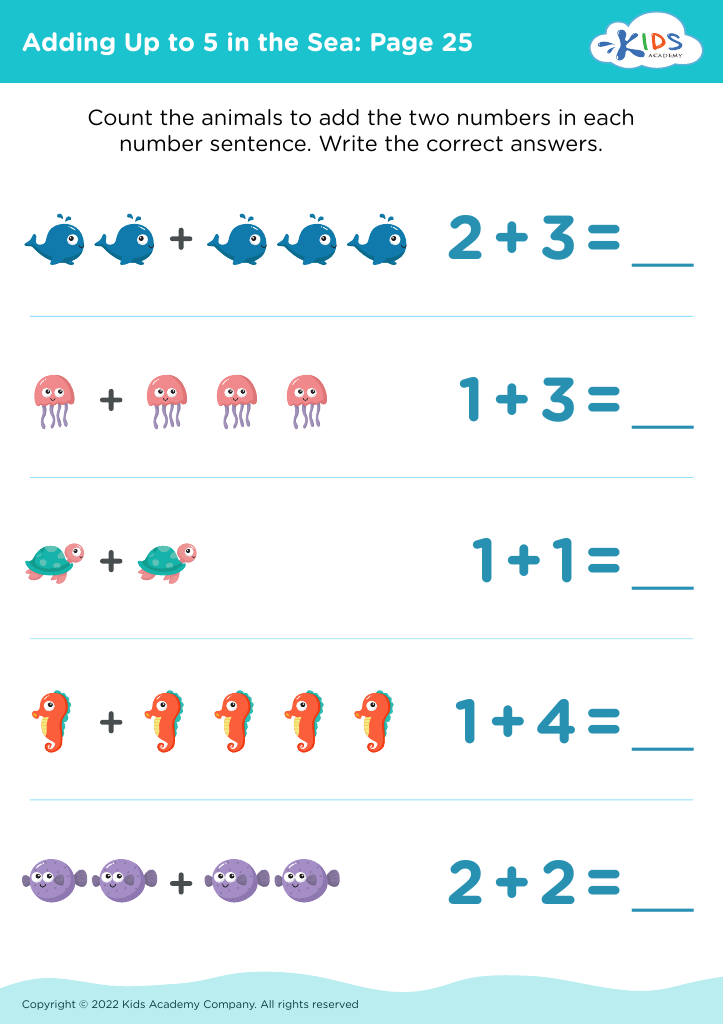
Adding Up to 5 in the Sea: Page 25
Worksheet
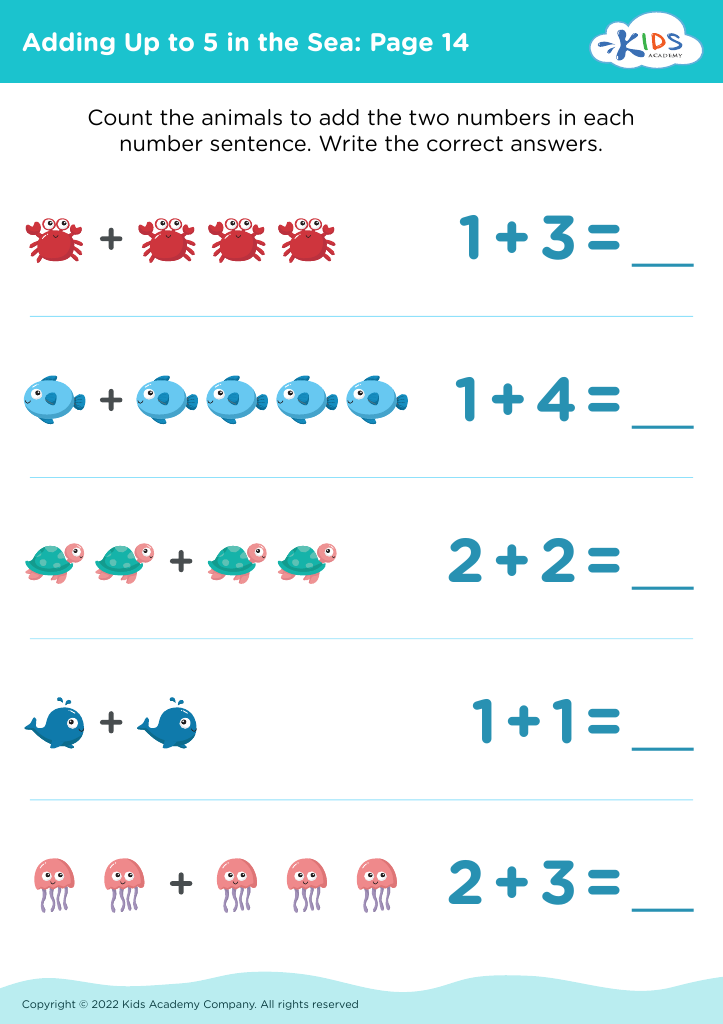
Adding Up to 5 in the Sea: Page 14
Worksheet
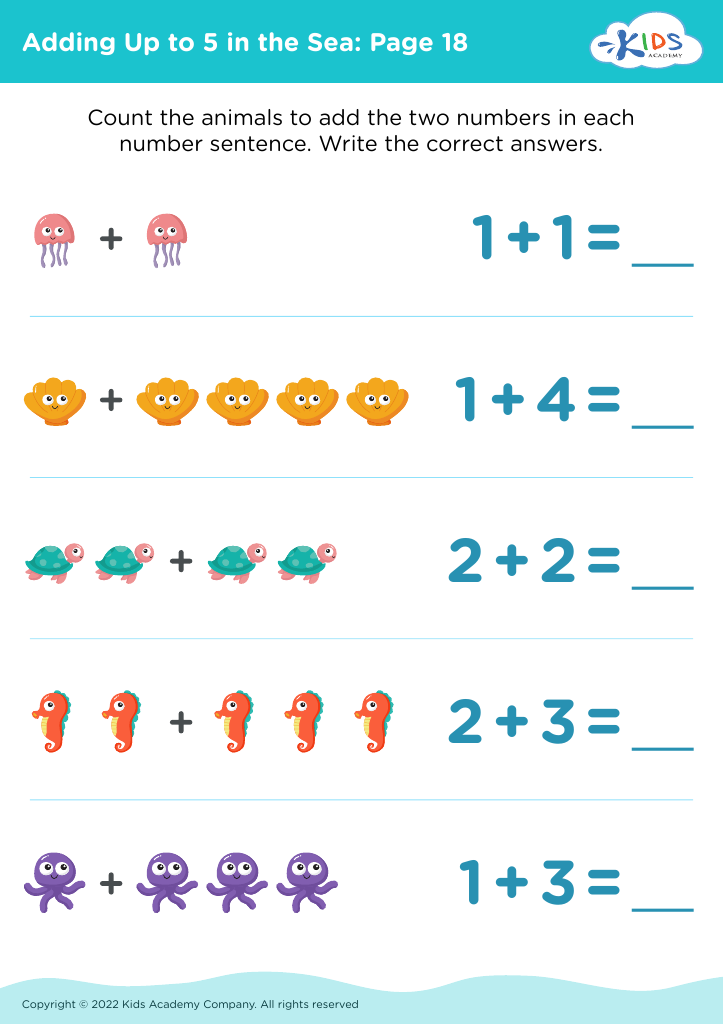
Adding Up to 5 in the Sea: Page 18
Worksheet
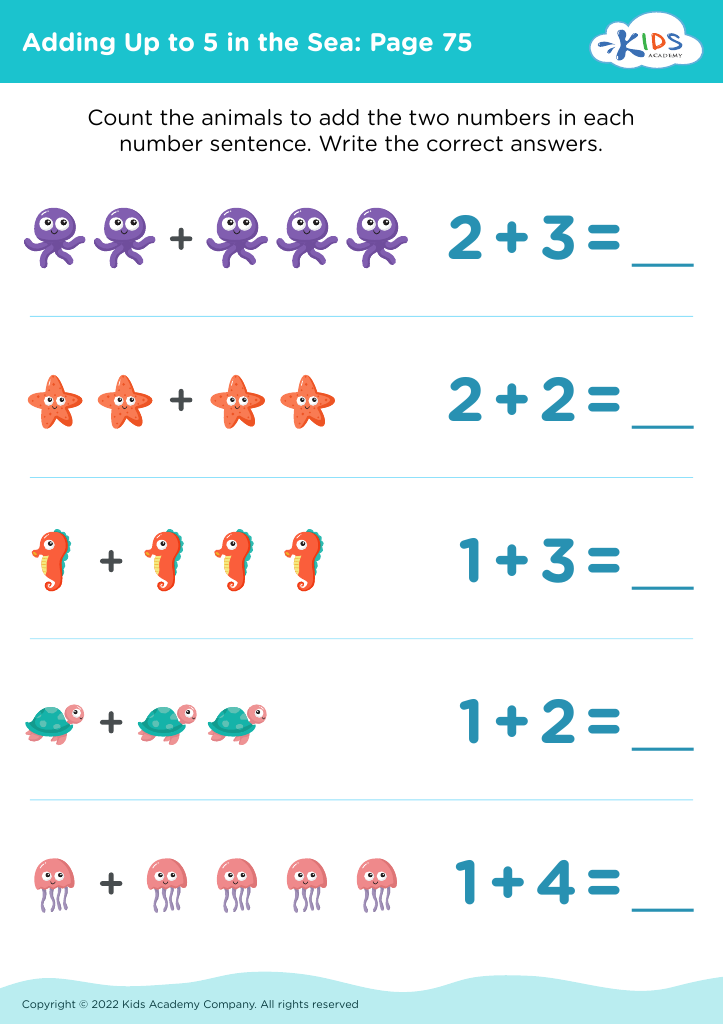
Adding Up to 5 in the Sea: Page 75
Worksheet
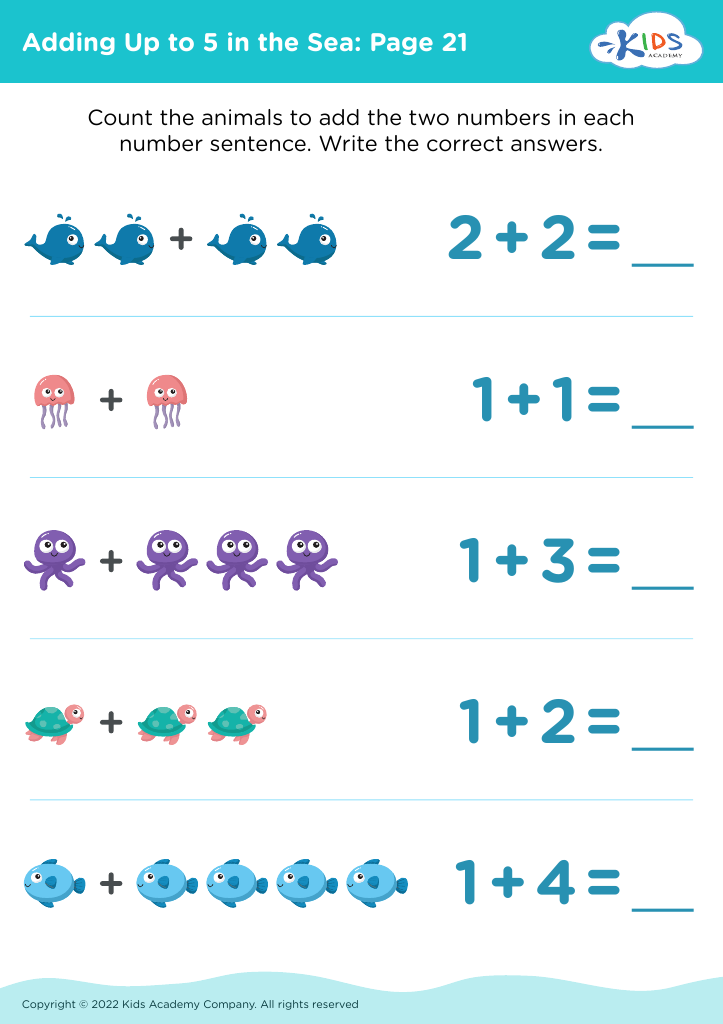
Adding Up to 5 in the Sea: Page 21
Worksheet
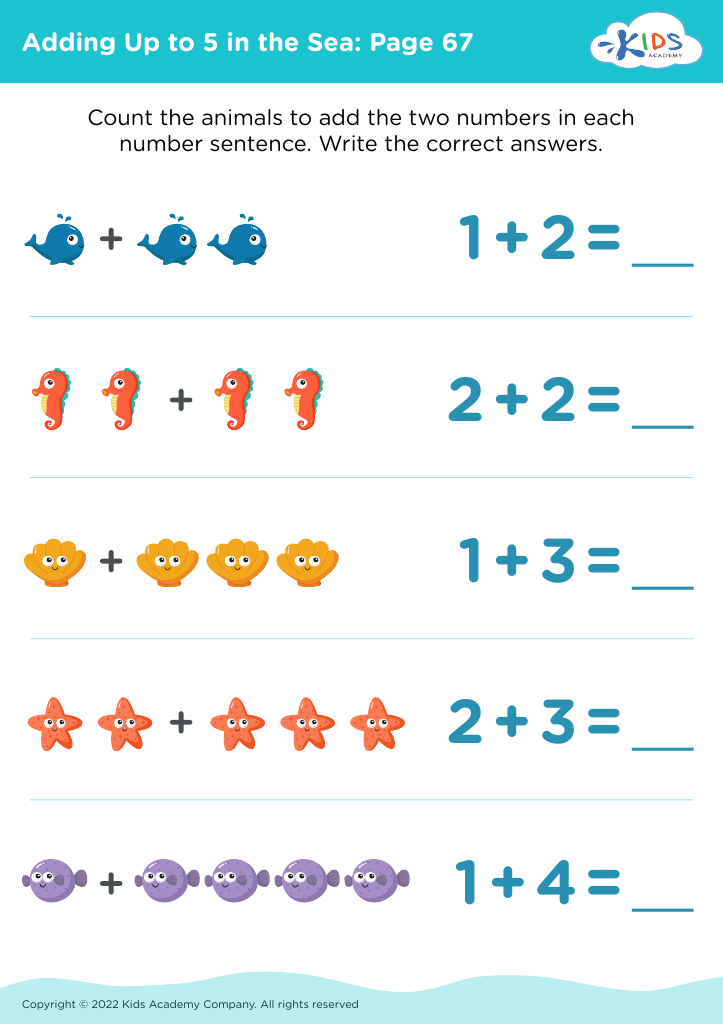
Adding Up to 5 in the Sea: Page 67
Worksheet
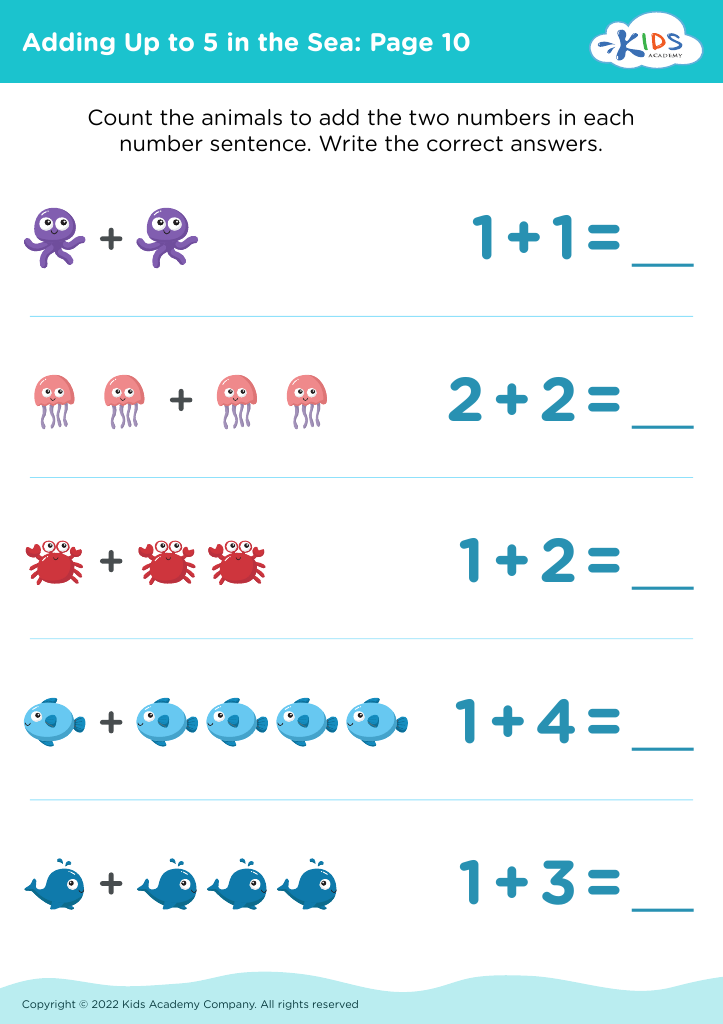
Adding Up to 5 in the Sea: Page 10
Worksheet
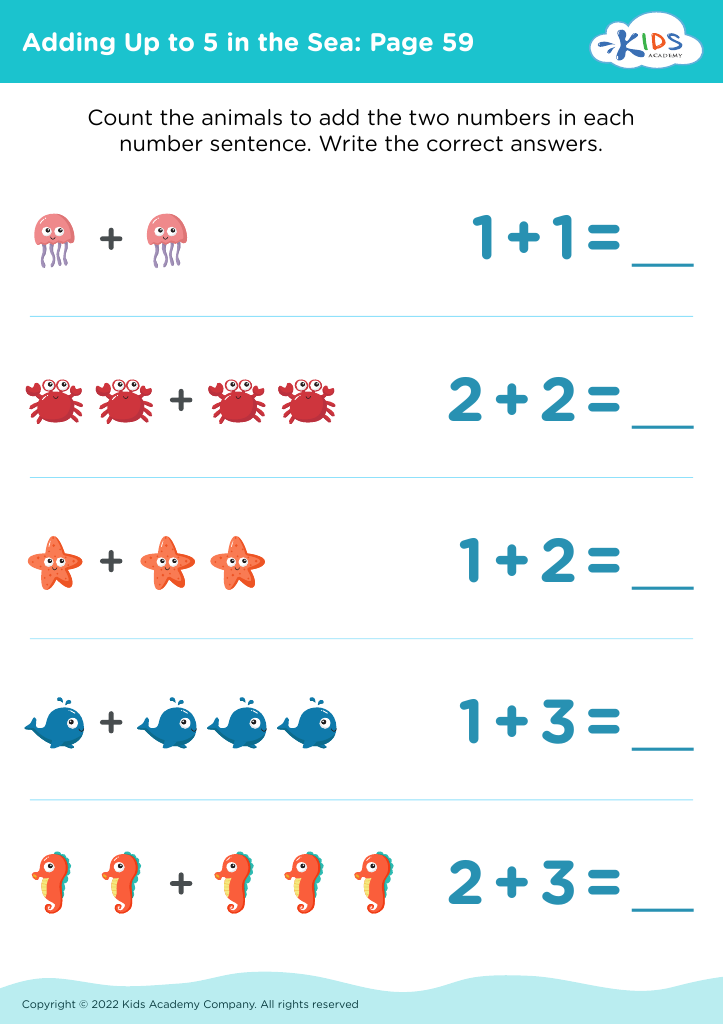
Adding Up to 5 in the Sea: Page 59
Worksheet
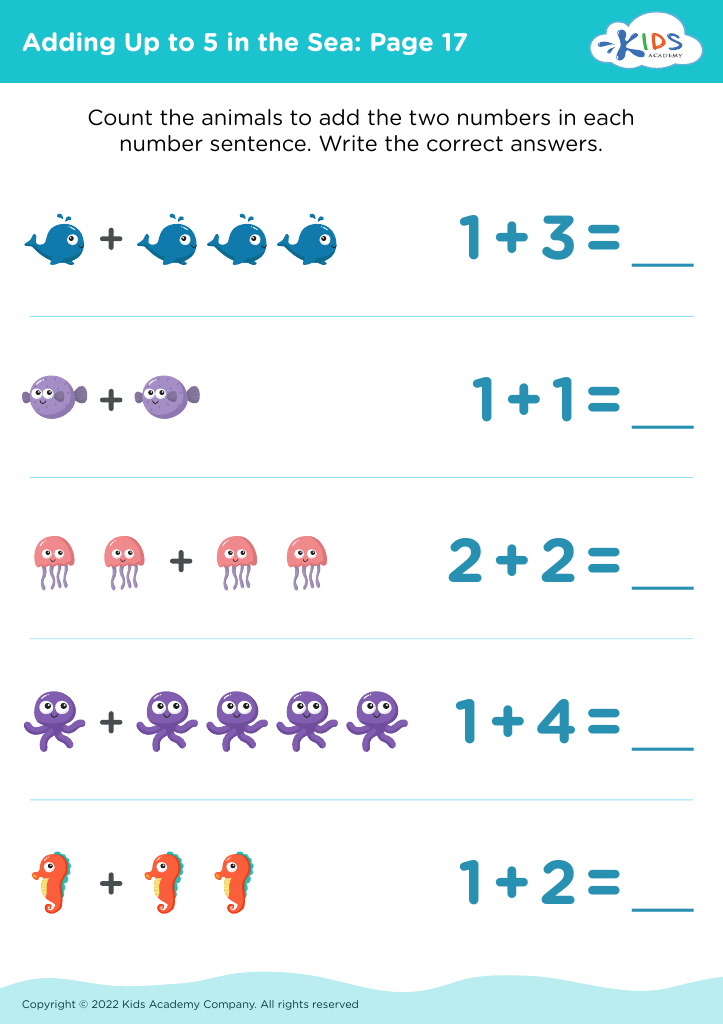
Adding Up to 5 in the Sea: Page 17
Worksheet
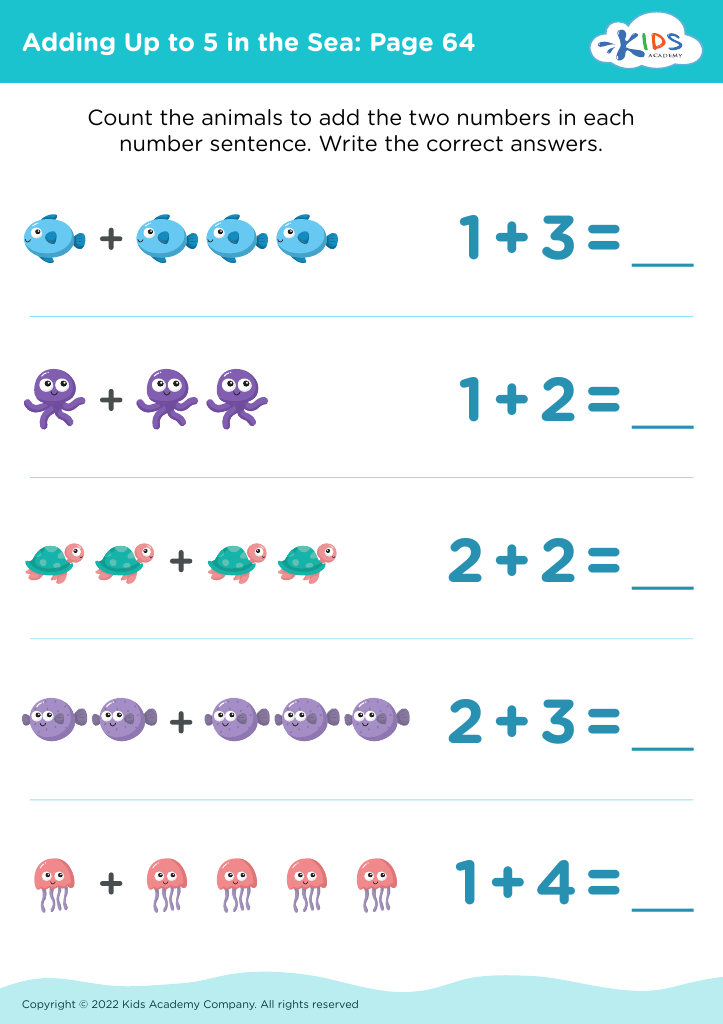
Adding Up to 5 in the Sea: Page 64
Worksheet
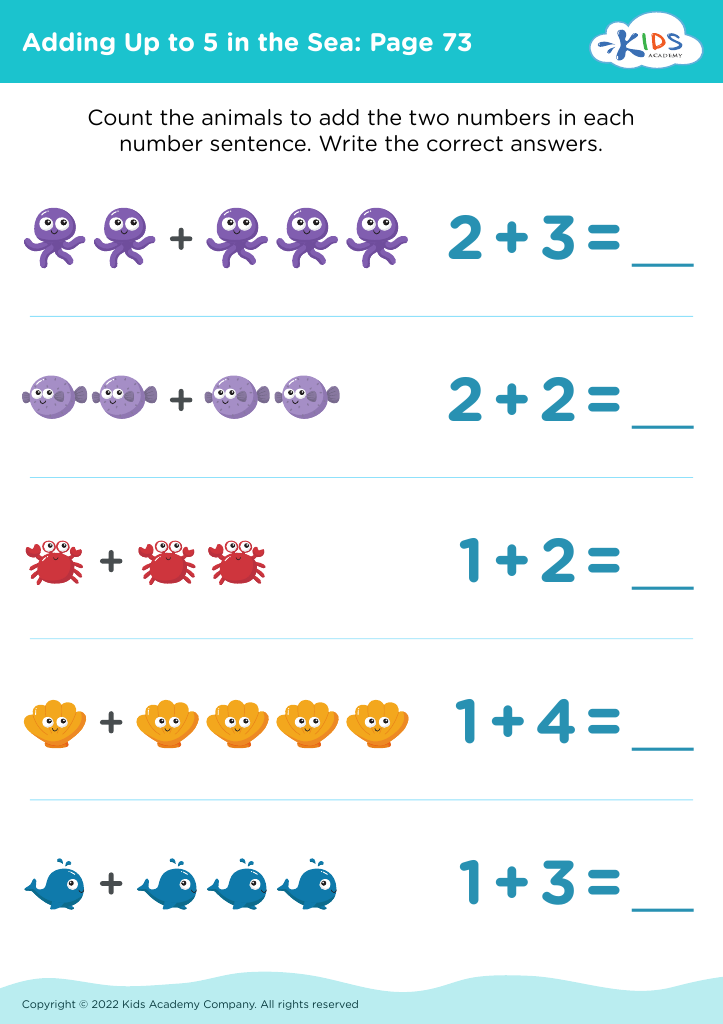
Adding Up to 5 in the Sea: Page 73
Worksheet
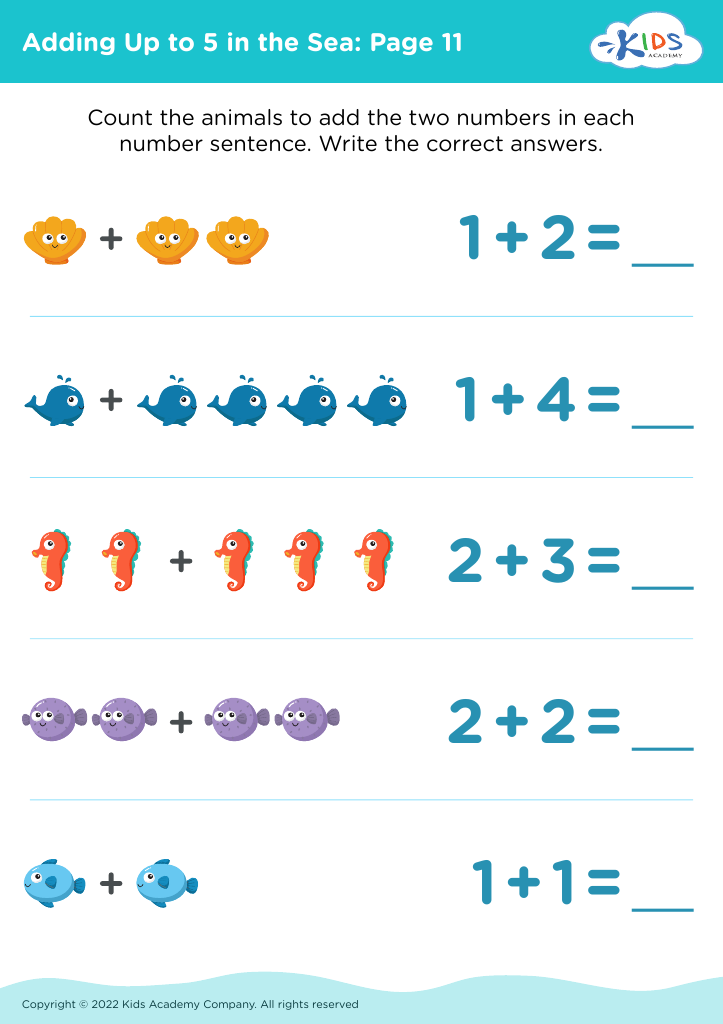
Adding Up to 5 in the Sea: Page 11
Worksheet
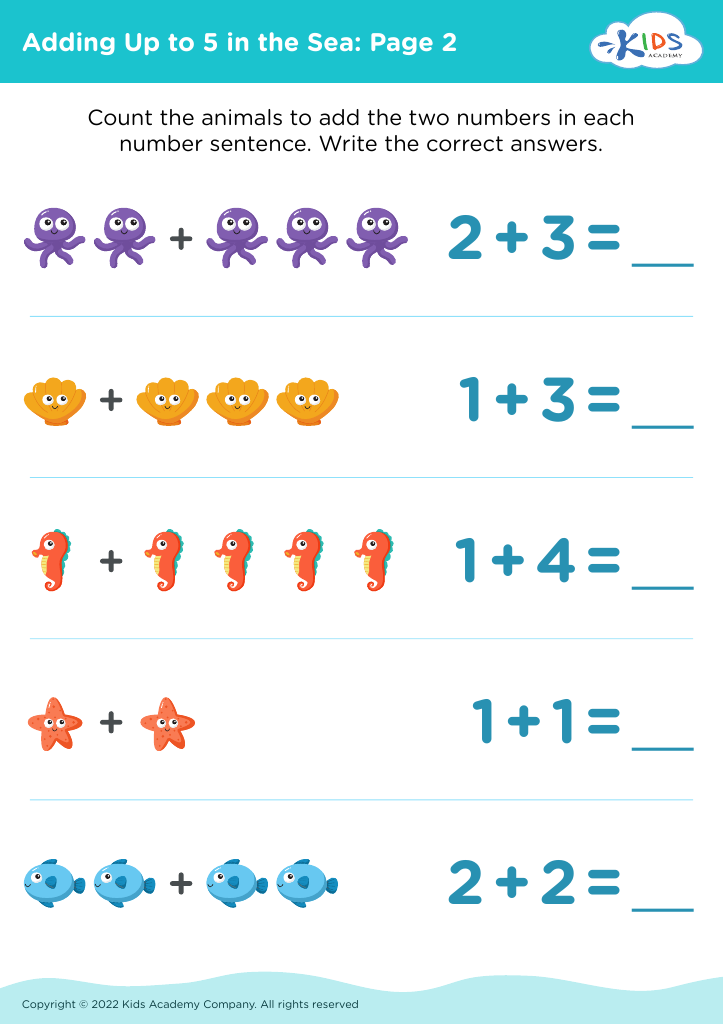
Adding Up to 5 in the Sea: Page 2

Adding Up to 5 in the Sea: Page 2

Adding Up to 5 in the Sea: Page 2
Worksheet
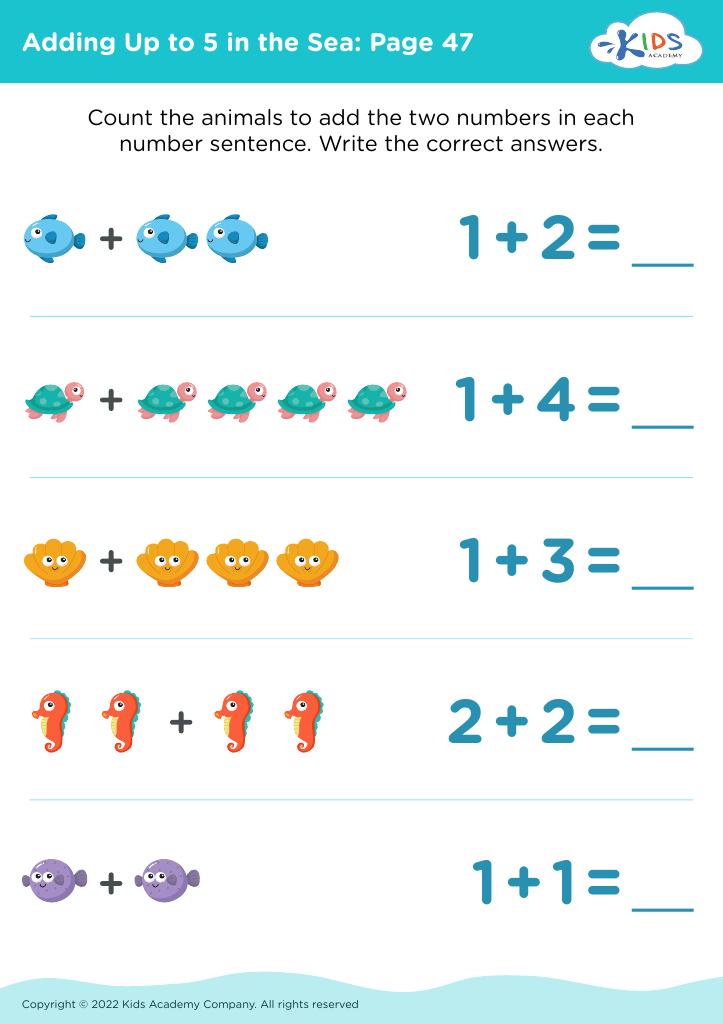
Adding Up to 5 in the Sea: Page 47
Worksheet
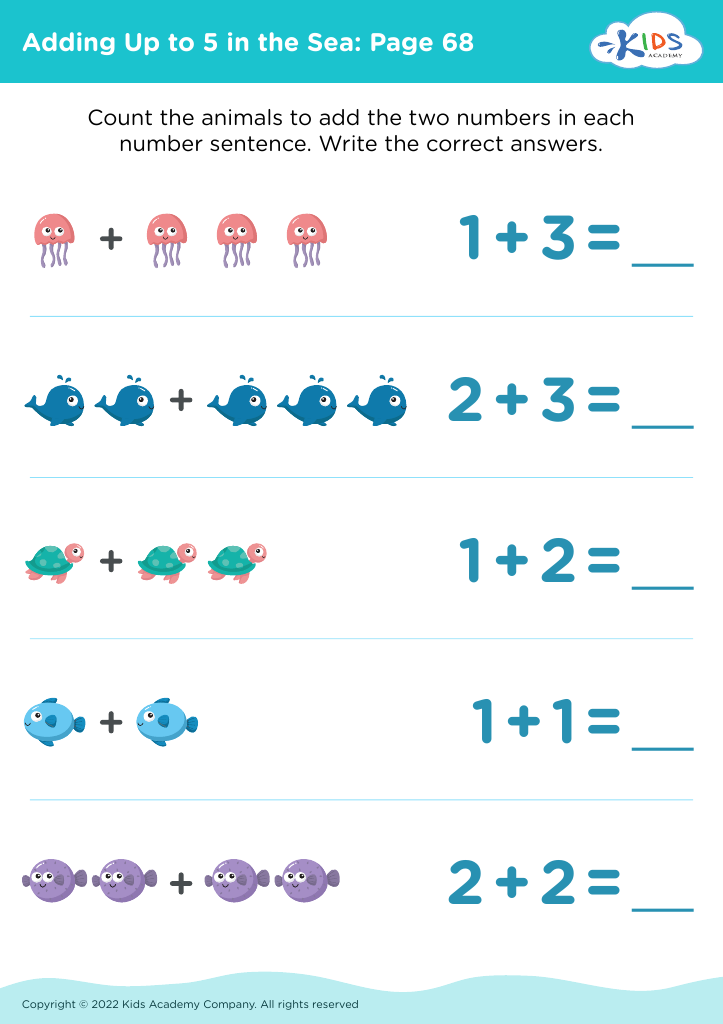
Adding Up to 5 in the Sea: Page 68
Worksheet


Visual learning is crucial for children aged 3-6, as this developmental stage is marked by their rapid cognitive growth and curiosity about the world. By incorporating visual elements such as pictures, charts, and real-life imagery related to sea exploration, parents and teachers can significantly enhance children's understanding and retention of concepts. For young learners, the sea offers a vibrant and engaging environment filled with diverse creatures, colors, and patterns.

Using visual aids about the sea can spark imagination and stimulate discussions, encouraging children to ask questions and express their thoughts. This type of learning accommodates various learning styles, catering to visual learners who thrive on images and diagrams.

Moreover, visual learning helps children make connections between what they see and what they learn. For example, showing kids pictures of starfish while discussing marine life can provide a meaningful context and foster comprehension. By nurturing their visual learning skills, parents and teachers can boost children's literacy, vocabulary, and critical thinking skills. Ultimately, incorporating visual learning centered around themes like the sea can make learning more interactive, enjoyable, and effective for early learners, setting a strong foundation for future educational success.