Check out this FREE Trial Lesson on Addition & Subtraction for age 3-6!

Relate Subtraction and Addition

Favorites
With answer key
Interactive
  • 3-6
  • Addition skills
  • Addition & Subtraction
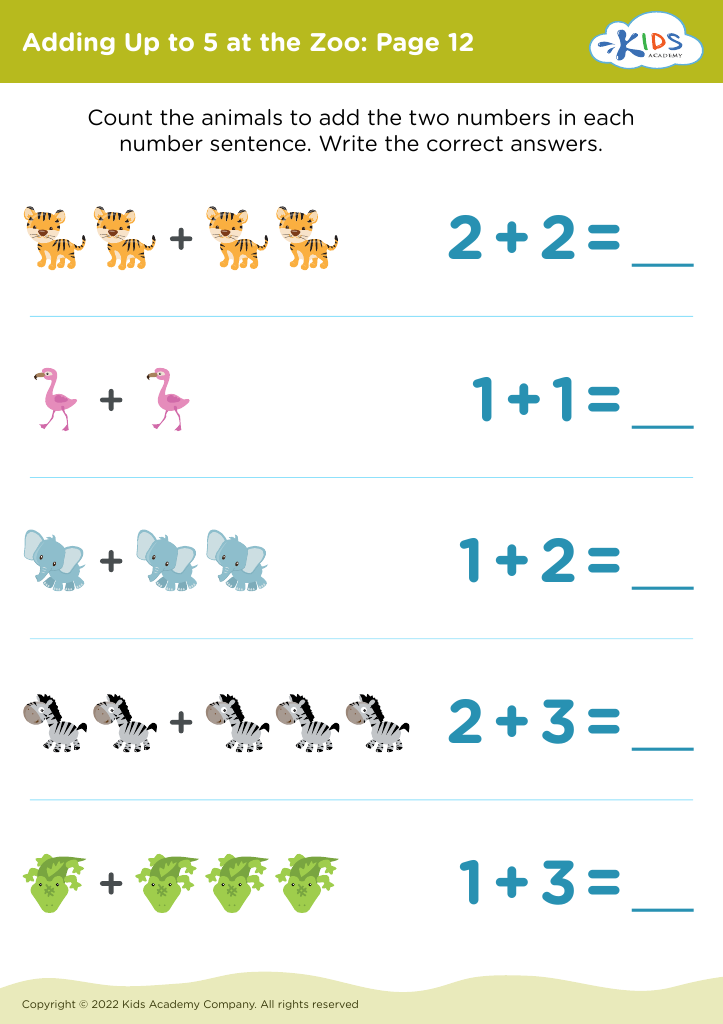
Adding Up to 5 at the Zoo: Page 12
Worksheet
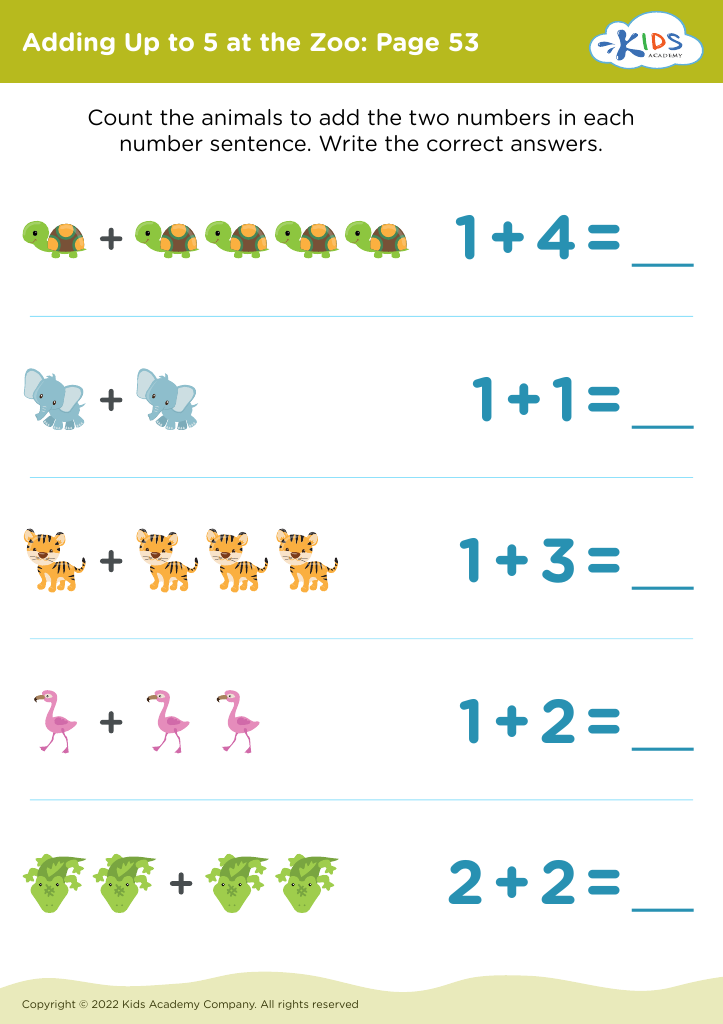
Adding Up to 5 at the Zoo: Page 53
Worksheet
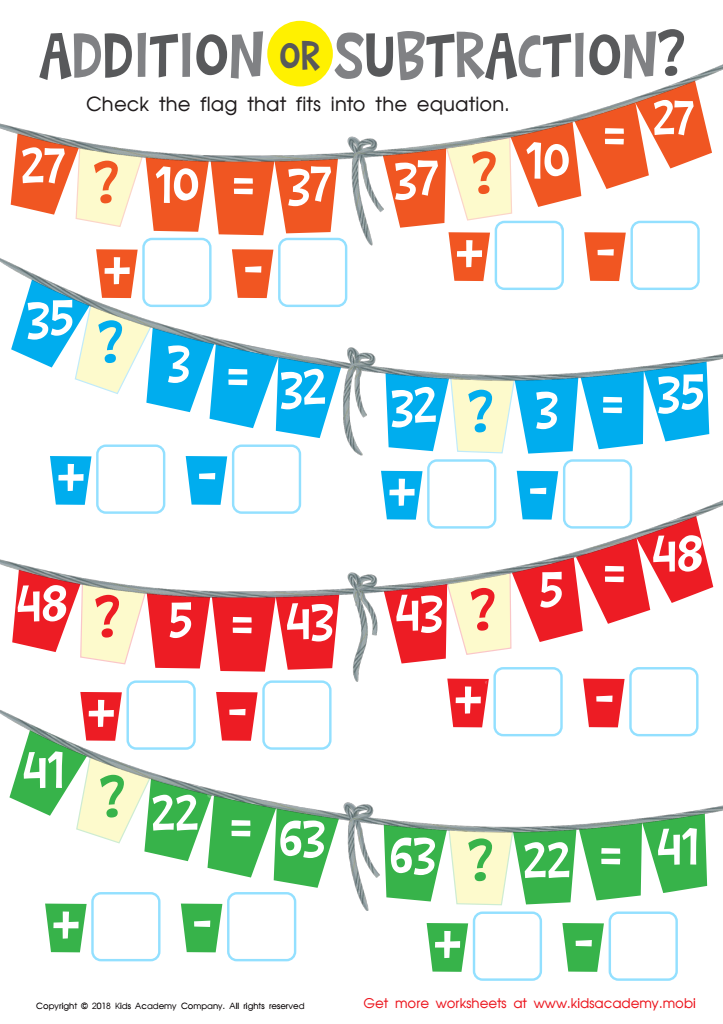
Addition or Subtraction? Worksheet

Addition or Subtraction? Worksheet

Help your math whiz's number skills advance with these colorful flag equations! With the free PDF, they'll learn to solve addition and subtraction facts by following the correct orders of operation. And the best part? They'll develop a deeper understanding of how the different operations work together within equations. Give it a try and watch their skills soar!
Addition or Subtraction? Worksheet
Worksheet
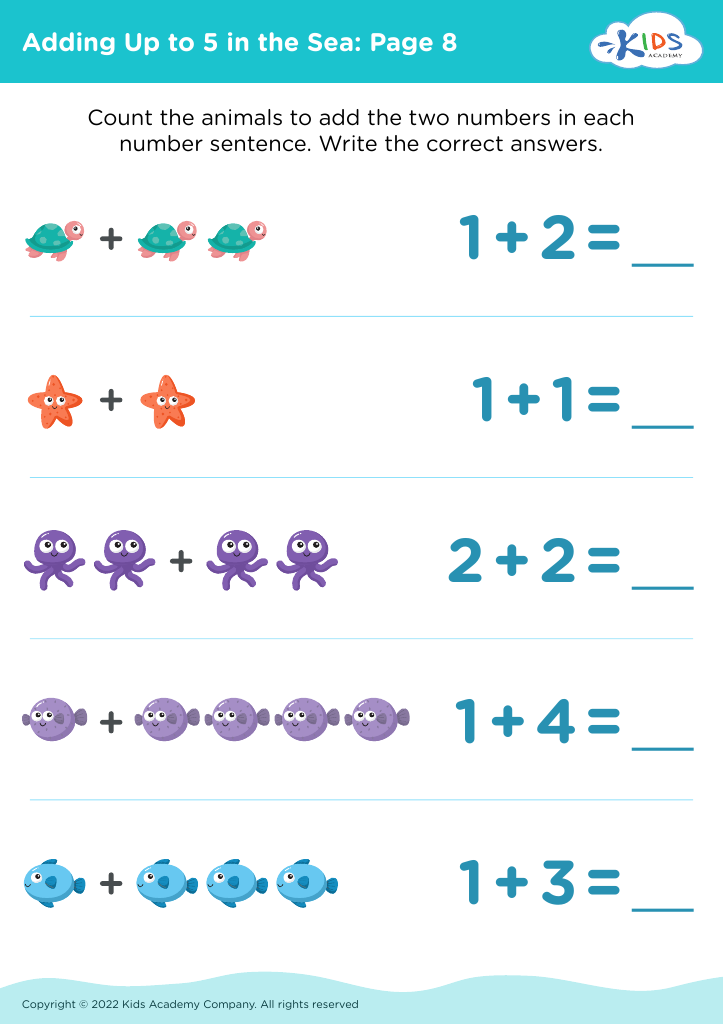
Adding Up to 5 in the Sea: Page 8

Adding Up to 5 in the Sea: Page 8

Adding Up to 5 in the Sea: Page 8
Worksheet
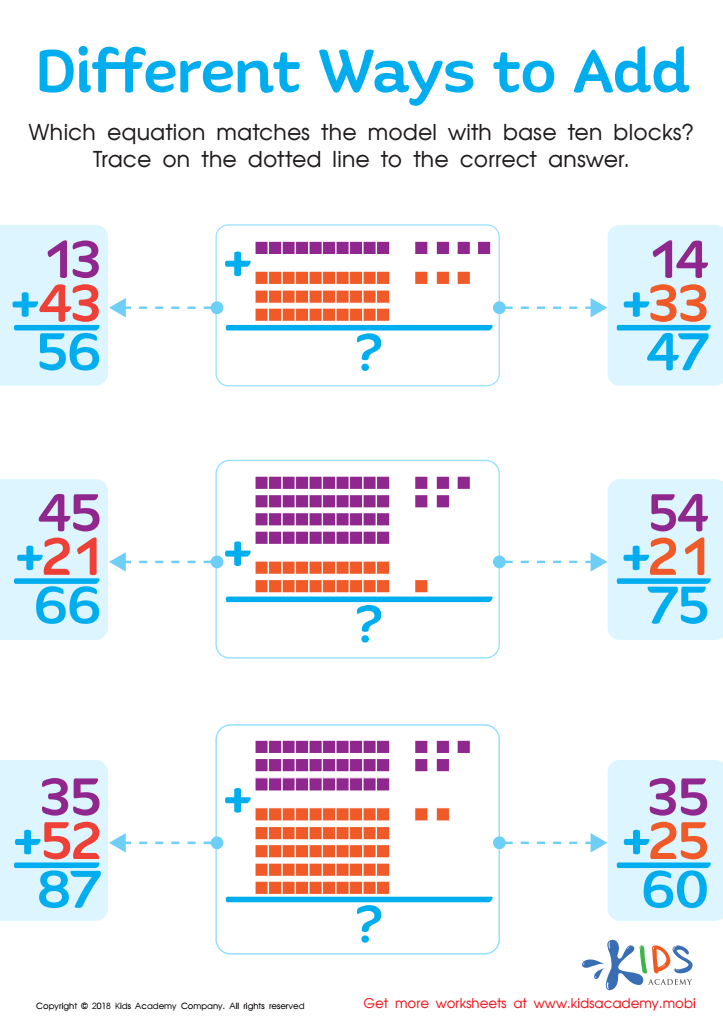
Different Ways to Add Worksheet

Different Ways to Add Worksheet

This worksheet enhances math skills by having students match equations to base ten pictures and tracing lines. It not only helps with fine motor skills, but also encourages number sense, with various ways to add and build upon existing math knowledge.
Different Ways to Add Worksheet
Worksheet
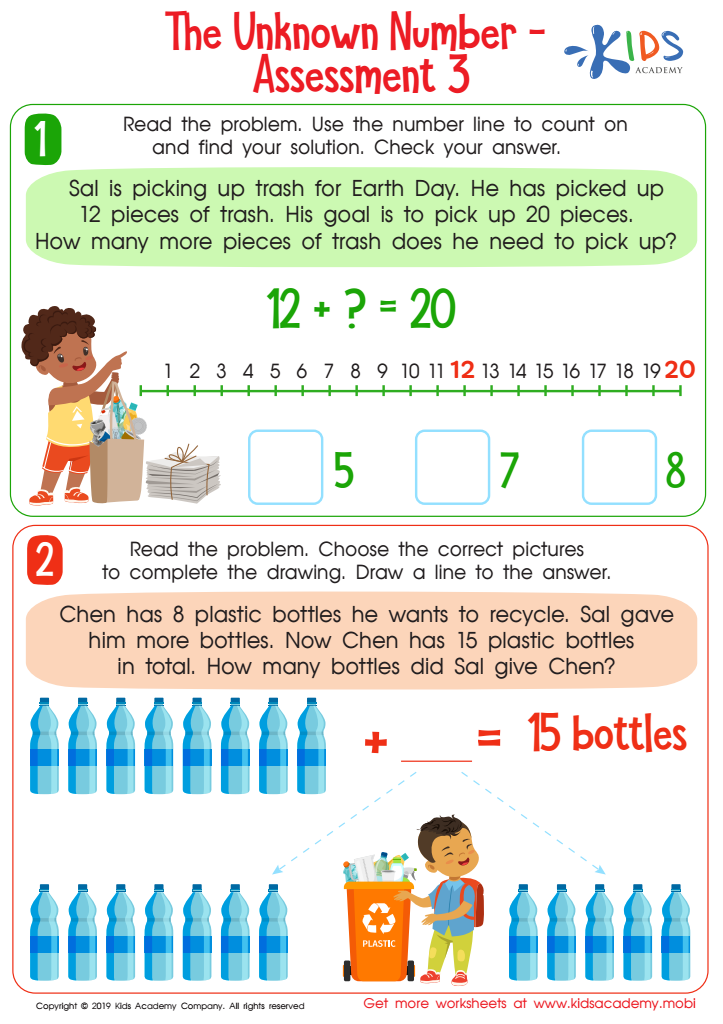
The Unknown Number - Assessment 3 Worksheet
The Unknown Number - Assessment 3 Worksheet
Read the Earth Day-themed word problem aloud to your kids, pointing to the pictures as you go. Use the number line to help them count on and find the answer. Then check it together. Doing this can help them learn more about Earth Day and meet other children who are doing their part to keep it clean.
The Unknown Number - Assessment 3 Worksheet
Worksheet
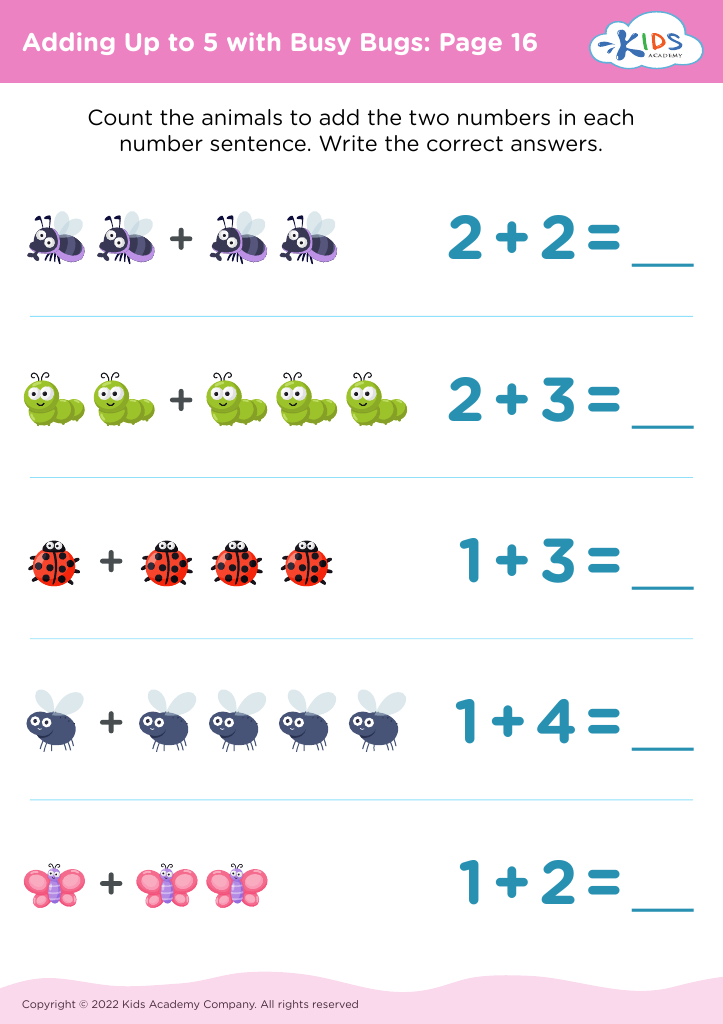
Adding Up to 5 with Busy Bugs: Page 16
Worksheet
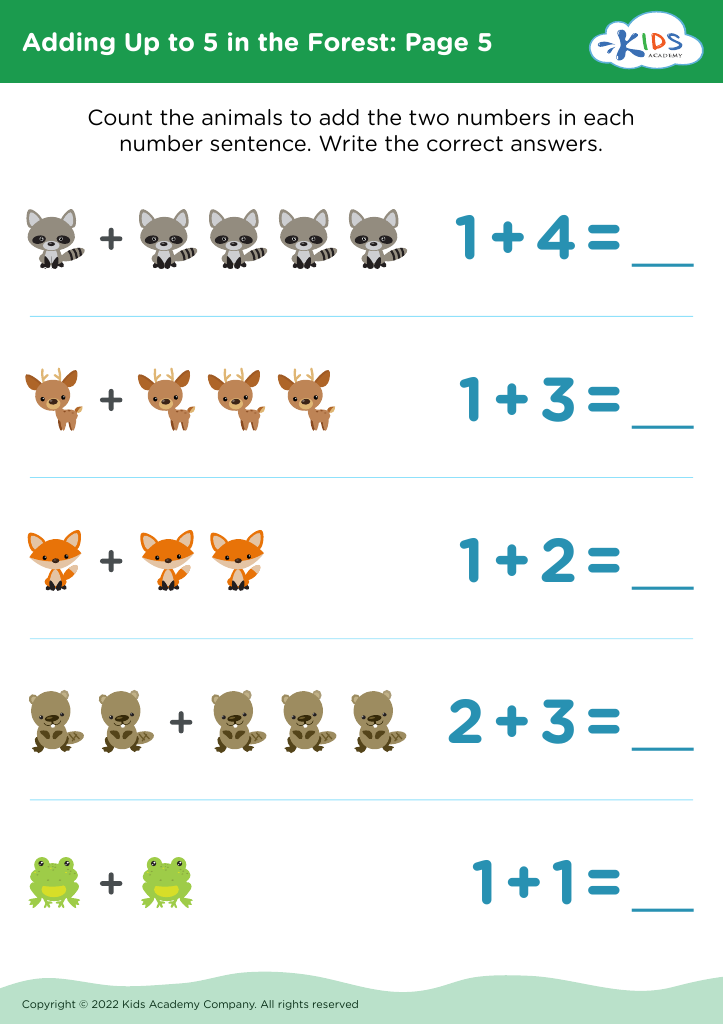
Adding Up to 5 in the Forest: Page 5
Worksheet
Addition and Subtraction Within 1: Assessment 3 Worksheet
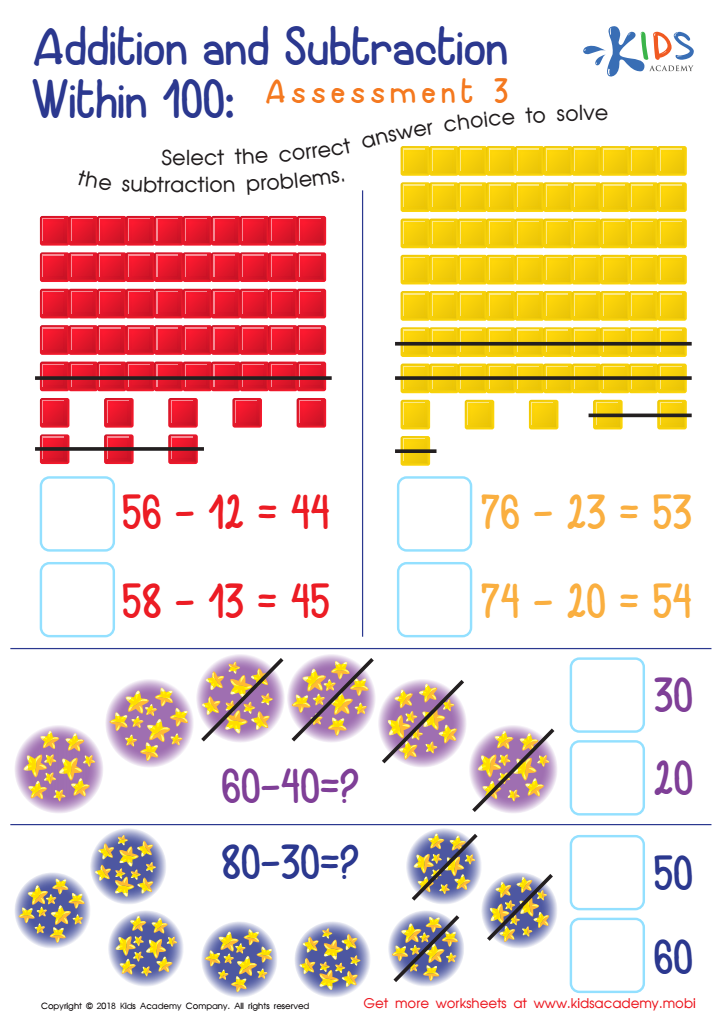
Addition and Subtraction Within 1: Assessment 3 Worksheet

Help your kids count the base ten blocks in the picture. Then, count how many have been marked off. Ask them to select the correct answer choice to solve the subtraction problems based on the blocks counted. 80 words
Addition and Subtraction Within 1: Assessment 3 Worksheet

Worksheet
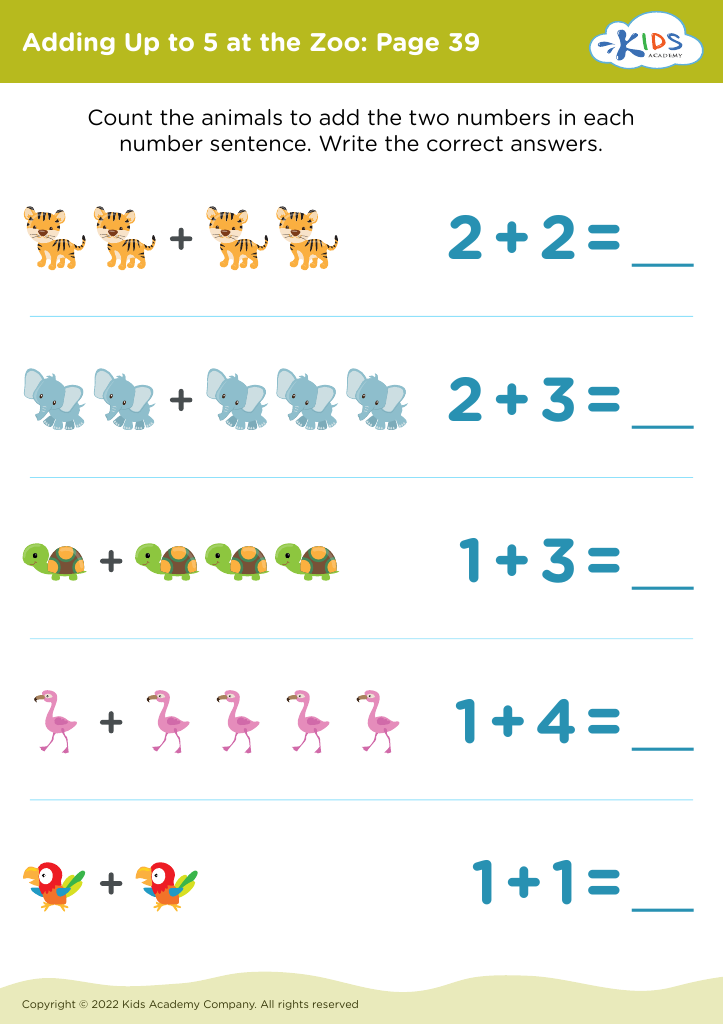
Adding Up to 5 at the Zoo: Page 39
Worksheet
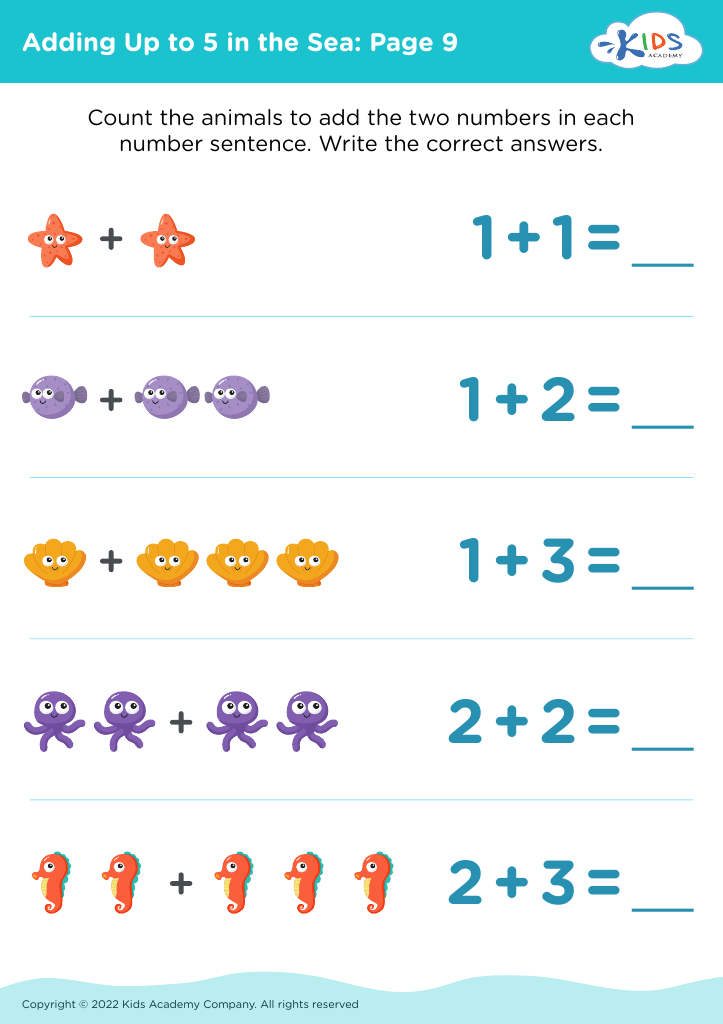
Adding Up to 5 in the Sea: Page 9

Adding Up to 5 in the Sea: Page 9

Adding Up to 5 in the Sea: Page 9
Worksheet


... 4 5

Parents and teachers should prioritize the development of addition and subtraction skills in young children aged 3-6 for several important reasons. First, these foundational math skills enhance critical thinking and problem-solving abilities. Early exposure to numbers enables children to recognize patterns, make logical connections, and develop a sense of quantity, which is essential for more complex mathematical concepts later on.

Additionally, mastering basic addition and subtraction fosters confidence in children’s abilities. When they successfully solve simple math problems, they build self-esteem and an appreciation for learning. This early confidence can positively impact their overall attitude towards school and education.

Incorporating addition and subtraction in everyday activities—such as counting toys, sharing snacks, or incorporating games—makes learning enjoyable. This approach not only strengthens their math skills but also instills a love for learning and curiosity.

Moreover, these skills serve as a foundation for future academic success. Proficiency in addition and subtraction is linked to a deeper understanding of more advanced math topics in the future. Understanding these fundamental concepts also supports children's cognitive development, laying the groundwork for lifelong learning. Thus, fostering addition and subtraction skills during this critical developmental phase benefits children far beyond the classroom.