Basic Arithmetic Addition & Subtraction Worksheets for Ages 3-6 - Page 2
45 filtered results
-
From - To

Line up the Tigers Worksheet
 Assign to My Students
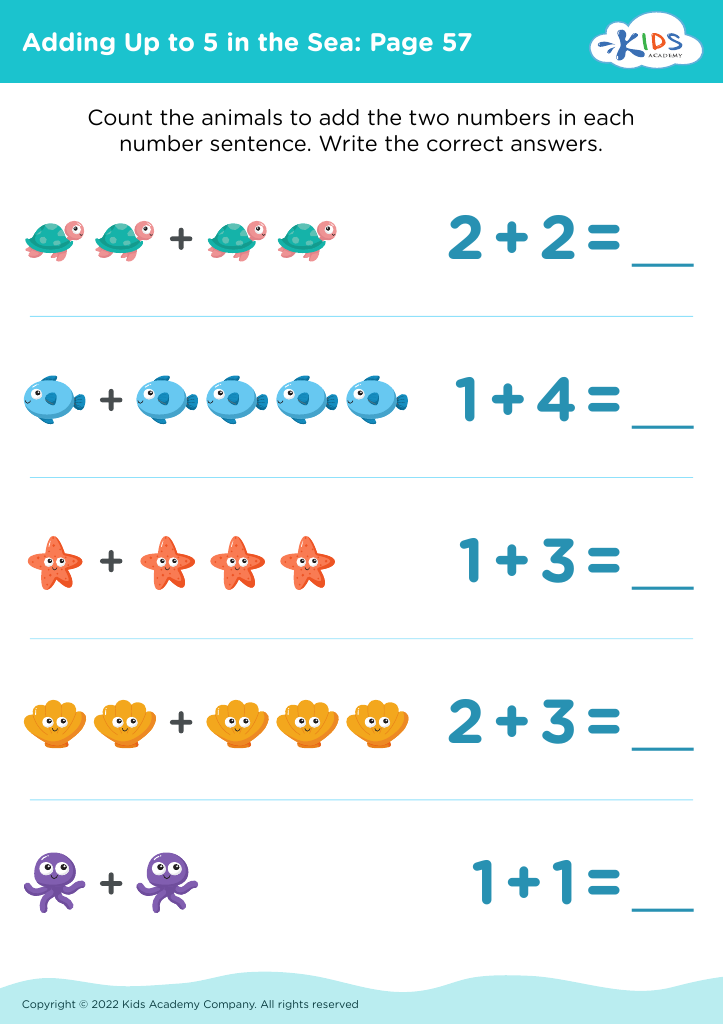
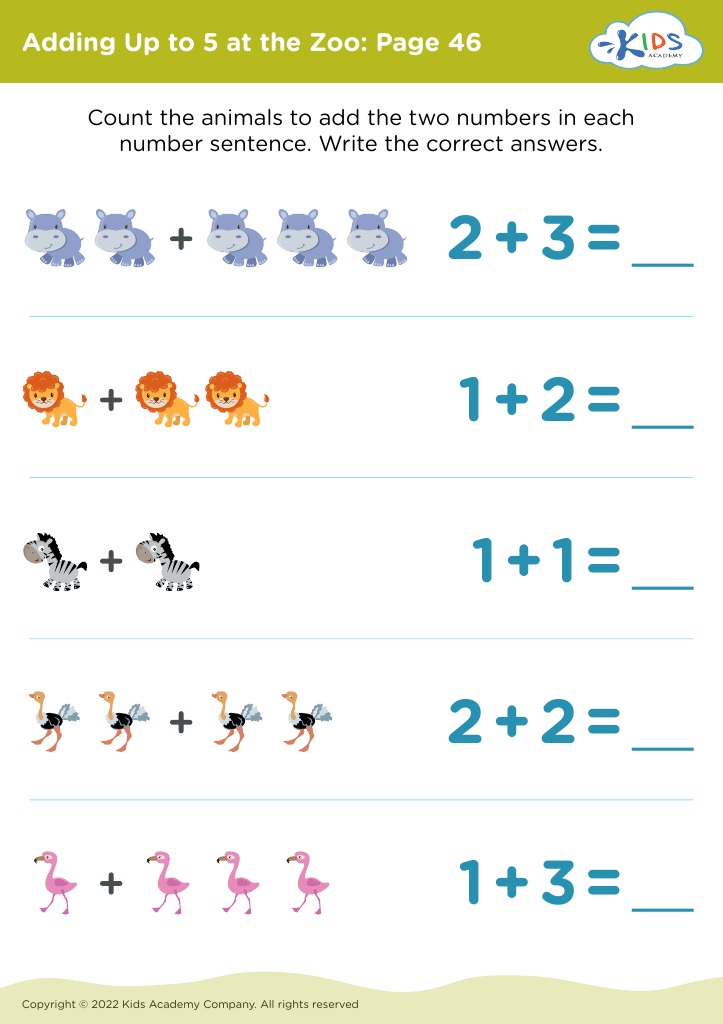
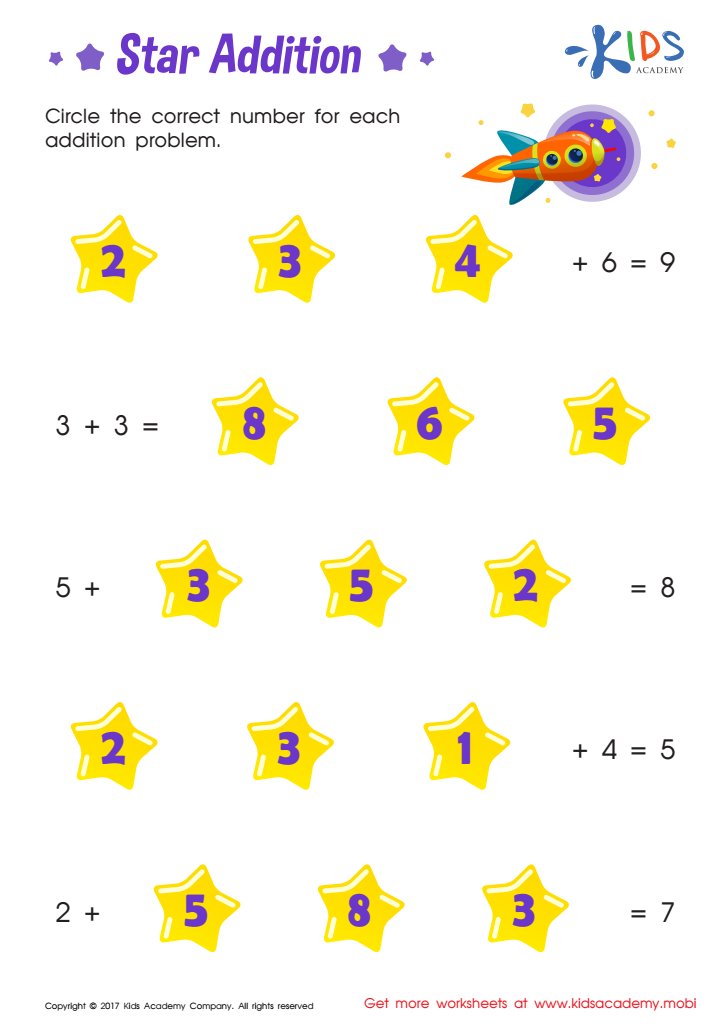
Star Addition Printable
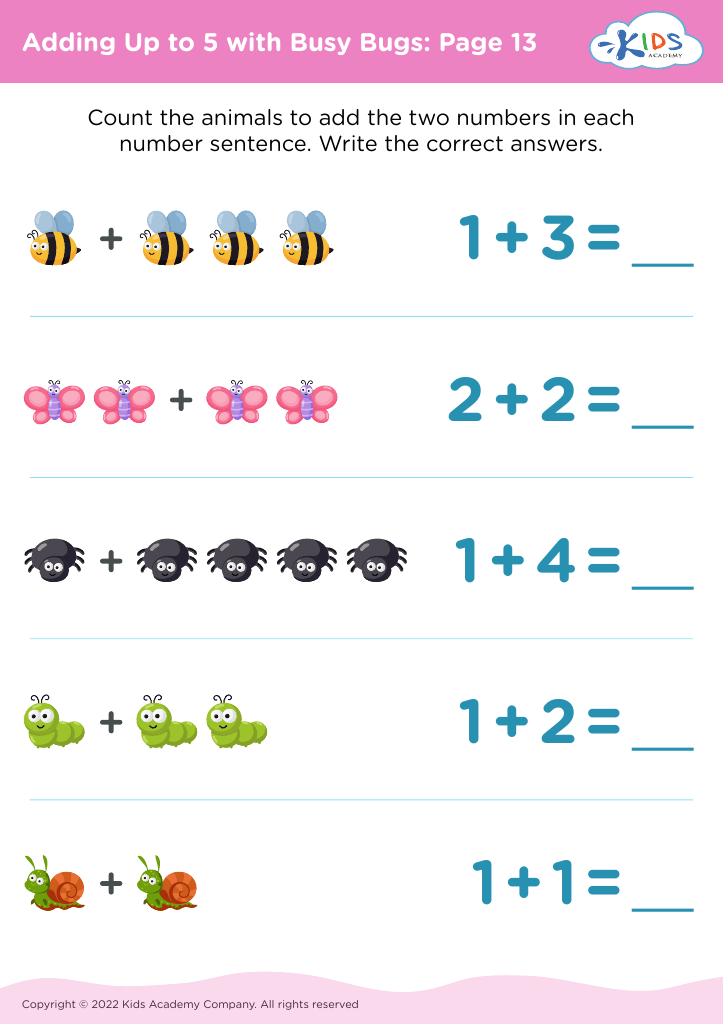
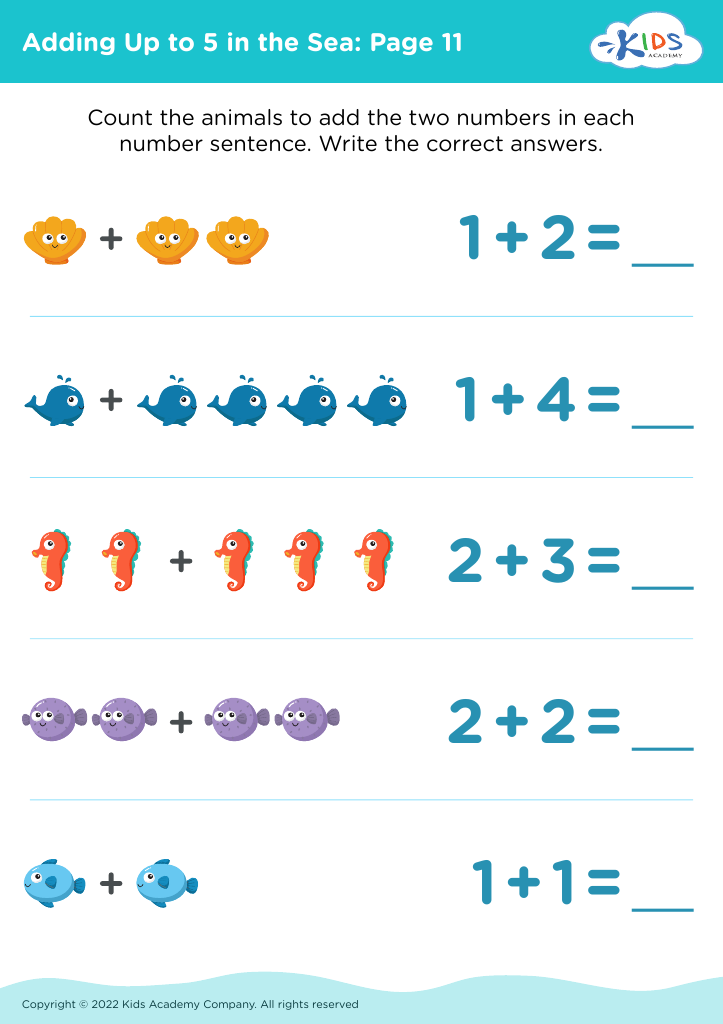
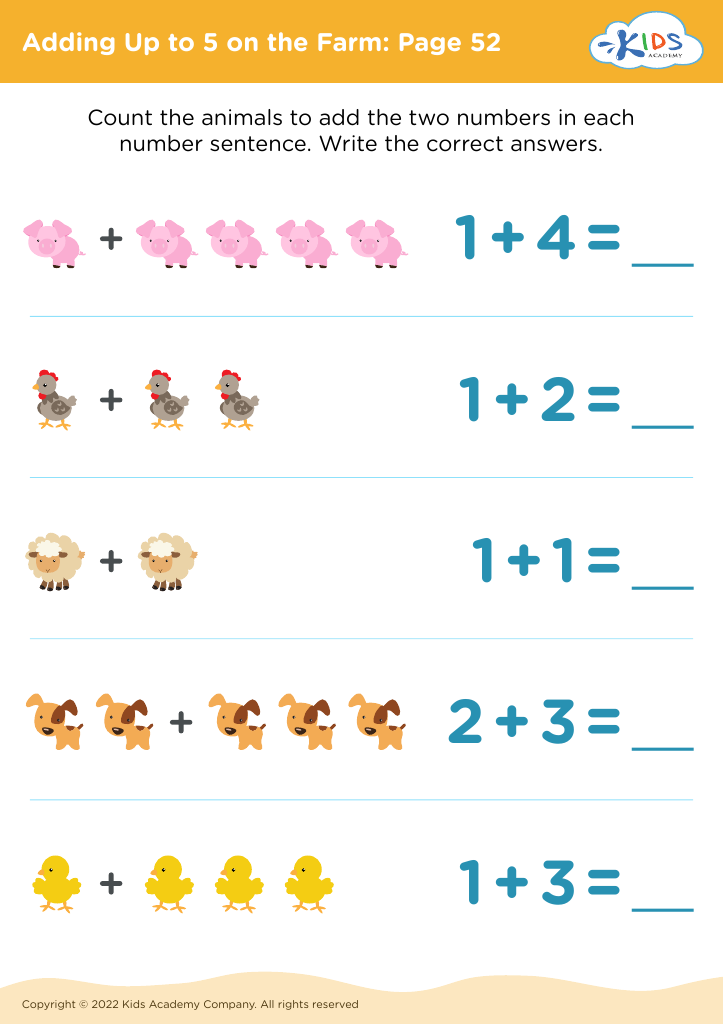
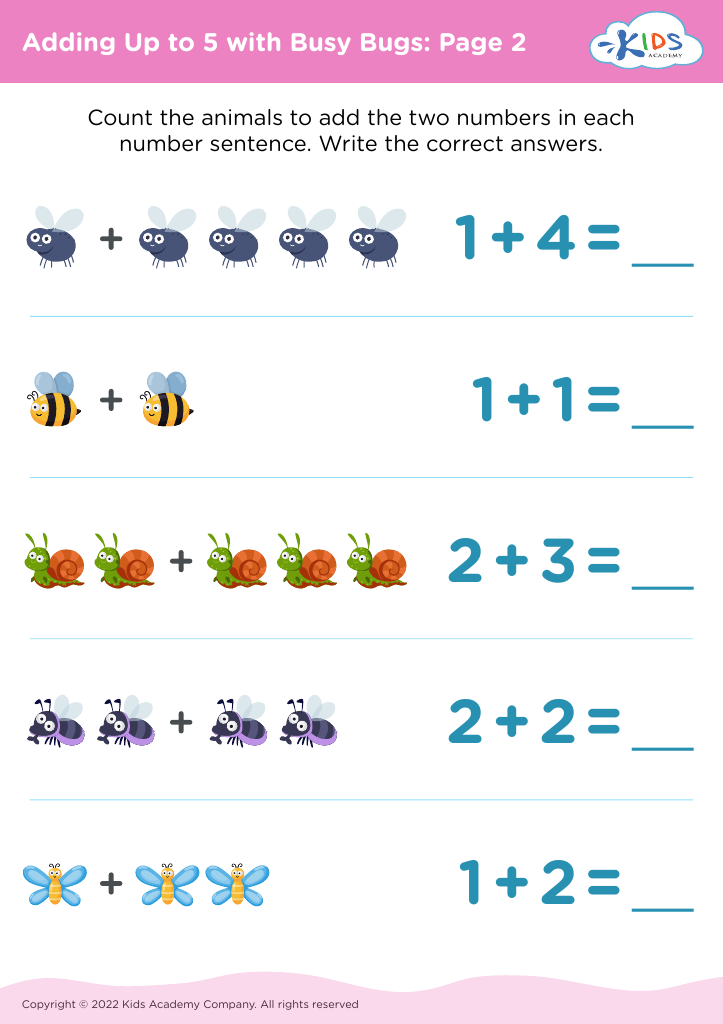
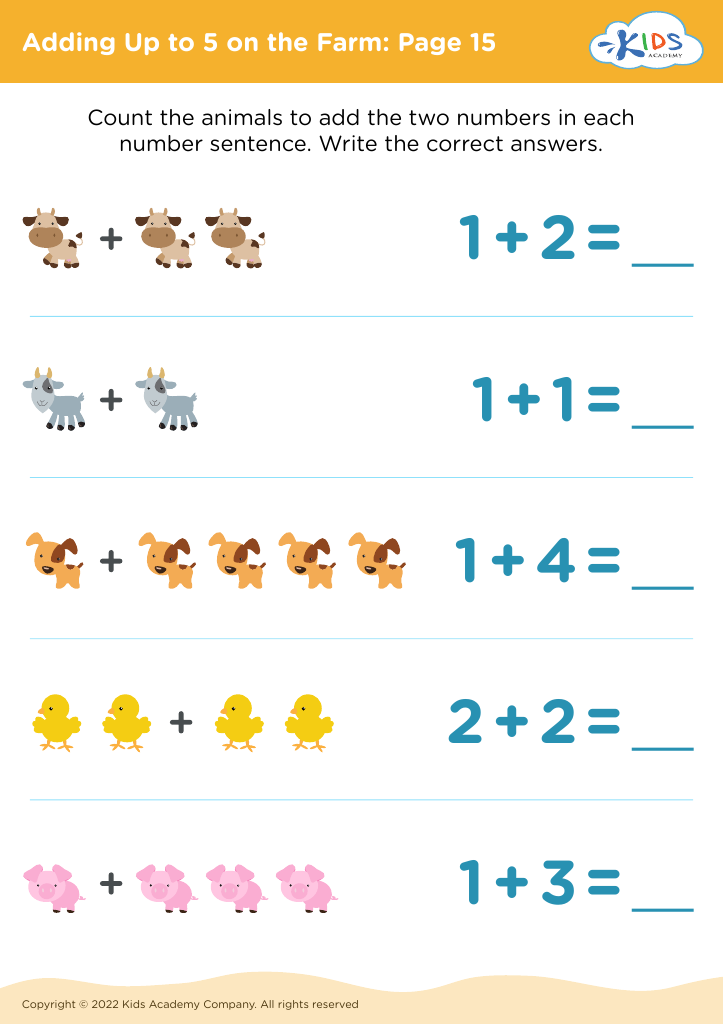
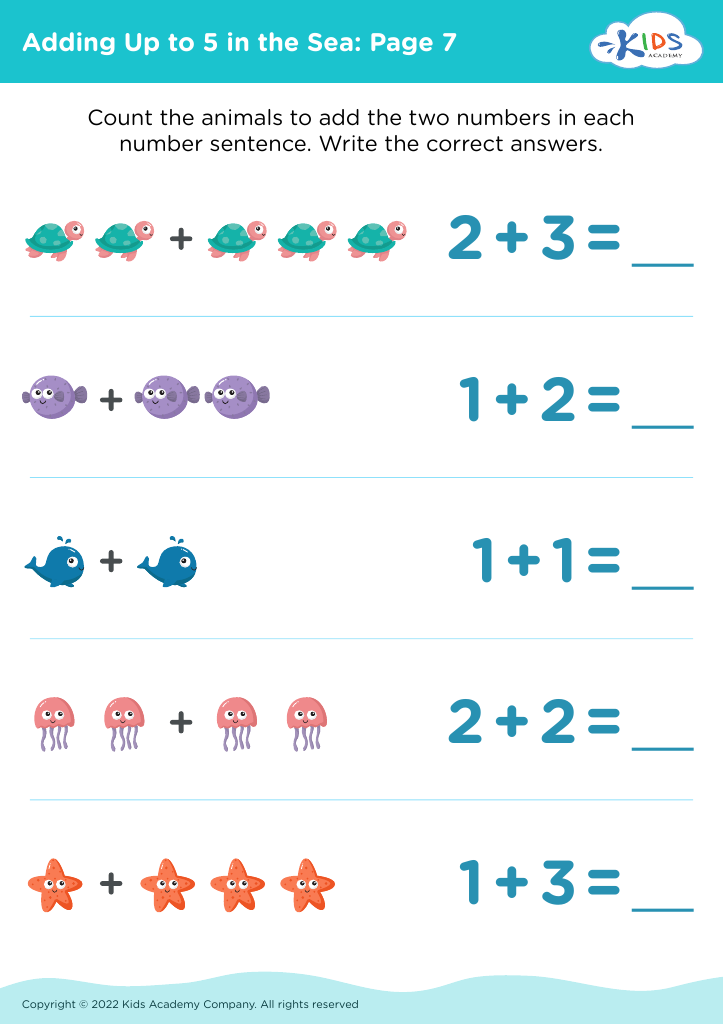
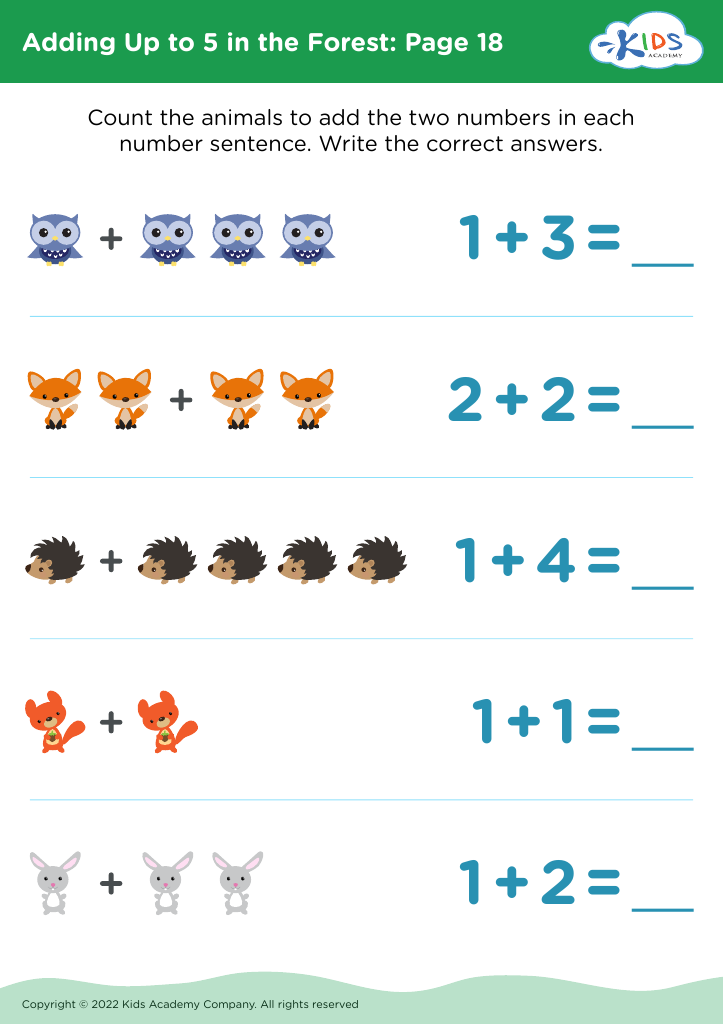
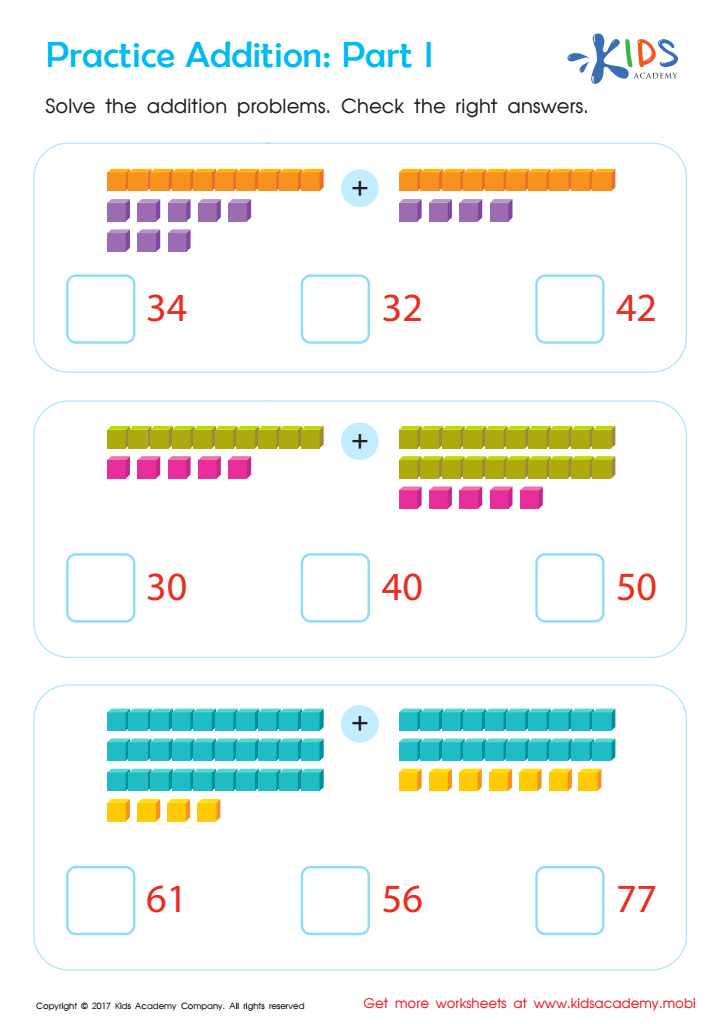
Practice Addition: Part 1 Worksheet
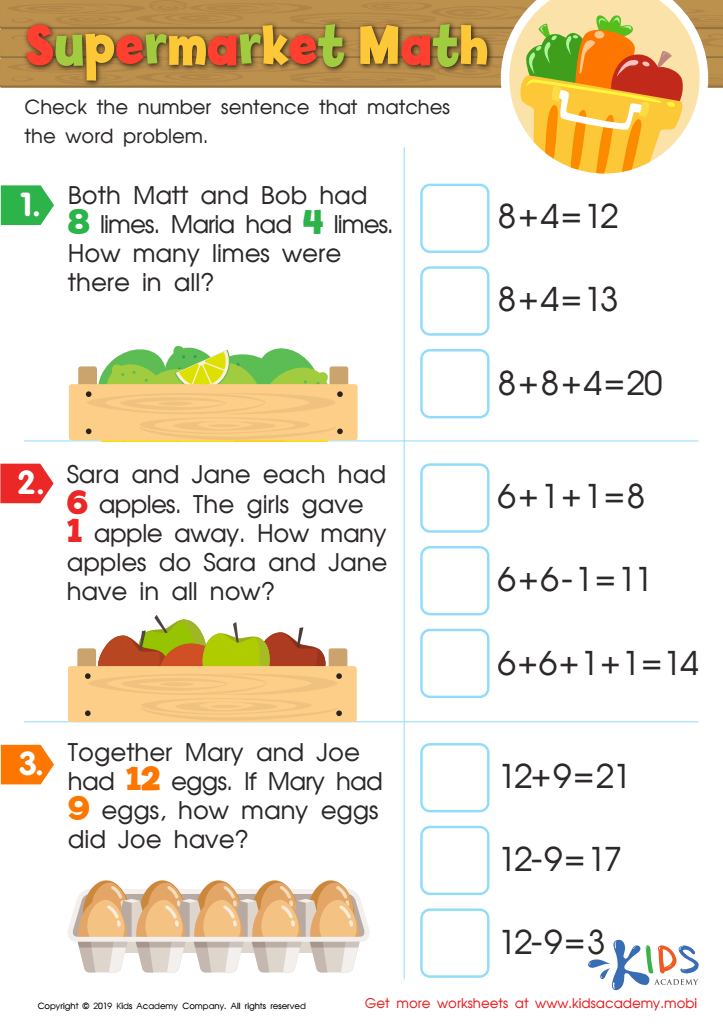
Supermarket Math Worksheet
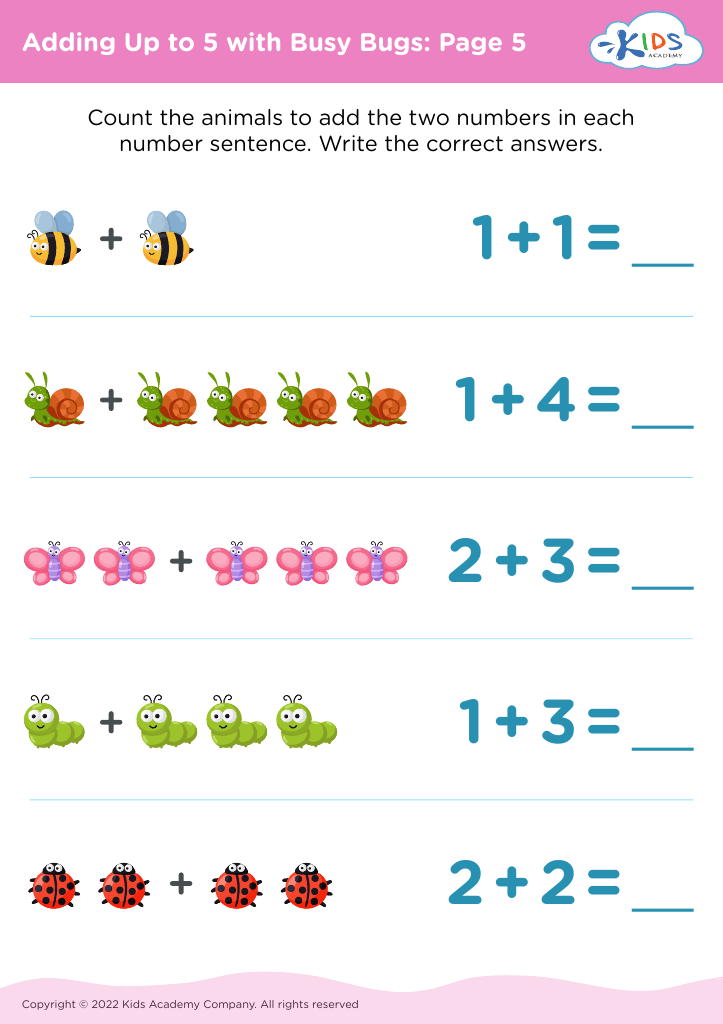
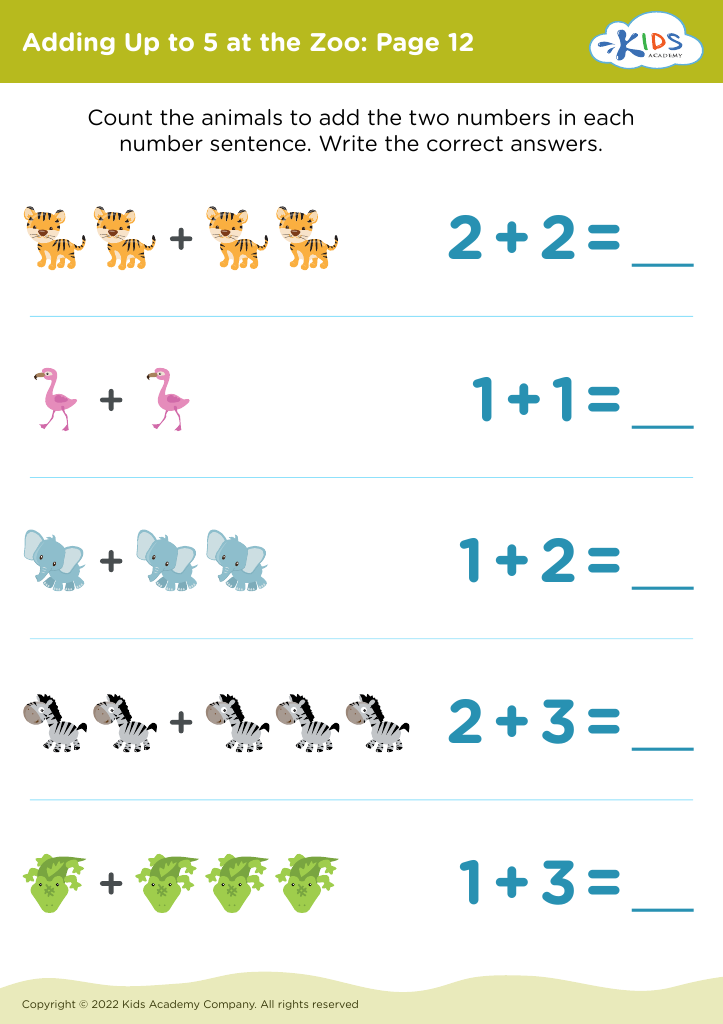
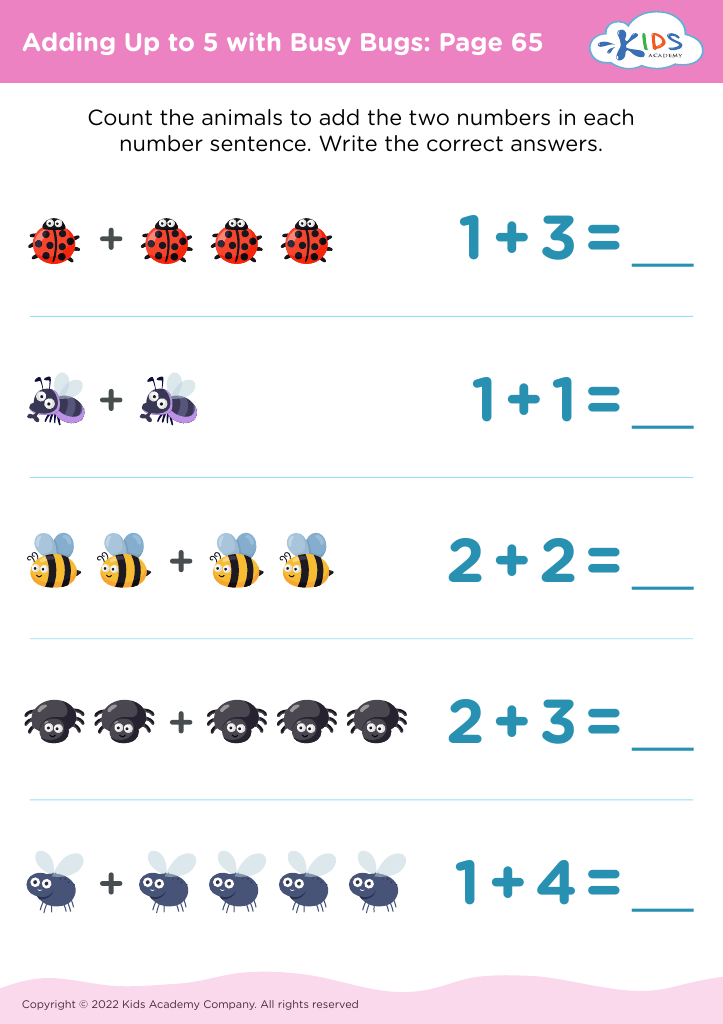
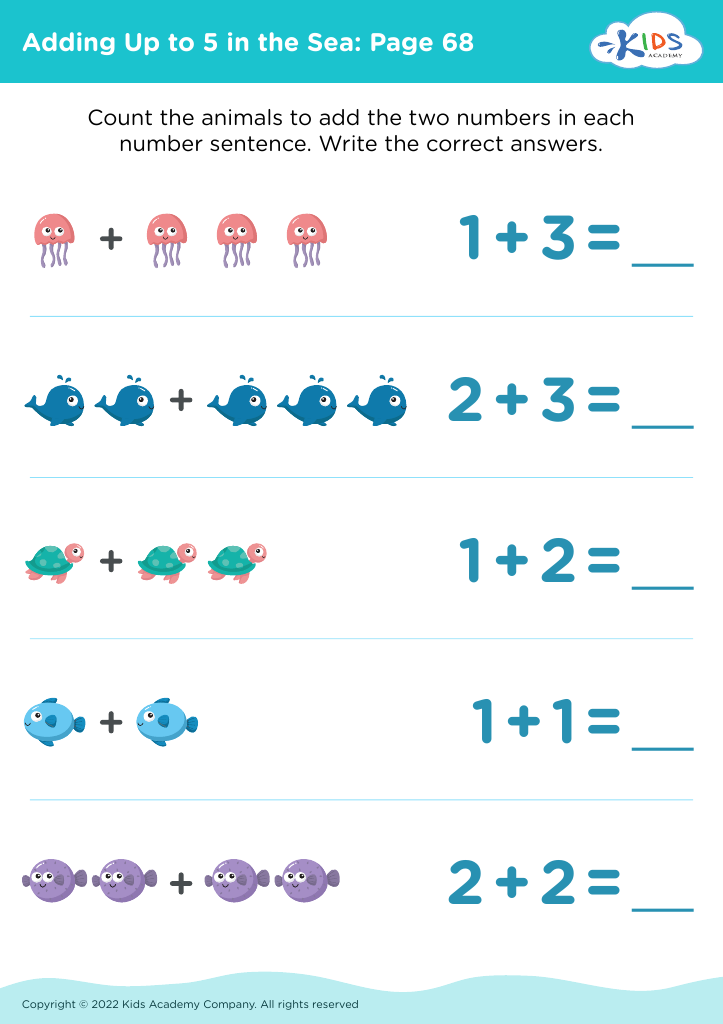
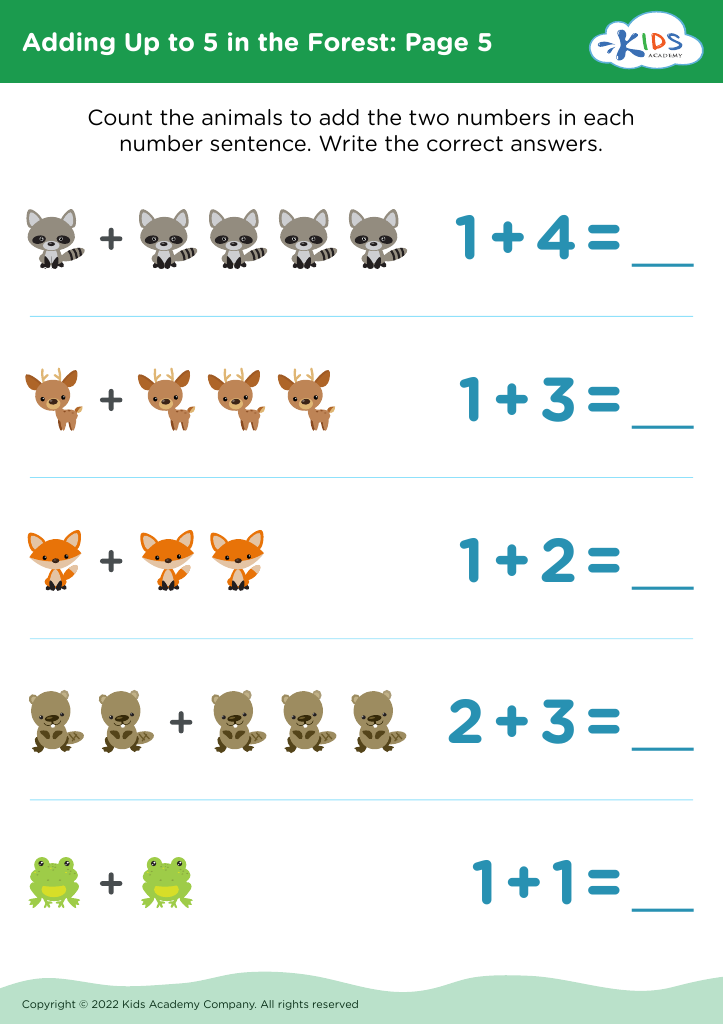
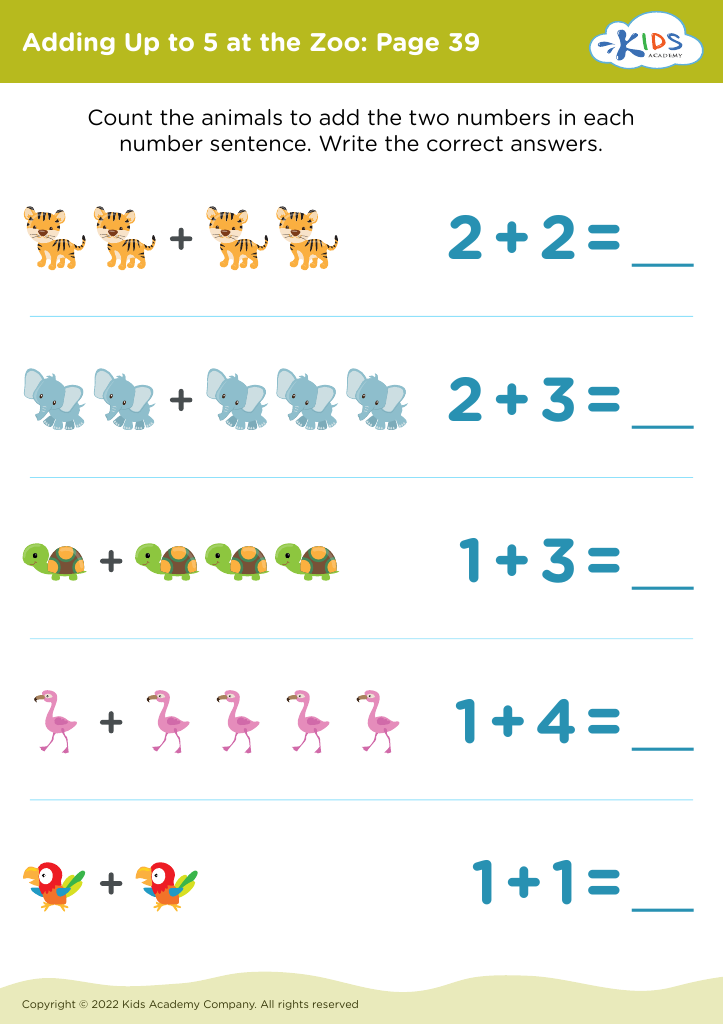
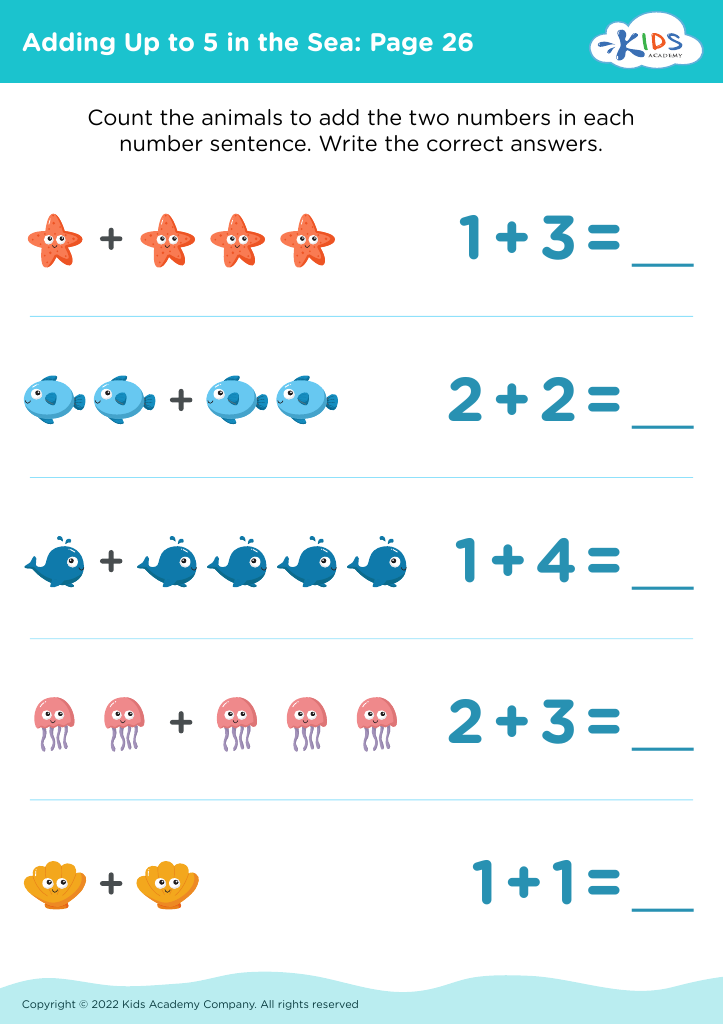
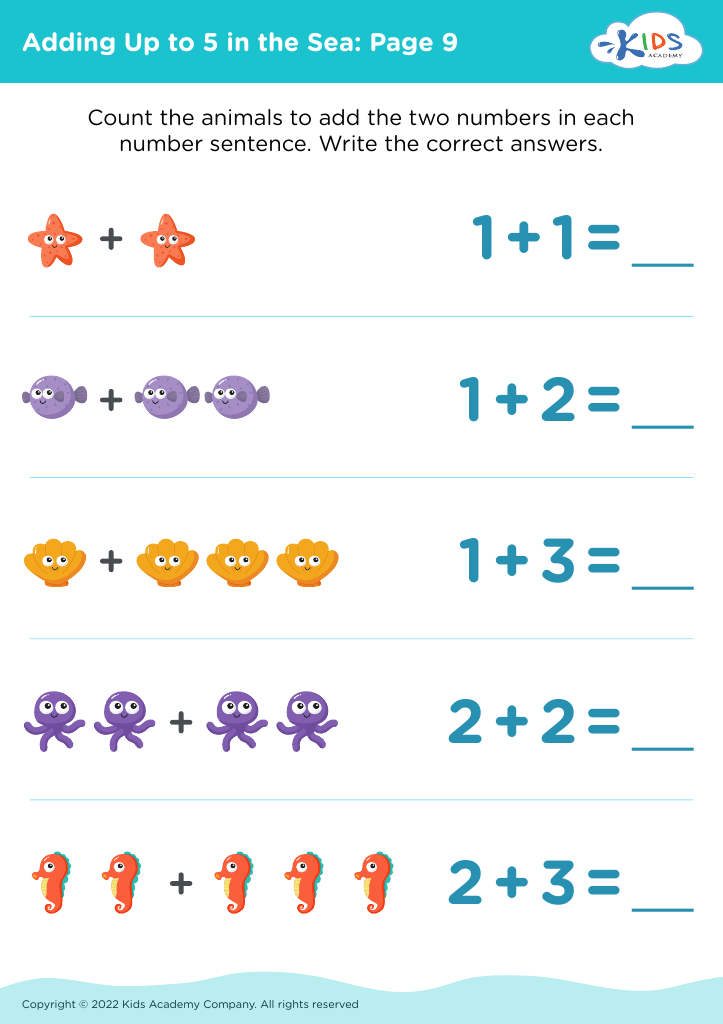








Parents and teachers should prioritize basic arithmetic, such as addition and subtraction, for children ages 3-6 because these skills form the foundation for all future mathematical learning. Introducing these concepts early fosters numeracy, which is crucial for everyday problem-solving and logical reasoning.
During these formative years, children's brains are highly receptive to new information. By engaging them in simple arithmetic, we enhance their cognitive development and improve memory and concentration. Early exposure to numbers and basic operations helps children understand more complex math concepts in later grades, reducing the likelihood of math anxiety and academic struggles.
Moreover, learning addition and subtraction teaches children about patterns, relationships, and sequences, which are essential for understanding the world around them. These activities also enhance fine motor skills, focus, and the ability to follow instructions—all of which are vital for overall school readiness.
Socially, mastering these skills boosts a child's confidence in their abilities, promoting a positive attitude towards learning. It also provides opportunities for interactive play with peers and adults, contributing to their social-emotional development.
In summary, foundational arithmetic not only teaches specific math skills but also supports overall intellectual and social growth, making it crucial for the holistic development of young children.








