Filters

442 filtered results

Clear all filters
Favorites
With answer key
Interactive

442 filtered results

Difficulty Level

Grade


Check out this FREE Trial Lesson on Addition & Subtraction for age 3-6!

Writing Number Sentences for Addition Story Problems

Favorites
With answer key
Interactive
  • 3-6
  • Number Recognition
  • Addition & Subtraction
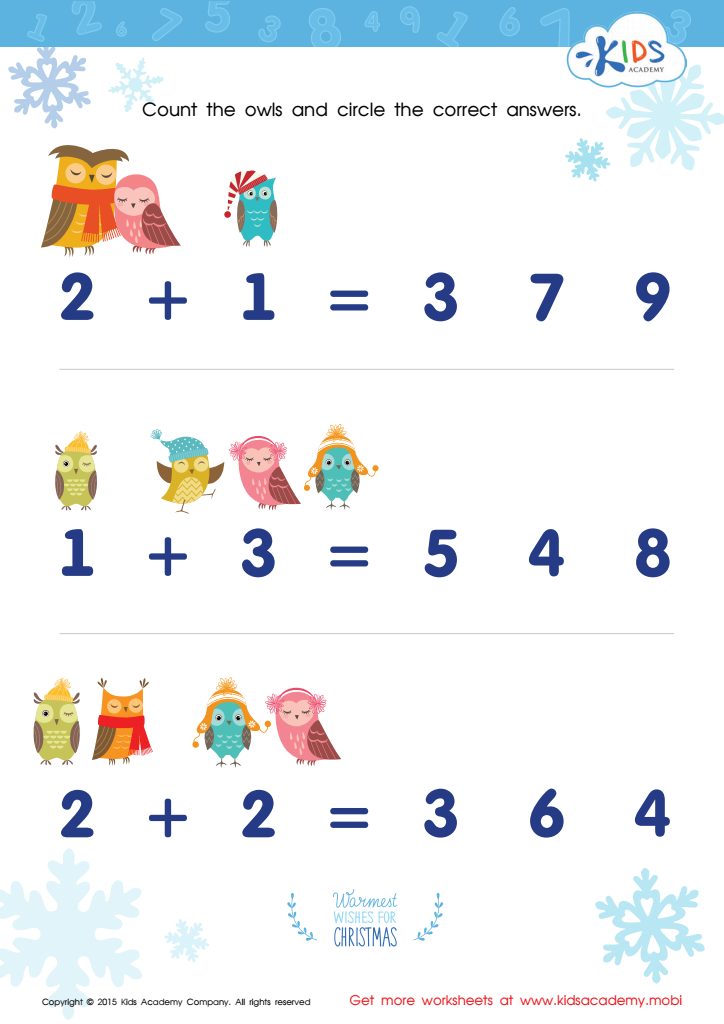
Math PDF Worksheet: Count Little Owls

Count Little Owls Worksheet

Math fun awaits! Count the cute little owls and practice adding single digits up to three indoors. Bright pictures help kids solve these simple problems. Get the free worksheets and enjoy the holiday season with Kids Academy!
Count Little Owls Worksheet
Worksheet
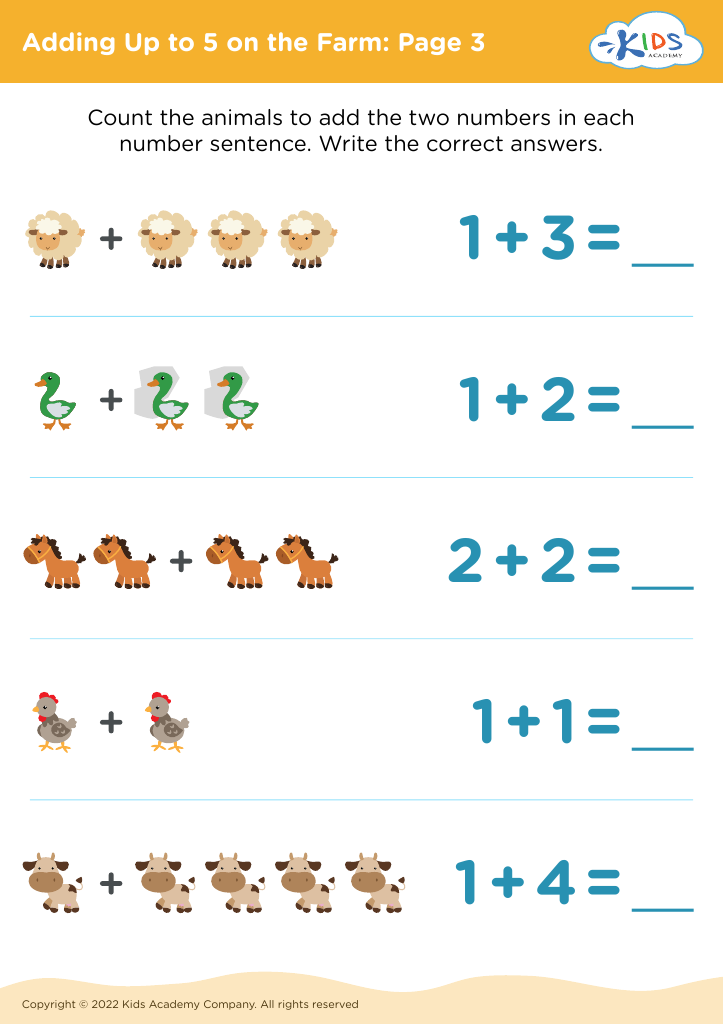
Adding Up to 5 on the Farm: Page 3
Worksheet
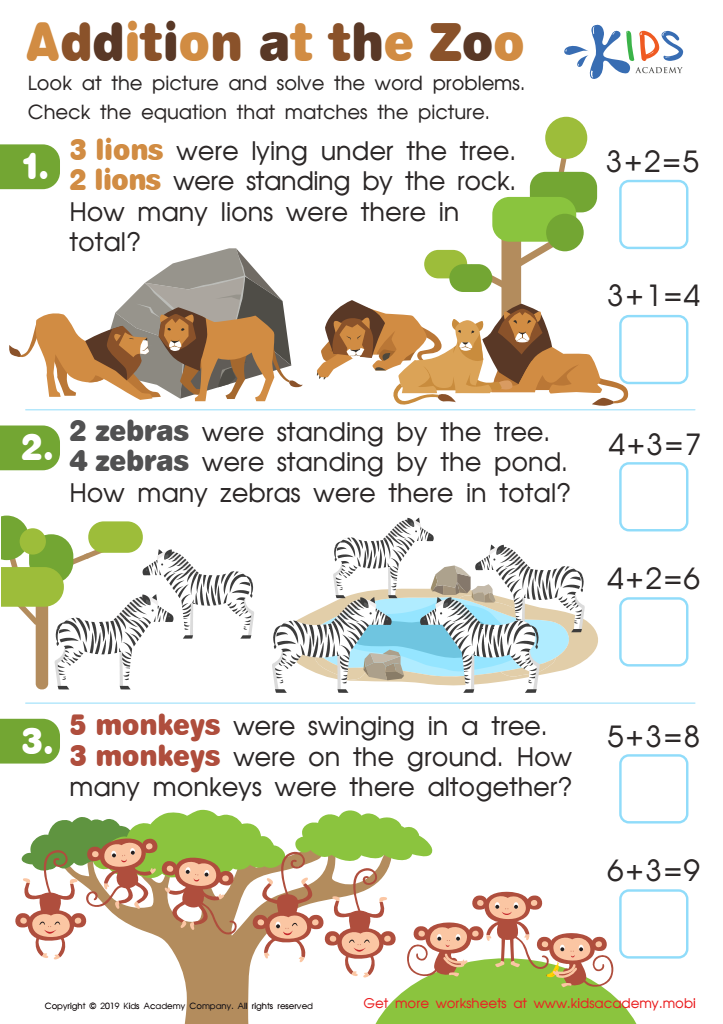
Addition at the Zoo Worksheet

Addition at the Zoo Worksheet

Visit the zoo with your kids and point out all the different animals. Ask them to name their favorites and identify animals on a worksheet. Challenge them to solve word problems related to the pictures. Ask them for the equation that fits the picture and check the answer.
Addition at the Zoo Worksheet
Worksheet
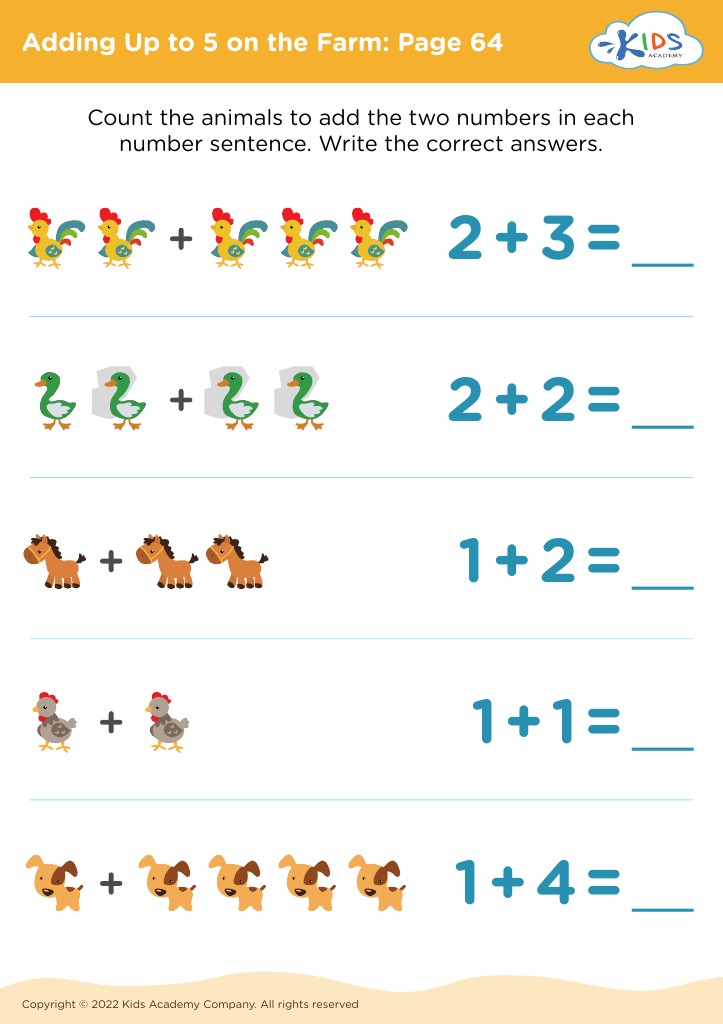
Adding Up to 5 on the Farm: Page 64
Worksheet
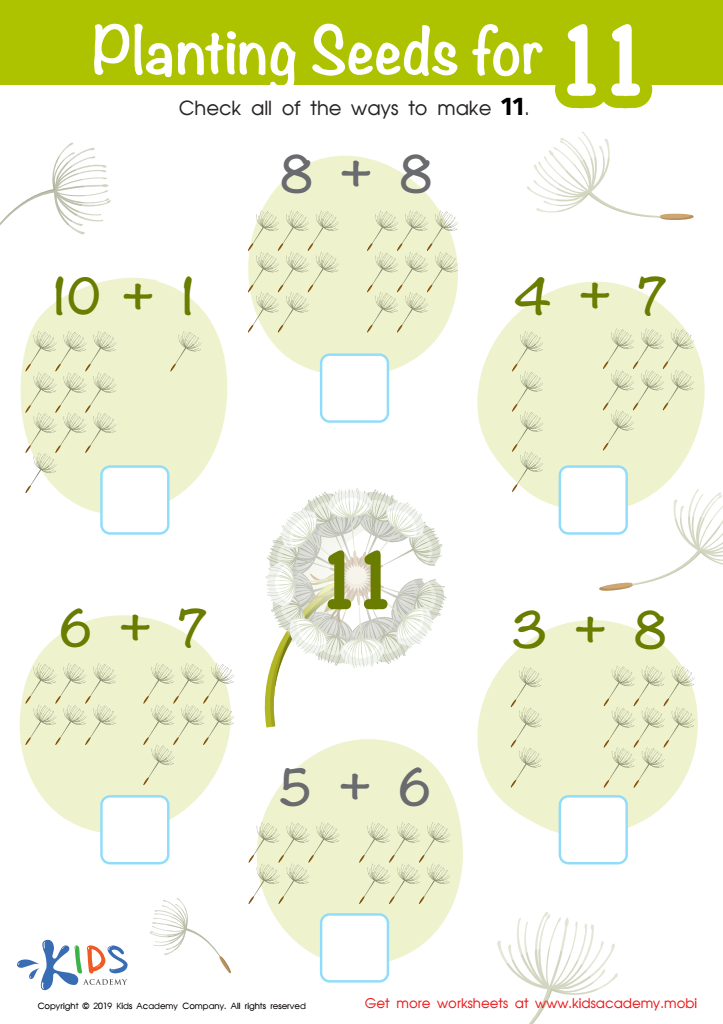
Planting Seeds for 11 Worksheet
Planting Seeds for 11 Worksheet
Before starting, ask your students to count as high as they can. Explain that different numbers can add up to the same total. Give examples like 2+2 =4 and 3+1 =4. Ask if they can think of other examples. Then have them work through the equations in the printout and circle all that add up to 11.
Planting Seeds for 11 Worksheet
Worksheet
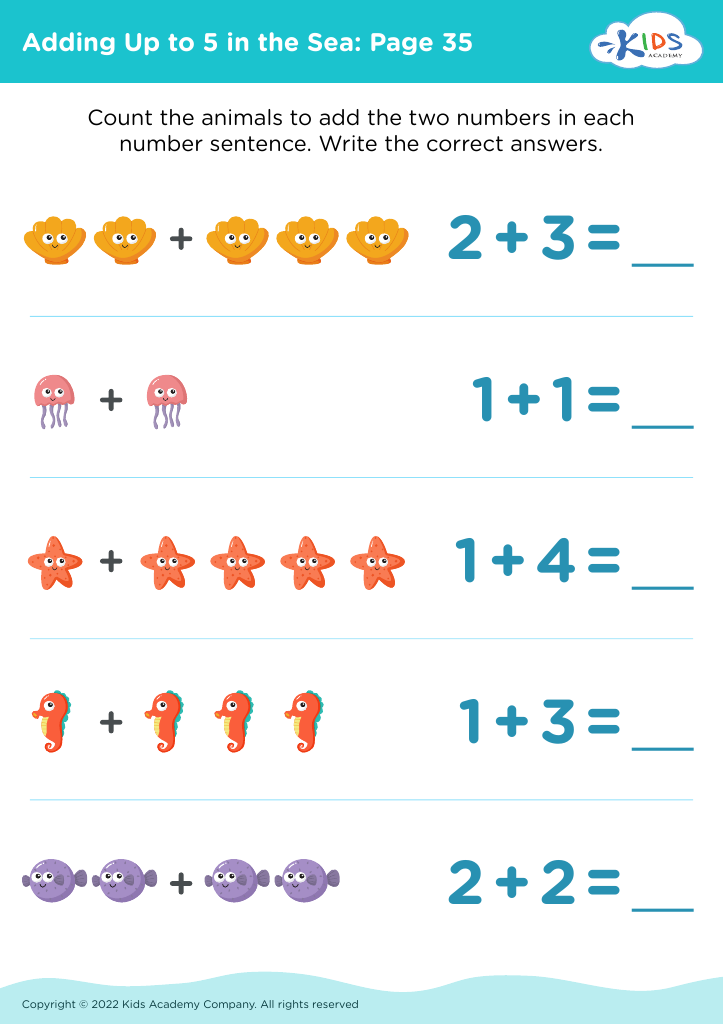
Adding Up to 5 in the Sea: Page 35
Worksheet
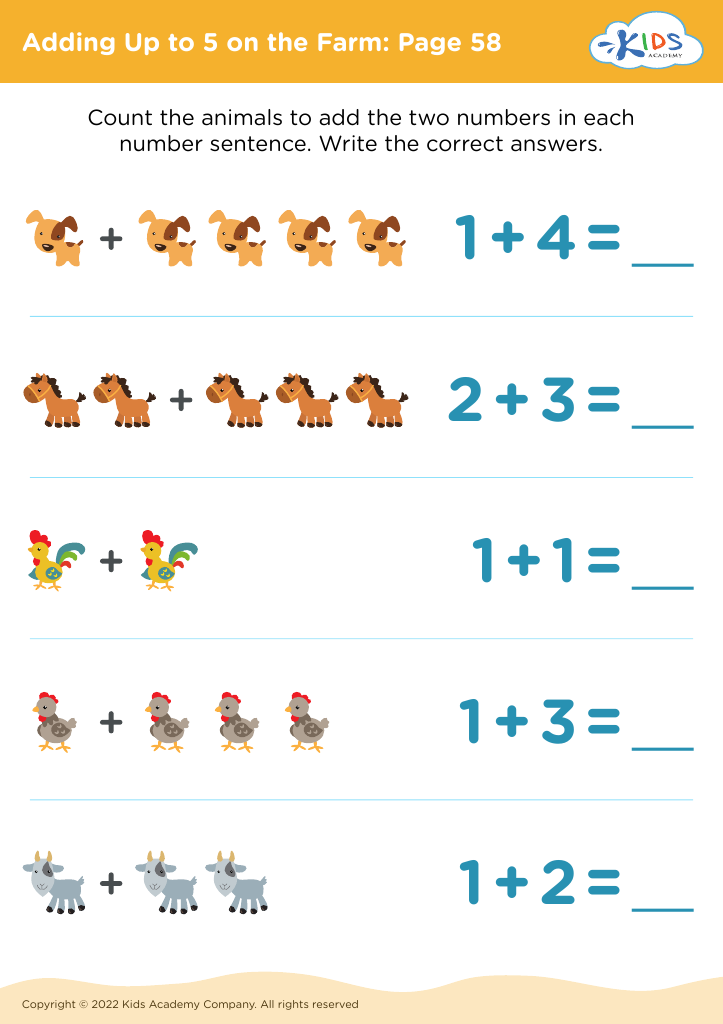
Adding Up to 5 on the Farm: Page 58
Worksheet
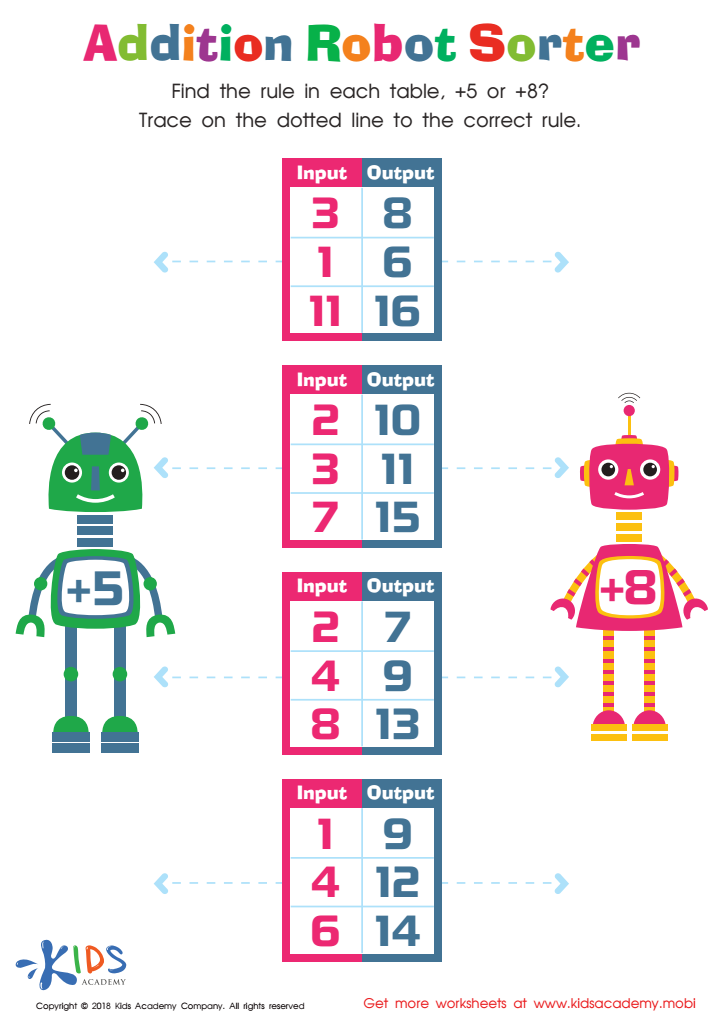
Addition Robot Sorter Worksheet

Addition Robot Sorter Worksheet

This worksheet helps your child understand addition. Have them trace the dotted lines to the correct equations: +8 and +5. It's a great way to aid their mathematical comprehension and get them comfortable with adding equations.
Addition Robot Sorter Worksheet
Worksheet
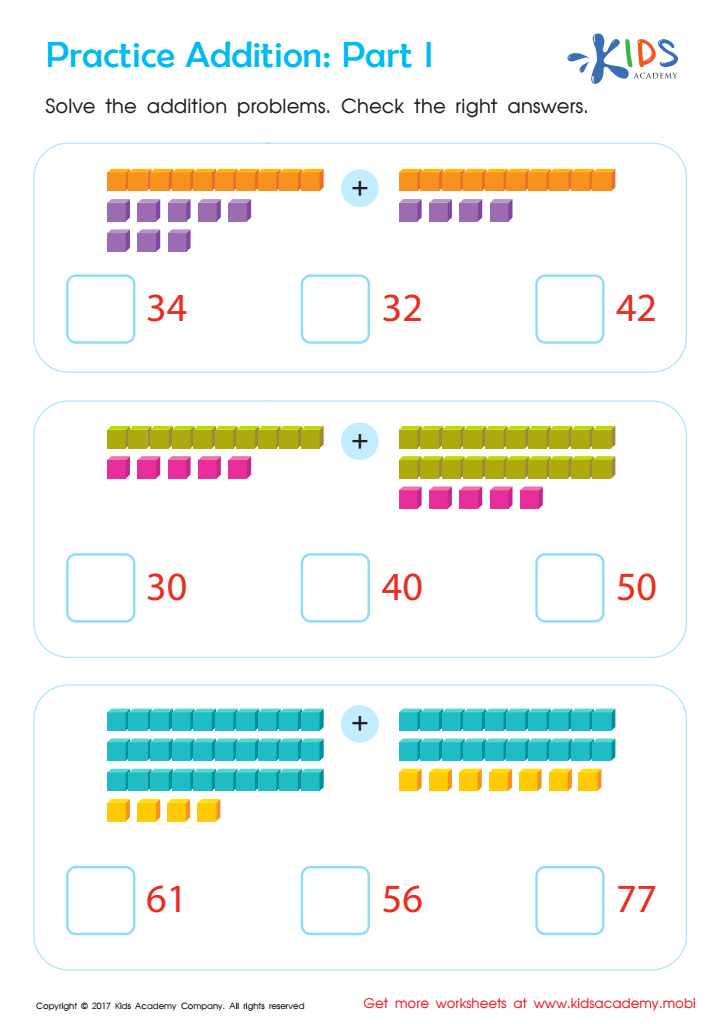
Practice Addition: Part 1 Worksheet
Practice Addition: Part 1 Worksheet

Having trouble teaching your 1st grader numbers and addition? Download this free worksheet! With colorful building blocks, it helps kids visualise and understand simple equations. For extra guidance, multiple choice answers are included to boost their confidence when practising.
Practice Addition: Part 1 Worksheet
Worksheet
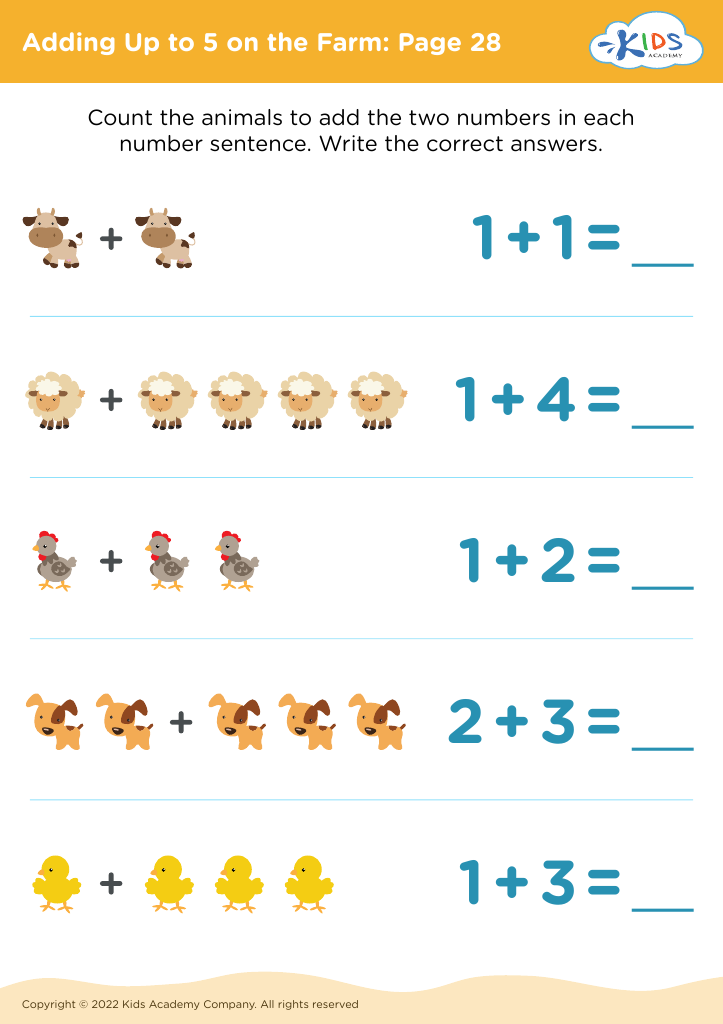
Adding Up to 5 on the Farm: Page 28
Worksheet
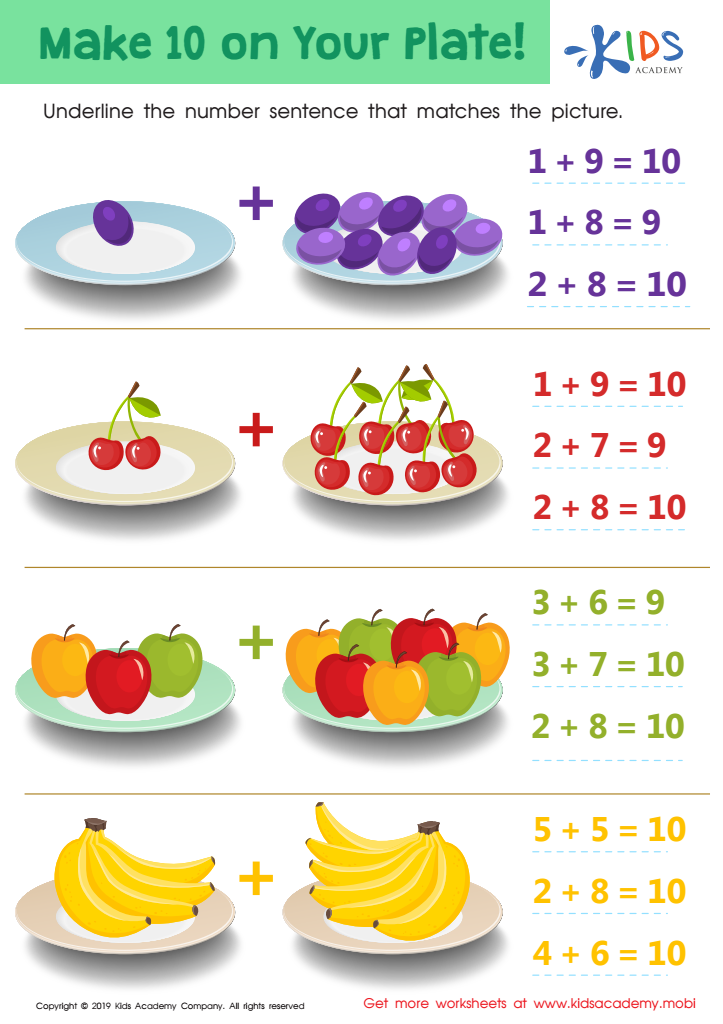
Make 10 on Your Plate! Worksheet
Make 10 on Your Plate! Worksheet
Get your students interested in this exercise by asking them to identify the fruits in the picture. Then, carefully count all the groups of fruit and add them up. Help preschoolers underline the number sentence that matches the picture. Engage their taste buds in a fun way with four different equations!
Make 10 on Your Plate! Worksheet
Worksheet
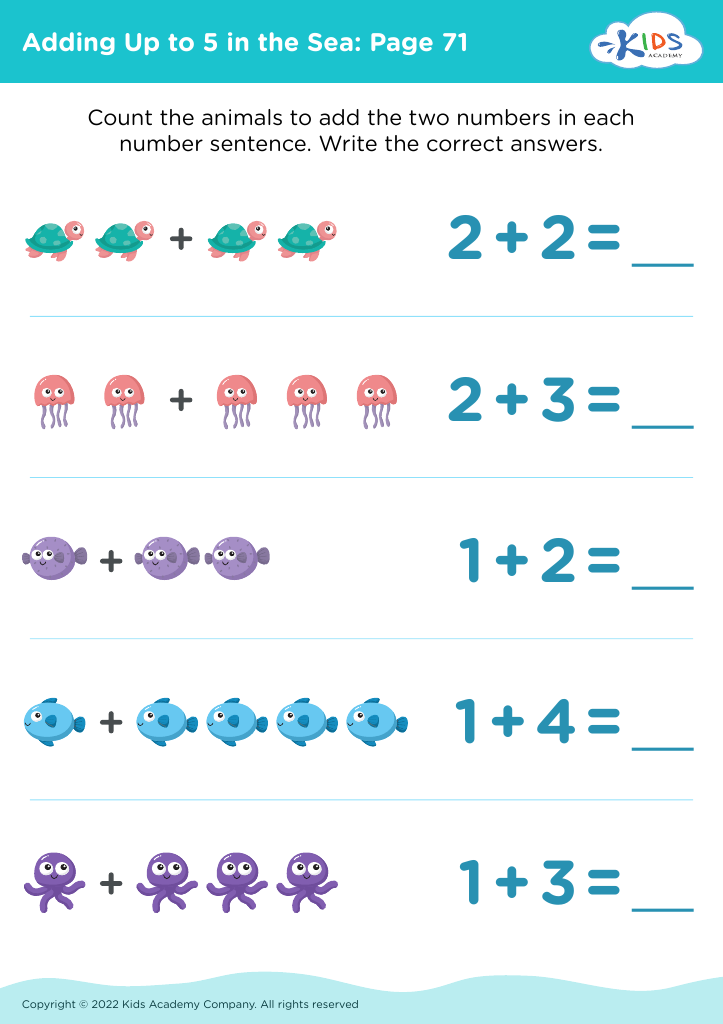
Adding Up to 5 in the Sea: Page 71
Worksheet
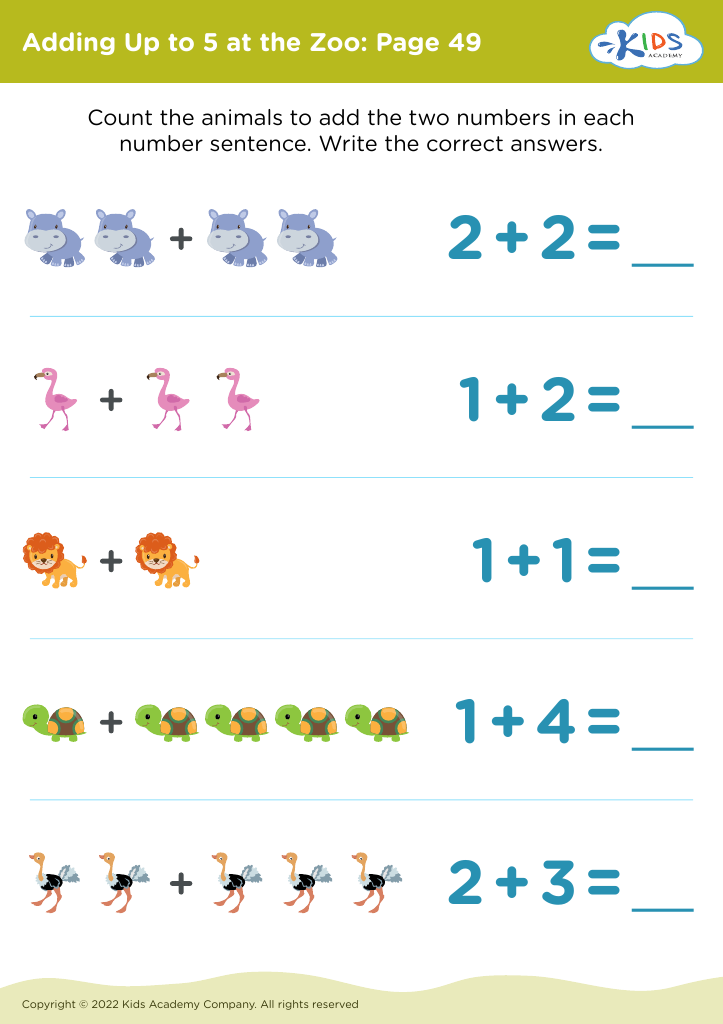
Adding Up to 5 at the Zoo: Page 49
Worksheet
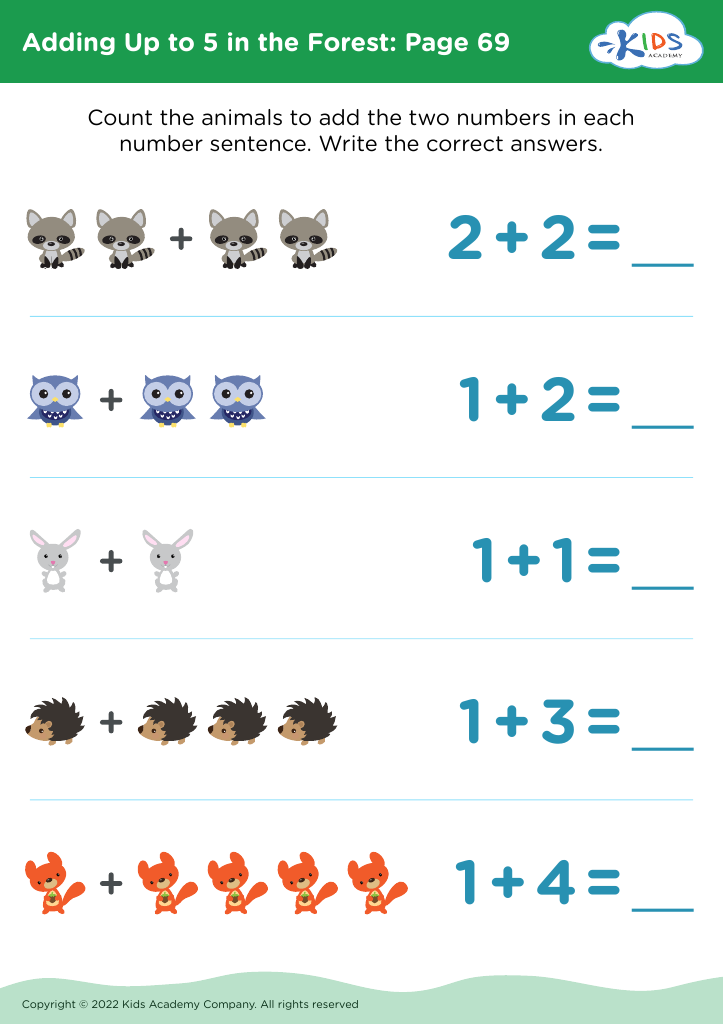
Adding Up to 5 in the Forest: Page 69
Worksheet
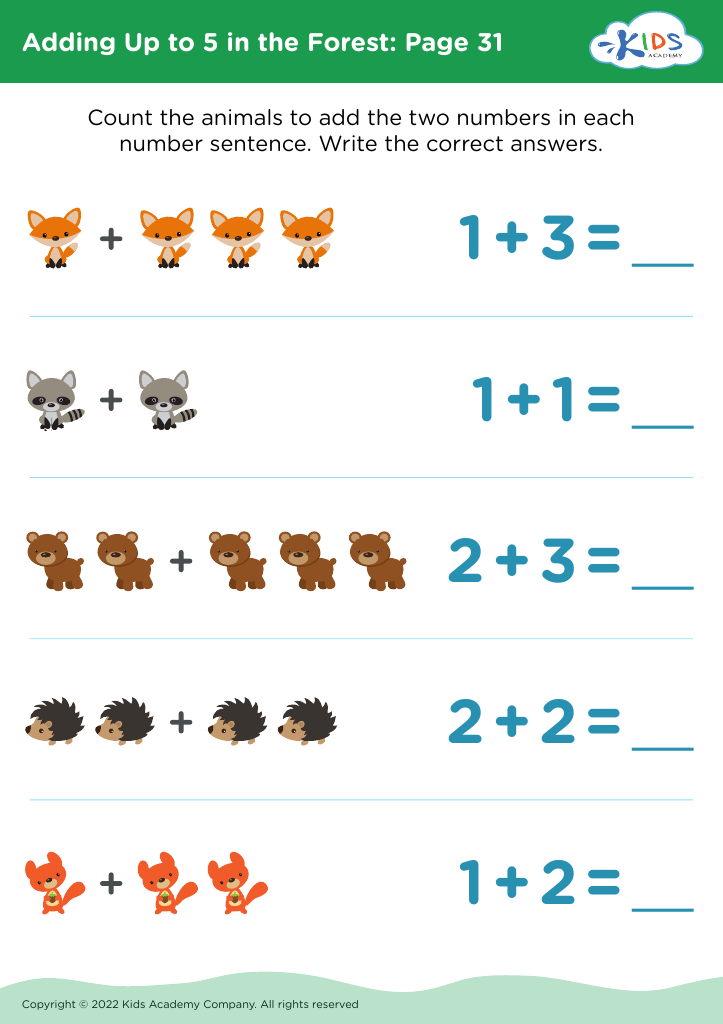
Adding Up to 5 in the Forest: Page 31
Worksheet
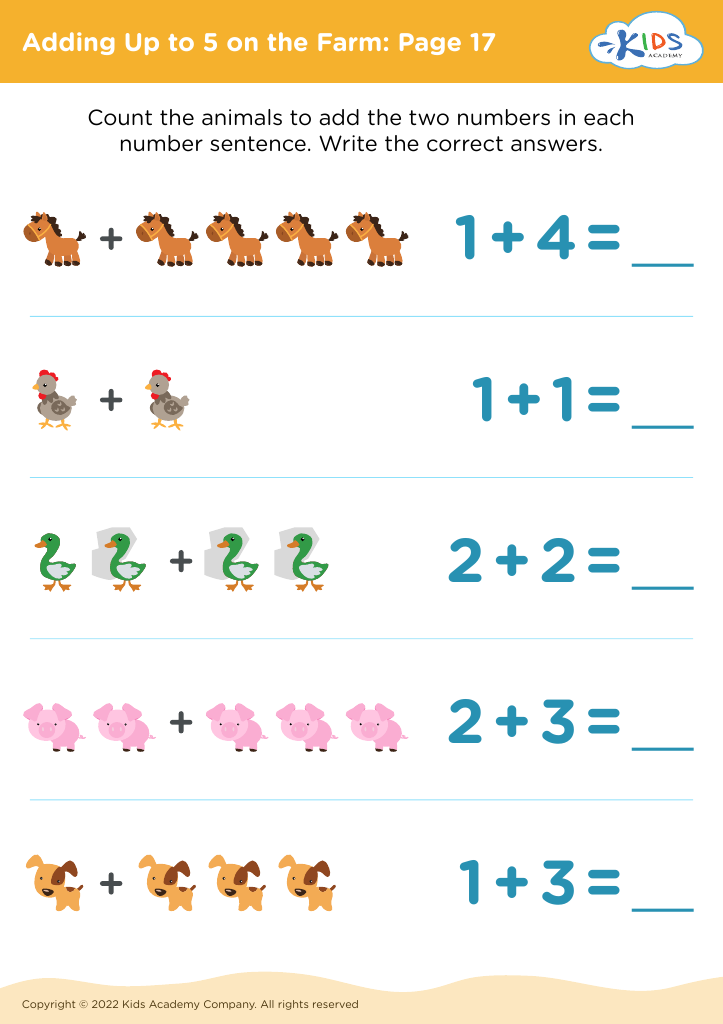
Adding Up to 5 on the Farm: Page 17
Worksheet
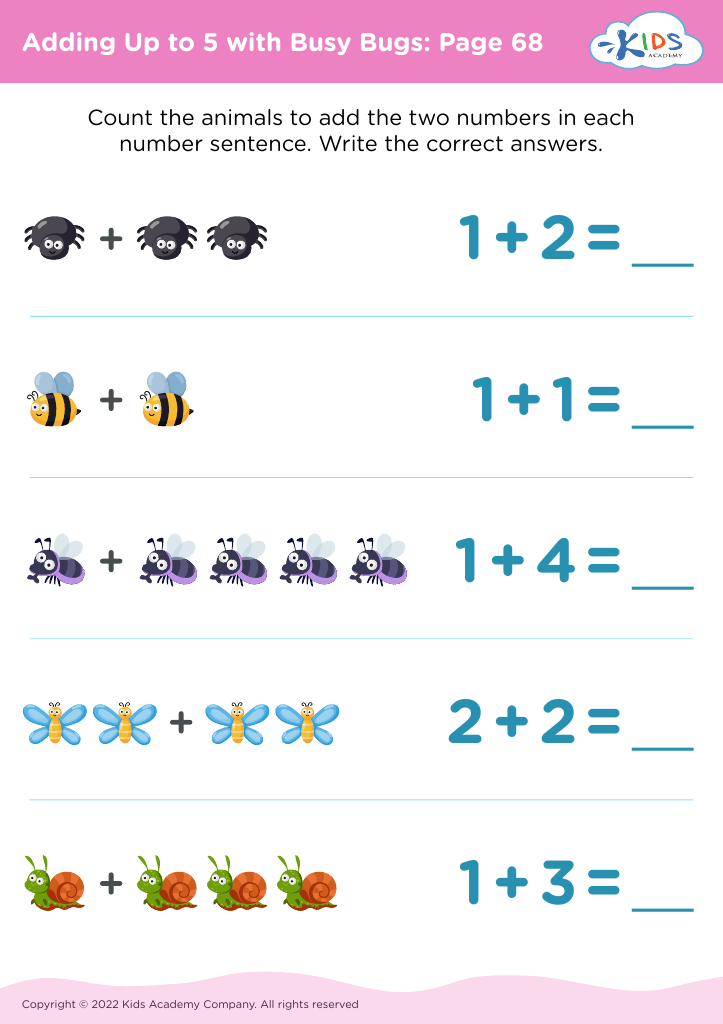
Adding Up to 5 with Busy Bugs: Page 68
Worksheet
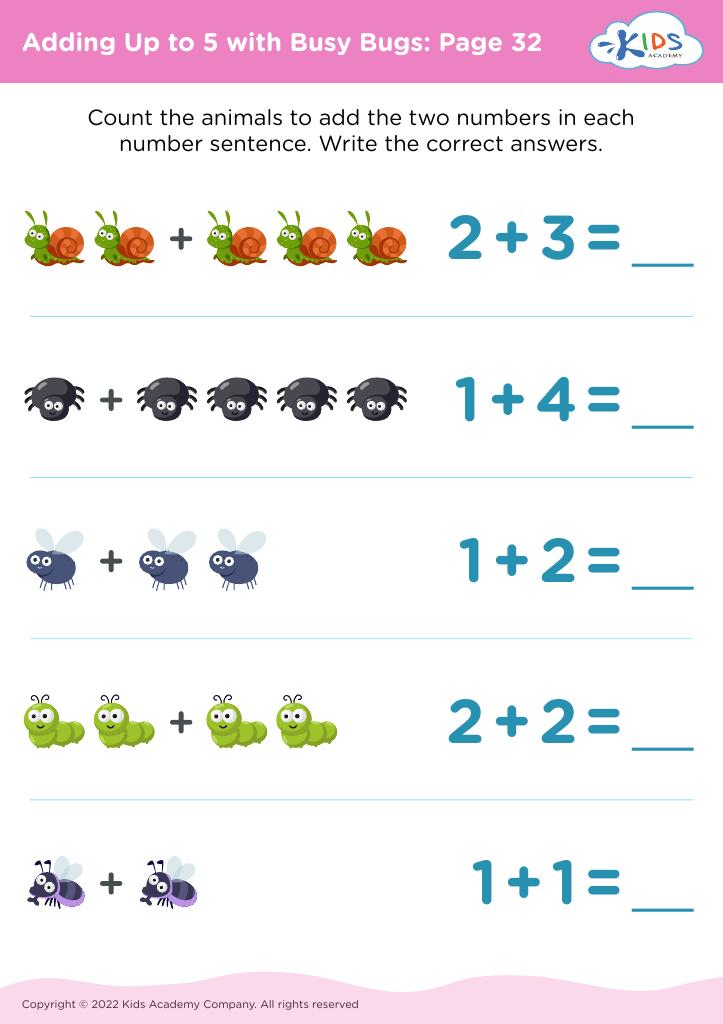
Adding Up to 5 with Busy Bugs: Page 32
Worksheet
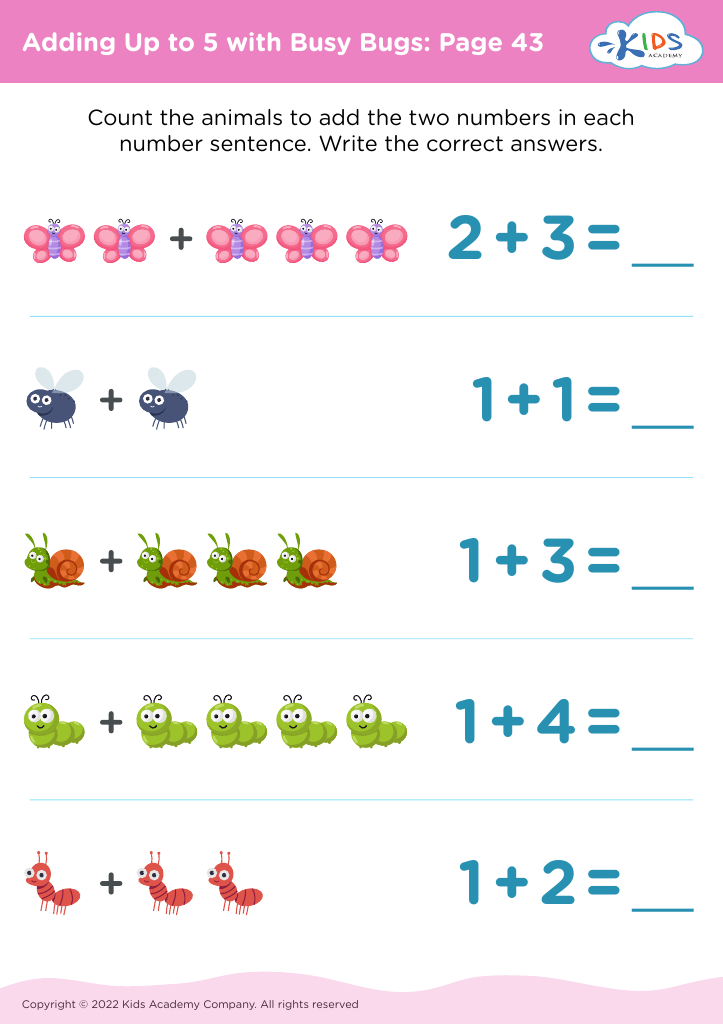
Adding Up to 5 with Busy Bugs: Page 43
Worksheet
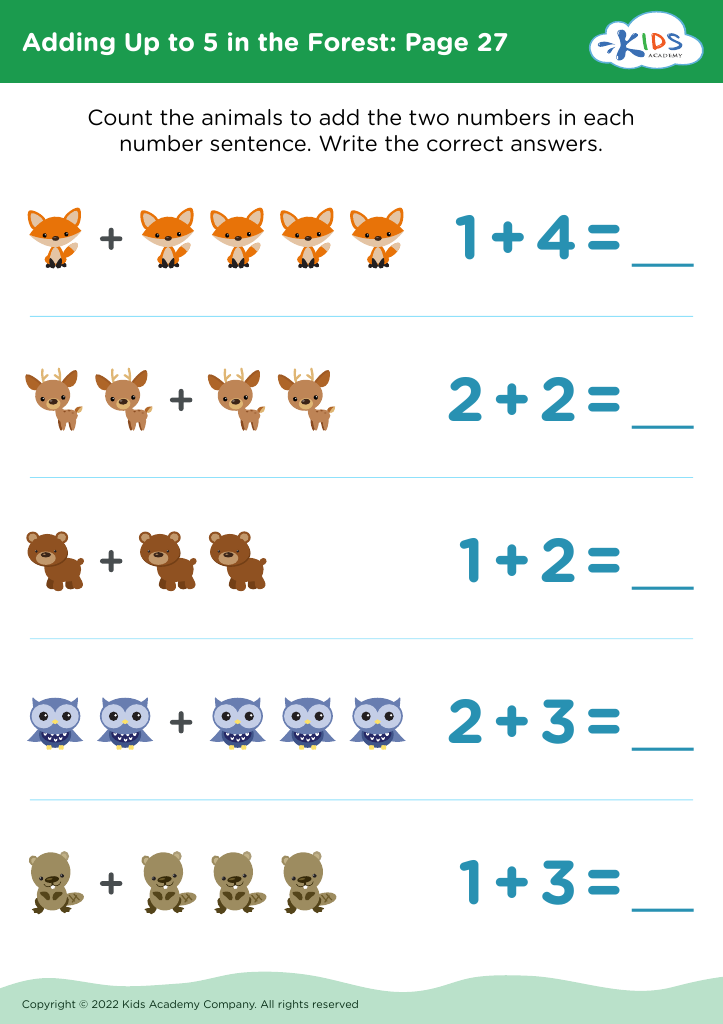
Adding Up to 5 in the Forest: Page 27
Worksheet
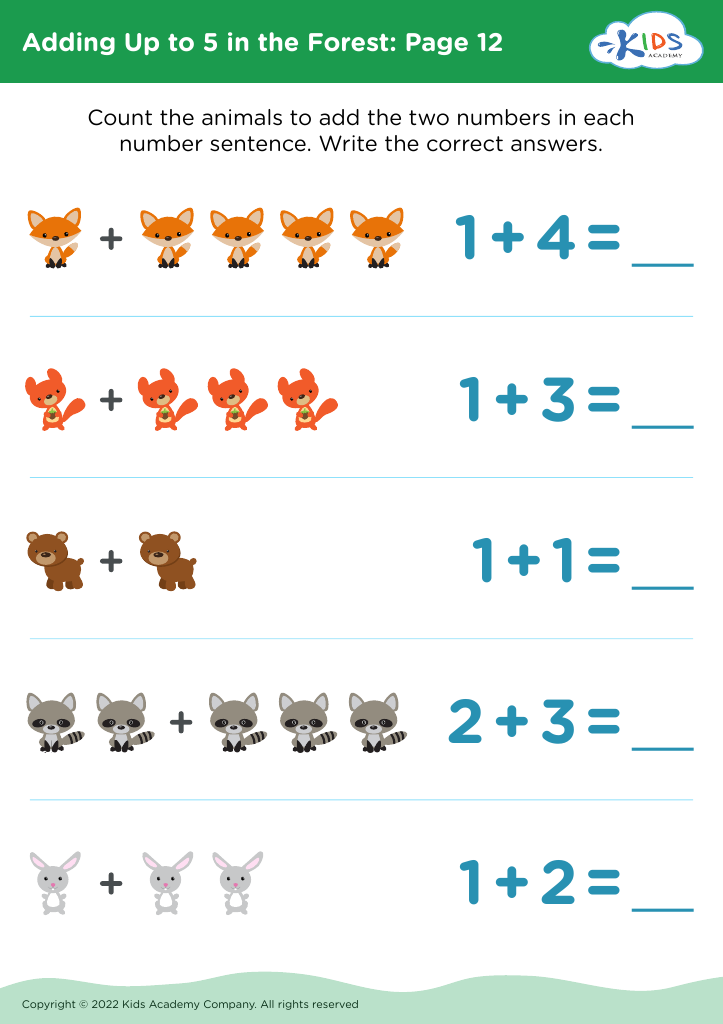
Adding Up to 5 in the Forest: Page 12
Worksheet
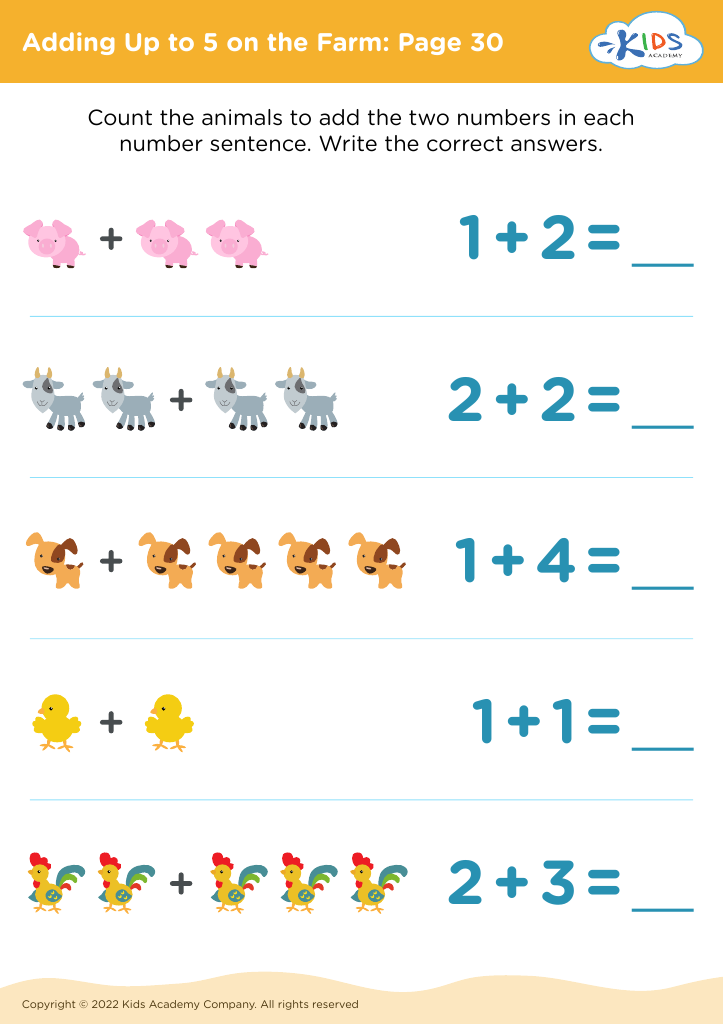
Adding Up to 5 on the Farm: Page 30
Worksheet
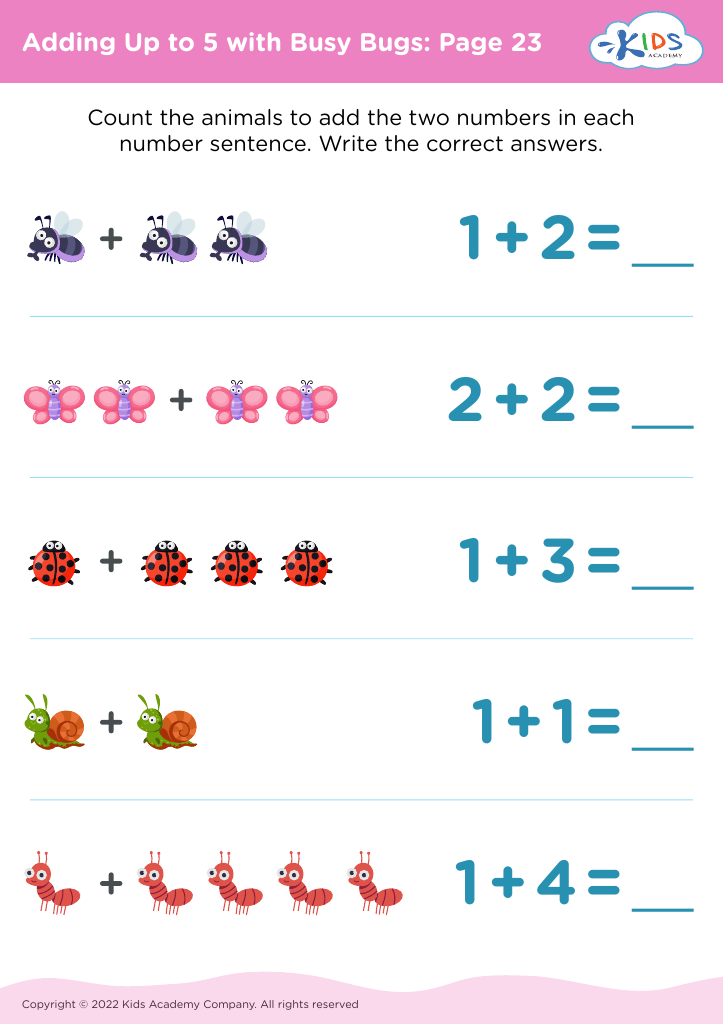
Adding Up to 5 with Busy Bugs: Page 23
Worksheet
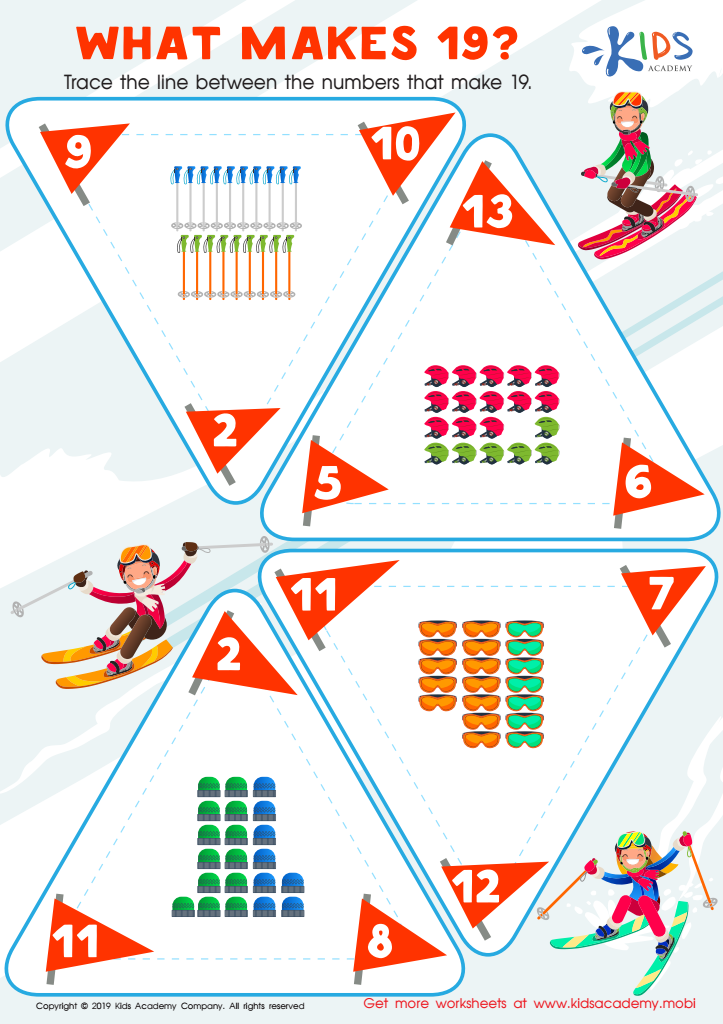
What Makes 19? Worksheet


What Makes 19? Worksheet

As a parent, it's your responsibility to help your kids learn. Put on the teacher hat and use this worksheet to teach them addition tricks. Help them count and add the objects, trace a line between the numbers that make 19, and take their learning a step further.
What Makes 19? Worksheet

Worksheet


Parents and teachers should prioritize number recognition, addition, and subtraction for children ages 3-6 because these foundational skills are critical for mathematical comprehension and cognitive development. Early exposure to numbers helps children develop a strong number sense, enabling them to understand quantity, relationships, and the overall concept of mathematics. Mastery of these basic arithmetic operations fosters problem-solving skills and logical reasoning, which are applicable well beyond math class.

Additionally, number recognition enhances language development as children learn to associate numbers with words and symbols. Activities that incorporate number recognition build fine motor skills and encourage sensory exploration, making learning engaging and dynamic. As children progress, strong foundational skills promote self-confidence and a positive attitude toward learning.

Moreover, the early years are marked by significant brain development; experiences during this time can greatly influence future learning capabilities. By supporting children in recognizing numbers and understanding addition and subtraction, parents and teachers equip them with the skills to tackle more complex math concepts in later years, ensuring academic success. Ultimately, fostering these numeracy skills lays the groundwork for lifelong learning and intellectual curiosity in children.