Numeracy development Addition & Subtraction Worksheets for Ages 3-6
3 filtered results
-
From - To
Enhance your child's numeracy skills with our engaging addition and subtraction worksheets designed specifically for ages 3-6. These printable resources incorporate colorful visuals and interactive activities that make learning math enjoyable. With a focus on foundational concepts, our worksheets help young learners develop a strong understanding of basic arithmetic through fun exercises and real-life scenarios. Perfect for preschoolers and kindergarteners, these materials cater to various learning styles, ensuring a well-rounded mathematical foundation. Foster your child's confidence in math while they explore the world of numbers. Start nurturing their numeracy development today with our expertly crafted worksheets!
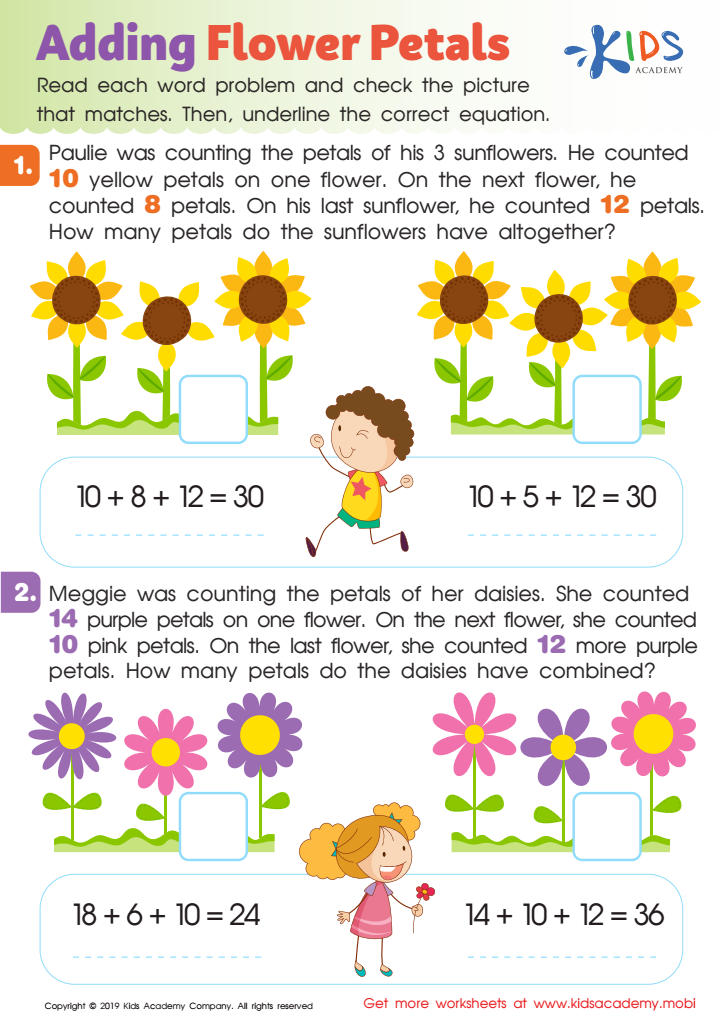
Adding Flower Petals Worksheet
 Assign to My Students
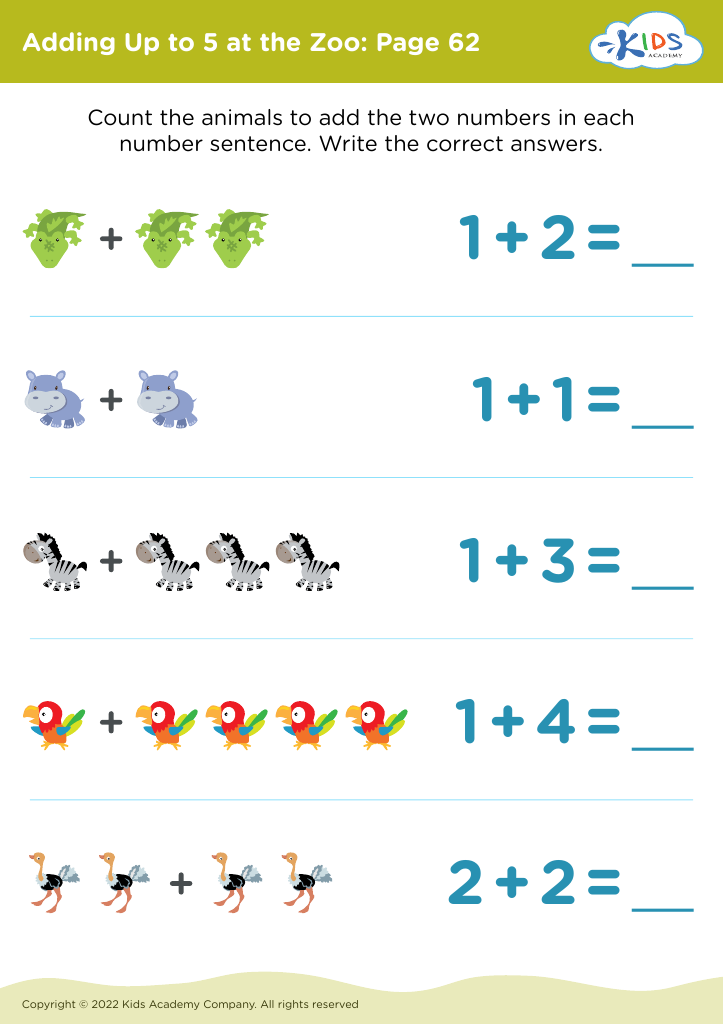
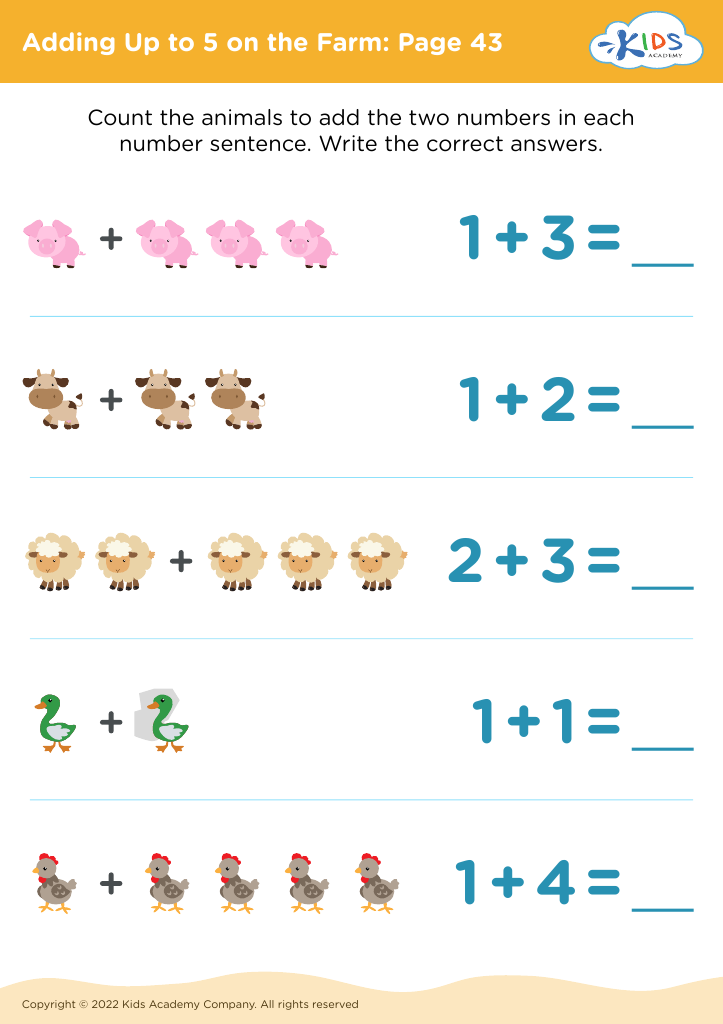








Numeracy development, particularly in addition and subtraction, is crucial for children aged 3 to 6 years as it lays the foundation for their overall mathematical understanding and future academic success. During this formative stage, children begin to grasp basic counting, number recognition, and simple operations. These skills are essential as they help to develop critical thinking, problem-solving skills, and encourage logical reasoning.
Parents and teachers play a pivotal role in this development by creating engaging and supportive learning environments. When children learn addition and subtraction through fun activities such as games, songs, and hands-on experiences, they cultivate a positive attitude towards mathematics. Early exposure and practice with these concepts help demystify numbers and foster confidence, therefore reducing math anxiety later in life.
Moreover, numeracy skills support other areas of learning, including literacy and science, by enhancing cognitive development and promoting pattern recognition. Understanding these basic concepts also engages children in everyday experiences, such as counting toys, sharing snacks, or identifying prices, which ground their learning in real-world applications. Thus, prioritizing addition and subtraction in early childhood education is vital for equipping children with essential skills that they will build on for years to come.








