Fine motor development Addition Worksheets for Ages 3-6
3 filtered results
-
From - To
Enhance your child's fine motor skills while learning essential addition concepts with our engaging worksheets designed specifically for ages 3-6. Our Fine Motor Development Addition Worksheets combine interactive activities with fun visuals to keep young learners captivated. As children practice counting and simple addition, they will also strengthen hand-eye coordination, dexterity, and control, which are crucial for their overall development. Each worksheet features age-appropriate exercises, including tracing numbers and manipulating shapes, promoting both math readiness and fine motor skills. Give your child the tools they need for success in early mathematics and development with our carefully curated resources!
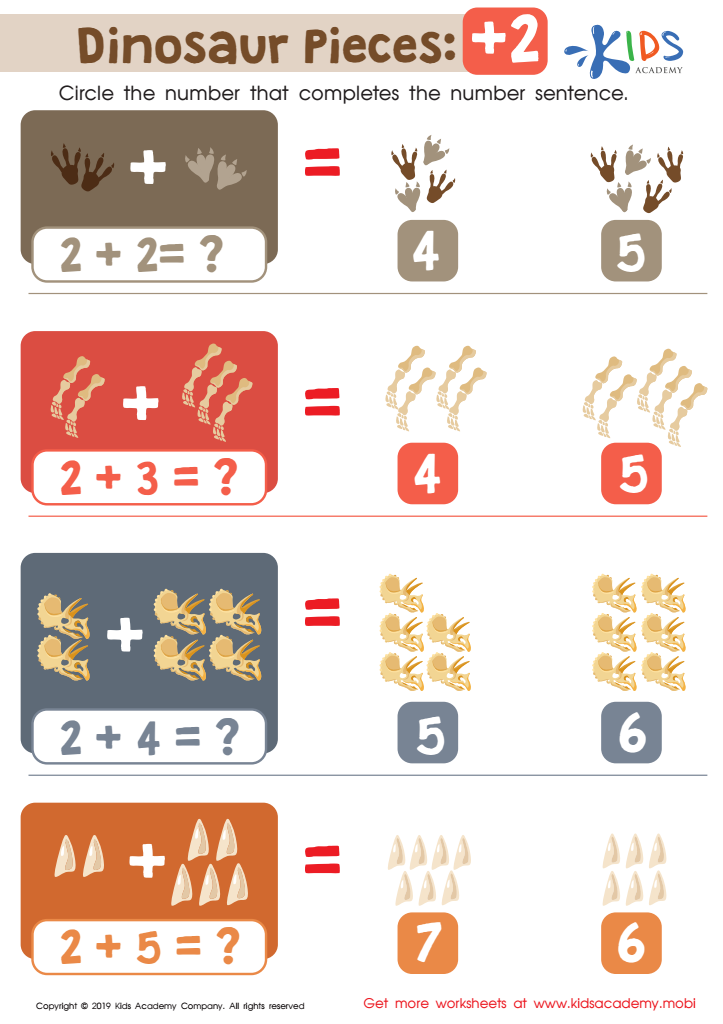
Dinosaur Pieces: +2 Worksheet
 Assign to My Students








Fine motor development is crucial for children aged 3-6 as it lays the foundation for essential skills they will use throughout their lives. Fine motor skills involve the coordination of small muscles in the hands and fingers, which are critical for tasks such as writing, drawing, and using utensils. As children learn to control their movements, they gain independence in self-care tasks like buttoning clothes and tying shoelaces.
Parents and teachers should care about fine motor development because these skills promote cognitive growth, problem-solving, and creativity. Engaging in activities that strengthen fine motor skills—such as cutting with scissors, threading beads, or manipulating clay—can enhance hand-eye coordination and spatial awareness.
Moreover, a strong foundation in fine motor skills can boost confidence and academic performance, particularly in literacy and numeracy, as children become proficient in writing and manipulating small objects. By actively supporting and observing fine motor development through play and targeted activities, parents and teachers can foster an environment that nurtures children's physical, social, and emotional well-being. Investing in this crucial aspect of development can ultimately set children on a path toward school readiness and lifelong learning.








