Filters

18 filtered results

Clear all filters
Favorites
With answer key
Interactive

18 filtered results

Difficulty Level

Grade


Enhance your child’s learning journey with our Hand-eye Coordination Addition Worksheets designed for ages 3-6! These engaging activities combine fundamental math skills with exciting hand-eye coordination exercises. Children will not only practice addition by counting and matching but will also improve their fine motor skills through fun challenges. Ideal for at-home learning or classroom use, our worksheets stimulate young minds and make learning enjoyable. With colorful illustrations and interactive tasks, these resources are perfect for nurturing a love of learning while building essential skills. Explore our collection today and help your child master addition with creativity and excitement!
Check out this FREE Trial Lesson on Addition for age 3-6!

2 Step Addition Word Problems Using Drawings

Favorites
With answer key
Interactive
  • 3-6
  • Hand-eye Coordination
  • Addition
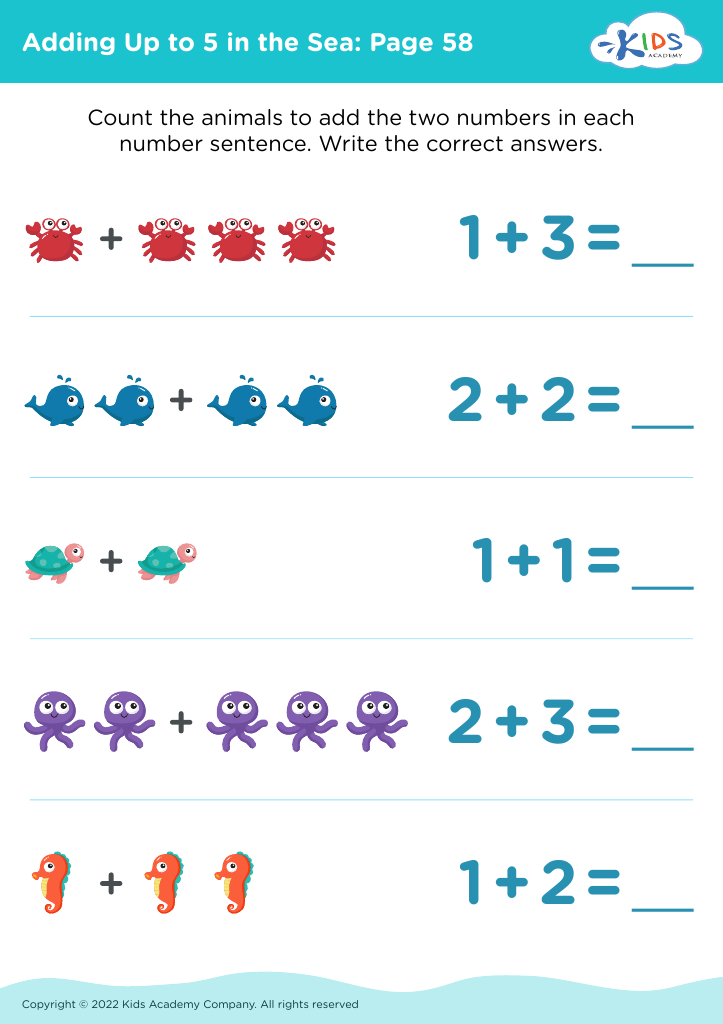
Adding Up to 5 in the Sea: Page 58
Worksheet
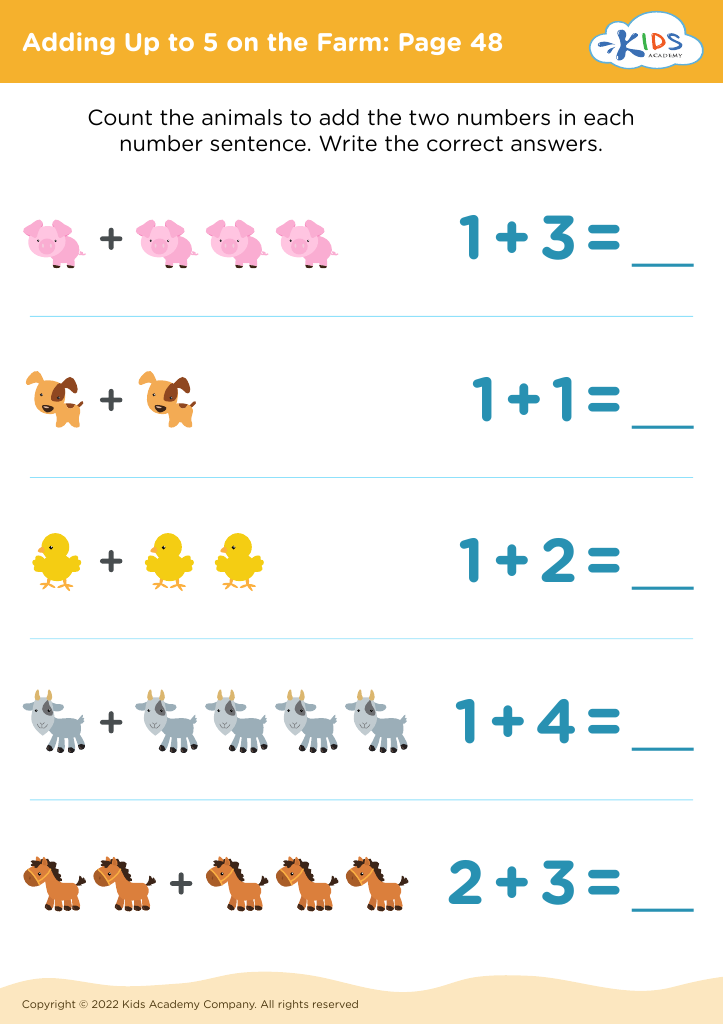
Adding Up to 5 on the Farm: Page 48
Worksheet
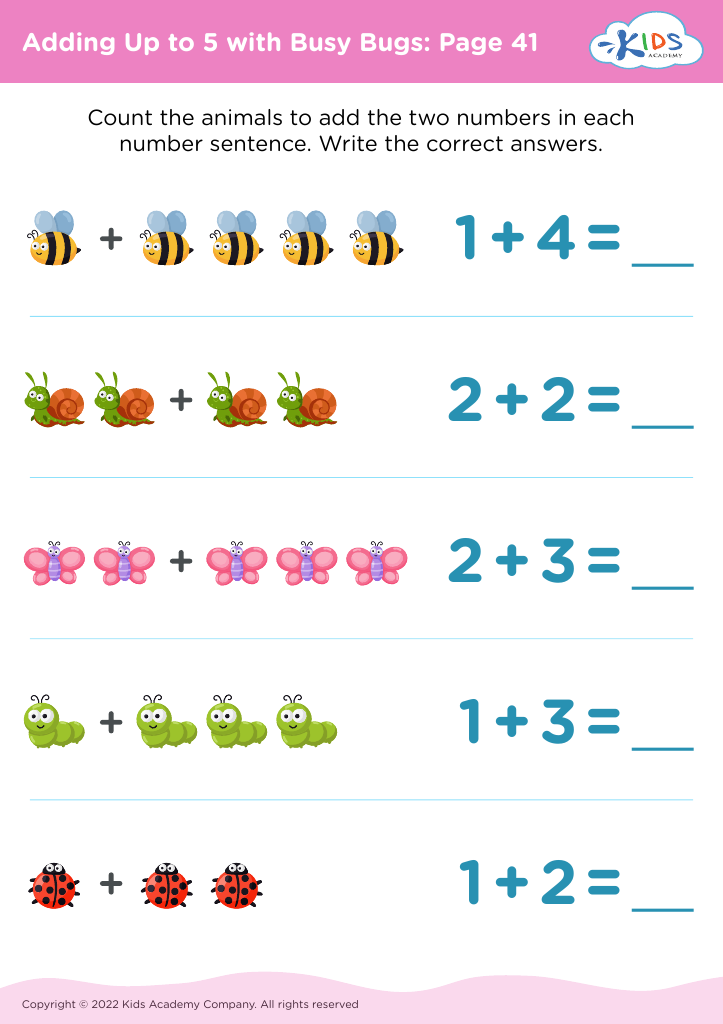
Adding Up to 5 with Busy Bugs: Page 41
Worksheet
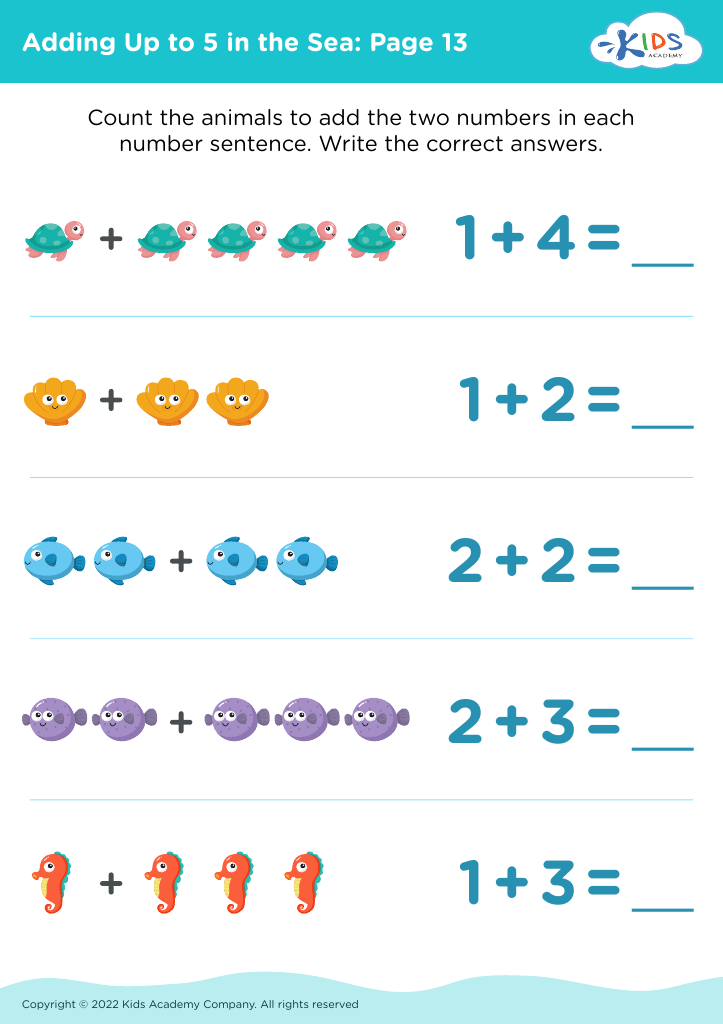
Adding Up to 5 in the Sea: Page 13
Worksheet
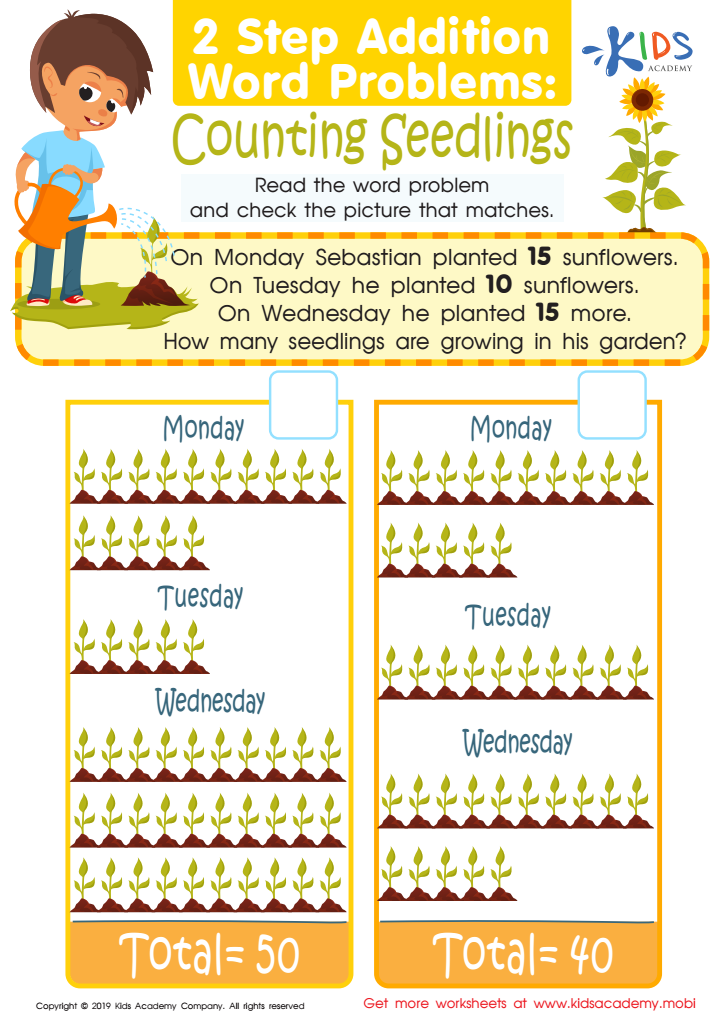
Counting Seedlings Worksheet

Counting Seedlings Worksheet

Understanding math word problems is key. Multiple steps can prove challenging - this free worksheet provides one-to-one picture representation to help kids solve multi-step addition word problems. Strengthen addition skills by choosing the matching picture to the answer.
Counting Seedlings Worksheet
Worksheet
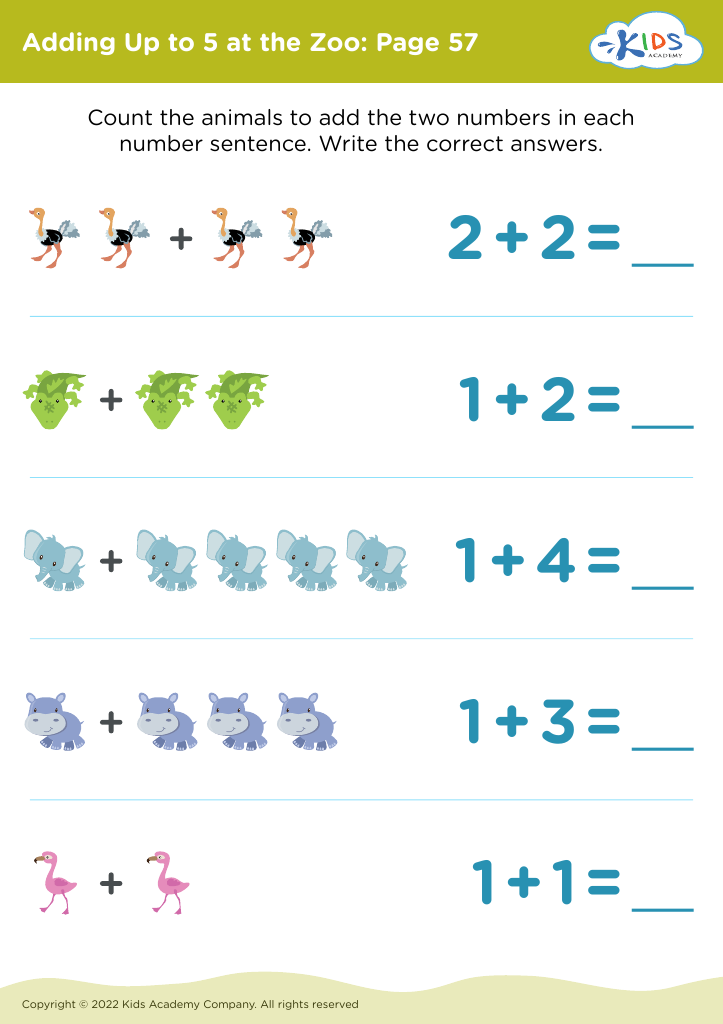
Adding Up to 5 at the Zoo: Page 57
Worksheet
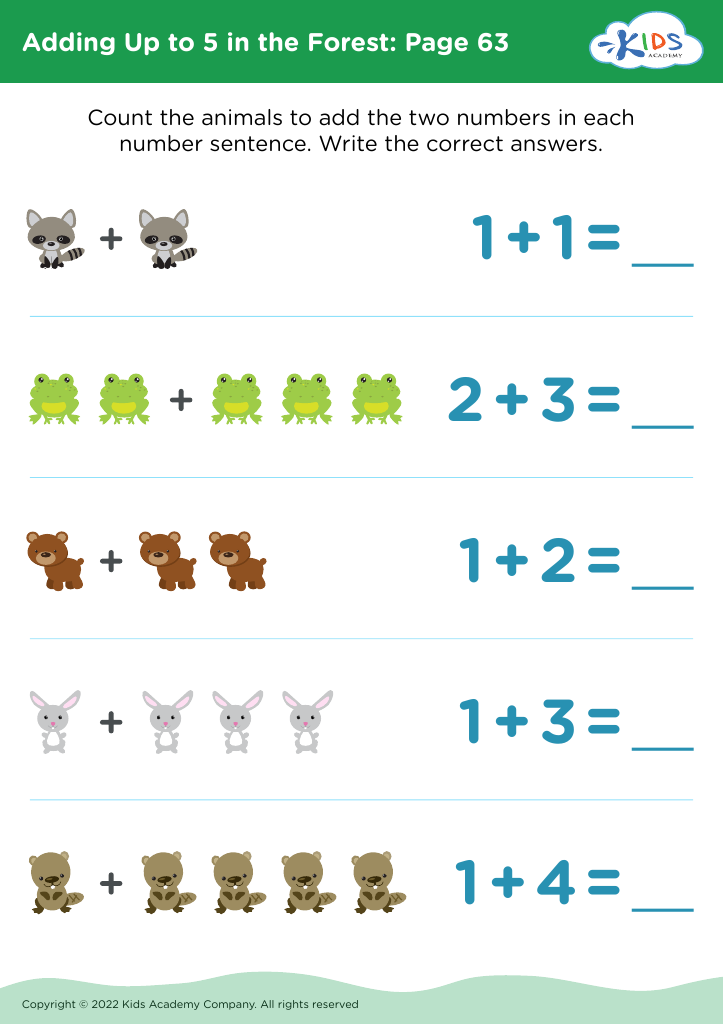
Adding Up to 5 in the Forest: Page 63
Worksheet
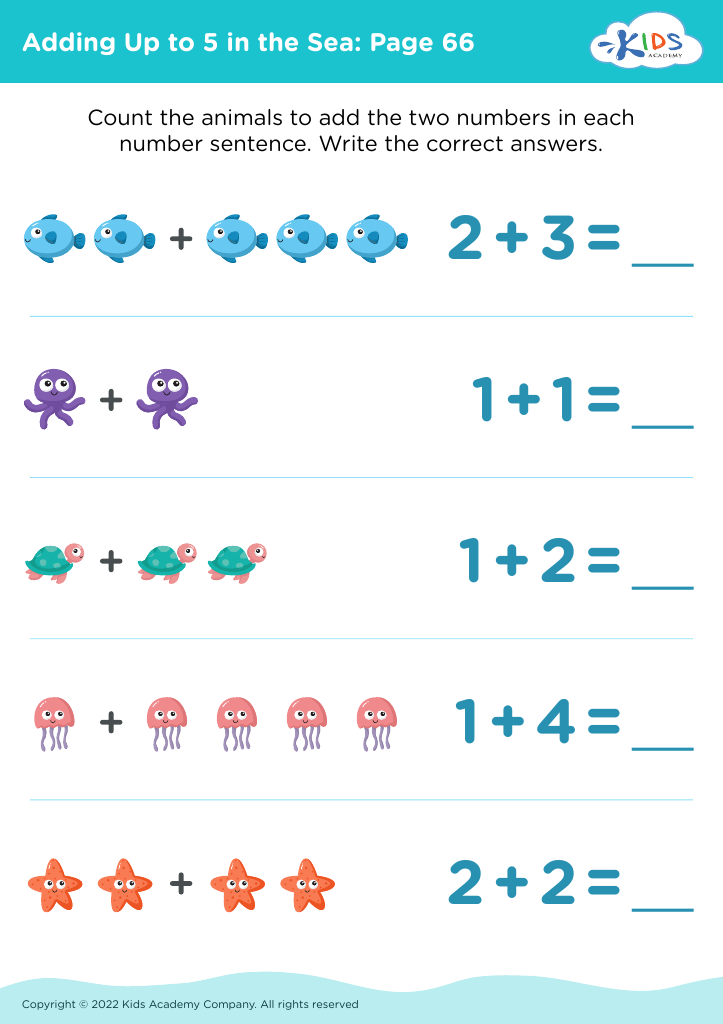
Adding Up to 5 in the Sea: Page 66
Worksheet
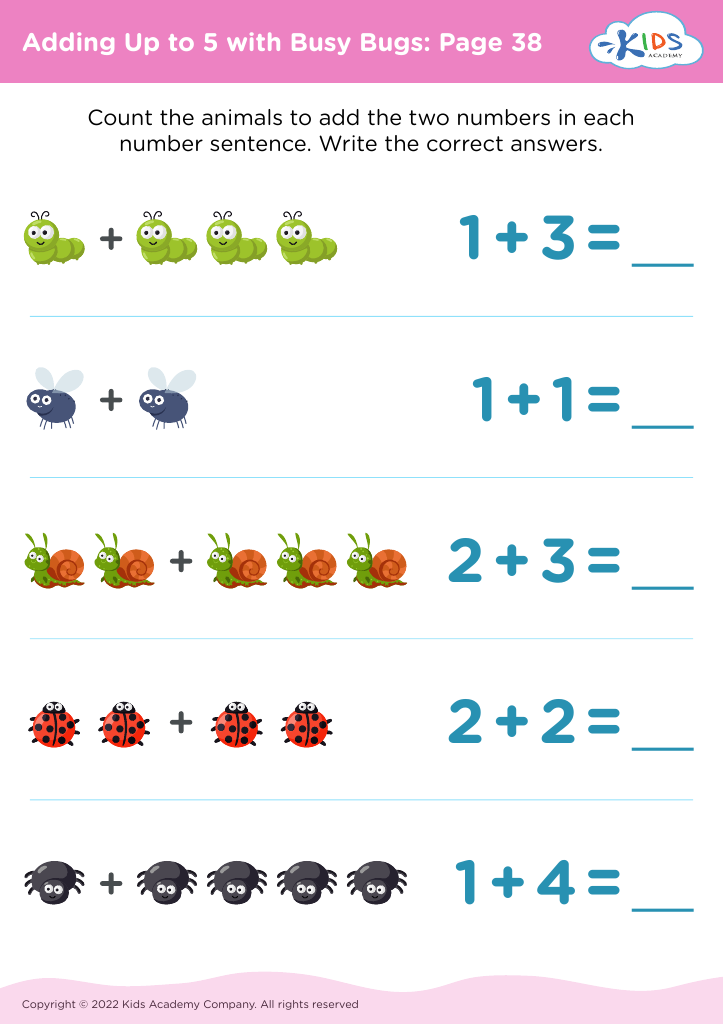
Adding Up to 5 with Busy Bugs: Page 38
Worksheet
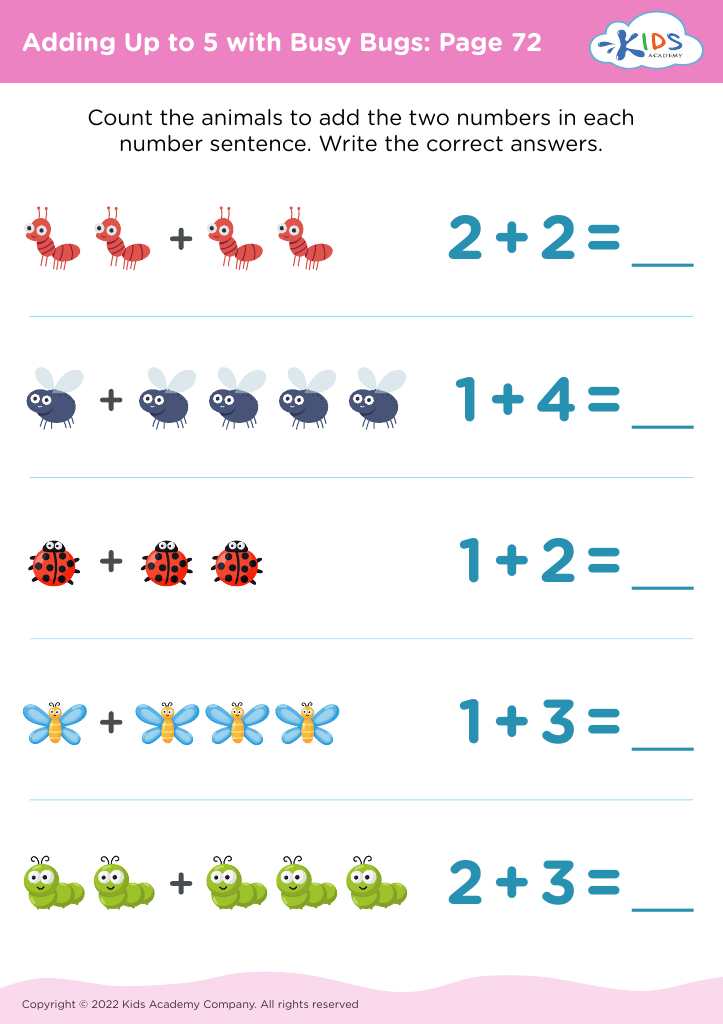
Adding Up to 5 with Busy Bugs: Page 72
Worksheet
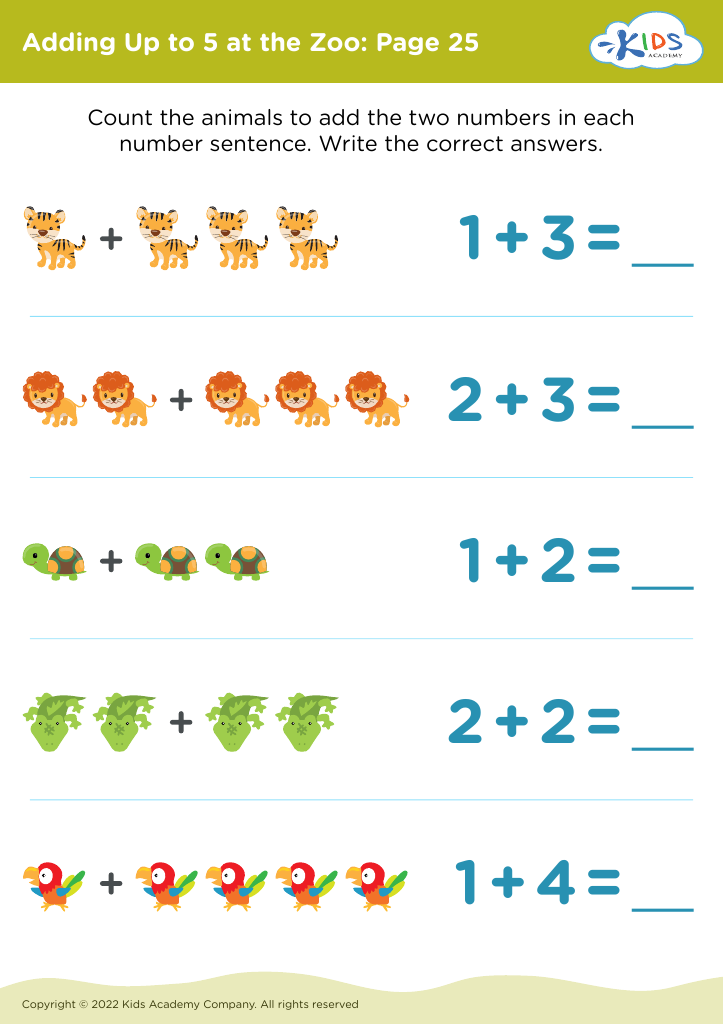
Adding Up to 5 at the Zoo: Page 25
Worksheet
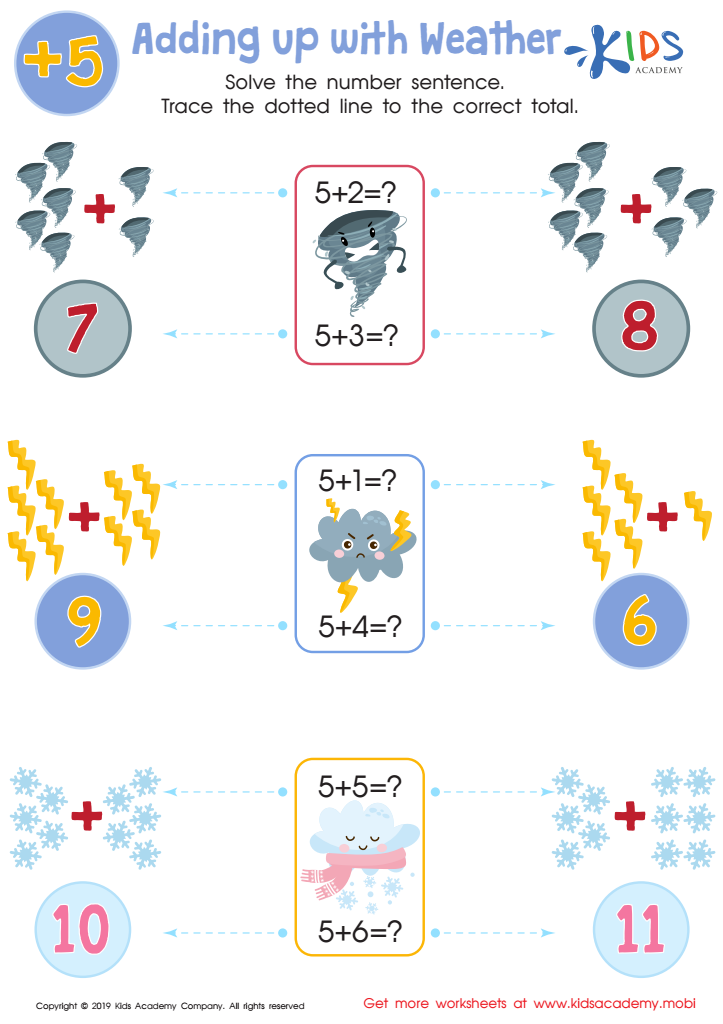
Adding up With Water Worksheet
Adding up With Water Worksheet
Ask your kids to name different kinds of weather and what it's like outside now. Then, help them solve the number sentences on the worksheet by tracing the dotted line to the correct total.
Adding up With Water Worksheet
Worksheet
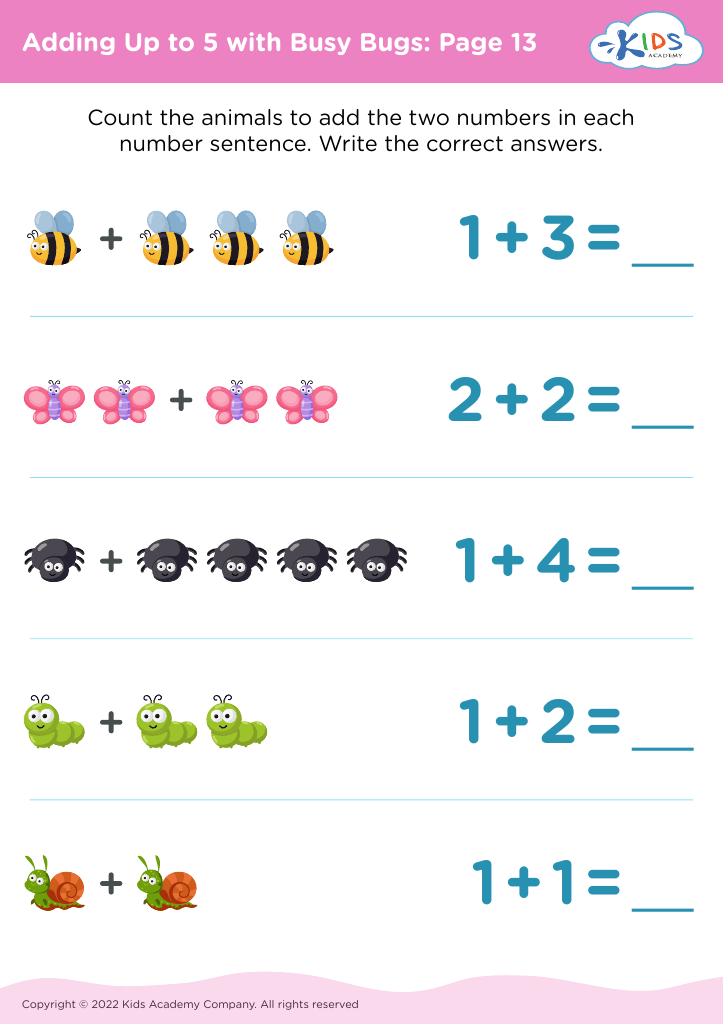
Adding Up to 5 with Busy Bugs: Page 13
Worksheet
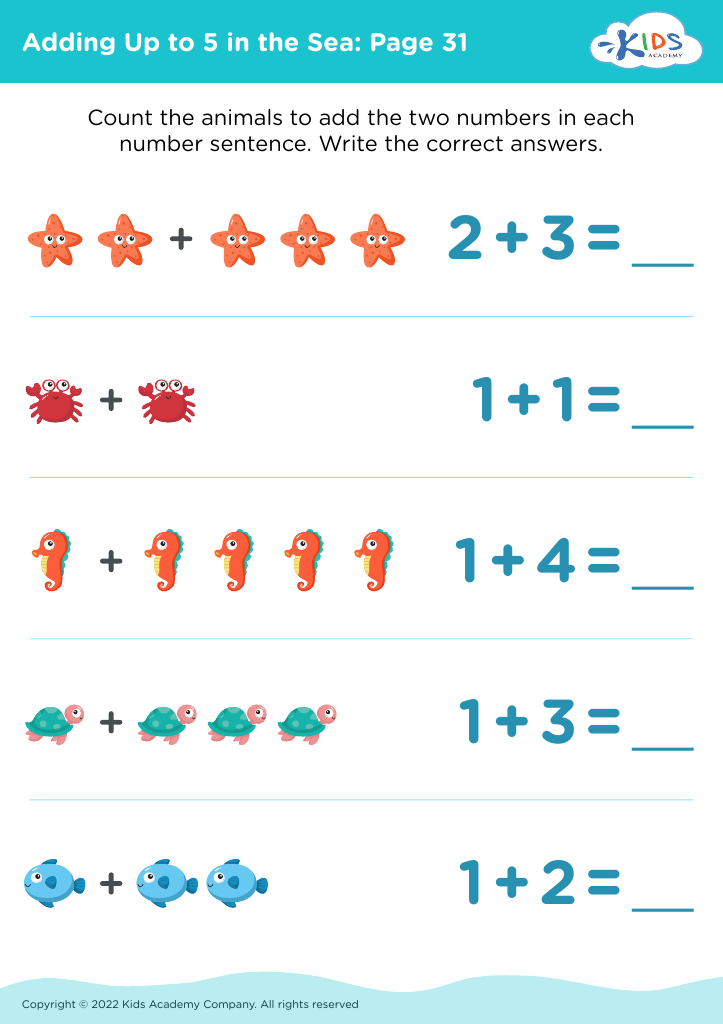
Adding Up to 5 in the Sea: Page 31
Worksheet
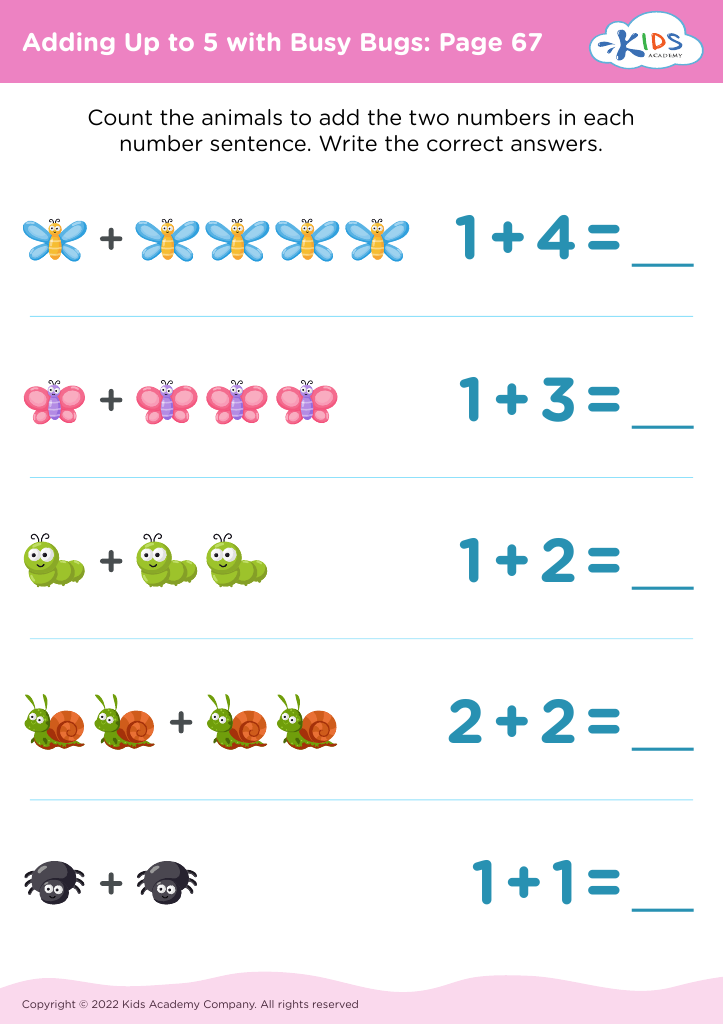
Adding Up to 5 with Busy Bugs: Page 67
Worksheet
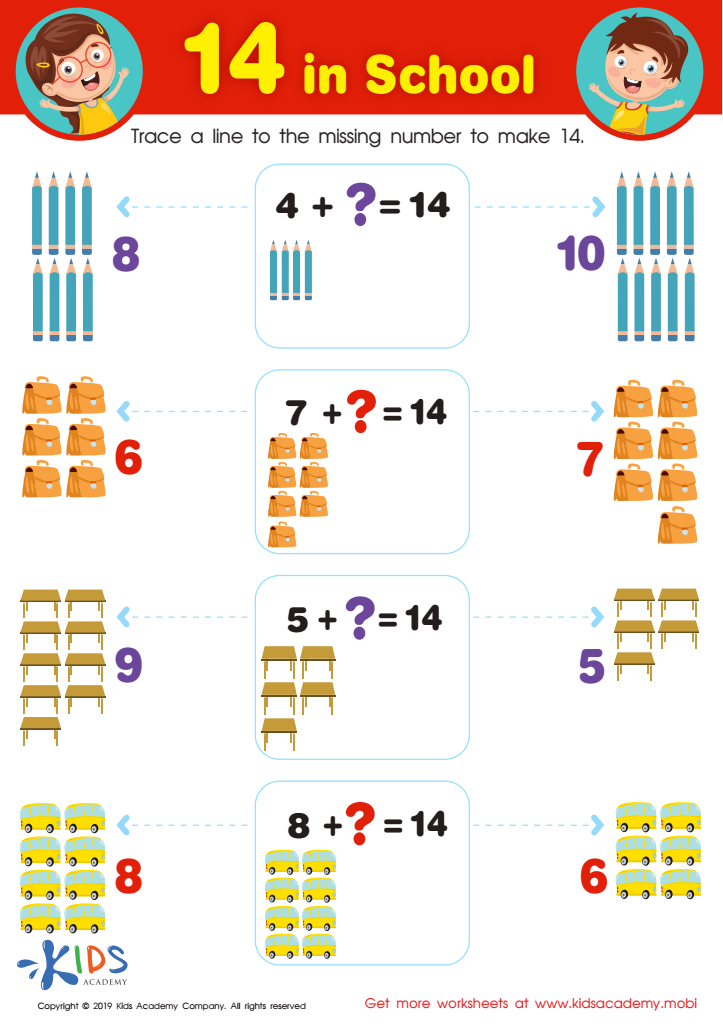
14 in School Worksheet


14 in School Worksheet

Remind your kids that adding different sets of numbers can give the same total (e.g. 2+3=5, 4+1=5). Ask them for more examples. Afterwards, work through the exercise. Help them count the objects and trace a line to the missing number that makes the total 14.
14 in School Worksheet
Worksheet
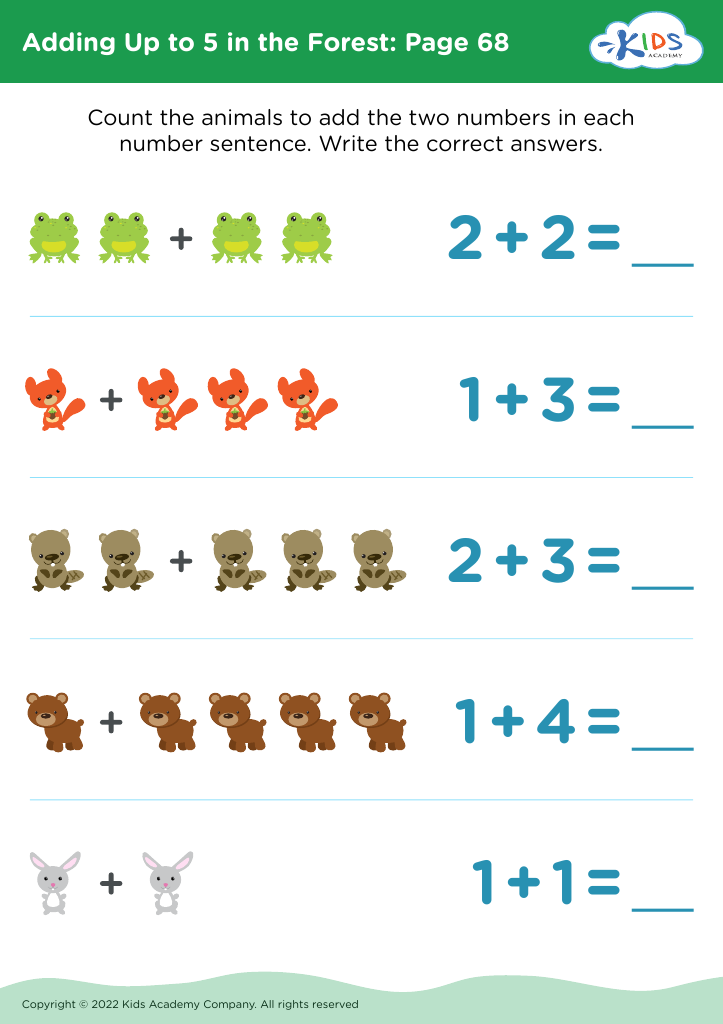
Adding Up to 5 in the Forest: Page 68
Worksheet
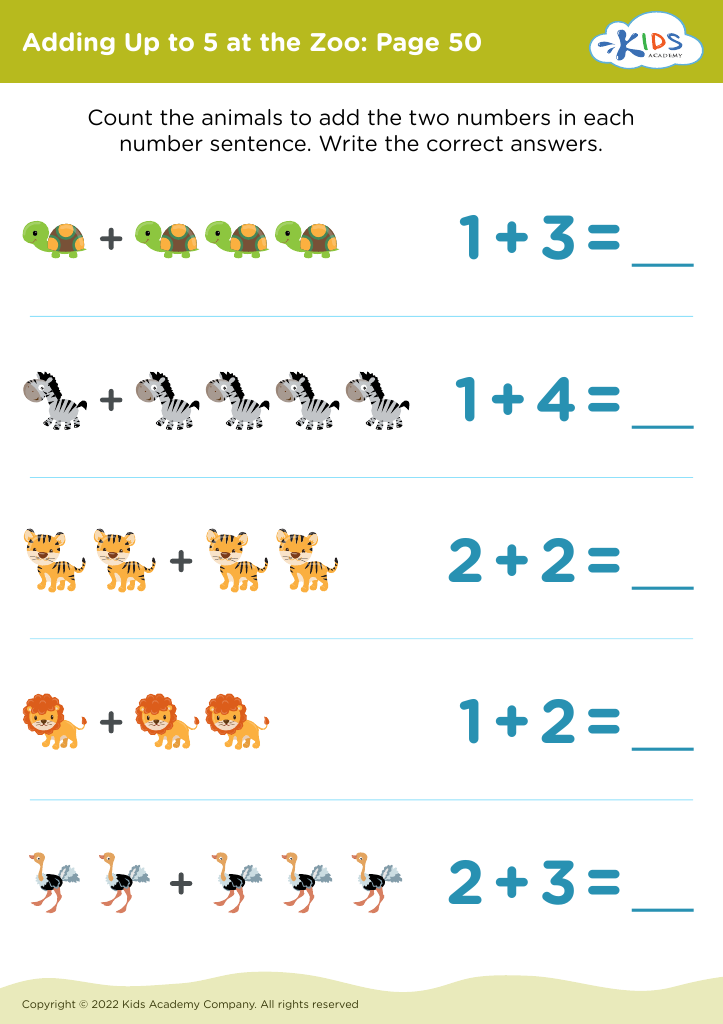
Adding Up to 5 at the Zoo: Page 50
Worksheet


Hand-eye coordination is a crucial developmental skill for children aged 3-6, forming the foundation for various learning experiences and daily activities. This skill involves the ability to coordinate visual input with physical movement, which is essential for tasks such as writing, drawing, and participating in sports.

Parents and teachers should care about enhancing hand-eye coordination because it significantly impacts children's academic performance and social interactions. Strong hand-eye coordination can boost a child's confidence as they gain proficiency in basic tasks like using scissors, catching a ball, or manipulating small objects, which can help foster a sense of accomplishment and independence.

Additionally, developing hand-eye coordination can set the stage for important cognitive skills. Activities that promote this skill often involve problem-solving, critical thinking, and motor planning, which are vital for overall cognitive development. Engaging children in fun activities—such as puzzles, arts and crafts, and coordinated games—provides an excellent opportunity for growth in this area.

By supporting the improvement of hand-eye coordination, parents and teachers can facilitate children's readiness for school and lifelong learning, ensuring they possess the essential skills needed to navigate various challenges effectively.