Filters

87 filtered results

Clear all filters
Favorites
With answer key
Interactive

87 filtered results

Difficulty Level

Grade


Check out this FREE Trial Lesson on Addition for age 3-6!

D

Favorites
With answer key
Interactive
  • 3-6
  • Visual Learning
  • Addition
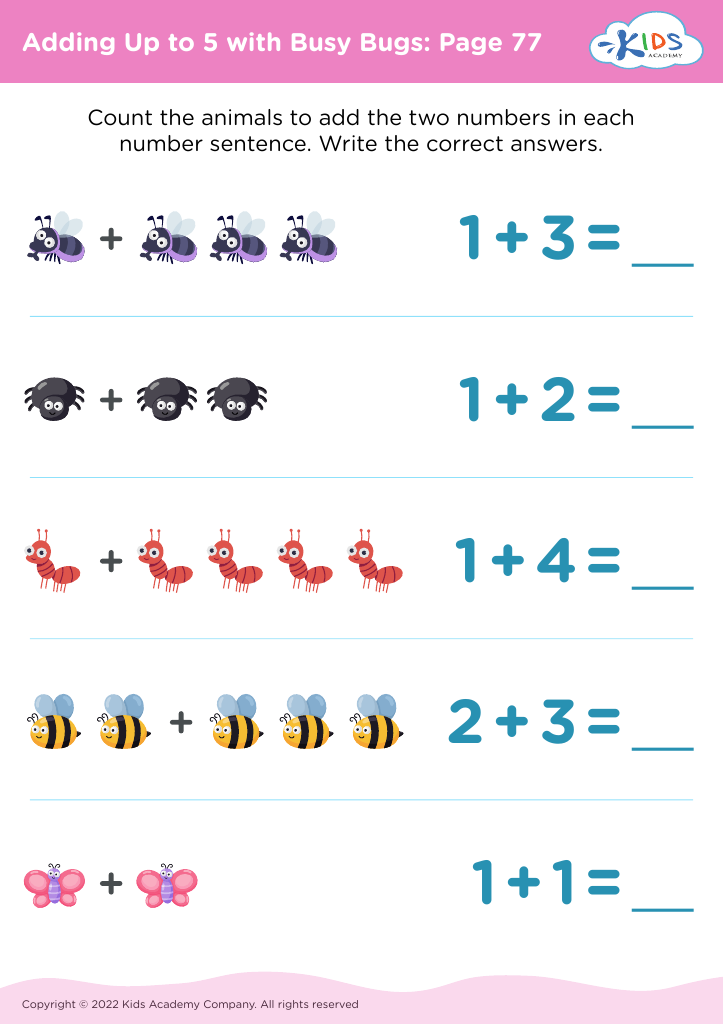
Adding Up to 5 with Busy Bugs: Page 77
Worksheet
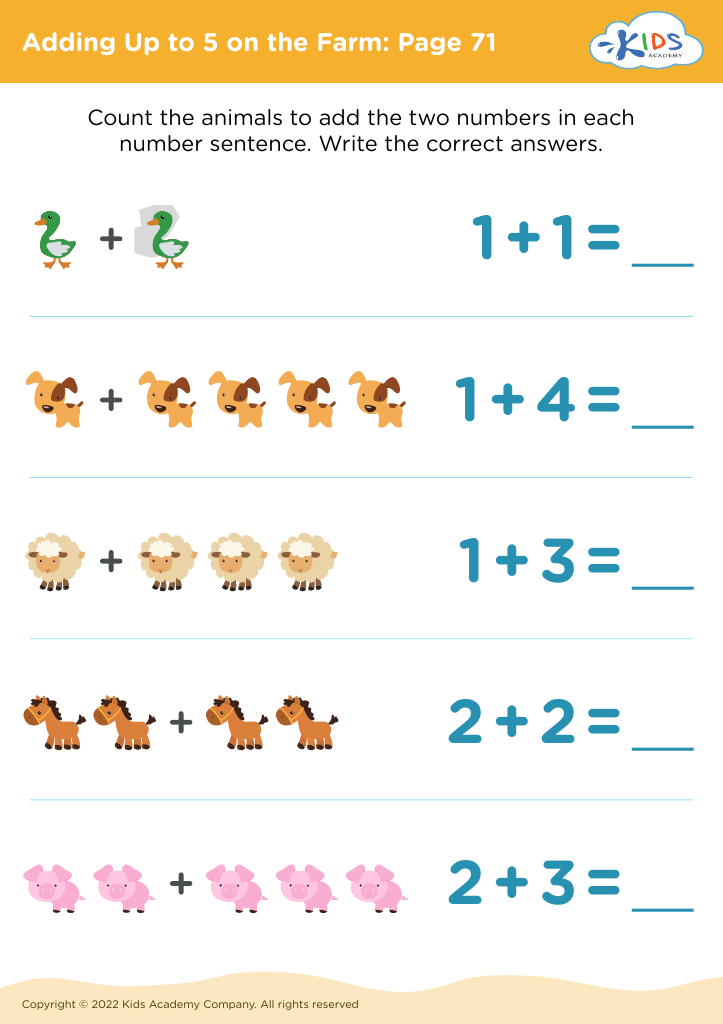
Adding Up to 5 on the Farm: Page 71
Worksheet
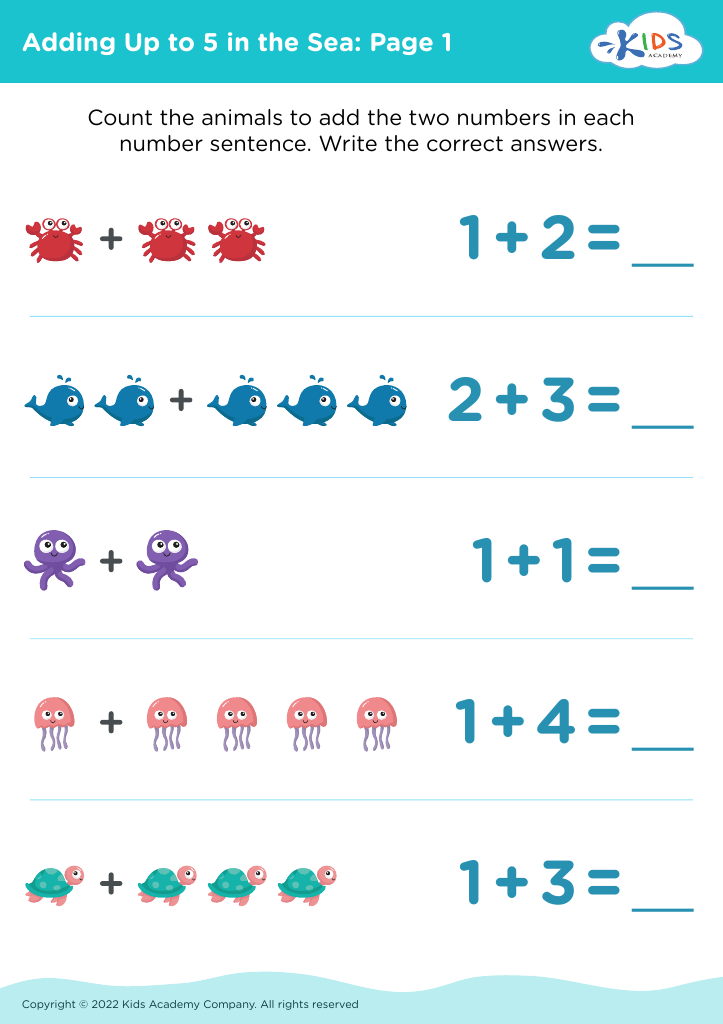
Adding Up to 5 in the Sea: Page 1

Adding Up to 5 in the Sea: Page 1

Adding Up to 5 in the Sea: Page 1
Worksheet
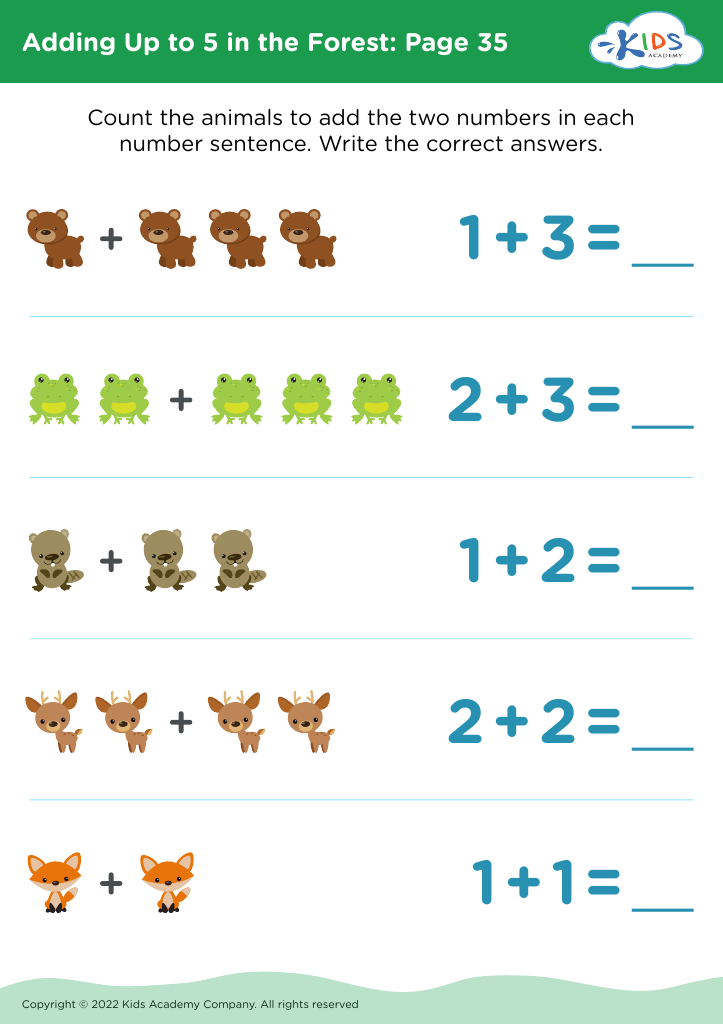
Adding Up to 5 in the Forest: Page 35
Worksheet
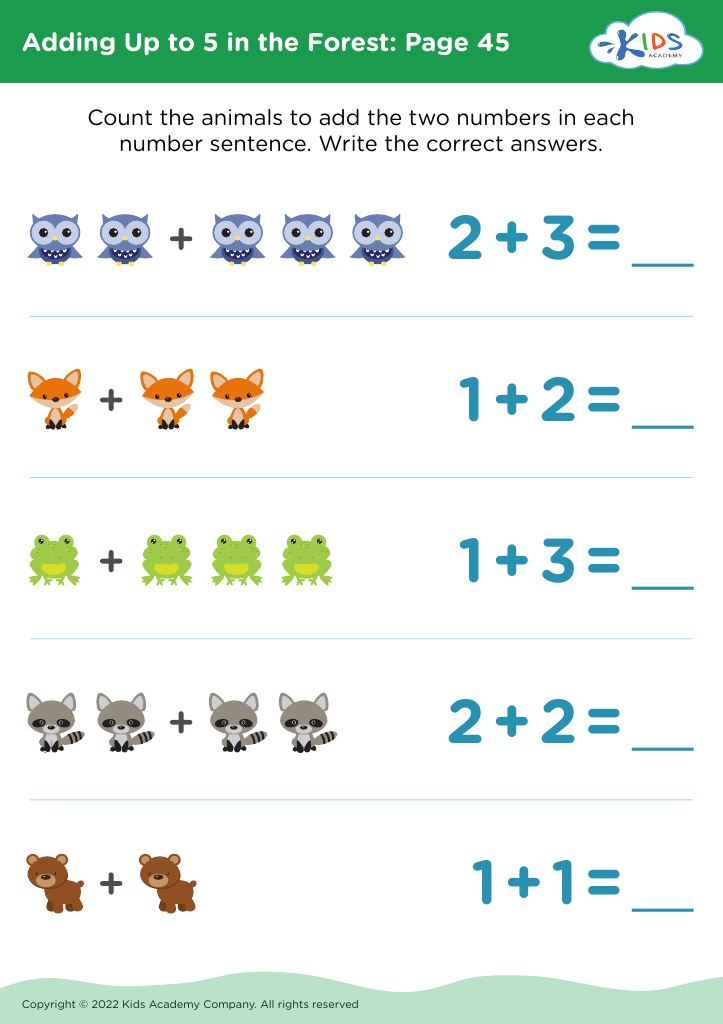
Adding Up to 5 in the Forest: Page 45
Worksheet
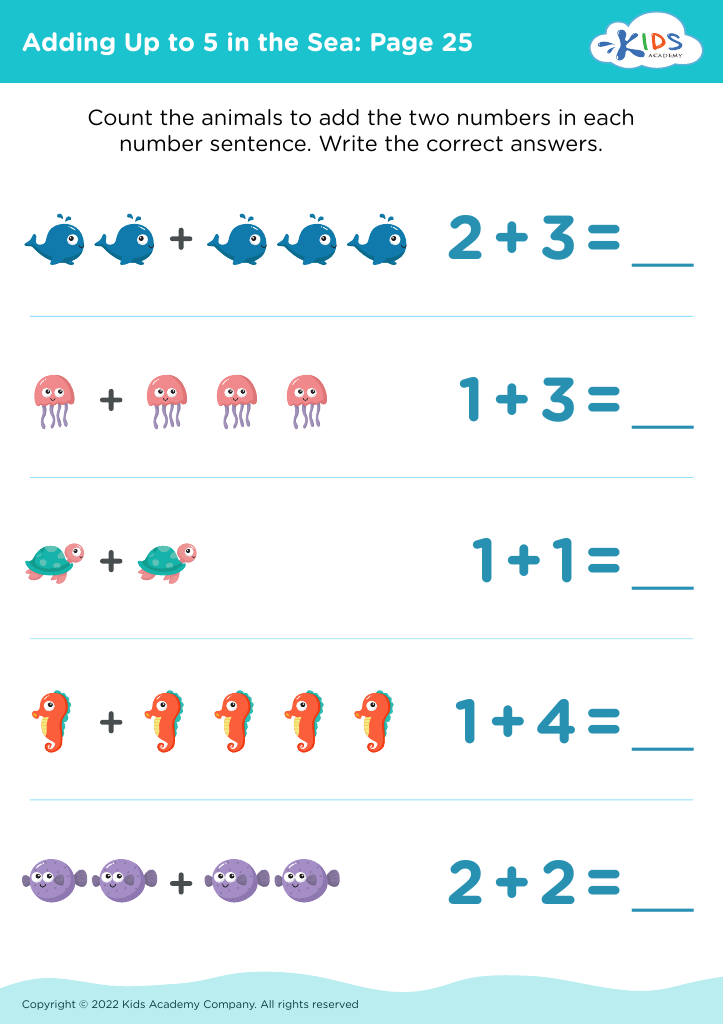
Adding Up to 5 in the Sea: Page 25
Worksheet
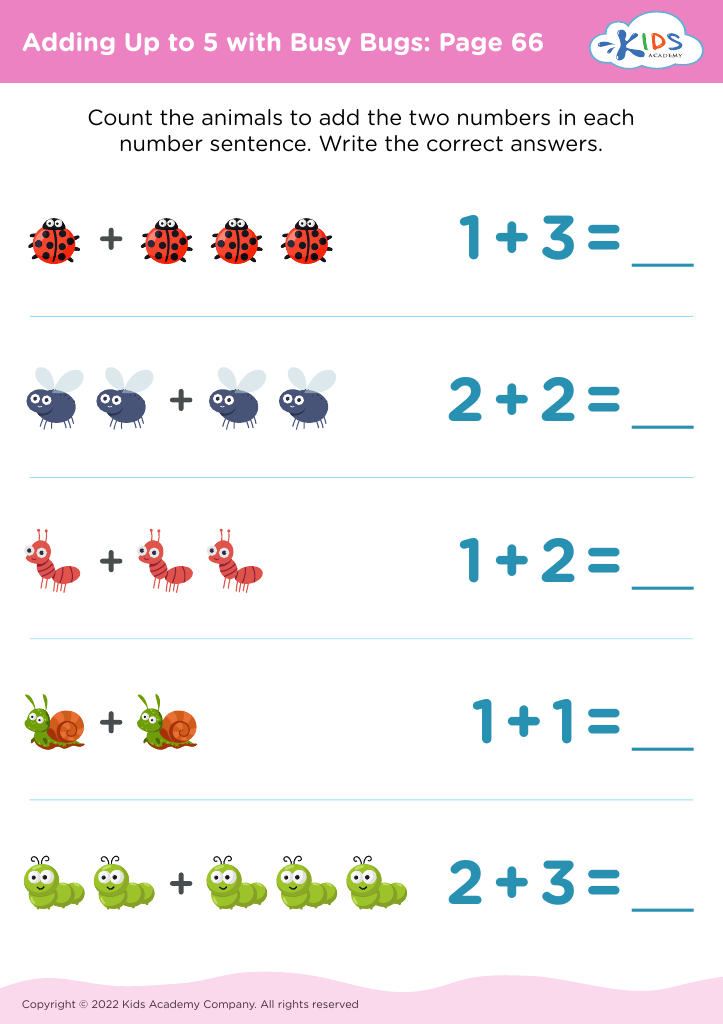
Adding Up to 5 with Busy Bugs: Page 66
Worksheet
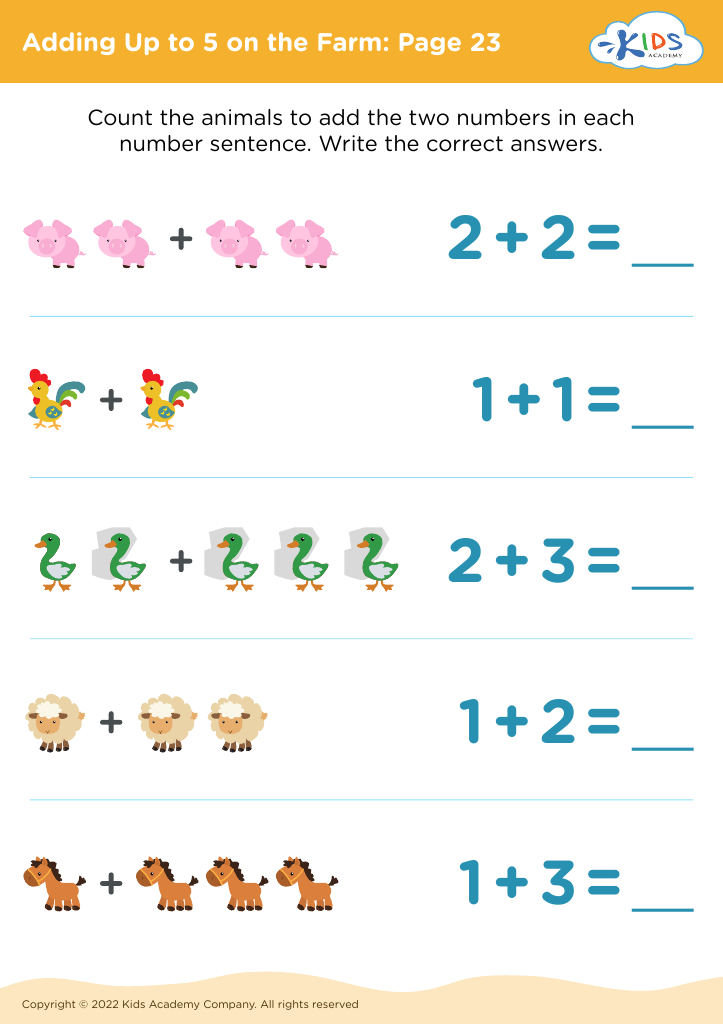
Adding Up to 5 on the Farm: Page 23
Worksheet
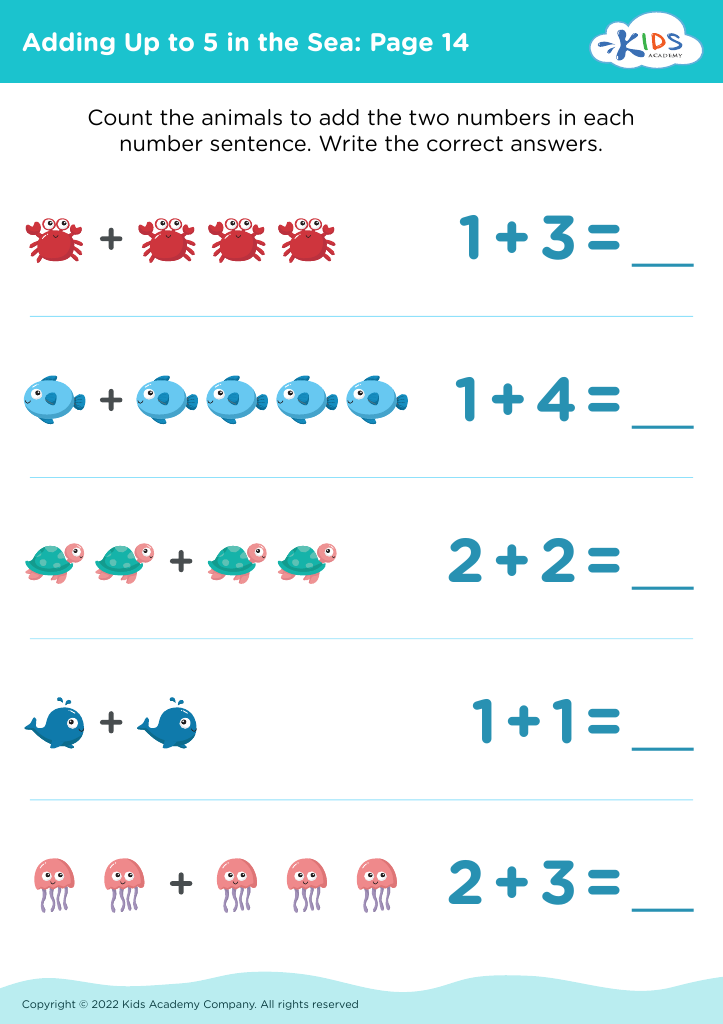
Adding Up to 5 in the Sea: Page 14
Worksheet
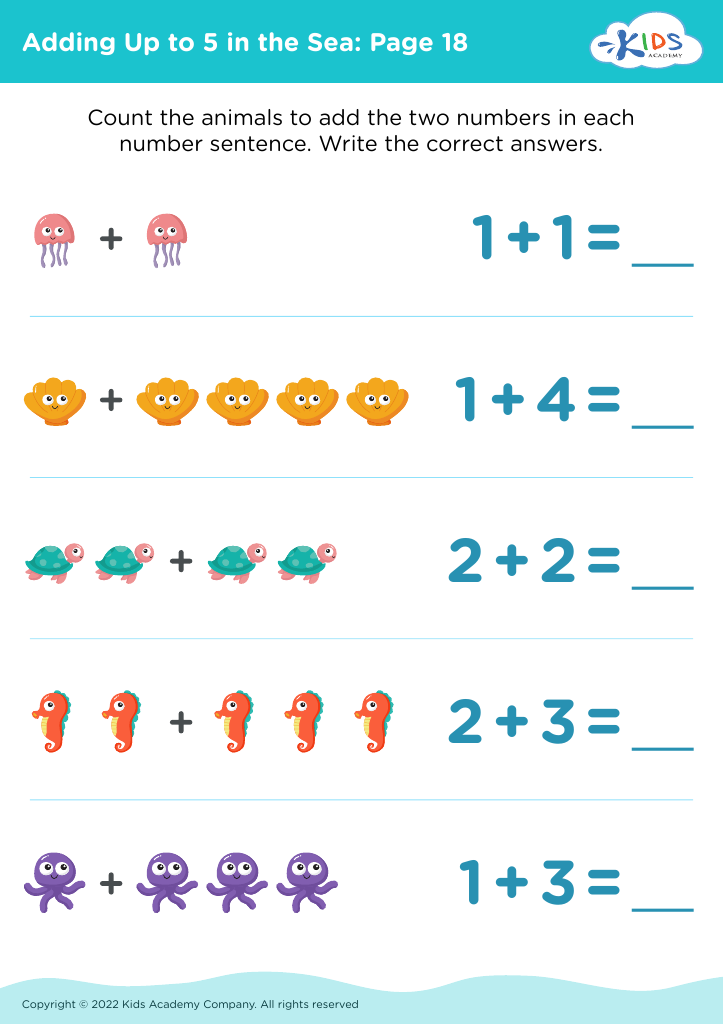
Adding Up to 5 in the Sea: Page 18
Worksheet
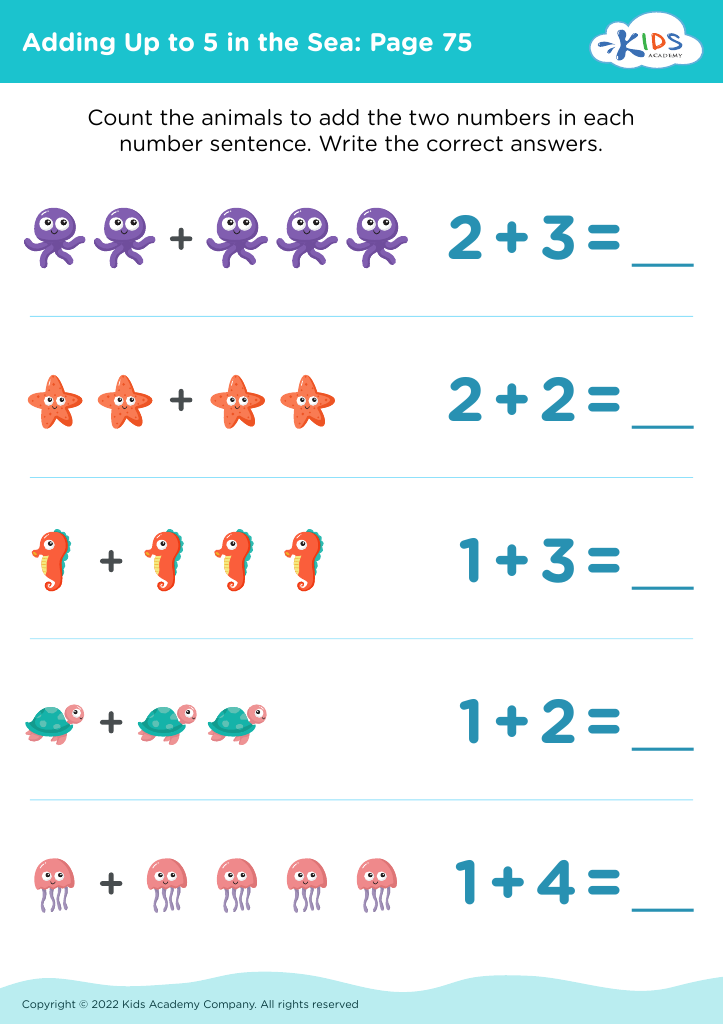
Adding Up to 5 in the Sea: Page 75
Worksheet
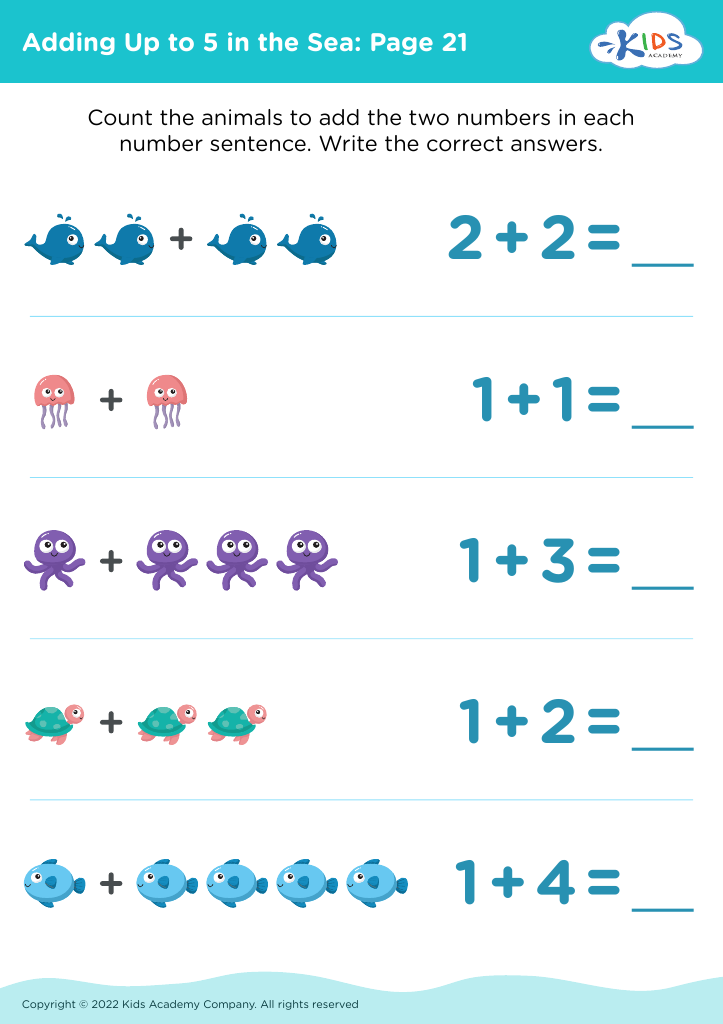
Adding Up to 5 in the Sea: Page 21
Worksheet
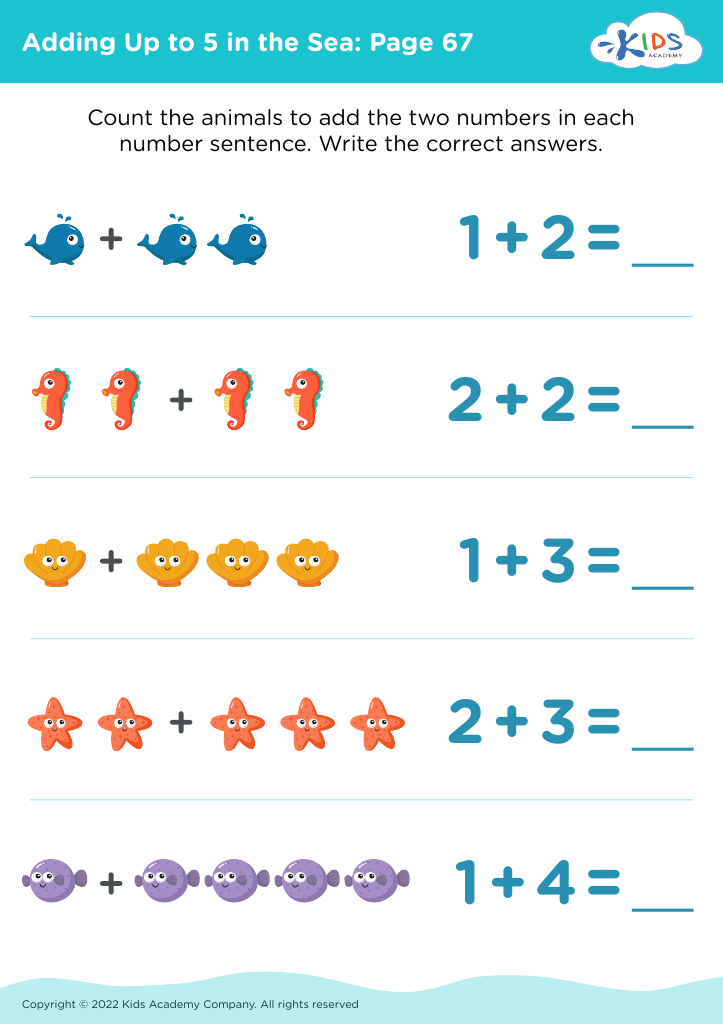
Adding Up to 5 in the Sea: Page 67
Worksheet
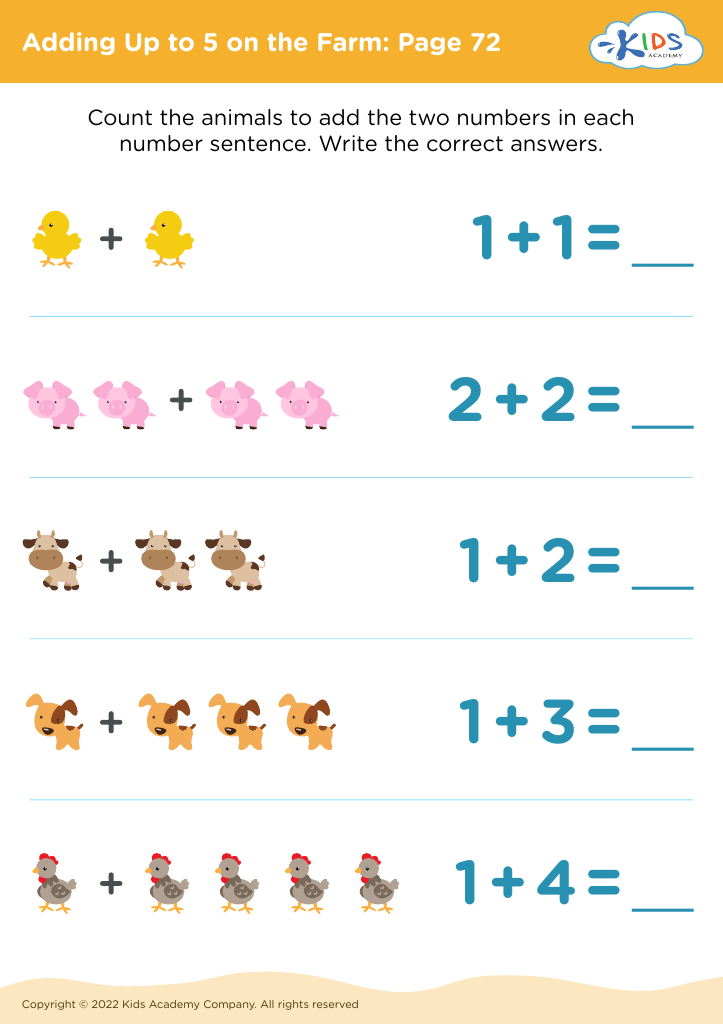
Adding Up to 5 on the Farm: Page 72
Worksheet
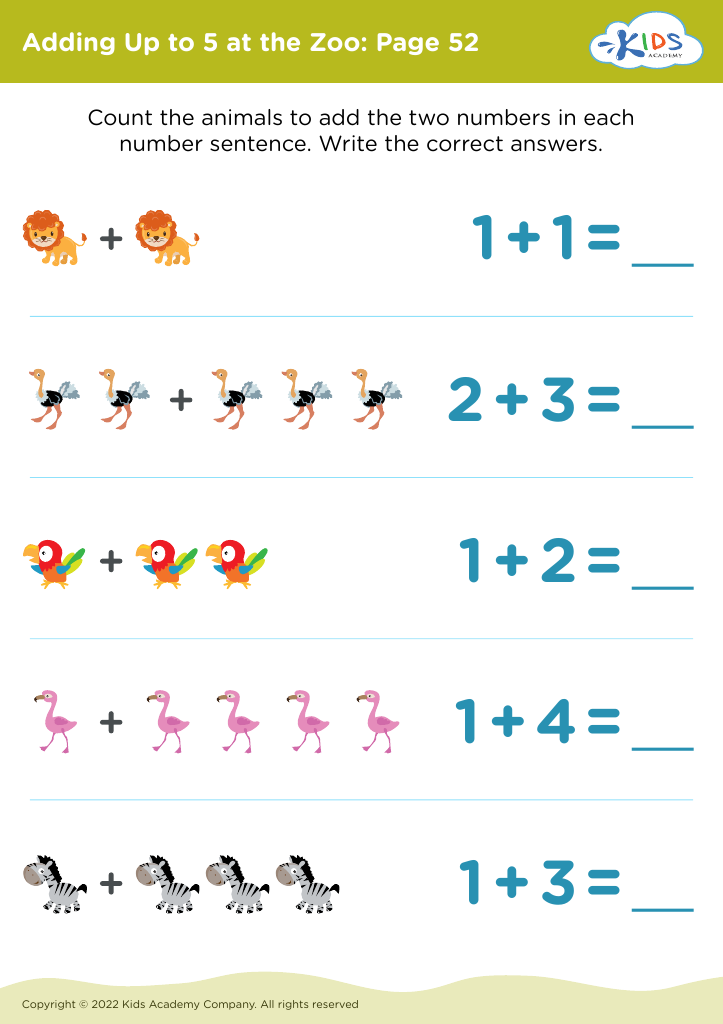
Adding Up to 5 at the Zoo: Page 52
Worksheet
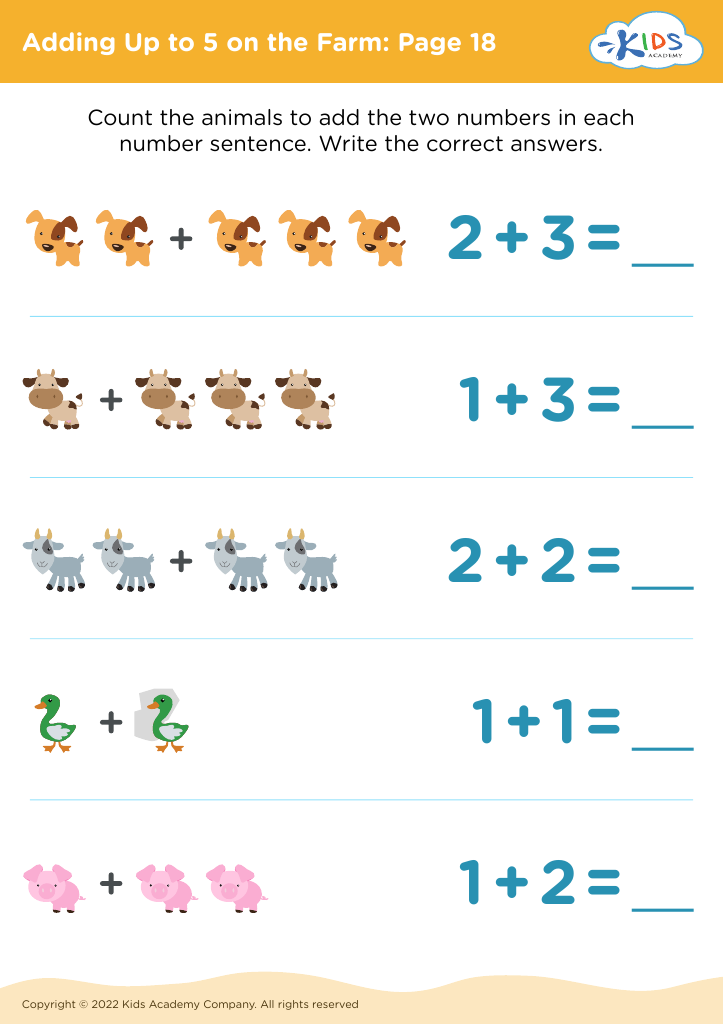
Adding Up to 5 on the Farm: Page 18
Worksheet
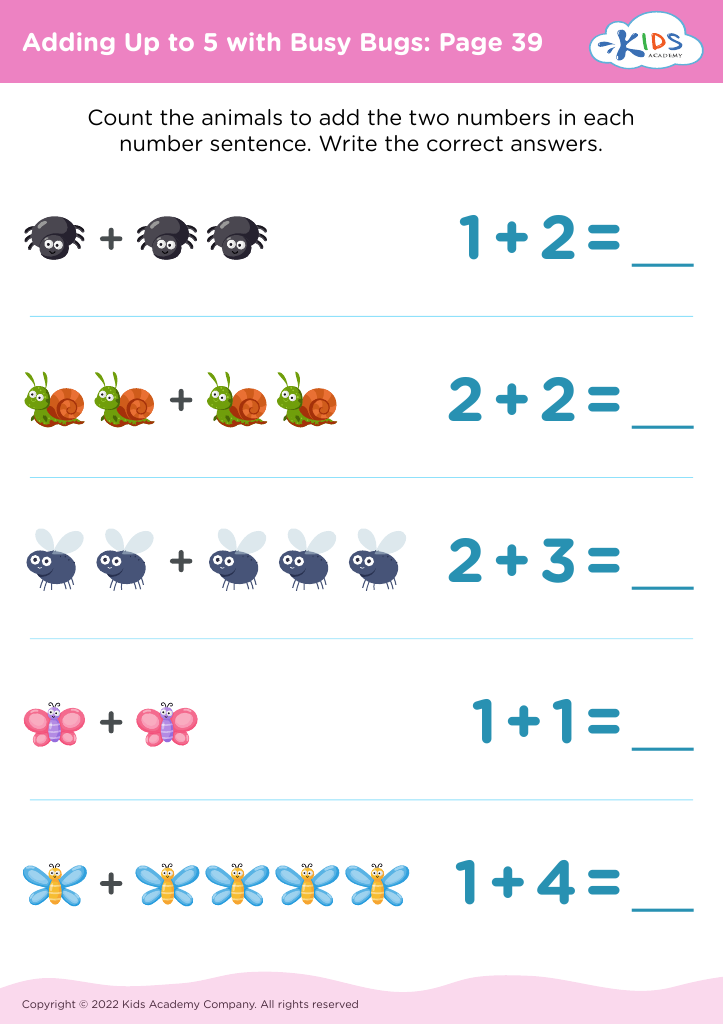
Adding Up to 5 with Busy Bugs: Page 39
Worksheet
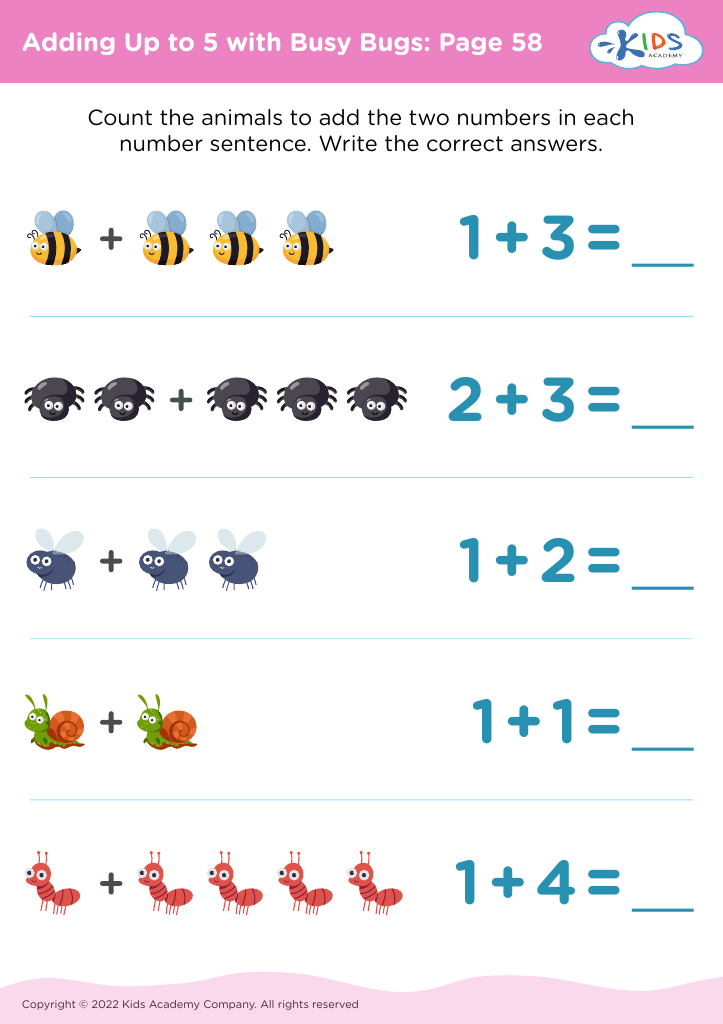
Adding Up to 5 with Busy Bugs: Page 58
Worksheet
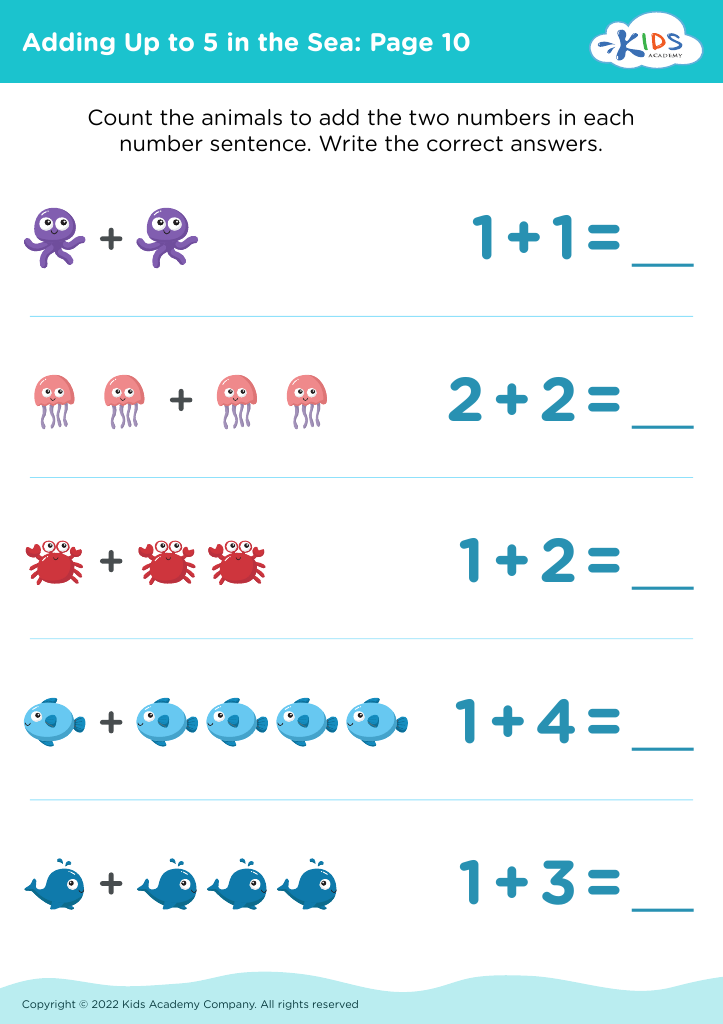
Adding Up to 5 in the Sea: Page 10
Worksheet
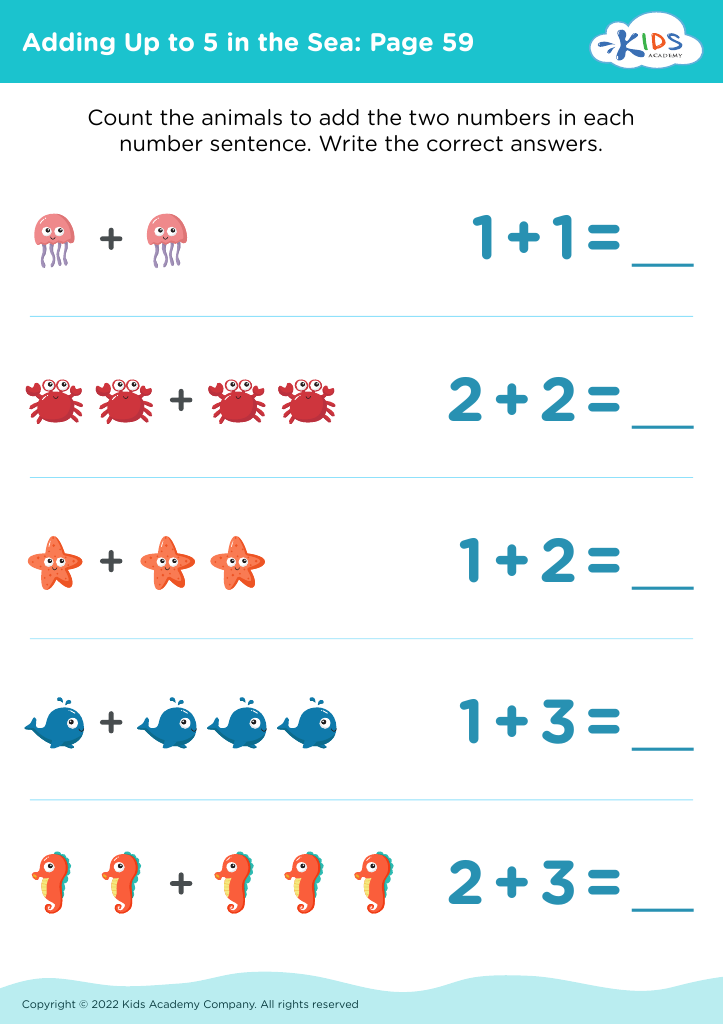
Adding Up to 5 in the Sea: Page 59
Worksheet
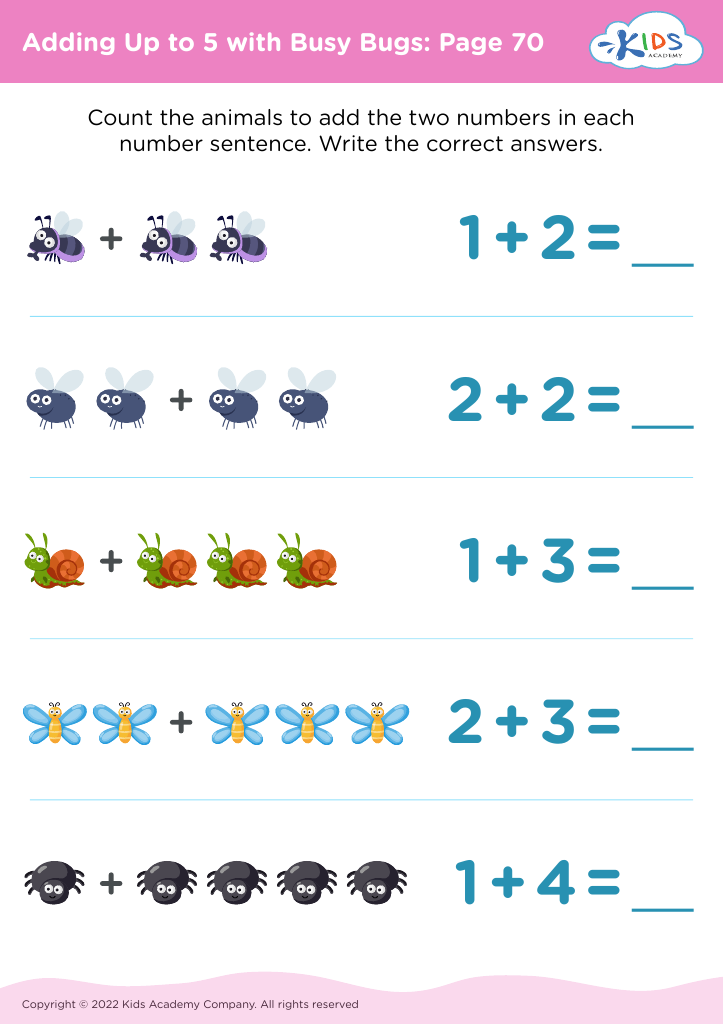
Adding Up to 5 with Busy Bugs: Page 70
Worksheet
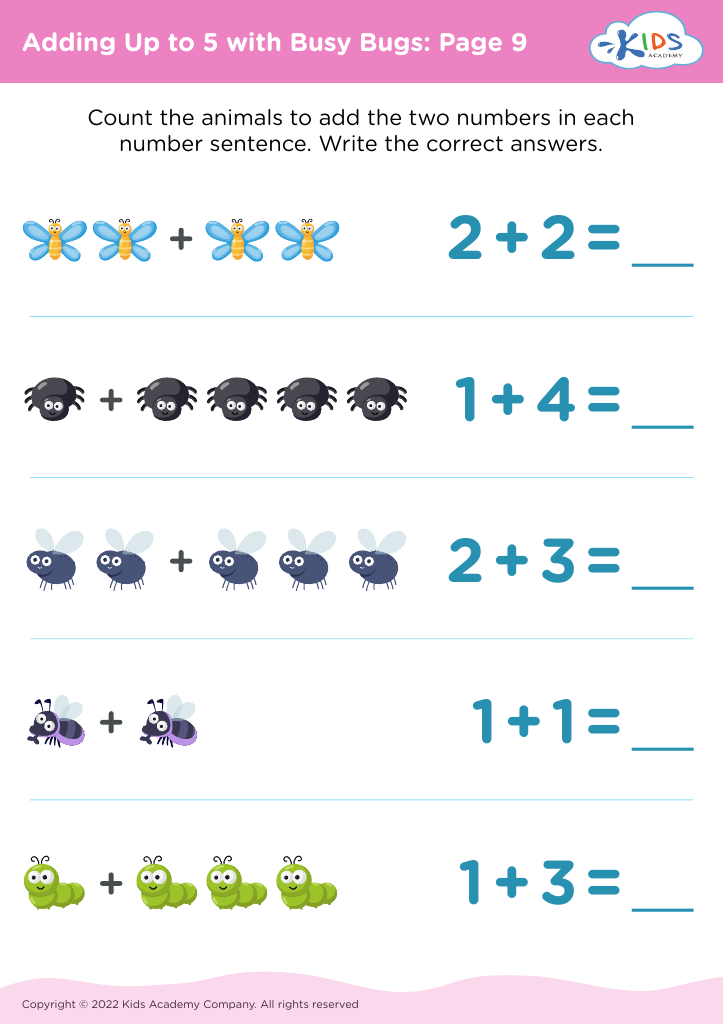
Adding Up to 5 with Busy Bugs: Page 9
Worksheet
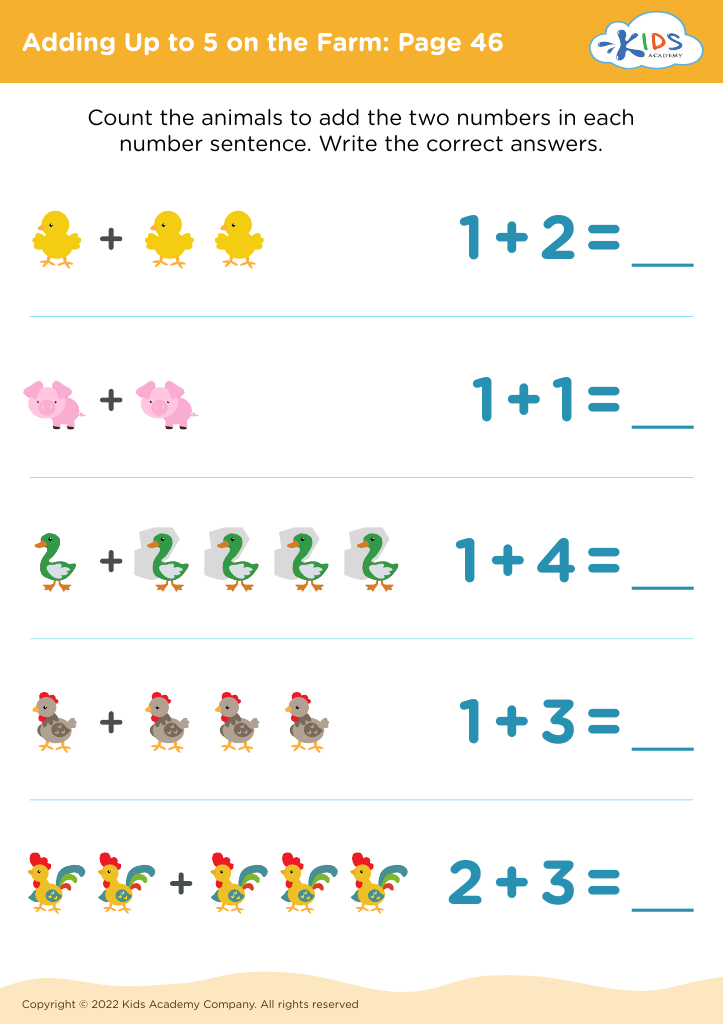
Adding Up to 5 on the Farm: Page 46
Worksheet
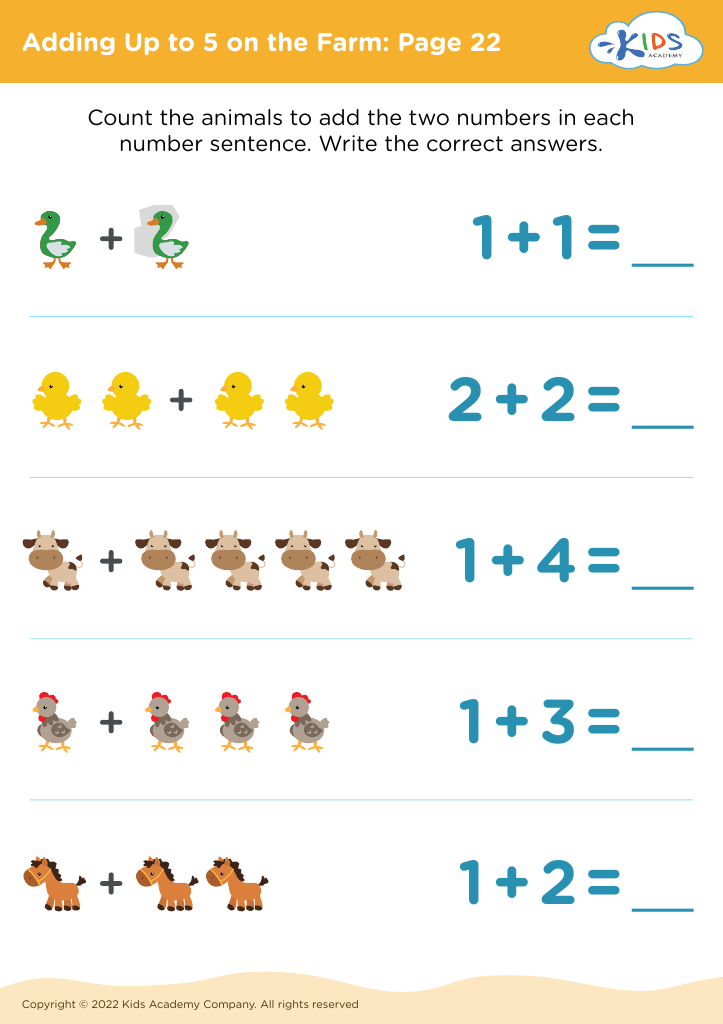
Adding Up to 5 on the Farm: Page 22
Worksheet


Parents and teachers should prioritize Visual Learning Addition for children aged 3-6 because it is an effective way to foster early mathematical understanding and engagement. During these formative years, children are naturally inquisitive and learn best through visual stimuli. Engaging visual resources, such as colorful charts, counting blocks, and interactive games, help simplify the concept of addition. By using visual aids, children can grasp abstract numerical concepts more concretely, allowing them to visualize problems and solutions in a tangible way.

Additionally, visual learning caters to diverse learning styles. Some children may find traditional methods challenging, but visuals can bridge that gap, making learning more accessible and enjoyable. Incorporating visual elements also enhances memory retention, providing a strong foundation for future mathematical learning.

Moreover, nurturing early math skills sets the stage for academic success and boosts children’s confidence. When kids can visualize and solve addition problems effectively, they build critical thinking skills that will benefit them across subjects. Understanding the value of visual learning in mathematics empowers parents and teachers to create engaging, supportive environments that stimulate curiosity and foster a lifelong love for learning.