Categorization skills Geometry Worksheets for Ages 3-6
3 filtered results
-
From - To
Enhance your child's geometry skills with our engaging categorization worksheets specifically designed for ages 3-6! These printable resources offer a fun way to help young learners identify, sort, and categorize various geometric shapes. By working through diverse activities, children will develop essential early math skills while building their spatial awareness and critical thinking abilities. Our worksheets are colorful and interactive, making learning a joyful experience. Perfect for home or classroom use, these activities encourage independent exploration and creativity. Invest in your child's educational journey and watch them confidently navigate the world of geometry with ease! Start categorizing today!
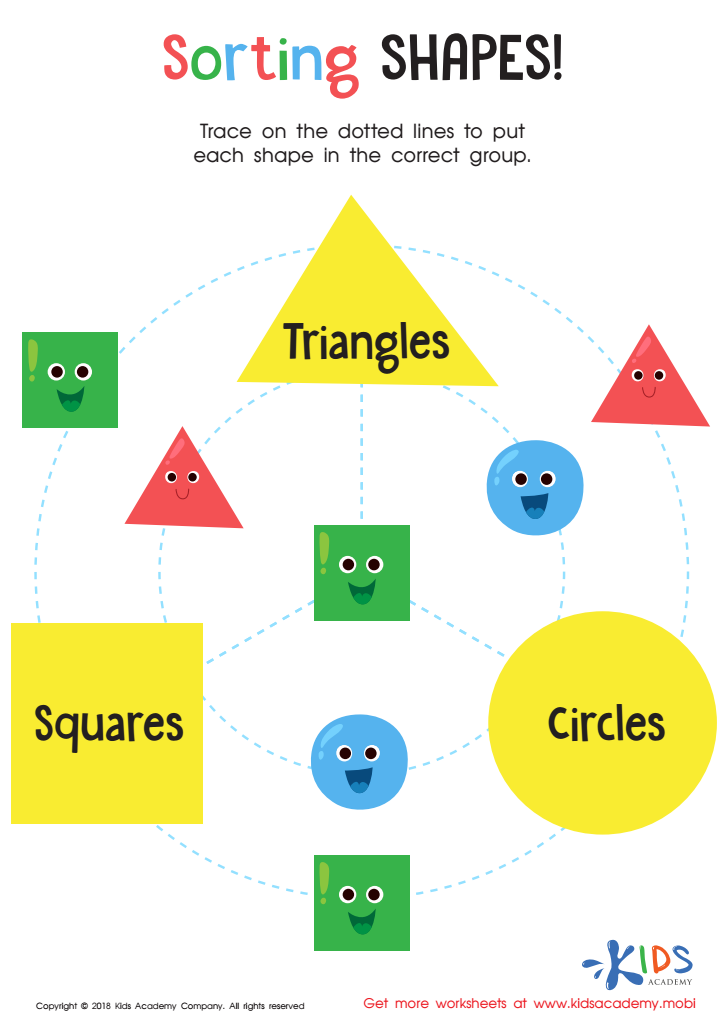
Sorting Shapes - Part 3 Worksheet
 Assign to My Students











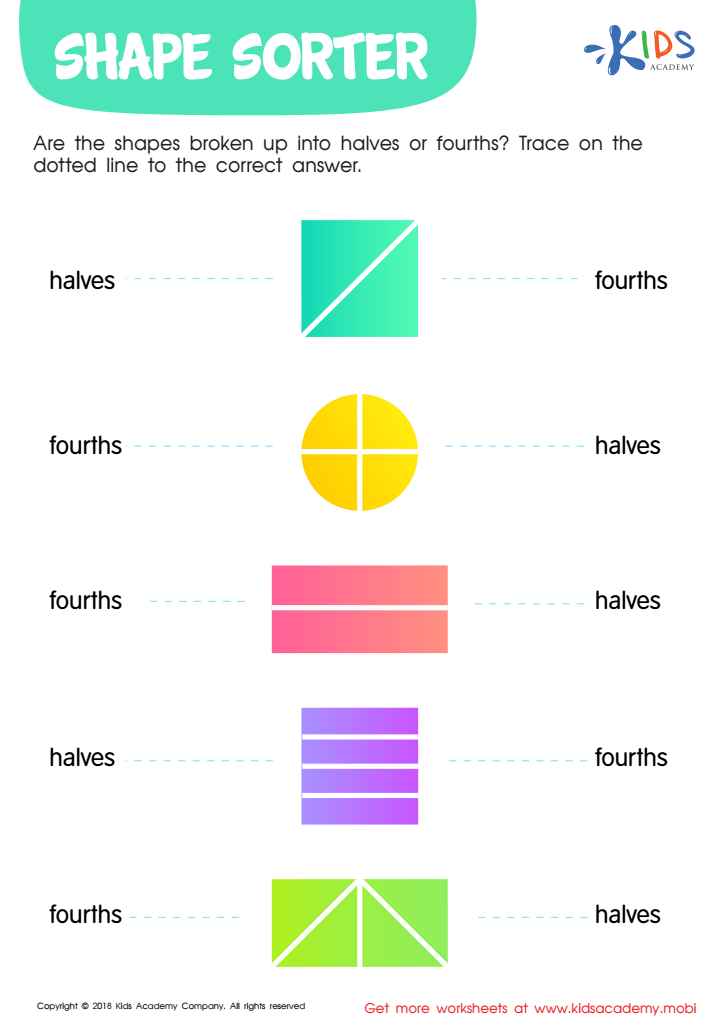
Shape Sorter Worksheet
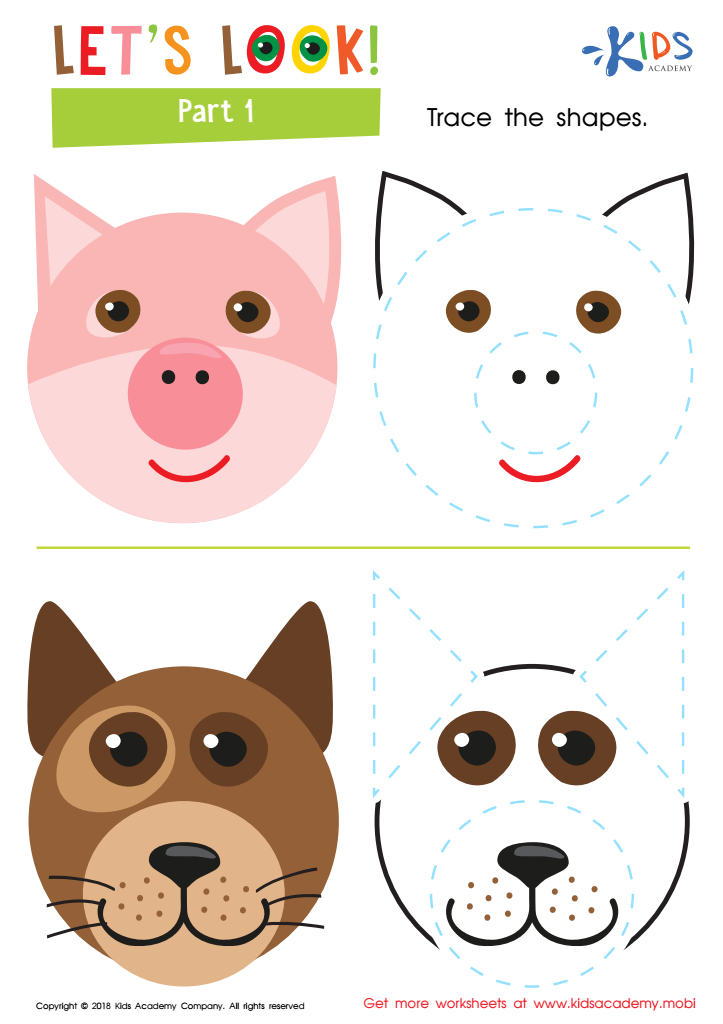
Let's Look! Part 1 Worksheet








Categorization skills in geometry are crucial for children aged 3-6 as they form the foundation for more advanced mathematical understanding. By teaching children to categorize shapes, sizes, and spatial relationships, parents and teachers help them develop critical thinking and problem-solving abilities. These skills enable children to identify patterns and make connections between different concepts, fostering cognitive development.
Furthermore, a child's early experiences with geometry play a significant role in their overall academic success. When children learn to categorize geometric shapes, they enhance their visual-spatial awareness, which is essential for later skills in reading, mathematics, and science. Engaging with shapes also promotes language development, as children learn to describe and discuss their observations using appropriate vocabulary.
Additionally, categorization supports everyday life skills. For instance, recognizing shapes and sizes assists children when sorting toys, understanding environments, and organizing objects, laying the groundwork for effective decision-making in daily activities. Ultimately, nurturing categorization skills in geometry empowers children to approach learning with confidence, cultivates creativity, and sets the stage for lifelong learning. Emphasizing these skills early on equips children with essential tools for success in school and beyond.








